
Inactive· since Jun 15, 2026
- 78
- days it ran
- 0
- relaunches
Ad copy
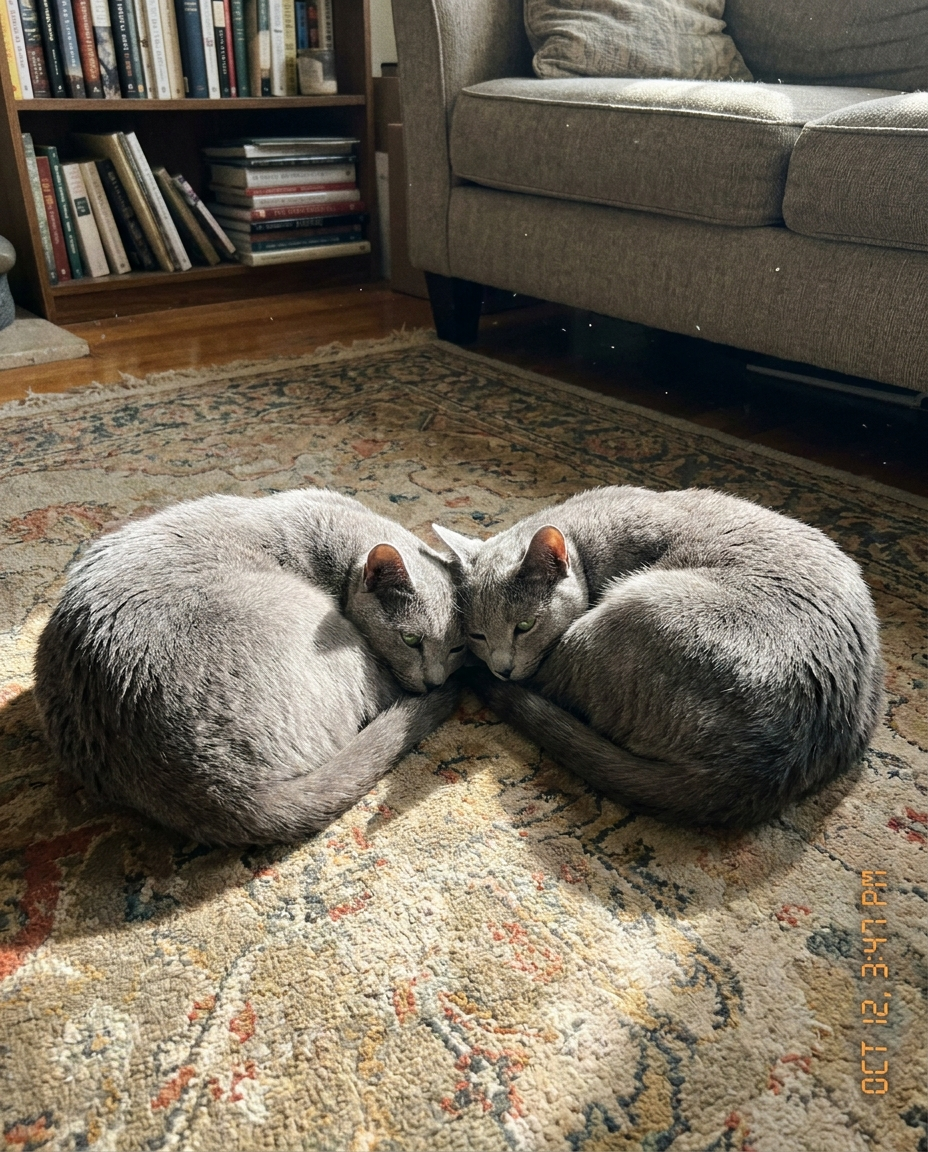
Same house. Same food. Same litter. Same vet. Two sisters from the same litter of kittens. One of them is dead. The other one has the bloodwork of a cat half her age. The only variable that ever differed between them is what they drank out of. I have the lab sheets side by side in a drawer, and I am going to walk you through them, because they are the most convincing two pieces of paper I have ever held. My name is Elaine Voss. I'm 56. I am, by profession and by personality, an accountant. I do not believe in miracle products. I believe in controlled variables. Which is the only reason this post exists. Vera and Nadia were Russian Blue sisters. Identical silver-gray plush coats, identical green eyes, adopted together as kittens. For twelve years they ate the same food at the same times, used the same boxes, saw the same vet, slept in the same sun. If you wanted to design a controlled study of two cats, you could not do better. Same genetics. Same environment. Same everything. Vera started declining at ten. It looked like textbook aging. Drinking a bit more, then noticeably more, camped by the water bowl. Losing weight despite eating. Coat going from plush to staticky. The vet ran a panel: chronic kidney disease, stage 2 sliding toward 3. We did the prescription kidney diet. We did the quarterly panels. Eventually we did sub-q fluids at home, which if you have never pinned a betrayed-looking cat to a towel twice a week, I do not recommend as a hobby. Her numbers never came back down. They just climbed slower. At twelve, they stopped climbing slower. I held her at the end and the vet said the thing they say, that CKD is the most common cause of death in older cats, that we did everything right, that some cats are just prone. Here is where the accountant in me ruined my own grieving process. Because Nadia, the genetically near-identical sister, living in the identical environment, was right behind her on the same road. Her panel at eleven showed the same early creep Vera's had shown at ten. Creatinine nudging up. Urine concentration high. The vet said the same sentence: we'll monitor it. I have heard "we'll monitor it" before. I know how that ledger closes. So I did what I do. I stopped grieving and started auditing. If two identical cats in identical conditions both develop the same disease on the same schedule, the cause is not bad luck. The cause is a shared input. I listed every input they shared. Food: premium, vet-approved. Litter: unscented clumping. Environment: indoor, calm. Water: filtered, refreshed twice daily, ceramic bowl. I could not find the flaw, which meant I was not qualified to find the flaw, which meant I needed someone who was. A woman in a CKD support group, after I posted my whole spreadsheet, no exaggeration, my actual spreadsheet, replied with one line: "Your flaw is the bowl. Read this. It's by a feline specialist and it's the only thing that ever explained my cat's numbers to me." The article was by Dr. Helen Park, a feline medicine specialist, eleven years in a cats-only practice. It opened with a cat named Biscuit, whose owner did everything right, and who reached Dr. Park's clinic in crisis anyway, and did not make it. By paragraph two I recognized the road. By paragraph four I recognized my own water bowl. Here is what Dr. Park explained, and I want you to read it the way I did, as an auditor finding the bad line item after months of searching. Cats are desert animals. They evolved getting nearly all their water from prey, so their thirst drive is suppressed by design. A cat does not feel thirst proportionate to its need. Fed dry or even mixed food and given a bowl, nearly every domestic cat runs chronically dehydrated, every day, for life. This is not a defect in your cat. It is the default state of the species in our homes. Then the bowl itself. A cat's nose detects the biofilm that grows in the microscopic pores of any bowl within hours of refilling. The whiskers object to deep bowls. And the old instinct rates still water near the den as suspect while moving water reads as safe, which is why cats stare at faucets and lick shower tiles while a full bowl sits ignored. So the cat drinks a fraction of its true need. The urine concentrates. And here is the line that made me put the article down and get Vera's file out of the drawer: concentrated urine is the single greatest controllable strain on a cat's kidneys, running silently, around the clock, for years, until the panel finally shows what was happening the entire time. The shared input was the water. It had been the water for twelve years. The food we changed, the panels we ran, the fluids I pinned her to a towel for, all of it managed the downstream wreckage of an upstream cause sitting in a ceramic bowl I refreshed twice a day like a ritual. Dr. Park also explained why the obvious fix, a fountain, so often fails the audit. Most are stainless on top for the product photo with a plastic tank underneath, where the water sits and grows the same biofilm the cat's nose already rejected. The cat quits it in a week and the owner concludes fountains don't work. The real fix needs the whole system at once: 304 food-grade stainless steel throughout including the tank, proper filtration, continuous moving flow, and a wide shallow drinking surface that never touches whiskers. She designed one around exactly that. I ordered it the same night, because the audit was complete and the corrective action was obvious. Nadia, who in eleven years I had never once seen drink for longer than four seconds, stood at that fountain on the first evening and drank for upwards of thirty. I timed it. Of course I timed it. I then did what I imagine no normal grieving pet owner does, but I told you what I am. I measured. Water consumption, daily, before and after, using the reservoir markings. Nadia's intake roughly tripled within two weeks. Her urine, which the vet had flagged as highly concentrated, came back at her recheck significantly more dilute. And six months later, the panel. Creatinine: down, back inside normal range. Urine specific gravity: healthy. The early creep that had tracked exactly one year behind her dead sister's: reversed. My vet looked at Nadia's new panel, then pulled Vera's old file, and laid the two side by side on the counter. Two sisters. Same genetics, same food, same home, same vet. One set of numbers that climbed to the end. One set of numbers that turned around. She looked at them for a long moment and asked what changed. "The water," I said. "Specifically, the thing it sits in." I keep photocopies of those two lab sheets in a drawer, and I look at them more than is probably healthy, because they are the cleanest controlled comparison I will ever see. One variable. Two outcomes. A dead sister and a living one. If you have a cat, any cat, but especially a cat past eight, hear me as the numbers person and not as the grieving one: Your cat is a desert animal that does not feel its own thirst, drinking from a vessel its nose, whiskers, and instincts reject, and its kidneys are quietly billing the difference every single day. The panel that says "normal, we'll monitor" is the early ledger of the same account Vera's closed at twelve. Dr. Park's article is the full audit. The desert-thirst problem, the bowl rejection, why the kidney diets and the monitoring keep failing to bend the curve, and the fountain she built around the actual cause. I've linked it below. P.S. People ask if I am angry that nobody told me sooner. I am an accountant. I do not do anger, I do reconciliation. Vera's column is closed and cannot be reopened. Nadia's column is open, and corrected, and every clean panel is a deposit. Your cat's column is open too. Read the article. Linked below. P.P.S. The single most expensive line in Vera's twelve-year ledger was not the emergency care or the prescription food. It was a ceramic bowl that cost eleven dollars and ran, unaudited, for twelve years. Check your own line items. Linked below.
Same litter. One lived, one didn't.
Home to award-winning pet products. Shop premium, vet-approved items that both you and your pets will love. Quality you can trust, for pets that deserve the best.
LEARN MORELike this ad? Make it yours.
Crush rebuilds this exact creative around your product — your brand, your colors, your offer — in about a minute.