
Inactive· since Jun 11, 2026
- 39
- days it ran
- 0
- relaunches
Ad copy
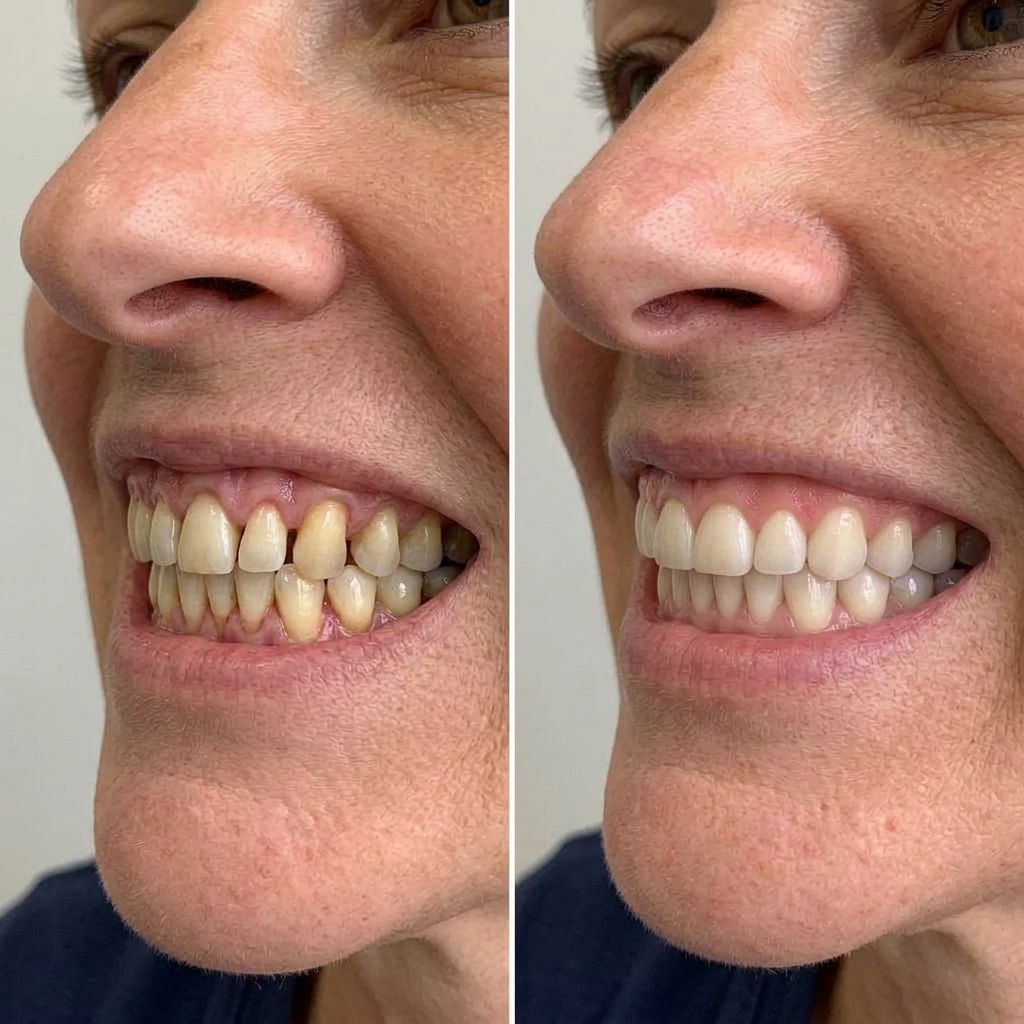
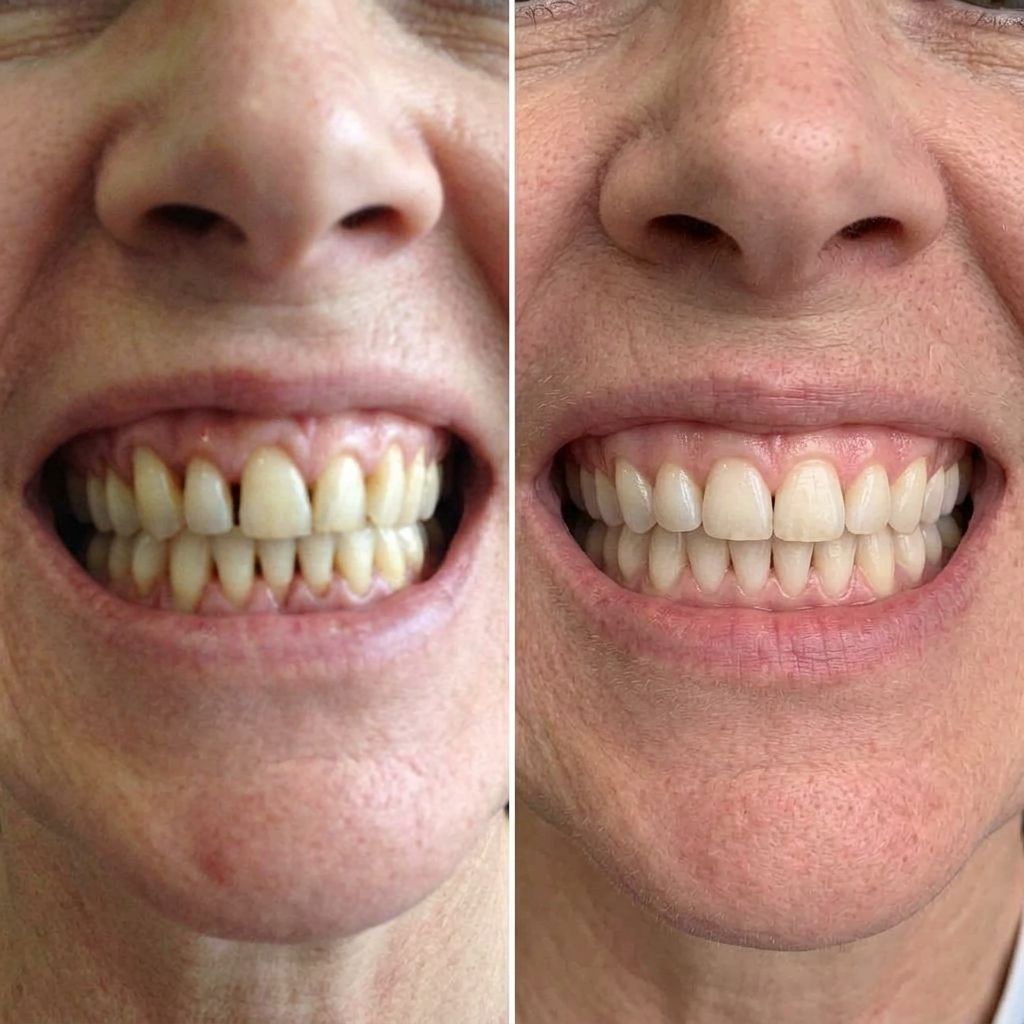
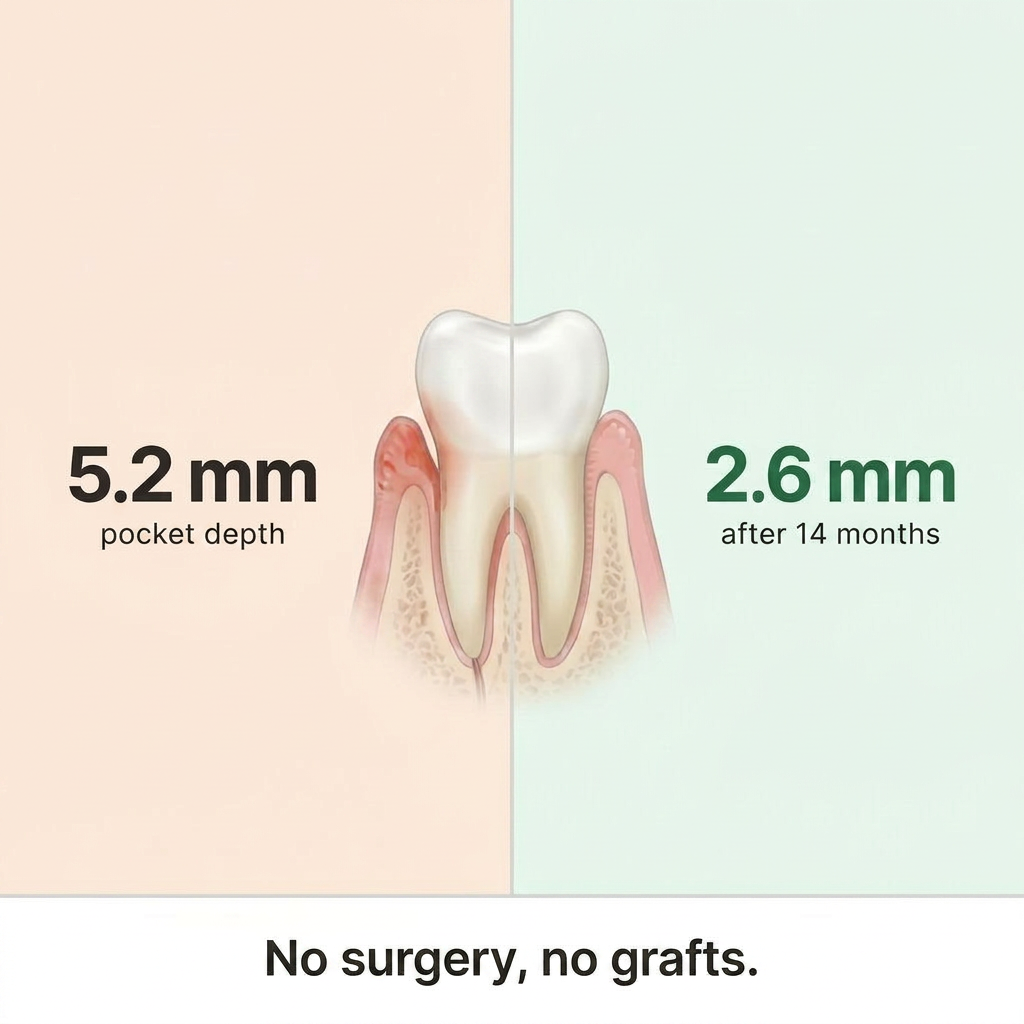
I have treated gum disease in Italy for 18 years without surgery. When I moved to Australia, I couldn’t believe my ears hearing what dentists here were telling their patients. I have been a specialist periodontist for 22 years. The first 20 years I worked in Milan. I moved to Australia two years ago when my wife's company relocated her position to Sydney. I started working at a clinic here. Good clinic. Skilled dentists. But during my first three months, I saw something that kept me awake at night. Women in their 50s and 60s came in with significant gum recession. Exposed roots. Gums as thin as tissue paper. Every single one of them said the same thing. "My dentist has been monitoring it for years." Monitored it. In Italy, we don’t just monitor receding gums. We treat the cause. Because by the time it’s serious enough to require a graft, something has already failed — structurally and systemically — and a graft won’t fix that. It just patches over what’s already lost. Here’s what your dentist probably hasn’t told you about what receding gums really are. Your gum tissue isn’t soft tissue like skin. It’s a highly structured collagen matrix. Collagen makes up about 60% of the gum tissue’s dry weight. It’s the framework — the physical architecture — that keeps your gums thick, tight, and firmly attached to your teeth. When that matrix is intact, gums hold firm. They resist. They don’t pull away. When that matrix breaks down, the tissue thins out. It loses its grip. It starts to recede. After your 30s, your body produces less collagen each year. By age 50, you produce about 70% less than at 25. Your gum tissue starves for the structural protein it’s made of. No amount of brushing replaces that protein. Good hygiene removes bacteria. It does not build the collagen framework. So the tissue keeps thinning. The recession keeps spreading. And your dentist keeps measuring and telling you to keep brushing. The Journal of Clinical Periodontology published in 2019 a meta-analysis of 11 studies on 2,847 patients. It confirmed that collagen deficiency — not bacterial infection — drives recession in patients over 45 who otherwise have good oral hygiene. Not bacteria. Collagen deficiency. Your hygiene isn’t the problem. The protocol that treats your hygiene as the problem is. I want to be honest about gum grafts. Most of my patients here in Sydney had been told a graft was the next step. Some already had them. A graft takes tissue from the palate and stitches it over the area with the exposed root. It covers the recession that has already occurred. What it doesn’t do is address why the recession happened in the first place. The collagen deficiency remains. Structural breakdown continues. In the adjacent tissue, in the surrounding teeth — the same process continues underneath, untouched. Grafting is like repainting a wall that’s crumbling from the inside. The surface looks good. For a while. I’ve seen this in patients who came to me after grafts. Beautiful surgical results. But 18 months later, the recession had moved on. Because nothing had changed structurally. This is what no one tells you about where recession leads if the underlying cause remains untreated. It doesn’t stop at the gum line. The tissue continues to thin and recede. Eventually, recession reaches the bone — the bone that holds your teeth in their sockets. When the bone starts to break down, teeth loosen. They shift. They become unsalvageable. I’ve had that conversation more times than I should have. With women who did everything their dentist told them. Who had their grafts done properly. Who never missed a check-up in 20 years. But who still, over time, lost their teeth. The graft addressed the symptom. The cause kept working. Quietly, structurally — until the damage couldn’t be patched. When I came to Australia, I assumed the research about structural collagen therapy simply hadn’t reached here yet. In Italy, we had worked with targeted collagen supplementation protocols for over a decade. It grew out of research from Bologna and Rome in the early 2010s — periodontists studying why some patients responded to grafts and others didn’t, despite identical surgical technique. What they found was that those who didn’t respond had measurably lower collagen density in the surrounding gum tissue. The graft had no healthy tissue to anchor to. It wasn’t a surgical failure. It was a structural failure. That research led to studies on whether building collagen density could stabilise recession without surgery — in early to moderate cases. The University of Bologna published a study with 578 patients with moderate recession over 14 months. Two groups. Same hygiene protocol. Same cleaning regime. Group B also received targeted collagen peptides designed to reach the periodontal tissue directly. At 12 weeks: Group A continued to show recession. Group B showed stabilisation of the tissue in 91% of patients. 37% showed measurable improvement in gum thickness. Study conclusion: "Targeted collagen supplements address the structural deficiency behind age-related gum recession, regardless of bacterial load." Regardless of bacterial load. Your hygiene does not determine this outcome. Your collagen does. I want to tell you about a patient. Her results embody what I see when people finally tackle the right problem. She was 54. Had "monitored" her recession since she was 49. Two teeth with significant exposed roots. Her previous dentist had recommended grafts on her four front teeth. She came to me for a second opinion. Her hygiene was impeccable. The recession was real. In Italy, we ask a question before we even touch surgical tools: have we addressed the root cause? A graft patches the hole. It doesn’t fix why the hole appeared. I recommended 12 weeks of targeted collagen support before making any surgical decisions. She was skeptical. Five years of perfect hygiene hadn’t stopped anything. She didn’t believe a supplement could do what five years of careful brushing hadn’t. I explained it simply. Brushing removes bacteria. That’s what it’s for. It doesn’t rebuild tissue. Your gums don’t break down due to bacteria. They break down because the structural protein they’re made of isn’t produced in sufficient amounts by your body anymore. You can clean a building perfectly. If the steel framework corrodes, the building will still collapse. She agreed to try. Week 2: The gums felt less sensitive when brushing. Week 4: Less sensitivity to cold water for the first time in years. Week 8: No bleeding at the gumline. She said she couldn’t remember the last time it had been that way. Week 12: Her dental hygienist measured the recession at every site. Then measured it again. Site 1: reduced from 4.4 mm to 2.9 mm. Site 2: reduced from 3.9 mm to 2.7 mm. Site 3: stabilised at 3.2 mm — no further deterioration. Site 4: stabilised. She didn’t need a graft on those four teeth. In Italy, this is where we start. Not with surgery. But with the structure. I share this because I’ve spent two years quietly frustrated over what I see here. Women who came to me after years of being told to “keep up the good work” — while their gum tissue slowly disappeared. Women who felt they failed. That their bodies betrayed them despite doing everything right. They didn’t fail. The protocol failed them. Australian dental education focuses on bacterial control and surgical repair. Structural therapy — nutritional support for the tissue itself — is not part of standard training. Most Australian dentists graduated before this research was published. They do what they’ve been taught. This is no criticism. It’s simply where the knowledge gap exists. But the research exists. And you don’t have to wait for your dentist to discover it. If you’ve "monitored" receding gums for years with no outcome other than it getting worse — if you’ve had grafts and seen recession return nearby — if you’ve been told your hygiene is excellent yet your gums still recede. The answer isn’t to brush differently. It’s to give your tissue what it’s been missing. That’s exactly what Biomevia™ is formulated to do. Built on research about collagen signalling. Dosed at levels that really reach the periodontal tissue. Not some generic supplement with "gum health" on the label. But the specific structural support your tissue has been depleted of. I recommend it to my own patients. I have no financial interest in this company. I recommend it because the mechanism is proven, the research supports it, and I’ve seen it work — first in Milan and now here. Try Biomevia™ for 30 days. Keep track of what your dental hygienist measures. Pay attention to bleeding, sensitivity, and what you see at the gum line in the mirror each morning. If nothing changes — if your next visit shows no difference — contact the team for a full refund. No questions asked. You risk nothing but finding the answer sooner rather than later. You have spent years doing what you were told. Brushing right. Using floss every night. Attending every check-up. Doing everything right. And the recession still came. It’s not your failure. It’s a knowledge gap in the protocol you were given. The Italian research filled that gap for my patients in Milan. It fills it for my patients in Sydney now. It can fill it for you too. For every month you wait is another month of structural loss. Another fraction of a millimetre your tissue recedes from where it should be. Another month closer to that conversation I’ve had too many times — the one that starts with "we did all we could" and ends with teeth being pulled. You don’t have years to waste. And neither do your gums. Dr. Sophie Callaghan https://go.usevelaro.com/Biomevia/leading-periodontists-are-furious-that-this-oral-microbiome-revival-is-making-gum-graft-surgery-unnecessary-for-thousands-of-australians P.S. — My patients usually notice reduced bleeding within the first two weeks. Measurable changes in pocket depth by six weeks. Significant stabilization or improvement by month three. Your timeline may vary. But you won’t know until you try. P.P.S. — One of my patients referred her sister three months ago. Her sister’s dental hygienist called the results after eight weeks “unexpected.” She texted me afterwards: "Why didn’t anyone tell me about this five years ago?" It’s the most common question I hear. Don’t let it be yours.
Why Receding Gums Get Worse (and What You Can Do to Stop It)
Leading Australian periodontists are frustrated that this “oral microbiome restoration” makes gum grafts unnecessary for thousands of Australians
SEE DETAILSLike this ad? Make it yours.
Crush rebuilds this exact creative around your product — your brand, your colors, your offer — in about a minute.