Aging Well Daily
Aging Well Daily Facebook ad: “My husband died on a Wednesday in March.”
Ran for 15 days, from July 20 to August 4, 2026, the last day Crush saw it.
Run by Aging Well Daily on Facebook. Crush is not the advertiser and does not verify its claims. See this ad in Meta's Ad Library(opens in a new tab)
Want an ad like this for your product?
Crush makes new ad images for your product from this ad: your logo, your product photo, your offer.
Trials from $19.95 USD, then $79.95 USD a month. Cancel anytime.
About this ad
- Meta Ad Library ID
- 1008878935299210
- Platforms
- Facebook, Instagram, Audience Network, Messenger and Threads
- Relaunches
- 0
Ad text
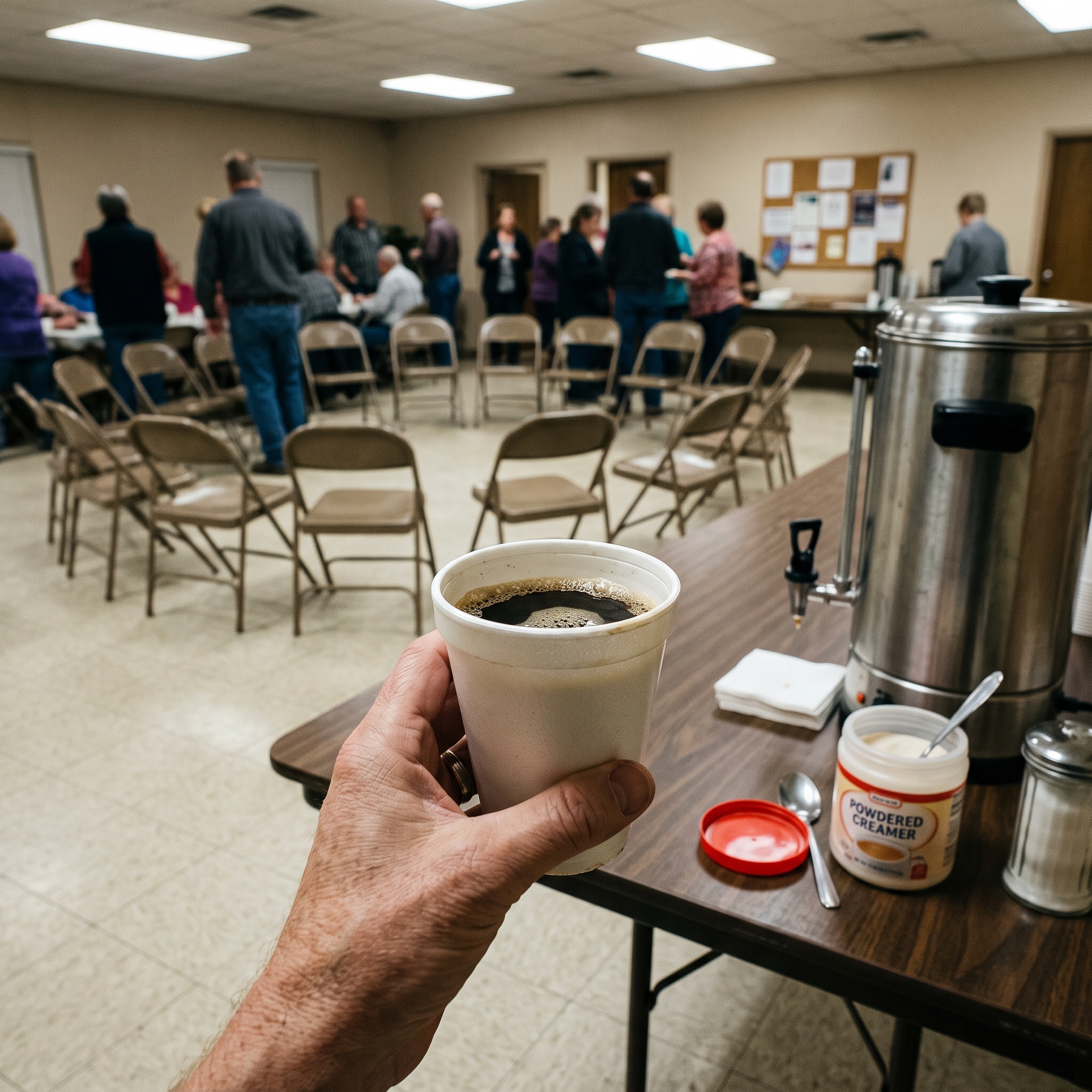
My husband died on a Wednesday in March, at 4:50 in the afternoon, in a hospital bed they'd wheeled into what used to be our dining room. His name was Del. We were married forty-one years. He was the kind of man who warmed the car up for me on winter mornings without being asked, who kept a running list of everyone's birthdays in a little spiral notebook in his shirt pocket, who could not walk past a stray dog without crouching down to talk to it like they were old friends catching up. When the hospice nurse stepped out to give us the room, I climbed onto that narrow rented bed beside him and held his hand until it went cool, and I thought — this is the worst it will ever be. It can't get worse than this. I was wrong about that, and it took me a long time to understand why. Because grief does not do its worst work at the funeral. Everyone shows up for the funeral. The casseroles come, the cards come, our daughter Carol flew in from Denver and answered the phone so I didn't have to. And then — the way it's supposed to go — they go back to their own lives, and the cards stop, and one ordinary Tuesday you look up and it's just you and the house and the enormous, ringing quiet. For me, the quiet had a specific address. It was our bedroom. It was that bed. I could get through the days. I could go to the grocery store and make small talk with Denise at the register. I could keep the bird feeder full. I could sit at Del's memorial garden — Carol had planted him a little bed of black-eyed Susans out back, the flowers he loved because they came up no matter what, in poor soil, in drought, "stubborn as your mother," he used to say. What I could not do was lie down in our room at night without my whole body going rigid, like an animal that hears something moving in the dark. I'd get into bed on my side — I never once, not in eight months, moved over to the middle, and I never touched his side — and within twenty minutes something in my lower back and my hip would start to ache, a deep, dragging, pulling ache, and I'd shift, and it would follow me, and I'd shift again, and by two in the morning I'd give up and go sit in the recliner in the front room with the TV muted, watching people sell jewelry to no one, until the sky went gray. And here is the thing that kept me from ever once questioning it: everyone had an explanation, and the explanation was always the same. It was grief. Of course it was grief. My doctor — a nice enough young man, younger than Carol — patted the back of my hand and said, "You've been through a tremendous loss. The body holds grief. Give it time." My sister said it was grief. The pamphlet from the hospice bereavement office said the body holds grief. Carol, gently, over the phone, said, "Mom, it's only been a few months. You're allowed to not be okay." And I believed all of them, because it was the most obvious thing in the world. My husband of forty-one years had died in the next room. Of course I couldn't rest in the bed we'd shared. What kind of woman would that even be, the kind who could? So I carried it the way you carry the thing you think you deserve. Quietly. As penance, almost. The ache was just what grief felt like in the body, and the body holds grief, and there was nothing to be done but wait for time to do the only thing time does. I want to tell you about Marguerite now, because everything turns on Marguerite. Carol was the one who signed me up for the grief group. I fought her on it. I am not a church-basement, share-your-feelings-with-strangers kind of woman, and I told her so, and she said, "You don't have to say a single word, Mom. Just go and drink the bad coffee and be in a room with people who get it." So on Thursday nights I started driving over to the Methodist church on Fourth Street, and I'd sit in a folding chair in a circle in the fellowship hall under those flickering fluorescent lights, and mostly I did exactly what I told Carol I would do. I drank the bad coffee. I listened. I didn't say much. Marguerite sat two chairs down from me most weeks. She'd lost her husband a year and a half before I lost Del — Harold, an accident on the highway outside Zanesville, no warning at all. She was seventy-one, sharp-eyed, wore her reading glasses on a beaded chain, and before she retired she'd spent thirty-one years as a nurse, the last decade of it working nights on a rehabilitation floor. She had a way of listening to people with her whole face that made you feel less alone just sitting near her. It was during the coffee break — that's the part I keep coming back to, that it happened during the coffee break and not the circle, over by the folding table with the industrial urn and the little tub of powdered creamer — that Marguerite changed my life. I'd been standing there stirring, not really saying anything, and she asked me, plainly, the way she asked everything, "How are you sleeping, honey?" And I don't know why, but I told her the truth for once. Not the grief-group answer. The real one. I told her about the ache. About the recliner. About two in the morning, night after night, my hip and my back pulling like something was wrong, and how I'd resigned myself to it because it was grief and the body holds grief. Marguerite got very quiet. Then she said, "Can I ask you something that's going to sound strange?" I said all right. She said, "How old is your bed?" I actually laughed, the first real laugh in I don't know how long. What a thing to ask. But I did the math, and the answer stopped me. Del and I had bought that mattress the year Carol started high school. It was seventeen years old. Marguerite nodded slowly, like a woman confirming something she already suspected. And then she said the thing. She set down her Styrofoam cup and she said, "I spent thirty-one years turning people in beds, and I'll tell you what I told every family that would listen. When somebody can't get comfortable no matter what they do — when they ache on one side and roll and ache on the other — half the time it isn't the body at all. It's the surface underneath it. You've been sleeping in a dead man's side of a seventeen-year-old bed, sweetheart, and I'd bet my pension there's a valley worn into it a hand-width deep. You're not lying flat. You're lying in a hole, all night, tipped onto the same hip. That's not grief doing that. That part — that part you can fix." I stood there with my little wooden stirrer and I could not speak. Because she was right, and I knew she was right the instant she said it, the way you know a true thing in your body before your mind catches up. I thought about how I only ever lay on my side. I thought about how the ache always landed in the same hip. I thought about that mattress, seventeen years of the two of us, and how of course — of course — there was a trench worn into it, and I had been climbing down into that trench every night and lying tipped over in it until my body screamed, and calling it grief. Naming my own husband's absence as the thing that was hurting me, when part of it, some real and fixable part of it, was just an old broken bed. I have to tell you the other reason her words landed the way they did, because it's the reason I almost didn't do anything about it. I had been burned before. About two months after Del passed, in one of those three-a.m. online spirals, I'd spent a foolish amount of money on a memory-foam topper that a very confident advertisement swore would change everything. It came rolled up in a box, smelled like a chemical plant for a week, and when I finally lay down on it I sank into it like wet sand and could not turn over, and worse, it held the heat against me until I'd wake up damp and miserable at one in the morning. I gave up after four nights, and it had been leaning against the wall of the guest room ever since, a two-hundred-something-dollar monument to my own gullibility. So when Marguerite said "you can fix this," some tired, bruised part of me thought: I already tried. Fixing it made it worse. But I'm a reader. I always have been. And now that I was up at two in the morning every night anyway, sitting in that recliner, I started to read. Not the confident advertisements this time. The actual research. And what I found down there in the quiet did something I did not expect — it didn't just inform me, it released me. There is a study, published in The Lancet, back in 2003. Over three hundred people with chronic back pain, followed for ninety days. The people given a medium-firm surface did better than the people on the soft one. It is more than twenty years old, almost nobody has heard of it, and I sat there in the dark and got, honestly, a little angry, because I finally understood why. You cannot patent "firmer." There's no money in it. A firm layer is not a gadget you can trademark and sell at a four-hundred-percent markup, so a thirty-billion-dollar mattress industry has every reason to keep selling us the plush, sink-in, cloud-soft beds — the exact surface that study flagged as the problem — and no reason at all to tell an old woman the answer might be simple and cheap and un-patentable. My nice young doctor didn't tell me. He told me it was my age, and my grief, and to give it time. I read other things, too, down in that recliner. There's a Japanese sleep researcher, Okamoto-Mizuno, who studied what the body actually needs to rest deeply, and it turns out your skin has to cool by about a single degree to let you fall into the good, deep part of the night — which explained, all at once, that miserable damp foam topper leaning against my guest room wall, holding heat against me like a fever. And I read about the shikibuton, the thin, firm sleeping mat people in Japan have laid out on the floor and slept on, on purpose, for four hundred years. Four hundred years of choosing firm and flat. Not because they were poor. Because it works. And here we all were paying a fortune to sink into a hole. I sat there at three in the morning with my reading glasses on and my dead husband's flowers coming up stubborn in the backyard, and for the first time since March, something loosened in my chest. Because part of what I'd been carrying as grief — the two a.m. ache, the recliner, the bracing — was not, it turned out, a punishment I had to bear until time healed it. It was a seventeen-year-old trench and a tipped-over hip. And that, I could do something about. So I did the thing Marguerite told me she'd have done. I didn't buy another whole mattress — the thought of hauling ours out, the thought of what it would mean to replace the bed Del died beside, I wasn't ready for any of that, and honestly I'm still not. What she told me to look for was a firm layer to go on top. A surface to hold me flat, up out of the valley, so the same hip wasn't taking all of it all night long. The one I found is called Hanare. I'll tell you about it plainly, because after that foam disaster I don't have the patience left to be sold to, and I won't do it to you. It is a topper. Three inches, and it is not memory foam — that mattered to me more than anything after what I'd been through. It's medium-firm, firm enough that it holds you up level instead of letting you sink down into the old worn hollow. The cover is a bamboo-viscose blend, and I did not care about that until I read about the cooling, but I care now, because it actually breathes — I have not once woken up damp the way that other thing left me. It simply lays on top of the mattress you already have. No straps; you settle it on, put your fitted sheet over it, and that's the whole job. It fits deep mattresses, eight inches up to twenty, so I didn't have to measure a thing. I bought the queen. It was a hundred and twenty-nine dollars. I sat looking at that number for a long minute, because after the small fortune I'd wasted on the foam, a hundred and twenty-nine dollars seemed almost too cheap to trust — how could the thing that worked cost less than the thing that didn't? But that was the whole point the research had been making to me at three in the morning. The truth was never expensive. The truth just didn't have a marketing budget. The other thing that finally let me press the button: they give you a hundred nights to try it, in your own home, on your own bed. If it does nothing — if it's one more monument for the guest room wall — you put a label on the bag, you send it back, and you get your money back. After being burned, that was the only reason I trusted it enough to try. A hundred nights and a garbage bag and your money back. No arguing. It came a week later. I settled it over the whole bed and put our sheets back on. That first night I did not expect anything. I'd been disappointed too recently to hope. I lay down on my side, braced the way I always braced — and the ache didn't come. I lay there almost suspicious, waiting for two a.m. and the pulling in my hip, and instead I felt myself lying flat. Just flat. Level. Held. Not tipped down into anything. The word that came to me was so small it surprised me. Better. Not fixed. Not healed. Del was still gone; the other side of the bed was still empty and always will be. The topper did not touch a single ounce of that, and it can't. But the ache was gone, and somewhere past midnight I fell asleep in the room where my husband died, for the first time in eight months, and I did not wake up in the recliner. I woke at first light, in our bed, on my side, and I lay there and I cried — but it was a different kind of crying than the three-a.m. kind. The kind that lets something out instead of keeping it in. It's been a while now. The nights are still hard sometimes, because the nights are supposed to be hard sometimes; that's the grief, and I'm not looking to have that fixed, because that's Del, and I get to keep it. But I sleep. I'm out of the recliner. And a strange, quiet dignity came back to me that I hadn't even noticed I'd lost — the simple animal dignity of being able to lie down at the end of the day and rest. Here's the part I most need to tell you, and it's the reason I'm sitting here writing all of this out on a Sunday afternoon instead of keeping it to myself. A few weeks ago at the grief group there was a new woman. Younger than me, maybe fifty, lost her husband over the summer, sat with her arms wrapped around herself the whole hour and didn't say a word — the way I used to sit. At the coffee break I watched her stand alone by the urn, and I thought about Marguerite putting down her cup two chairs from me, and I walked over. I asked her how she was sleeping. She looked at me like I'd caught her at something, and she told me the truth, the same way I once did — the ache, the couch, the giving up. And I heard Marguerite's voice come right out of my own mouth. "Can I ask you something that's going to sound strange? How old is your bed?" That's the whole thing, really. That's why I'm writing this. Somebody who spent thirty-one years turning people in beds leaned over and told me a true thing during a coffee break, and it gave me back my nights, and now I can't seem to stop leaning over and telling the next person. So consider this me leaning over to you. If you've been lying awake carrying all of it as grief, or as your age, or as just the way things are now — and maybe most of it truly is, I'm not going to tell you your own heart — but if some small, stubborn, fixable part of it might be a worn-out bed and a hip that's tipped into a hole every single night, you're allowed to be curious about that. That's all. Just curious. You can read about it the way I did, quietly, on your own time, here: www.tryhanare.com/hanaretopper Del would've liked knowing this got passed along. He kept everyone's birthday in a little notebook so nobody would ever feel forgotten. This is my version of the notebook, I suppose. Passing it on so the next person doesn't lie in the hole for eight months calling it something it isn't. P.S. If you tried a memory-foam topper once and it made everything worse — too soft, too hot, sank you deeper — please don't let that be the end of it for you. That was my exact story, and the whole problem was that it went the wrong direction. Soft and hot was never the answer. Firm and cool was. They are not the same product and they are not the same night. P.S.S. Marguerite told me the trench is the thing nobody thinks to check. Press your hand flat into your side of the mattress, right where you lie. If it sinks and stays sunk, if there's a hollow shaped like you — that's what's been tipping you over all night long. Go press on it right now. I'll wait. P.S.S.S. To the person reading this who feels a little ashamed that a bed could be part of it — like it would mean your grief wasn't "real" if a hundred-and-twenty-nine-dollar layer could touch any of it — I felt that too, so hard I almost didn't try. It doesn't mean that. Your loss is real and enormous and nothing on this earth fixes it. This just quietly took one thing off the pile that never belonged on it. You're allowed to set that one thing down. P.S.S.S.S. And if you're reading this at two or three in the morning, in the recliner, with the TV muted and the sky not gray yet — I know exactly where you are, because I lived in that chair for eight months. I'm not going to promise you anything. I'm just going to tell you that I'm not in the chair anymore, and that the thing that got me out of it was smaller and simpler than anyone with a white coat or a marketing budget ever bothered to mention. Go press on your mattress. Then go read. You have time. You're up anyway.
Where the ad sends people
tryhanare.com
My husband died on a Wednesday in March.
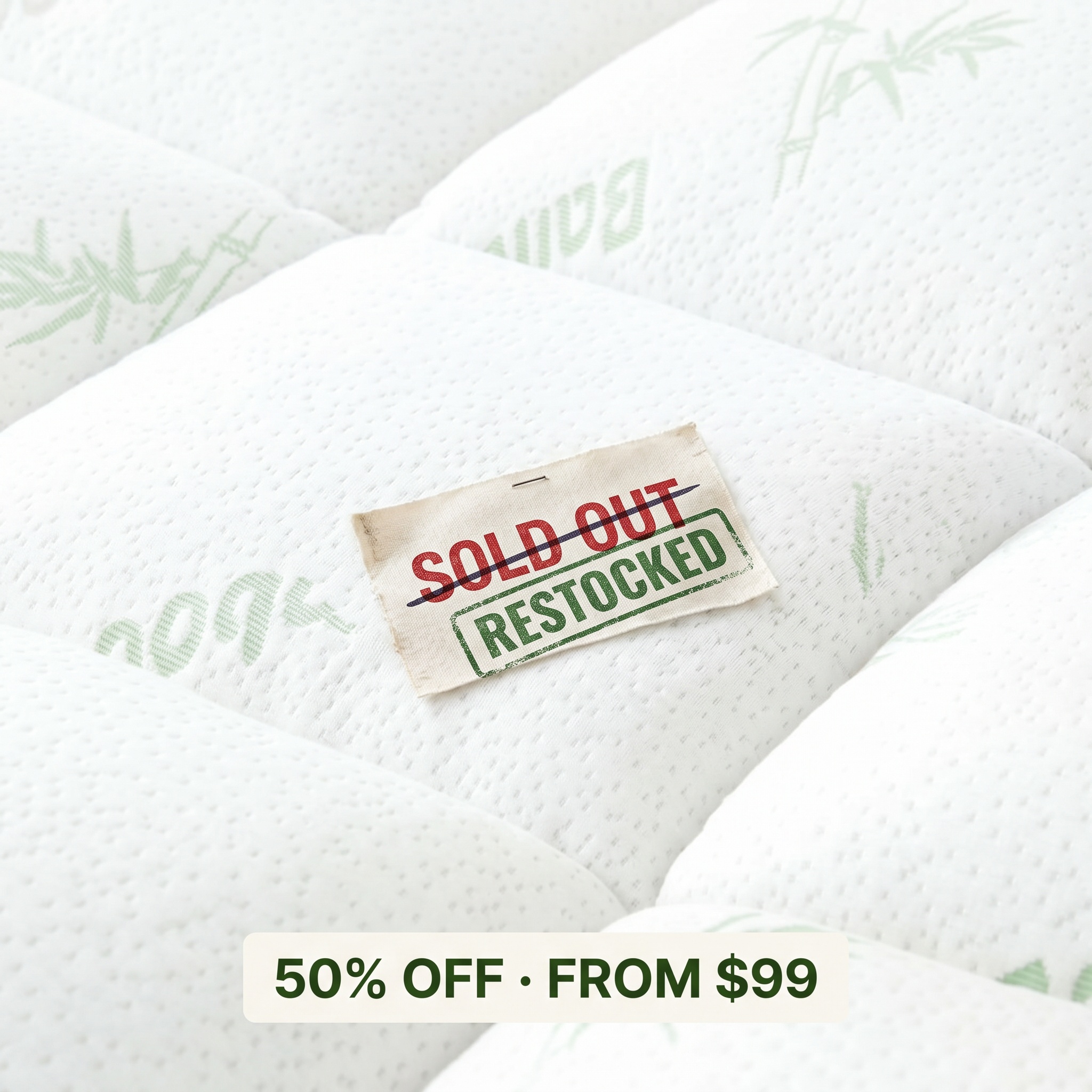
Sleep cooler and wake up refreshed. The BambooBreeze Mattress Topper adds cloud-like cushion with breathable bamboo fabric. Shop now for $149.
Learn more: tryhanare.com(opens in a new tab)