Amelia Bennett
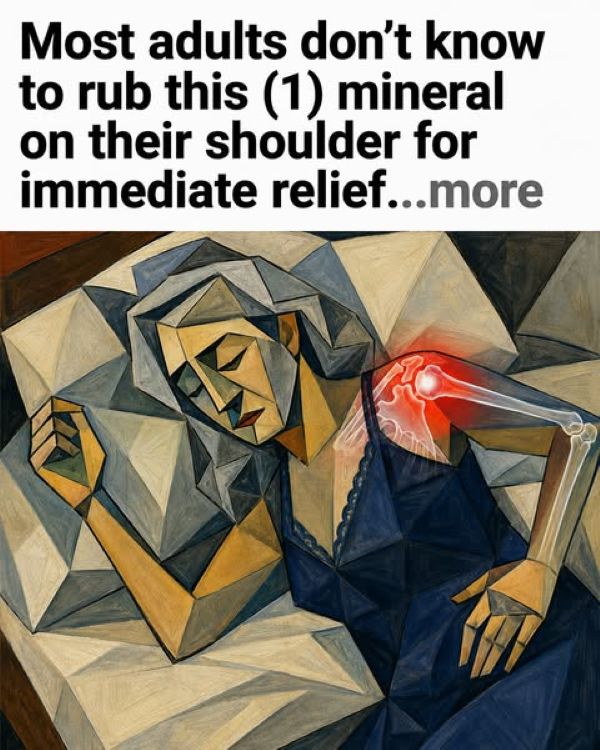
Amelia Bennett Facebook ad: “12 years of shoulder pain gone in 2 days?”
Ran for 8 days, from August 5 to August 13, 2026, the last day Crush saw it.
Run by Amelia Bennett on Facebook. Crush is not the advertiser and does not verify its claims. See this ad in Meta's Ad Library(opens in a new tab)
Want an ad like this for your product?
Crush makes new ad images for your product from this ad: your logo, your product photo, your offer.
Trials from $19.95 USD, then $79.95 USD a month. Cancel anytime.
About this ad
- Meta Ad Library ID
- 1012487561601644
- Platforms
- Facebook, Instagram, Audience Network, Messenger, WhatsApp and Threads
- Relaunches
- 0
Ad text
I've been treating shoulder pain for 19 years and if your shoulder aches, burns, or catches every time you reach for something... I am about to tell you exactly what they are hiding from you and why they will never tell you the truth. And by the end of this, you are going to be outraged. My name is Dr. Blane. Board-certified pain management specialist. Nineteen years treating chronic inflammation, musculoskeletal pain, and stubborn shoulder pain that nobody could explain. And I am breaking ranks with my own profession to tell you this. Because there are three things happening right now. One. Your body is screaming at you that something is wrong. Two. The medical system is gaslighting you into thinking it is normal wear and tear. And three. There is a billion-pound industry that profits every single day you stay stiff and in pain. So let me tell you what happened with one of my patients. Because her story is going to open your eyes to how messed up this really is. Her name was Margaret. 72 years old. For three straight years, she dealt with this. A deep, grinding ache in her right shoulder that never fully went away. She had been active her whole life, gardened every morning, swam at the local pool, and suddenly she had the shoulder of someone 20 years older. She could not lift her arm above chest height without a hot, searing catch. Reaching the top shelf of her own kitchen cabinet became a two-step process with a stool. Hooking her bra behind her back? She stopped trying. Started fastening it in front and spinning it around like a teenager. She stopped swimming. Stopped carrying her grandson because she was terrified her arm would give out. Started sleeping propped upright in the armchair because the second she rolled onto that shoulder, the throbbing woke her up like an alarm clock. And the pain kept spreading. A constant dull ache in the joint. A burning line down the outside of her upper arm. She described it as someone slowly tightening a rusty clamp around her shoulder all day, every day. And here is what makes me sick to my stomach. She came through my office. Multiple doctors. Her GP. An orthopaedic specialist. Me, the pain specialist. Thousands of pounds in appointments, X-rays, MRIs. And you know what every single one of us told her? "There is no tear. Nothing to repair." "It is just wear and tear. Normal for your age." "Take ibuprofen." "Rest it. Avoid overhead activity." Avoid overhead activity. This woman could not wash her own hair and we were telling her to reach less. Then we gave her the cortisone shot. You know what happened? Two weeks of relief. Maybe three. Then the pain came roaring back, worse than before. So she got another shot. And another. Until the orthopaedic specialist told her they had to stop, because too many injections start breaking down the very tissue they are injected into. The shots numbed the pain. But the shoulder did not heal. The stiffness did not release. I watched this woman do everything I told her, spend thousands of pounds, take my prescriptions, and get worse. Not better. Worse. And I did not understand why. Until a neuromuscular inflammation researcher stopped me in my tracks at a conference and taught me more about chronic, aching shoulders in 30 minutes than I had learned in two decades of practice. October 2023. Chicago. The Annual Pain and Musculoskeletal Medicine Symposium. I was standing alone during a coffee break, rolling my right shoulder in slow circles, trying to work out the familiar deep ache under the joint. Because 14 months earlier, my own shoulder had started aching. And nothing I had been prescribing to patients for 19 years worked on me either. That is when I noticed him. Dr. Leonard Voss. Neuromuscular inflammation researcher. He had spent the entire morning setting up his exhibit booth. Lifting boxes. Hanging banners overhead. Arms over his head for hours. No wincing. No favouring one side. No visible discomfort after a full morning of overhead work. I walked over. "Excuse me. At your age, after a morning like that, how is your shoulder not screaming?" He smiled. The kind of smile that knows something you do not. He watched me roll my shoulder and did not need to ask. "Dr. Blane, may I show you something? It will take thirty minutes. But it will change how you understand this completely." He pulled out a notepad and drew a simple diagram. "Your treatment model treats shoulder pain as a structural problem. So you rest it. Numb it with pills. Inject it with cortisone. That is like responding to a fire alarm by removing the batteries while the fire keeps smouldering in the wall." He tapped the notepad. "This is not a structural problem. It is an inflammation problem in the soft tissue surrounding the joint. And the reason your pills and shots are not working is because you are silencing the alarm. Not putting out the fire." Here is what is actually going on. The shoulder is the most mobile joint in your body, and it is held together almost entirely by soft tissue. Tendons. Muscle. A thin lubricated cushion called the bursa. When that tissue becomes chronically inflamed, it thickens and stiffens. The tendons swell inside a space that was never designed to hold swollen tendons. And the pain comes from pressure. Every time you lift your arm, that inflamed, thickened tissue gets pinched inside the joint. Nerve endings compressed and irritated over and over, hundreds of times a day, with every reach, every turn of the steering wheel, every roll onto your side at night. But here is what nobody ever told me in two decades of pain management training. The inflammation thickening that tissue is driven by specific enzyme pathways — and those pathways are fed by damaged senescent cells that researchers call zombie cells. These are cells that accumulate inside the soft tissue surrounding the joint and refuse to die the way healthy cells do. Instead they sit there releasing the very enzymes that keep the tendons and bursa swollen and irritated. They block the repair signals. They maintain the inflammatory environment that makes every overhead reach feel like a hot blade. And the more that environment persists, the more those zombie cells turn the healthy tissue next to them into zombie cells too. That is why cortisone shots wear off. The zombie cells are still there. That is why rest does not fix it. The zombie cells do not care whether you move or not. That is why anti-inflammatories buy temporary relief and nothing more. They silence the alarm. The zombie cells keep working underneath. Dr. Voss pulled up research on his phone. Study after study pointing to the same mechanism. The compound that directly addresses this is niacinamide. Not a drug. Not a synthetic compound. A form of vitamin that has been studied for decades, but almost never discussed in the context of soft tissue inflammation and chronic shoulder pain. Niacinamide supports NAD+ production — the molecule your cells need to clear zombie cells out and restore a healthy tissue environment. When NAD+ comes back, the cellular cleanup crew finally has the fuel to do the job. The zombie cells start being cleared. The enzymes they were releasing stop flooding the tissue. The swelling recedes. The pinching inside the joint stops. The pressure on the nerve endings releases. The pain follows it out. "But here is the critical piece," he said. "Oral niacinamide has to survive digestion, get absorbed through the gut, enter circulation, and still arrive at the tissue deep in your shoulder in a meaningful concentration. For a lot of people, especially those with any gut inflammation, almost none of it makes it to the target tissue." He leaned forward. "But applied topically? Directly over the affected joint? The niacinamide absorbs transdermally, bypasses the gut entirely, and reaches the inflamed tissue at the site. That is where the research gets interesting." Then he said something that made my stomach drop. "Paired with topical magnesium, which acts as a natural muscle relaxant and supports healthy vascular tone, you get a dual mechanism. The niacinamide supports NAD+ and clears the zombie cells keeping the tendons and bursa swollen. The magnesium helps the surrounding muscles, the ones that have been guarding and clenching around that painful joint for months or years, finally release. Two problems addressed at the same location at the same time." I sat there thinking about every patient I had sent home with ibuprofen and a cortisone referral. Numbing the pain signal. Not touching the zombie cells grinding away inside the joint. Here is what makes my blood boil. The medical system knows about niacinamide's anti-inflammatory mechanisms. Researchers publish on it. But the connection between topical niacinamide, zombie cell accumulation in soft tissue, and chronic shoulder pain? Nobody is joining those dots in a clinical setting. Because there is no profit in it. Pharmaceutical companies cannot patent a topical cream built around a naturally occurring vitamin and a mineral that has existed for centuries. So it never makes it into the treatment conversation. The money is in the shots that wear off in three weeks. The pills you take forever. The £20,000 surgery waiting for you at the end of the road. Every prescription I had written for 19 years worked downstream. Not one of them touched what was happening inside the joint. After that conversation I went looking for a topical product that matched what the research pointed to. The niacinamide. The magnesium. The right delivery format to actually reach the tissue. Most products I found were one or the other. Magnesium creams with no meaningful anti-inflammatory compound. Or niacinamide skincare products made for your face, not your joints. Until I found Magnesium Freeze from Radiance Labs. A topical magnesium and niacinamide relief cream built around exactly the dual mechanism Dr. Voss had described. Not a pain masker. Not a numbing agent that wears off by lunchtime. Something that actually went after the zombie cell environment in the soft tissue at the site, with the magnesium working alongside it to release the clenched, guarding muscles around the joint. When I looked at the formulation it mapped directly onto what the research pointed to. They understood the mechanism. They built the product to match it. The niacinamide supports NAD+ production directly in the local tissue — clearing the zombie cells and restoring the environment the repair cells need to work. The pharmaceutical-grade magnesium absorbs transdermally — bypassing the gut entirely — and gives those same cells the cofactor they need for collagen synthesis, tissue regeneration, and cellular energy production right at the source. Then a cool-to-warm wave — menthol, Coolact 10, camphor, Hotact VBE — opens the blood vessels and floods the starved tissue with oxygen-rich blood that chronic inflammation has been restricting. Most topical creams fade in four minutes. This keeps working for up to two hours. And a layer of botanicals — arnica, frankincense, aloe vera, vitamin E — calms the remaining inflammation and protects the tissue while the deeper repair work takes hold. Three layers. Twelve ingredients. One application. Directly at the joint. I started using it myself first. Week 1: Applied it each morning and evening directly over the front and side of my shoulder. The deep morning stiffness was noticeably less by day four. Day 9: Slept on my right side for the first time in over a year. Woke up in the same position I fell asleep in. Week 3: Reached the top shelf of my wardrobe without that hot catch in the joint. Just reached up and took the box down like a normal person. Week 8: Full circles with my arm, both directions, no grinding. I carried my case through the airport with my right hand and did not think about it until I landed. Then I called Margaret. And every other patient I had failed. "I need to tell you something. The treatments I prescribed were wrong. I was numbing your pain when I should have been clearing the zombie cells in the tissue around your joint. I did not know the difference. But I do now." Margaret, week 6: "Dr. Blane, I hooked my bra behind my back this morning for the first time in over a year. I stood in my bedroom and cried. I did not think that was ever going to happen again." The burning down her arm? Gone by week four. She went back to the pool. Picked up her grandson again. Moved out of the armchair and back into her own bed, on her own side, sleeping through the night. She got her life back. This is the mechanism they do not want you to know about. Because the second you clear the zombie cells in the tissue around your shoulder, you do not need their cortisone shots anymore. You do not need their symptom-masking prescriptions. The tissue calms down. The joint stops pinching. The stiffness releases. The pain follows. And here is what I need you to understand about timing. Zombie cell accumulation in soft tissue compounds over time. The longer that tissue stays swollen and irritated, the more the zombie cells accumulate and the harder it is to reverse. Early stages respond faster. Longer-term cases take more time and see lower success rates. If you have been dealing with this for over a year, do not wait longer. If you have been dealing with a shoulder that aches all day, burns down your arm, catches when you reach, wakes you up when you roll over — and nothing has worked, it is not because you slept on it wrong. It is not because you are just getting older. It is because the zombie cells in the tissue around your joint have never been addressed. And nobody is talking about it. Magnesium Freeze from Radiance Labs has a 180-day money-back guarantee. If it does not work, you pay nothing. And honestly? Even if you are sceptical, try it for a month. See if your body responds the way mine did. The way Margaret's did. Because the medical system is not coming to save you. We profit too much from keeping you on pills and shots that silence the alarm and never put out the fire. A neuromuscular inflammation researcher taught me more in 30 minutes than I learned in two decades of practice. It is about time I passed that lesson on. Go get it. P.S. I have stopped recommending cortisone shots as a first-line treatment for chronic shoulder pain in my practice. I recommend clearing the zombie cell environment in the soft tissue topically first. My colleagues think I have lost my mind. But my patients are reaching overhead again instead of scheduling surgeries. P.P.S. Every cortisone shot buys you a few weeks of silence while the zombie cells keep releasing their enzymes underneath. And the shots themselves break down the tissue over time. You are muting a smoke alarm inside a burning house. Stop muting the alarm. Put out the fire. P.P.P.S. Margaret: "Three years of ibuprofen and cortisone shots and my shoulder never changed. Two months of Magnesium Freeze from Radiance Labs and I am back in the pool three mornings a week. I wish someone had told me sooner."
Where the ad sends people
radiancelabs.shop
"12 years of shoulder pain gone in 2 days?"
See details: radiancelabs.shop(opens in a new tab)