Smith Sawyer
Smith Sawyer Facebook ad: “My wife ate low fat food.”
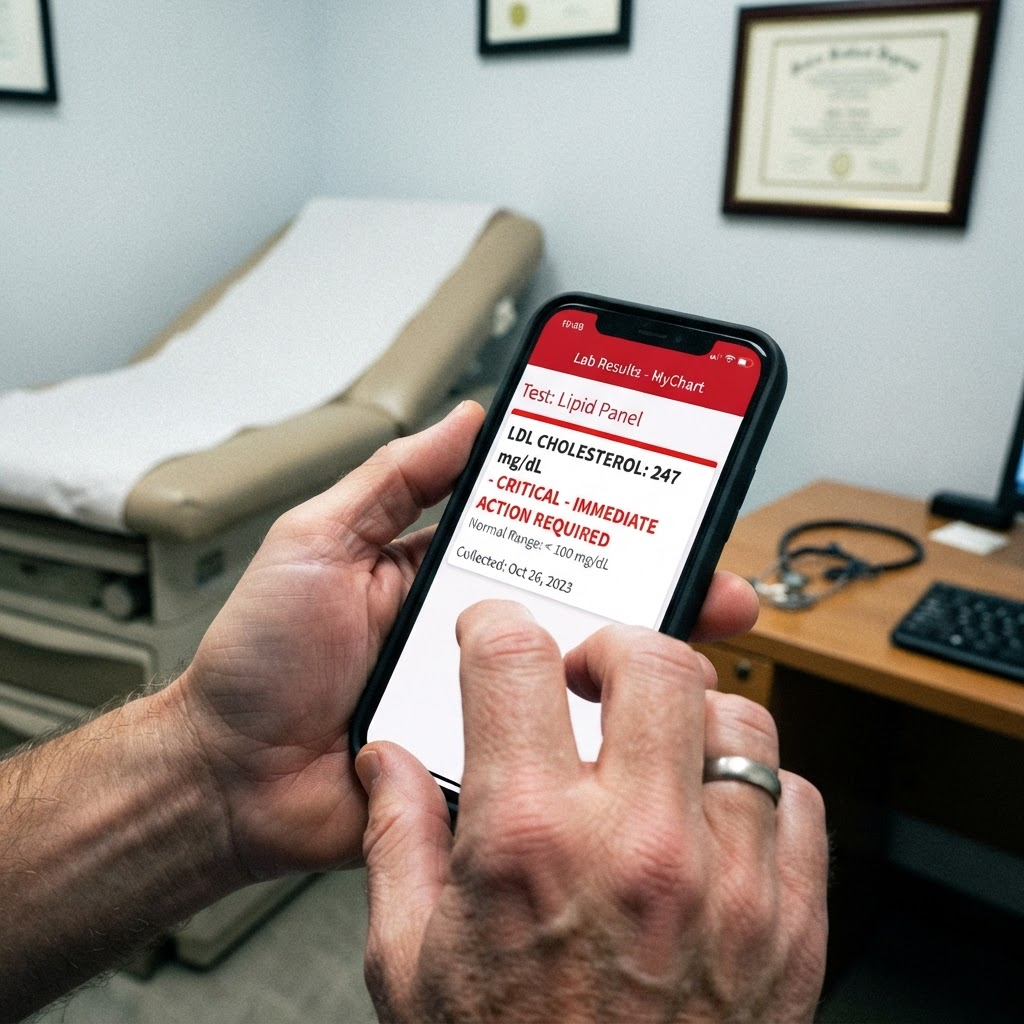
Ran for 2 days, from July 14 to July 16, 2026, the last day Crush saw it.
Run by Smith Sawyer on Facebook. Crush is not the advertiser and does not verify its claims. See this ad in Meta's Ad Library(opens in a new tab)
Want an ad like this for your product?
Crush makes new ad images for your product from this ad: your logo, your product photo, your offer.
Trials from $19.95 USD, then $79.95 USD a month. Cancel anytime.
About this ad
- Meta Ad Library ID
- 1012967474817777
- Platforms
- Facebook, Instagram, Messenger and Threads
- Relaunches
- 0
Ad text
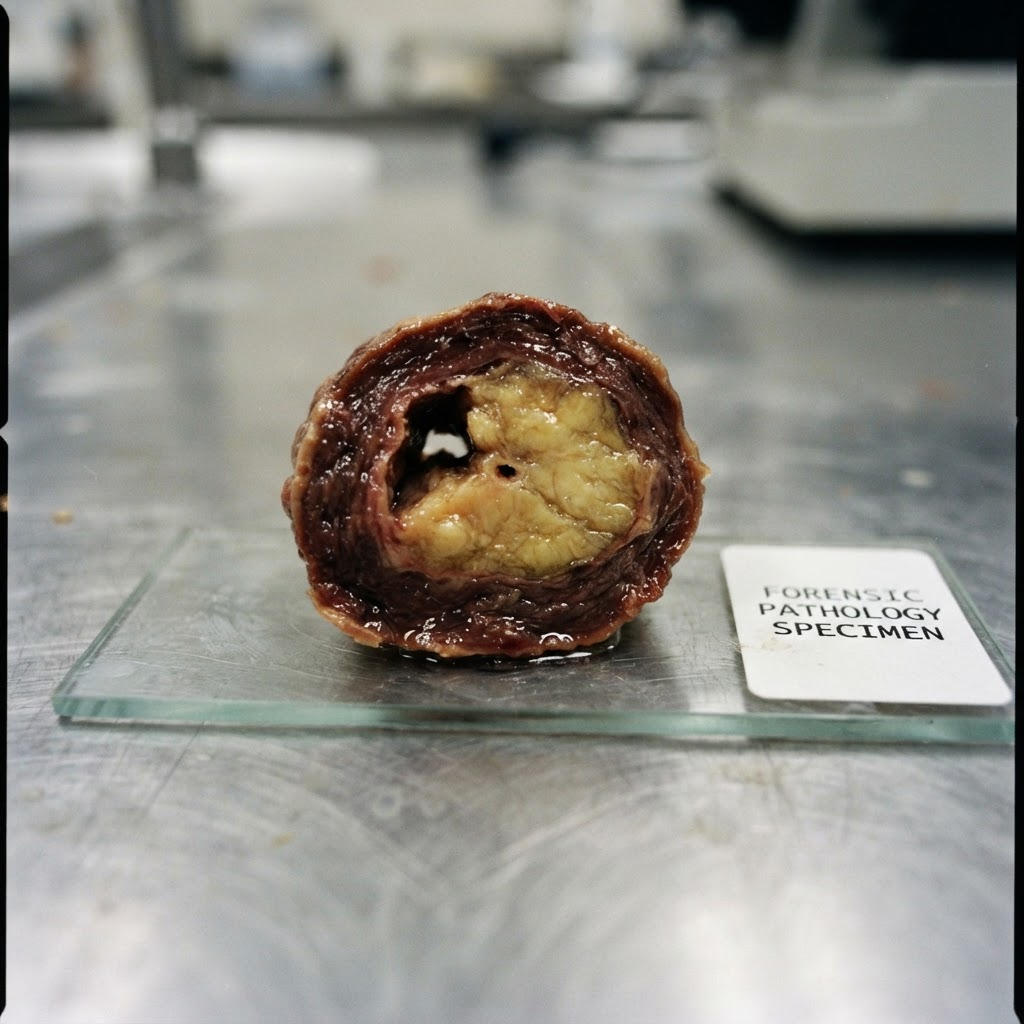
My wife died of a heart attack. She was fine at breakfast on Sunday morning. She walked into the emergency room in Aurora on a Wednesday afternoon. She didn't come home. She died at Rush Copley Medical Center on November 8th at 4:22 PM. She was 63 years old. I'm writing this from her side of the couch in our living room. I haven't slept in our bed since the funeral. I can't bring myself to walk past her nightstand, to the statin bottle that is still sitting there. I don't know when I'll move it. Her Lipitor is still on the nightstand. The lid is still off the way she left it that Wednesday morning. My son came over last week and asked if he could put it away. I told him no. I need to tell you what happened to Margaret. Because I'm reading the comments in the cholesterol forums and I'm seeing them. "My LDL is 138, I'm fine." "I eat oatmeal every day, my heart is healthy." "That's a smoker's problem." "By the time it matters, they'll have a pill for it." That's what I was saying eight years ago. Before Margaret's calcium score came back at 340. Before the second stent. Before the ambulance. If you're over 45, or your LDL has been sliding the wrong way, or your doctor has told you to "cut more fat and come back in a year," please read this entire thing. I know it's long. I know you're scrolling. I know you have things to do. Eight months ago I would have given anything, everything, for someone to tell me what I'm about to tell you. Margaret was told her cholesterol was high eleven years ago. She did everything right. She took her Lipitor every morning at 7 AM. Never missed a day, not once in eleven years. She cut butter out of the house. She swapped whole milk for skim. She switched to low-fat yogurt with the little fruit at the bottom. She ate oatmeal every single morning of her adult life for the last decade. She had a bowl of Cheerios most nights before bed instead of dessert. I used to tease her about that oatmeal. Now I'm the one eating it. She got her lipid panels every six months. She went to every appointment. She read the pamphlets the cardiologist gave her. She was the one reminding ME to take my blood pressure pill before bed. The slide started slow. Year one after diagnosis, her LDL was 168. The cardiologist said "this is manageable, just keep doing what you're doing." Year three it was 154. Year five, 149. Margaret would call me from the parking lot after every appointment and tell me the number, and I'd say "that's not too bad, honey, that's almost the same as last time." Year six it was 158. Year eight it was 162. The cardiologist added ezetimibe on top of the statin. Then he started talking about a PCSK9 injectable. Then he ordered a coronary calcium scan. I didn't know what a calcium score was. Margaret did. She'd been reading. "It means they take pictures of my heart, Smith. To see if there's already plaque in there. Even with the numbers coming down some, they want to look." I sat in the car for a long time after she told me that. She had the scan that spring. The number came back at 340. Anything over 300 is considered high risk for a cardiac event. I went to the follow-up with her. I sat in the chair next to her while the cardiologist explained what the calcium meant. Where the plaques were. How they'd already been forming for years, probably decades, while her LDL number on paper looked "not too bad." Margaret listened without interrupting. The cardiologist explained the risk. He explained the injectable. He explained the second statin dose. She looked at him while he explained it. He looked back at her. She didn't say anything. I saw the look. She had her first stent placed that October. Chest tightness on the elliptical at the Y. She almost brushed it off. I made her call the doctor. They did the angiogram. Two arteries with significant blockage. One stent went in that afternoon. The other, they said, they'd watch. I drove her to every cardiac rehab session for twelve weeks after that. I learned things about heart disease I never wanted to know. I learned that a stent is a metal cage that props the artery open where the plaque narrowed it. I learned that the plaque itself is still there, on both sides of the cage, waiting. I learned that a stent doesn't fix the disease. It fixes one spot in one artery on one day. The disease keeps working everywhere else. I learned that when a plaque ruptures, it's not the plaque itself that kills you. It's the clot that forms on top of it, in seconds, that seals off the artery. And a clot can form on a plaque you didn't even know you had, in an artery your cardiologist has never imaged, on a Wednesday afternoon while you're standing in your own kitchen making toast. The first warning came in the third year of the stent. Her stress test result changed. A section of her heart wasn't lighting up the way it had the year before. The cardiologist called me in the family area to talk. When the cardiologist calls you into the family area, the situation has changed. He was very calm. He told me the next few months would be an adjustment. That the disease was progressing quietly. That we needed to watch for chest pain, watch for shortness of breath, watch for anything that felt wrong. Then he came back a week later, after they'd reviewed the imaging in the team meeting. He sat down across from me in the same room and he said he wanted to make sure I understood the full picture. "There is no cure for atherosclerosis, Smith. Once the plaque is in the artery wall, it's in the wall. We can slow it. We can stabilize it with medication. We cannot remove it. What we have to offer Margaret is aggressive risk management, stents where we can reach them, and the hope that no plaque she has, in the arteries we haven't imaged, ruptures at the wrong moment." I sat with that for a long time. I nodded. I thanked him. I went and sat with Margaret while she waited for her ride down. I didn't tell her what the doctor had said. Not that day. Not most days after. She knew the facts. I think she'd known them longer than I had. I didn't see the point of saying them out loud. I sat in the cardiac rehab waiting room with four other husbands and three other wives. We learned each other's names. We learned each other's spouses' names. Ron's wife Denise had been in rehab for three years. Terry's wife Carla had a triple bypass six months in. Jim's husband Paul had two stents and a defibrillator. Over those years, Ron's wife died. Terry's wife had another surgery. Jim's husband got a heart transplant and moved to Texas. Margaret kept going. Year one after the stent she lost fifteen pounds on purpose. She was determined to shrink the risk. Year three, she had a small event on a plane and got escorted off in Phoenix by paramedics. Just a scare, they said. She flew home two days later and I picked her up at Midway holding a bouquet like it was a first date. She cried in the parking garage. Year four, sometime in the summer, she had a good stretch. A really good stretch. She wanted to plant a garden. She made me sit out in the yard with her and dig the beds. She laughed when I hit a rock with the shovel and almost fell over. I thought maybe we were turning a corner. We weren't. By the fall her LDL was climbing again on the second statin, and her cardiologist added the PCSK9 injectable. Year five. October. I went to my own annual physical. Routine bloodwork. I'd been ignoring my own numbers because Margaret's were what mattered. My doctor came in with the printout and said "Smith, your LDL is 158. Your ApoB is 118. Your triglycerides are 189." I sat there for a minute. Then I said: "Don't tell Margaret." He looked at me. He nodded. He wrote me a script for a low-dose statin and said "come back in six months." Come back in six months. I didn't tell Margaret. I couldn't. She was already carrying the weight of her own heart. She didn't need to know the same thing was starting in mine. I went home and made her dinner and watched her take her Lipitor at 7 PM and didn't say a word. Ten months later, Margaret was dead. November 8th. Wednesday afternoon. In the kitchen. That morning she made oatmeal the way she always did. Steel-cut oats with a spoon of ground flax and half a banana on top. She'd had that same breakfast almost every morning for a decade. She said her back felt tight when she sat down at the table. She rubbed it and said "I probably tweaked something reaching for the pan." I left for the hardware store at 10 AM. I was buying a bag of ice-melt for the front step. I got the call at 11:47. It was our neighbor across the street. She'd seen Margaret standing on the front lawn in her robe, one hand on the mailbox, gray in the face. She'd called 911 before she'd even walked over. The back step is still icy. I never spread the salt. I still haven't. I drove to Rush Copley in 23 minutes. It usually took 30. When I got there the ER doctor met me at the front of the department. She was very kind. She told me Margaret had presented with a massive anterior wall myocardial infarction. That a plaque in her left anterior descending artery, the one they call the widowmaker, had ruptured. That a clot had formed on top of it. That they'd worked on her for 41 minutes. 41 minutes. I sat in the family room and I counted every minute. The cardiologist came in around 5 PM. The same one who had treated Margaret for six years. The same one who had sat across from me in the family area room three and a half years earlier and told me there was no cure. I knew before he opened his mouth. He sat down across from me and he said "I am so sorry, Smith. We did everything we could." I walked back to the truck at 6 PM. I sat in the driver's seat in the hospital parking lot and I didn't move for an hour. I watched the other husbands and wives come and go through the sliding doors. I watched Ron, whose wife Denise had been gone for two years, walk past my truck and put a hand on the hood without looking at me. He had his own appointment that day. He was the patient now. When I finally got home, Margaret's oatmeal bowl was still on the kitchen counter. Half eaten. The spoon was still in the bowl. Her Lipitor bottle was next to it with the lid off. She'd taken her morning dose about an hour before her chest started hurting. I didn't touch the bowl. I didn't touch the bottle. They're still there. The funeral was a week later. My brother came in from Iowa. My son brought the grandkids. Two of the cardiac rehab wives came. Ron came. After everyone left, I sat in Margaret's spot on the couch and I looked at the Lipitor on the nightstand and I tried to understand how a woman who took her medication every single morning at 7 AM for eleven straight years and swapped every stick of butter in the house for canola oil could end up dead on her front lawn at the age of 63. The medications and stents over six years came to about $34,000 out of pocket after insurance. Not including the co-pays. Not including the injectable, which was $600 a month before the manufacturer coupon. And every day I open my phone and read the comments on the cholesterol articles. "My numbers are fine, I eat oatmeal." "I gave up butter years ago, I'm good." "That's a genetic thing, doesn't run in my family." "If it got bad I'd just get a statin." And I know, I KNOW, some of them will end up where Margaret ended up. Not from bad luck. Not from a rare gene. In a doctor's office hearing "your LDL is 158, cut more fat." In a kitchen at 8 AM eating oatmeal and thinking they've done their part. And some of them will end up where I am now. On the couch. With a bottle on the nightstand that belonged to a woman who isn't here anymore. I couldn't just sit in this house and watch it happen. I had to tell you my LDL isn't a hypothetical. It's me. My number was 158 the day I got that call from the neighbor. By the time we'd buried Margaret it was 164. Three months later it was 171 even on the statin. If I do nothing, I'll be where Margaret is in 8 to 12 years. Maybe less. So I started researching. Not because I wanted to. Because if Margaret died for nothing, if I can't help even one person, including myself, then I can't live with that. I spent weeks reading. NIH data. Cardiology journals I barely understood. Everything I could find on atherosclerosis and what actually stops a plaque from forming in the first place. The numbers don't look like cancer. The headlines don't lead with heart disease. But heart disease still kills more Americans than every cancer combined. Half of the people who die from a heart attack had "normal" cholesterol numbers on their last check. But here is the number no one leads with: The first symptom of coronary artery disease is a heart attack in nearly half the cases. Not chest pain the week before. Not a warning ache. The heart attack itself. And when it happens, one in three people die before they reach a hospital. That's what killed Margaret. Not her cholesterol. Her plaque. Built up over decades in an artery no doctor had ever imaged, ruptured on a Wednesday morning while she was standing at her own stove. Margaret was not unlucky. She was in a disease where the trajectory bends toward plaque no matter what number appears on your lipid panel, and the system manages the number without stopping the plaque. I read about other people in Margaret's cohort. The five women in her cardiac rehab class who started the same year Margaret started. Three were dead before her. Two had bypass surgery. The pattern was always the same. A plaque somewhere the imaging hadn't caught, that ruptured when nobody expected it to. What the cardiologist had told me in that family area room was exactly right, and I confirmed it in every journal article I read: There is no cure for atherosclerosis. Not a partial cure, not a slow one. No cure. Once a plaque is in your artery wall, it does not leave. Statins can shrink it a little. Lifestyle can slow new plaque. But nothing removes the plaque that is already there. And the plaque you don't know about is the one that kills you. Once you have significant coronary disease, what medicine has to offer is medication, stents when they can reach them, and the hope that nothing ruptures. And I kept reading one thing over and over, in study after study, paper after paper: It's not the LDL number that kills you. It's how long that LDL sits against your artery wall, and what happens to it while it's sitting there. Every person with any circulating LDL has a window. Years, sometimes decades. In that window, your body is supposed to keep the blood moving fast enough and clean enough that LDL particles don't have time to slip into the artery wall, get stuck, and oxidize. If your body manages that, you can live your whole life with a "borderline" number and never form a plaque. If it doesn't, if the blood moves slower, if the LDL lingers, if it starts to oxidize against the vessel wall, you form plaque. And by the time your calcium score is 340, you're shopping for a stent. That's what happened to Margaret. Her medication was supposed to be enough. It wasn't. Not because she was unhealthy. Because the medication addressed the number on the paper, not the traffic inside the artery. And no doctor was going to fix that with another prescription. Because the prescriptions we have manage the number. They don't fix the flow. So I started asking a different question. Not "how do you lower cholesterol?" "How do you actually stop LDL from lingering in the artery wall long enough to form plaque?" The first thing I did was go through Margaret's drawer. I'd been avoiding it. The bedside drawer where she kept her supplements and her reading glasses and the cards from her sister. I opened it one Saturday morning three weeks after the funeral and I sat on the edge of the bed and went through every bottle. Red yeast rice. A jar of "Heart Support Complex" from the health food store on Route 59. Fish oil capsules the size of horse pills. CoQ10. A $45 Amazon bottle called "Cholesterol Guard" with a picture of a healthy-looking heart on the label. She'd been taking these. Every day. For years. She'd believed they were helping her. They didn't. I took the red yeast rice bottle in my hand and I read the label. It was basically a low-dose statin in a supplement wrapper. She was already on a real statin. She was doubling up on the same mechanism without knowing it, and it did nothing to change what was actually happening inside her arteries. I picked up the "Heart Support Complex." I read the ingredients. Hawthorn. Garlic powder. A little niacin. Nothing at a clinical dose. Nothing that addressed the flow through her arteries. Just a handful of tired herbs with a heart drawn on the front. The fish oil, there is some evidence it helps triglycerides and some evidence it doesn't. Margaret's triglycerides had never been the problem. Her LDL had. Fish oil was the wrong target. The CoQ10 actually has some evidence behind it. It supports the cells lining the blood vessels. But she was taking it alone, without anything working on the sludge in the blood itself. The $45 Amazon blend, I read the back. Eight ingredients at sub-clinical doses with a marketing label on the front. It was designed to sell to people like Margaret. People who were scared and wanted to do something and didn't have the training to read the back of the bottle. I sat on the edge of the bed with my wife's supplements in my lap and I cried in a way I hadn't cried at the funeral. Because she had been TRYING. Every morning. With the oatmeal and the flax seeds and the Lipitor at 7 AM and these bottles that did nothing for what was actually killing her. She'd been throwing pebbles at a river. And I was furious. Because why is there an entire cholesterol supplement industry and not a single one of them addresses what actually forms the plaque? They all just repackage low-dose statins or throw fish oil at a problem that requires stopping LDL from getting stuck against the artery wall in the first place. It's like patching the roof after the ceiling's already caved in. That's when I found something different. I want to be honest with you. I am not a forum guy. Margaret was the one who joined groups. I'd never posted a single thing online in my life before November. I'm 64 years old. I ran a small electrical contracting business until I sold it at 62. I read the paper. I watch the news. I don't post anywhere. But at 3 AM, four weeks after Margaret died, I couldn't sleep. I was sitting on the couch with my laptop and I'd typed "what actually stops plaque from forming" into Google. I clicked something. It took me to a cardiovascular support forum. I want to be honest with you. I'm not a forum guy. Margaret was the one who joined groups. I'd never read a single online forum in my life before that night. I scrolled. And a man had posted something that stopped me cold. He said he was a retired cardiac ICU nurse, 71 years old, diagnosed with high LDL fifteen years ago, calcium score 220 at diagnosis. Fifteen years later his calcium score was 231. Almost no progression. Someone asked how. He said: "I take a nattokinase softgel every morning. Started two months after my calcium scan. My cardiologist tracks me every year and my plaque has been stable for over a decade. Four of the guys in my support group do the same thing." I almost closed the laptop. Nattokinase? That sounded like something they sell at the co-op next to the kimchi. Because I know natto. My son-in-law is Japanese and served it to me at his parents' house one Christmas. It was fine. It was food. It wasn't medicine. In what world does a fermented soybean enzyme stop plaque? But I couldn't stop thinking about it. Because that man's calcium score had held for fifteen years. Margaret's plaque had gone from a calcium score of 0 to 340 in about seven. What was the difference? So I kept reading. And what I found made me so angry I had to put the laptop down and sit in the dark for a long time. Nattokinase is an enzyme extracted from natto, a traditional Japanese fermented soybean food. It has been studied for decades. It's used clinically in Japan. And the thing it does in your body is something I understood immediately once I read it. Your blood carries a protein called fibrin. Fibrin is what makes blood clot. It's supposed to. If you cut yourself, fibrin is what stops the bleeding. But as you age, your body starts making more fibrin than it clears. The blood gets thicker. Sludgier. It moves more slowly through your arteries, especially in the small branches and turns where LDL is most likely to slip into the wall. That slow, sludgy flow is exactly what gives LDL time to infiltrate the artery lining and oxidize. Oxidized LDL is what forms plaque. Not LDL sitting quietly in a fast-moving stream. LDL that has been sitting still against the wall long enough to be attacked by free radicals and pulled into the tissue. Nattokinase does one specific thing. It breaks down excess fibrin. It thins the blood in a targeted way, at the root of the sludge. The blood flows faster. The LDL doesn't linger. Less LDL slips into the wall. Less LDL oxidizes. Less plaque forms. So at the same time your statin is lowering the number of LDL particles in your blood, nattokinase is making sure the ones that ARE there don't have time to sit against your artery wall and oxidize. Two different problems. Two different tools. But here's the thing I didn't know. Here's the thing that made me put the laptop down: By the time you're 50, your fibrin levels are already elevated compared to when you were 30. The clotting side of your blood is winning the argument with the clot-clearing side. The blood is thicker every year. And nothing your doctor prescribed for cholesterol, not the statin, not the ezetimibe, not the PCSK9 injectable, does anything about the fibrin. Your body still HAS a clot-clearing system. But it's outmatched. Like a broom against a snowstorm. Margaret's fibrin was elevated. Her Lipitor lowered her LDL number, some. But it didn't change the traffic. Her LDL, even the smaller amount that remained, kept getting stuck in the slow, sludgy blood around her artery walls. The plaque kept forming. The calcium score kept climbing. Until one Wednesday morning at the stove, one of those plaques ruptured. And nobody told us. I put the laptop down when I read that. I was shaking. Not from cold. From anger. From grief. From the realization that my wife's own body could have been supported in a way it never was, by an enzyme that costs less than a cup of coffee, and nobody, not her cardiologist, not the dietician, not the cardiac rehab team, ever mentioned it. But here's why I'm telling you about a specific formula and not just nattokinase in general. Because I also learned that most nattokinase on Amazon is basically junk. Regular nattokinase capsules, the kind on the shelves, are dry powder in a gelatin capsule. The enzyme is delicate. Once it hits your stomach acid without protection, most of it breaks down before it ever reaches your bloodstream. The dosing is all over the map too. Some bottles say "nattokinase" without a strength listed. Some list FU, which stands for fibrin units, but at low doses like 2000 FU. The studies that actually show a difference in blood viscosity use higher doses. You could take three capsules of the cheap stuff and not get the amount that shows up in the research. The one I ended up trusting is different. It's a softgel, not a dry capsule. The nattokinase is suspended in MCT oil, which protects the enzyme from stomach acid and helps it absorb better than dry powder. The strength is 4000 FU per softgel, which is at the higher end of what the research uses. And it comes with a few supporting ingredients that made sense to me once I understood them. CoQ10 for the cells lining the blood vessels. Turmeric and ginger and olive extract for inflammation. Bromelain and white willow for additional flow support. The brand is Vesterial. The product is called Nattokinase Complex. And I was skeptical. God, I was skeptical. After Margaret's drawer. After the red yeast rice. After the "Heart Support Complex." After the $45 Amazon blend. After watching my wife take supplements for eight years that didn't slow her plaque by a single point. I was not about to trust something new just because some man on a forum at 3 AM said it worked for him. So I called Margaret's cardiologist. The one who had treated her for six years. The one who walked into the family room and told me he was sorry. I told him what I'd found. I asked him straight: "Is this real? Is this safe? Or am I grasping at straws because I can't accept that Margaret is gone?" He was quiet for a long time. Then he said: "Smith, the data on nattokinase and blood viscosity is some of the most interesting we have in the natural-enzyme literature. The fibrin-lowering pathway is well documented. There are no contraindications at normal doses for most patients, though anyone on blood thinners should talk to their doctor. The enzyme has been used clinically in Japan for a long time." Then he paused. "If Margaret's flow had been supported earlier, if the LDL that was in her blood hadn't had as much time to sit against the wall, there's a real possibility her plaque might have progressed more slowly. She might have had more years." I had to hang up the phone. I sat on the edge of Margaret's side of the bed, the side I hadn't sat on since November, and I cried harder than I cried at the funeral. Because a doctor, Margaret's own doctor, just told me that my wife might have had more years if her flow had been supported. If anyone had told us. If we'd just known. I ordered Vesterial Nattokinase Complex that night. When the pouch came, I sat at the kitchen counter and I opened it and I held a single softgel in my palm. It was amber and small and smelled faintly like the MCT oil it was suspended in. Then I took the first one. I took it in the morning with a glass of water, the way you take a fish oil. I took it standing at the counter where Margaret used to make her oatmeal. I pulled her Lipitor bottle out of the drawer that morning. I set my own bottle next to hers. I didn't move hers. She was going to stay there. But mine was going to be there too, next to hers, every morning I was still here. That weekend, my daughter brought the grandkids over. It was the first time she'd been back to the house since the funeral, the first time I'd seen the kids since we buried Margaret. Ellie is four. Jacob is seven. They came through the door and Ellie looked around the living room and then she looked up at me and she said: "Grandpa, can Grandma see us from where she is?" I had to walk out of the kitchen. I stood in the garage for a few minutes with my hands on the workbench until I could breathe. That was when I understood what I was doing. Not just for my labs. For them. I've been taking a Vesterial Nattokinase Complex softgel every morning ever since. I want to tell you what happened to my own numbers. Because I'm 64 years old and my LDL was climbing before Margaret was even cold. I'm not a hypothetical either. Week 2. I didn't feel anything. I wasn't expecting to. I just kept taking it. Week 6. I did notice one thing. My hands and feet stopped going cold at night the way they had for the last two years. I told my son and he said "Dad, that's your circulation." Week 12. I had my quarterly bloodwork. Twelve weeks after I started. I was still on the low-dose statin my doctor had put me on after Margaret died. I sat in the parking lot of the lab the morning of the draw the way Margaret used to sit in the parking lot after her cardiology appointments. I was scared. I was scared the number was going to be 175 or 180. The results came back the next afternoon. LDL: 128. The previous quarter it had been 171. A drop of 43 points. ApoB dropped from 118 to 89. Triglycerides dropped from 189 to 141. I sat at the kitchen table and I looked at the printout and I read it three times. When I went in for my appointment, my doctor looked at the panel and he looked up at me and he said: "Smith, this is a significant move. Whatever you're doing on top of the statin, keep doing it." I didn't tell him what. I'm sure that's wrong of me. I'm sure I should have. But I wasn't ready to have a conversation about nattokinase with a doctor who hadn't been able to save Margaret. Not yet. I've been on Vesterial Nattokinase Complex for six months now. My most recent labs, last week, LDL 119. ApoB 84. Triglycerides 128. I'm scheduled for another calcium scan in the spring. My cardiologist thinks the number won't move much, which is exactly what we want. Stability, at my age with my numbers, is a win. I've told everyone I know. My brother in Iowa, he's 67, on a statin for twelve years, still has an LDL of 145, he asked his cardiologist about nattokinase and the cardiologist said "monitor with your regular labs, but yes, it's safe for you." He's been on it for four months. He emailed me last week and said: "Smith, my LDL dropped from 145 to 111. First real move in a decade." My neighbor Ron, his wife died of a heart attack two years before Margaret. Two widowers on the same street, same disease. He started it the day I told him. He grabbed my shoulder last month and said: "It's the first time since Denise died that I feel like I'm doing something other than waiting." My son, he's 38, he's a math teacher, he's the one whose kids ask if Grandma can see them. His last LDL was 148. He said "Dad, I'm not waiting until my numbers get bad. I'm starting now." He's been on it for three months. His LDL is 116. My daughter-in-law's father, he's 61, has had two stents already, said "Smith, my cardiologist actually asked me what I changed. My LDL dropped 38 points and my last stress test was normal for the first time in three years." Margaret's sister in Michigan, 66, hasn't had a heart attack yet but her calcium score last year was 180 and climbing. She ordered it the week of the funeral. She called me last month and said: "Smith, I think Margaret would want me to tell you my numbers are moving the right way for the first time in five years." I had to put the phone down when she said that. I'm not a doctor. I'm not a scientist. I'm not selling anything. I'm a 64-year-old widower sitting on a couch across from a nightstand with a Lipitor bottle on it that belonged to a woman who isn't here anymore. Here's what I know because I lived it: There is no cure for atherosclerosis. Once a plaque is in the wall, it stays in the wall. Medications slow progression. They do not remove existing plaque. Stents fix one spot on one day. They do not fix the disease. The first symptom of coronary artery disease is a heart attack in nearly half of cases. One in three people who have a heart attack die before they reach the hospital. Margaret was almost one of them. She made it to the ER. She didn't make it home. People are getting diagnosed right now with "borderline" LDL and being told to cut butter and come back in a year. Their doctors are watching the number and not watching the flow. The plaque forms while they eat oatmeal and swap whole milk for skim. There is no medication that reverses atherosclerosis. Statins lower the number of LDL particles. They do not stop the ones that are still there from lingering in the artery wall long enough to oxidize. And it turns out the low-fat era, the one Margaret and I grew up in, the one that told us to swap butter for margarine and eggs for cereal, was based on the wrong villain. When they took the fat out of the food, they replaced it with sugar. The low-fat yogurt has more sugar than a candy bar. The whole-grain cereal spikes blood sugar the same as a slice of white bread. Sugar drives inflammation. Inflammation raises fibrin. Fibrin thickens the blood. Thick blood gives LDL time to stick. LDL that sticks gets oxidized. Oxidized LDL forms plaque. Margaret ate the low-fat food for twenty-five years. She thought she was doing the right thing. Her cardiologist thought she was doing the right thing. Nobody told her the food itself was part of the problem. Your artery walls' ability to stay clear is a function of how fast your blood moves and how quickly LDL is cleared away from them. And there's an enzyme, studied for decades, used clinically in Japan, that supports both. I wish someone had told me this before her second stent. Before the calcium score of 340. Before the ambulance and the sliding doors and the family room. I can't go back. Margaret can't come back. Her Lipitor is on the nightstand and it's going to stay there. But you can still go forward. The article that explains what I just told you, the research, the mechanism, what nattokinase actually does to your blood and why the softgel form in MCT oil is different from the dry capsules on Amazon, it's on the Vesterial site. It's the reason I found their formula. It's the reason my own labs have moved for the first time in three years. I want you to read it. Not for me. For whoever you'd leave behind. Or for yourself, if you're the one whose numbers keep sliding no matter what you do. It's also backed by a 60-day money-back guarantee. Take it for two months, get your next round of labs, and if you don't see a difference, you get every dollar back. 👇 https://vesterial.com/products/nattokinase-complex Margaret used to say: "The best time to plant a tree is twenty years ago. The second-best time is today." Today is today. Smith Sawyer, age 64 Elgin, IL P.S. Her Lipitor is still on the nightstand. I've been home for eight months and I still can't move it. Every morning I walk past it and for one second I forget. For one second I think she's about to come out of the bathroom and take her morning dose. She's not. If putting this on the internet saves one person, just one, then at least something good came from the worst thing that's ever happened to me. P.P.S. Six years of statins, ezetimibe, a PCSK9 injectable, two stents, and cardiac rehab, and it still wasn't enough. And a small softgel that costs less than a cup of coffee, an enzyme her own cardiologist said might have slowed her plaque. Please. Don't end up here. P.P.P.S. I'm not paid by Vesterial. I don't get a penny from this. If you know a man over 45 whose LDL keeps sliding no matter what he does, or a wife whose husband thinks he's fine because he eats oatmeal, please share this with them. That's all I'm asking.
Where the ad sends people
vesterial.com
My wife ate low fat food..
Learn more: vesterial.com(opens in a new tab)