
Inactive· since May 27, 2026
- 3
- days it ran
- 0
- relaunches
- 29
- EU reach
Ad copy
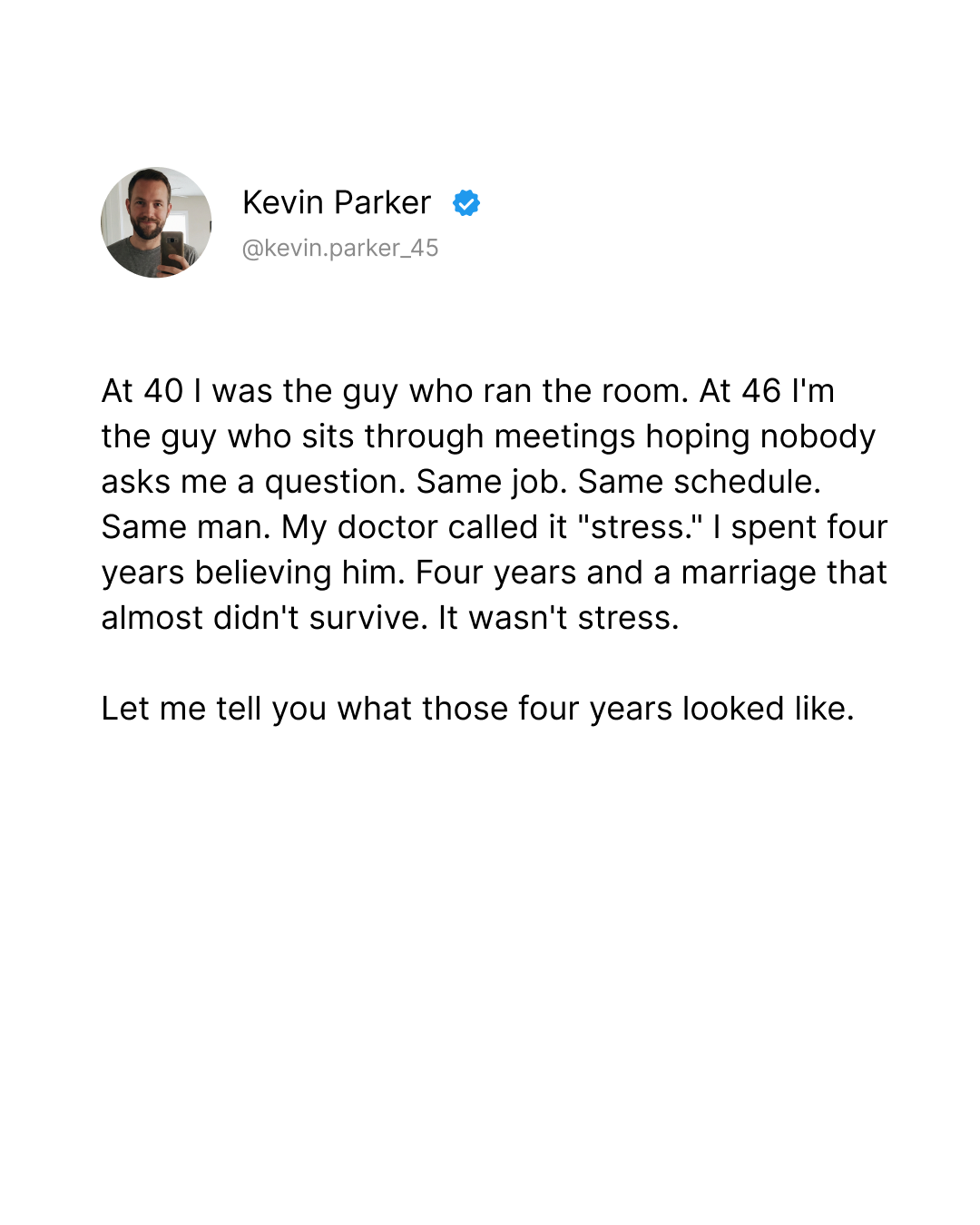
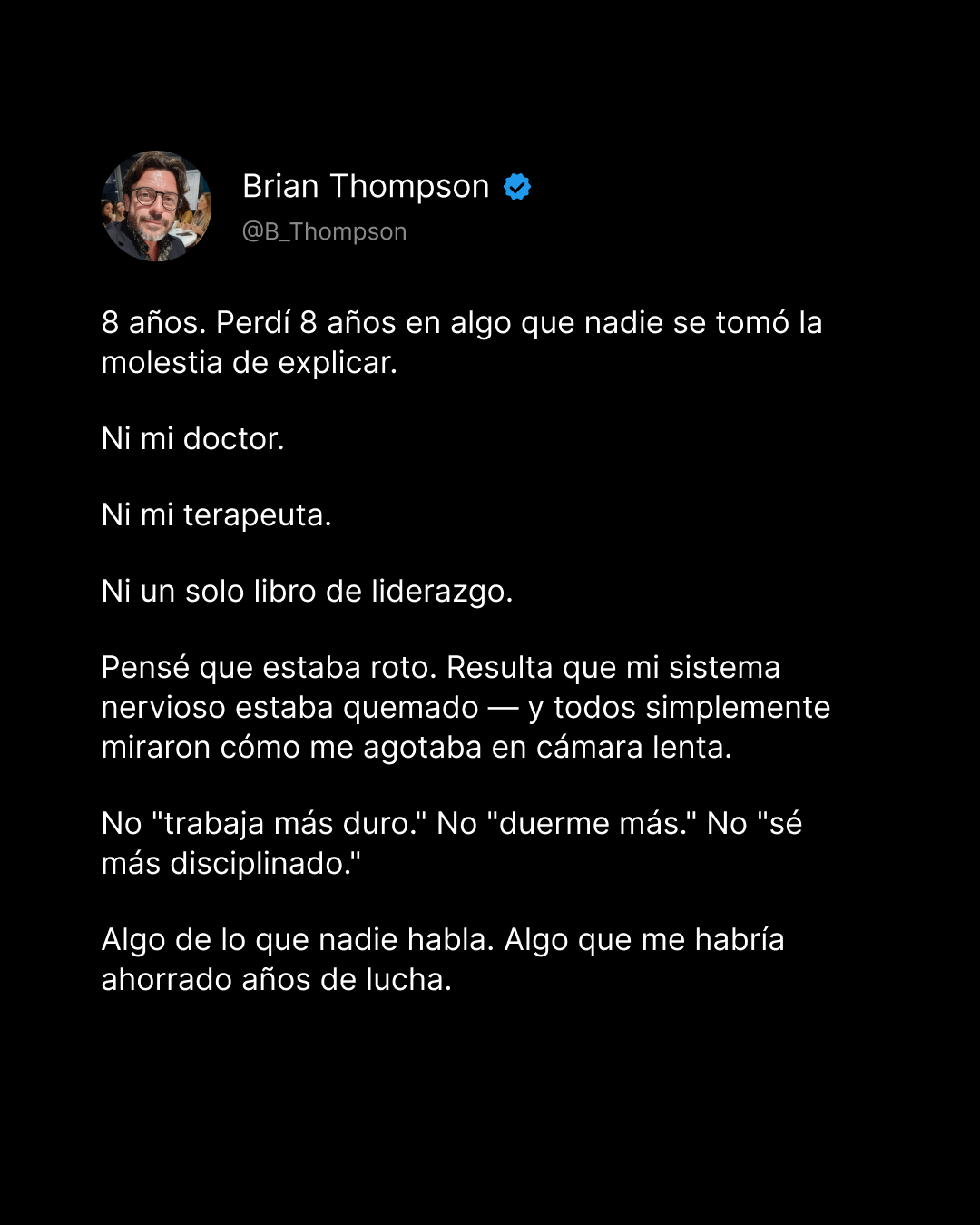
My dad was 185 pounds for as long as I can remember. Athletic. Consistent. The kind of man who'd been the same size since his thirties and never thought about it. Then somewhere around 46 that changed. By 50 he was 225. Same man. Same house. Same life. His doctor said it was age. Metabolism slowing down. Normal for men over 45. Three years believing that. Three years and 40 pounds. It wasn't age. Let me tell you what I watched. Because watching your father shrink inside a bigger body is something you don't have words for until you're trying to write it down. At 46, I noticed the shirts. He'd always worn fitted shirts — not tight, just fitted. Then they started being looser. I thought he'd just changed his style. I didn't say anything. At 47, he stopped coming to the beach on family holidays. He'd find a reason to stay back. "I'll watch the bags." "I'm not feeling the sun today." I was 24. I understood without asking. I just pretended I didn't. At 48, my mom mentioned the gym. He'd been going five mornings a week for a year. "He never misses," she said. "But nothing's changing." I heard something in her voice. Not frustration. Something quieter than that. Worry. I started paying attention. I watched him at the dinner table. He'd serve himself last. Take less than everyone. Eat slowly like he was counting something in his head. He'd been doing intermittent fasting for six months. He'd cut alcohol completely. He was doing everything right by every measure anyone had given him. He was gaining weight. I watched him at Christmas that year. We were taking photos — the whole family, outside, cold, everyone laughing. He kept positioning himself at the back. Behind my uncle. Behind me. I'm six feet tall. He was hiding behind his own son. I pretended not to notice. I've thought about that since. I wish I hadn't pretended. His doctor's response every six months: "Keep at it. These things take time." Once: "Have you tried cutting carbs?" He'd been cutting carbs for a year. He didn't say that to the doctor. He just nodded and came home and didn't talk about it. I want to say something about what this does to a man of his generation. My dad grew up believing that if you worked hard enough, you got results. That's the deal. You put in the effort, the effort pays off. He'd built a career on that. Built a family on that. And now his body was breaking the deal. He was putting in the effort — more effort than most men his age — and getting nothing back. Worse than nothing. He was going backwards. And he couldn't say that. Men his age don't say that. So he just went quiet about it. Stopped mentioning the gym. Stopped talking about food. Started wearing the same three shirts that fit and stopped buying new ones. I watched my father stop taking up space. Not dramatically. Slowly. The way a tide goes out — you don't notice until you look and the water is gone. Then one evening — I was visiting for the weekend, sitting at the kitchen table after dinner — my mom showed me something on her phone. A post she'd found in a health group. She'd been wanting to show someone and hadn't known how. A woman had written about her husband. Same story. Same 40 pounds. Same years of trying. She wrote: "His doctor kept saying metabolism. It wasn't metabolism. It was his nervous system. His body had been in survival mode for years and nobody had asked about that." I read the whole thing. She explained: chronic stress — the kind that accumulates over decades of high-responsibility work, of being the provider, of holding everything together without ever fully recovering — keeps cortisol elevated. And elevated cortisol tells the body to store fat. Especially around the middle. Especially in men over 40. The body isn't broken. It's doing exactly what a body in survival mode is supposed to do. Holding reserves. Protecting against a threat that isn't there anymore but that the nervous system never got the message about. Every diet he tried was working against a body in the wrong state. Every workout was adding more cortisol to a system already flooded with it. He wasn't failing. He was fighting his own nervous system without knowing it. I looked at my mom. "Does he know about this?" "I don't know how to show him," she said. I took her phone. I went to the living room. My dad was watching the news. I sat down next to him. "Dad. Can I show you something?" He looked at me. I handed him the phone. He read it slowly. The way he reads things he's taking seriously. Then he read it again. He handed the phone back. We sat there for a minute. "The survival mode thing," he said. "The body holding on." "Yeah." "That would explain why nothing works." "Yeah." "Because it's not about the food." "It's not about the food." He was quiet for a long time. The news was still on. Neither of us was watching it. "I thought I was just — " he stopped. Started again. "I thought this was just what happened. Getting older. I thought I'd just have to accept it." "You don't have to accept it." The post mentioned Liven. Not a diet. Not a workout program. Something that works with the nervous system — to bring the body out of survival mode so it stops holding on. He took the quiz that night. Sitting on the couch, glasses on, phone held at arm's length the way he holds it when he's reading something carefully. The quiz asked about the state he'd been running in. About waking up already tired. About the weight of carrying responsibility for years without putting it down. About the gap between how much he was doing and how little he was recovering. He clicked yes to almost everything. He didn't say anything for a while after. Then: "Nobody's ever asked me these questions." He downloaded Liven that night. Here's what I watched happen. From the son's seat. Visiting every few weeks, watching for the things my mom would text me about in between. Week 2: My mom texted. "He slept through the night. He told me at breakfast. He seemed almost confused by it." Week 3: I called him on a Sunday. He answered on the second ring — he usually lets it go to three or four. "How are you?" I said. "Actually good," he said. Not the "fine" that means not fine. Actually good. Week 4: I visited. We went for a walk — something he'd stopped suggesting. Halfway around the block he said "I'm down six pounds." Just like that. No build-up. "Six pounds. Without changing what I eat. Just the app." I didn't say anything. I just kept walking. "I know," he said. "I know." Week 6: Christmas photos. We were outside, cold, everyone laughing. I watched my dad position himself for the photo. He stood next to me. Not behind me. Next to me. I put my arm around him. He put his arm around me. I didn't say anything about it. Neither did he. Week 10: My mom called me. Not texted — called. "Twenty pounds," she said. "He got out the jeans from four years ago this morning. They fit. He stood in the kitchen and he didn't say anything. He just stood there. And then he went and made breakfast." I knew what that meant. I didn't need her to explain. It's been five months. He's down 28 pounds. He's buying fitted shirts again. He came to the beach at Easter — actually came, not "watched the bags." He stood in the water with his grandkids and I watched him from the shore and I thought: there he is. There's the man who was always there, just stuck in something nobody thought to ask about. Last month he said something I've been thinking about since. "I spent four years thinking my body had given up on me. Turns out it was just waiting for me to stop fighting it and start working with it." Four years. Because every doctor saw a man in his late forties and said "metabolism" without asking one single question about what state his nervous system had been running in. It wasn't age. It wasn't metabolism. It was a body in survival mode. And once he addressed that — five minutes a day, not a diet, not another gym program — his body finally let go. If your dad has been gaining weight no matter what he does... If he's gone quiet about it the way men go quiet about things that hurt... If he's stopped taking up space in photos, in rooms, in his own life... It might not be what his doctor is telling him. His body might be stuck in something nobody has thought to ask about. Show him this. Or show it to the person who loves him. Sometimes that's how it starts. Liven has a quiz. A few minutes. Free. Link is below. 💙 P.S. He texted me last week. Just a photo. Him at the beach. Standing in the water. No message. He didn't need to write anything.
THIS IS what you need to do
LEARN MORELike this ad? Make it yours.
Crush rebuilds this exact creative around your product — your brand, your colors, your offer — in about a minute.