
Inactive· since May 26, 2026
- 32
- days it ran
- 2
- relaunches
Ad copy
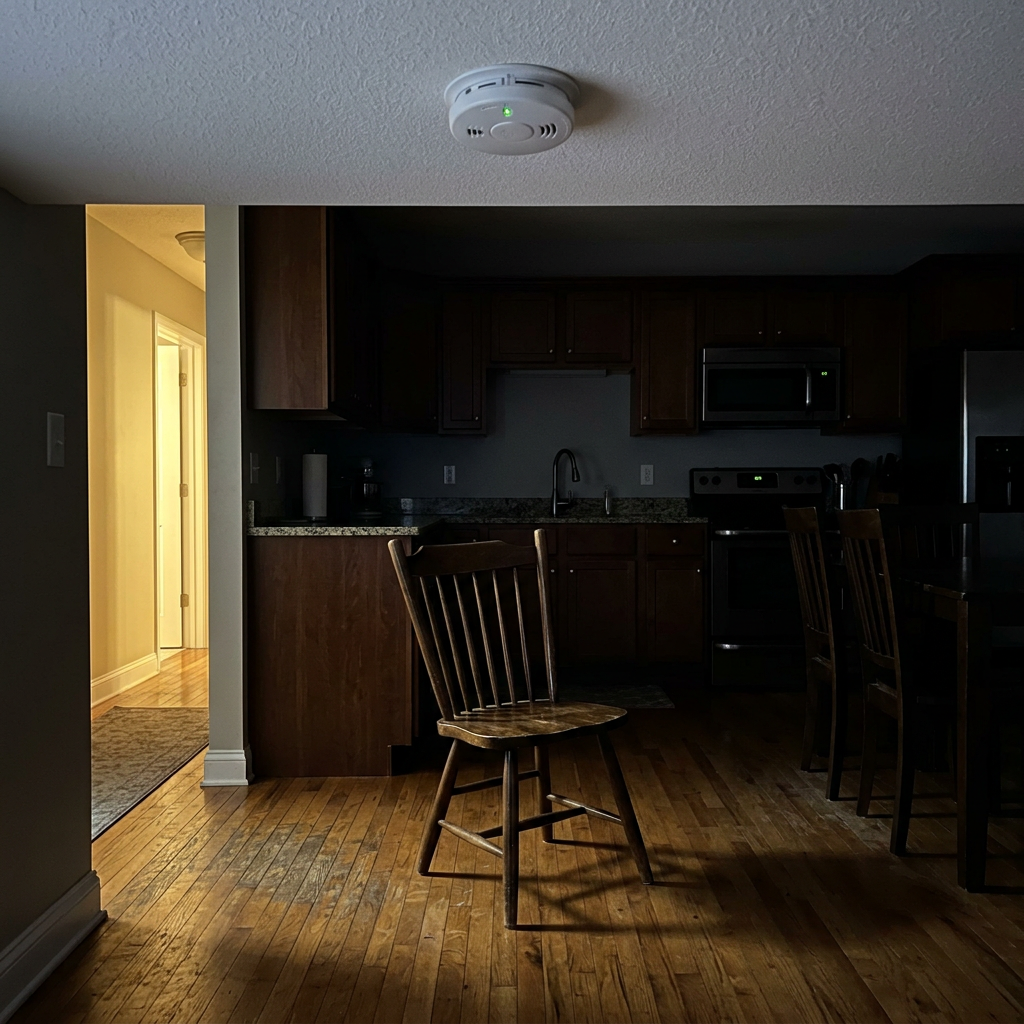
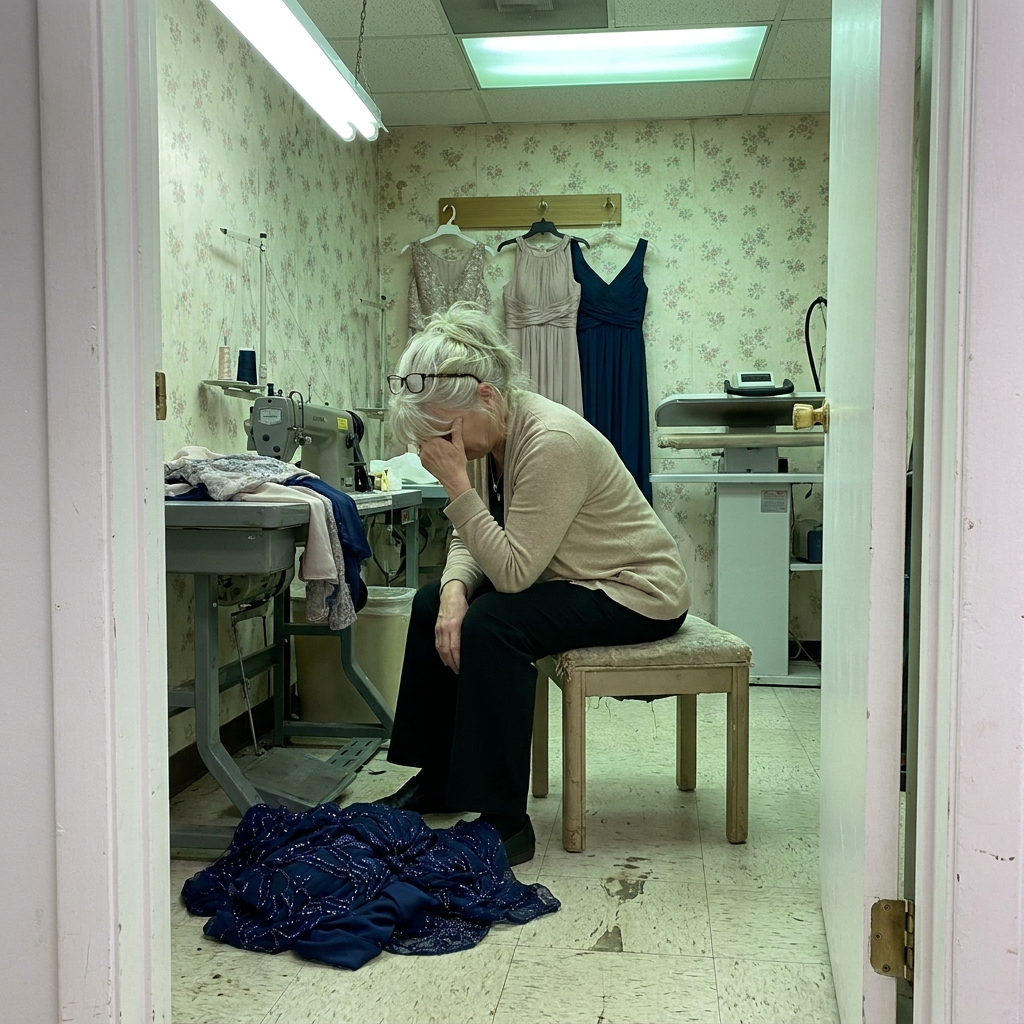
I found a note in my dead aunt's kitchen drawer last March that I have not been able to stop thinking about. It was a regular kitchen drawer. The kind with the silverware tray on top and the random stuff underneath. Twist ties. A measuring tape. Two AA batteries that might or might not still work. A church bulletin from Easter 1998. The kind of drawer every aunt in America has. We were running her estate sale. Me and my mom and my sister Carol. My aunt Joyce had passed in February at 81 and the family had decided the cleanest thing to do was sell what we could and split the rest. So there I was on a Saturday in Davenport, Iowa, in the kitchen of the little blue house Joyce had lived in for 47 years, pulling drawers and trying to decide what was a $2 item and what was a $50 item. I pulled the drawer out to dump it. And tucked underneath the silverware tray, folded in half and held down with a refrigerator magnet shaped like a sunflower, was a piece of yellow legal pad paper. I almost threw it away. I'm so glad I didn't. I unfolded it standing right there in the kitchen with my mother in the living room arguing with my sister about a credenza, and I read what my aunt Joyce had written to herself in her shaky cursive. It said: Started feeling like me again. Day 41. That's it. That was the whole note. One line of handwriting on a piece of yellow legal pad. Taped to the back of the paper with a strip of Scotch tape was an empty supplement bottle. I'm Howard. I'm 57. I live in Davenport with my wife Patty in a split-level we bought in 2003 when our youngest was still in elementary school. I'm a regional sales manager for a company that sells equipment to commercial kitchens. I drive a lot. I sit in a lot of cars and a lot of motel rooms and a lot of breakfast meetings at Hampton Inns. And I have been tired for 7 years. Not the kind of tired you fix with a weekend. Not the kind of tired you fix with a vacation. The kind of tired where you wake up at 6:30 in the morning after 8 solid hours and you look at the ceiling and you think, well, I guess that's going to have to be enough, because that's all I've got. I'd been like that since 2018. I'd told a doctor about it twice. Both times I got the same speech. You're in your fifties. You travel for work. You should lose 15 pounds. You should sleep more. You should drink less coffee. You should drink more water. You should exercise. I exercised. I drank more water. I lost the 15 pounds. I lost 17 pounds, actually, the first time, and 12 pounds the second time when I gained the first 15 back plus 4 more. It didn't matter. I was still tired. I was tired at the airport in Cedar Rapids at 5:40 in the morning. I was tired in the Hampton Inn breakfast room in Omaha at 7:15. I was tired sitting across from a client at a Cracker Barrel in Council Bluffs at 11:30, drinking my third coffee, trying to nod at the right places while the man across from me told me about his daughter's volleyball season. Patty noticed it the most. She said one night in 2023, about a year before Joyce passed, that she felt like she was married to someone who wasn't actually in the room. That was a hard thing to hear. She didn't say it mean. She said it the way Patty says things, which is gently and after a lot of thought, when she's already tried 4 other ways to bring it up. She said, "Howard, you come home and you sit on the couch and your body is here but you're not. I don't know where you are. I don't think you know where you are either." I told her I'd try to be more present. I meant it. But you can't be present when the lights inside are dim. You can show up. You can be in the room. You can make the right faces and answer the right questions. But there's a difference between showing up and being there, and Patty knew the difference, and so did I. I want to back up and tell you about Joyce, because Joyce is the whole reason this story exists. My aunt Joyce was my mother's older sister. She never married. She worked as a bookkeeper at a John Deere dealership in Moline for 38 years. She lived in the same little blue house on East 38th Street the entire time I knew her. She had two cats and a Pontiac Bonneville she drove until it died and then a Buick Century she drove until she did. Joyce was the family weirdo. I say that with love. She read 4 books a week. She watched Wheel of Fortune at 6:30 every night. She had opinions about herbal tea and was the only person I knew who composted before composting was a thing. She used to send my kids articles she'd clipped out of the newspaper about things she thought they should know. She was also tired. For most of my adult life, Joyce was tired. She'd come to Christmas at our house and sit in the corner armchair and fall asleep at 8 in the evening with a glass of wine still in her hand. My mom used to joke about it. "There goes Joyce, lights out at 8." For the last 4 years of her life she barely left her house. She stopped coming to the holidays. She'd call my mom and say her energy wasn't right today. She'd say it that way, "my energy." She'd say her head felt like there were curtains in it. My mom and Carol thought she was depressed. I thought she was depressed too. That's how we'd all decided to explain Joyce. Joyce is depressed. Joyce always has been. Joyce is the family member you check on and worry about and eventually stop expecting things from, because Joyce is just Joyce, and Joyce is tired, and Joyce reads her books and watches her Wheel of Fortune and that's the size of her life. Then she died. And we went to clean out her house. And I found that note. I want to slow down here because the moment I read that note, something happened to me that I didn't have words for at the time. I was standing in Joyce's kitchen holding a yellow piece of paper that said Started feeling like me again. Day 41 and an empty bottle taped to the back of it, and I realized 2 things at once. The first was that Joyce had not been depressed at the end. Or at least, not only depressed. Joyce had been suffering from something she'd figured out before any of us had even noticed. The second was that whatever she'd figured out, it had worked. She'd written Day 41. That meant she'd been counting. That meant whatever she was taking, she was on it long enough to feel something change. She had felt like her again. Joyce. The actual Joyce. The Joyce who read 4 books a week and clipped articles and had opinions about composting. I turned the bottle over in my hand. It was a small dark green bottle with a clean white label. The label said Alevia Amla. I had never heard of it. I put the note in my pocket. I put the empty bottle in my pocket. I finished the drawer. I did not tell my mother or my sister. I don't know why. Maybe because Joyce had hidden it. Maybe because the note had been written to herself, not to us. Maybe because in that moment it felt private. Like she'd left a message in a bottle, and I'd been the one to pull it out of the drawer, and it was on me to listen to it first before I decided what to do with it. When I got home Sunday night, I sat at our kitchen table after Patty had gone to bed. I opened my laptop. I typed Alevia Amla into the search bar. What I learned over the next 3 nights changed my whole life. I'm not a science guy. I sell ovens to truck stops. But I'm a guy who can read, and what I read started to make sense of a thing I'd never been able to make sense of, which was why nothing the doctors said had ever made me feel better. Here's what I learned, in plain English. Every cell in my body needs energy to do its job. That energy gets made in the mitochondria. The mitochondria are tiny little engines inside every cell. They take in what you eat, what you breathe, and they turn it into the cellular energy that lets the cell function. When the mitochondria are running well, you feel like you. You wake up rested. You think clearly. Your skin has color. Your mood holds steady. Your body does what you ask it to do. When the mitochondria slow down, all of that starts to dim. It doesn't fail. It dims. Like a dimmer switch in a dining room, the kind you slide down inch by inch and you don't notice the room is darker until somebody walks in from outside and says, "Why are you sitting in the dark?" That's what had happened to me. The mitochondria had been turning down for years. Decades, probably. Decades of stress and travel and gas station food and motel sleep and skipped breakfasts and forgotten waters and chronic tension I'd never managed to put down. The engines hadn't broken. They'd just been getting tired. And every year I'd been adjusting to slightly less light, and every year I'd been blaming it on my age, my weight, my coffee, my job. The doctors had been treating my behavior. They'd been telling me to fix what I was doing. None of them had ever said to me, "Howard, your engine room is running on fumes. You don't need more discipline. You need to support your mitochondria." That sentence didn't exist for me until I read it on a website at 1 in the morning in my own kitchen 3 weeks after my aunt's funeral. Amla, as I learned, is a small green fruit that grows mostly in India. It has been used in traditional medicine for thousands of years and is sometimes called Indian gooseberry. The thing modern research has been looking at is what it does to a pathway called AMPK. AMPK is basically your body's switch for waking up the mitochondria. When AMPK is active, your mitochondria get the signal to work harder, work better, work more like they used to when you were younger. That cellular energy starts flowing back to your cells. And because every cell in your body uses that energy, you start to feel it everywhere. The skin. The mood. The mornings. The mental fog. The weight that hasn't responded. The fatigue that sleep doesn't fix. Amla helps support AMPK. That's the simple version. The other thing Amla has is one of the highest antioxidant profiles ever measured in a food. The kind of damage that wore the engines down in the first place, the oxidative stress from decades of stress and food and air and just being alive, gets cooled off. The engines stop getting beaten up and start getting protected. I read all of this and I sat at my kitchen table and I cried. Not because of what it said. Because of what it meant about Joyce. Joyce had figured this out. Joyce, in her little blue house on East 38th Street, with her two cats and her Wheel of Fortune and her articles from the newspaper, had figured out what had been wrong with her, and she'd done something about it, and on Day 41 she had picked up a yellow legal pad and written down that she was finally feeling like herself again. And then she'd taped the empty bottle to the back of the note. And then she'd put it in her kitchen drawer where she'd see it when she opened it for a fork or a magnet or a measuring tape, so she would remember. And none of us had known. None of us had known she'd been figuring it out. None of us had known she'd been counting. None of us had known she was Joyce again at the end. I ordered a bottle that night. 1:14 in the morning. I remember the time because Patty came down to use the bathroom and saw me at the table with my laptop open and the empty bottle sitting next to it. She said, "What is that?" I said, "Aunt Joyce's." She said, "Okay," and went back to bed. She knew. Wives know. The bottle came on Wednesday in a small brown box from a U.S. address. 30 servings. Two capsules a day. I took two with my coffee on a Thursday morning at the Hampton Inn in Bettendorf. I was on the road for a client meeting in Moline. I want to be honest with you about what the next few weeks looked like, because the temptation in this kind of story is to say "and the next morning I woke up and the curtains lifted" and I don't want to do that to you. Week one, nothing. Week two, I was eating breakfast in Council Bluffs at a Hampton Inn and I realized I'd just finished my eggs and I hadn't reached for the coffee yet. I always reached for the coffee first. Always. Before I'd even taste the eggs. That morning I'd just eaten breakfast like a person, and the coffee was sitting there cooling off, and I hadn't even noticed. Patty noticed week three. She didn't say anything. She just stopped saying the things she'd been saying. The "where are you" stopped. The "you seem far away" stopped. She didn't say "you seem closer" because that's not how Patty talks. She just stopped saying I was far. Week four, I drove home from Sioux City on a Friday night, 4 hours in the car, and I walked into my own kitchen at 8:45 in the evening and Patty was at the counter making a salad. And I walked up behind her and put my hands on her shoulders and said, "Hey." And she turned around and looked at me and her eyes got wet. She said, "There you are." She said it like she'd been waiting at the door for me for 7 years. That was 11 months ago. I'm still on Alevia Amla. I take two every morning with my coffee. I keep an extra bottle in the kitchen drawer where Joyce kept hers, with the yellow note from her drawer folded next to it. Patty started taking it 5 months ago because she said if it was good enough to bring me home it was good enough for her. I'm not going to make you a list of promises. I don't know your kitchen drawer. I don't know what's been dim for you. I don't know how many years it's been or what you've already tried or what you've already given up on. But I know what it's like to read a one-line note from a dead aunt and realize she'd figured out something that everybody in your family had given up on her for, and she'd done it alone, and she'd been counting the days because she wanted to remember. And I know what it's like to walk into your own kitchen 11 months later and hear your wife say there you are. If you've been tired for a long time and nobody can tell you why, if your mornings have been dim and your nights have been dim and the room you're sitting in feels darker than the rooms other people are sitting in, please understand that there is a possibility nobody has explained to you yet. It might not be your discipline. It might not be your age. It might not be your weight. It might be that the engines that power every cell in your body have been turning down for years, and nobody ever told you they could be supported, and there is a small green berry that has been studied for what it does to that exact pathway. Alevia Amla is a small company. They ship from the U.S. The capsules are made here too. You take two a day with your coffee or your eggs and that's the whole regimen. There's no powder, no protocol, no tea you have to make, no morning ritual you have to learn. It comes with a 90-day money-back guarantee. You send the bottle back, you get your money back. No paperwork, no arguing, no hoops. You have 3 months to find out whether your engines come back on. If they don't, you've lost nothing but the cost of the postage. I lost 7 years before Joyce's note pulled me out of the drawer. If I could have those 7 years back, I'd pay a lot more than what a bottle of Alevia Amla costs. But I can't have those years back. What I can have is the years ahead. And so can you. 👉 alevia.com/amla/33 P.S. I want to say one more thing about Joyce. The night I found her note, I called my mother and I read it to her over the phone. My mother got quiet on the other end. She said, "Howard, you know what she said to me on the phone the last time we talked?" I said no. She said, "She said, 'Pam, I finally feel like myself again.' I thought she was talking about her mood. I told her I was glad she'd been seeing somebody." My mother started crying. She said, "She wasn't seeing anybody, was she." I said no, Mom. I don't think she was. I think she'd figured something out. And she was trying to tell us. And we didn't hear her. P.P.S. You'll know it's working before anyone else does. The mornings change first. Then the focus. Then the mood. Then the people around you start to look at you a little differently. Patty noticed before I did. The people in your life who have been watching the lights go down will be the ones who notice them come back up. Don't quit at week 2. Week 2 is the engines warming up. Weeks 3 and 4 are when the room starts getting bright again. P.P.P.S. Alevia Amla has that 90-day money-back guarantee I mentioned. Just send the bottle back. Full refund. No arguing. Think about what that says about a company. The doctors who told me to lose 15 pounds didn't offer me a refund when it didn't help. The two doctors who took my copay didn't offer me a refund either. Alevia gives you 3 months to find out, with nothing on the line. That's a different kind of company. P.P.P.P.S. Alevia is small. They sell out. I learned this in October when I tried to reorder for Patty and they were 9 days behind. I keep two bottles in the drawer now, the same drawer where I keep Joyce's note. If something in this story has felt like somebody finally describing what you've been living, don't decide to think about it. Don't decide to look into it later. Order one bottle. Take two with your coffee tomorrow. Find out by Father's Day whether the room can get bright again. P.P.P.P.P.S. Joyce wrote Day 41 on a yellow piece of paper because she wanted to remember. The thing she didn't know is that someone else was going to read it 4 years later and have their whole life change because of it. You never know who's going to find your note. Be Joyce. Start counting. 👉 alevia.com/amla/33
Like this ad? Make it yours.
Crush rebuilds this exact creative around your product — your brand, your colors, your offer — in about a minute.