Veronica Hayes
Veronica Hayes Facebook ad: “If You Have A Dog, Read This”
Ran for 40 days, from June 5 to July 15, 2026, the last day Crush saw it.
Run by Veronica Hayes on Facebook. Crush is not the advertiser and does not verify its claims. See this ad in Meta's Ad Library(opens in a new tab)
Want an ad like this for your product?
Crush makes new ad images for your product from this ad: your logo, your product photo, your offer.
Trials from $19.95 USD, then $79.95 USD a month. Cancel anytime.
About this ad
- Meta Ad Library ID
- 1019800603914658
- Platforms
- Facebook, Instagram, Audience Network, Messenger and Threads
- Relaunches
- 1
Ad text
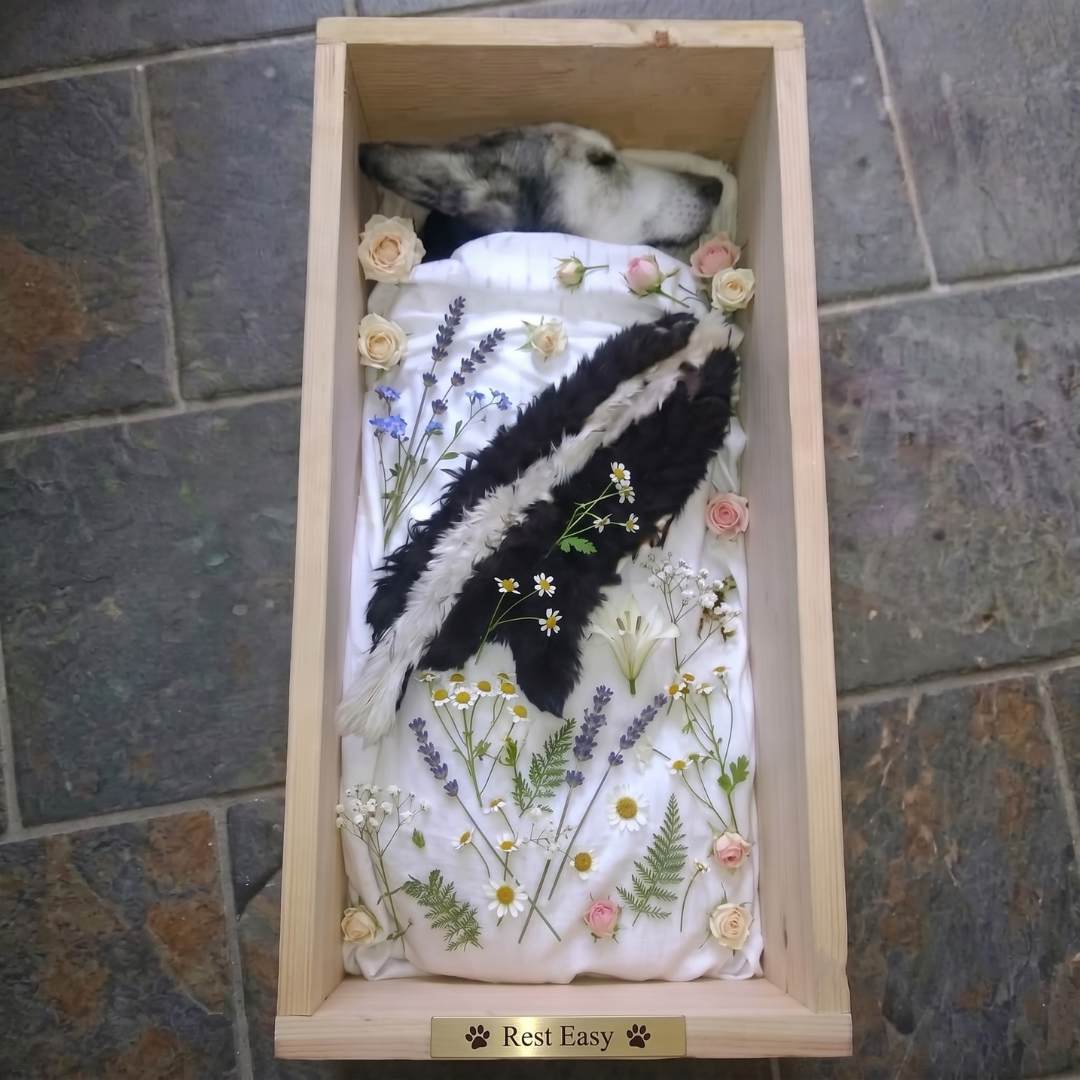
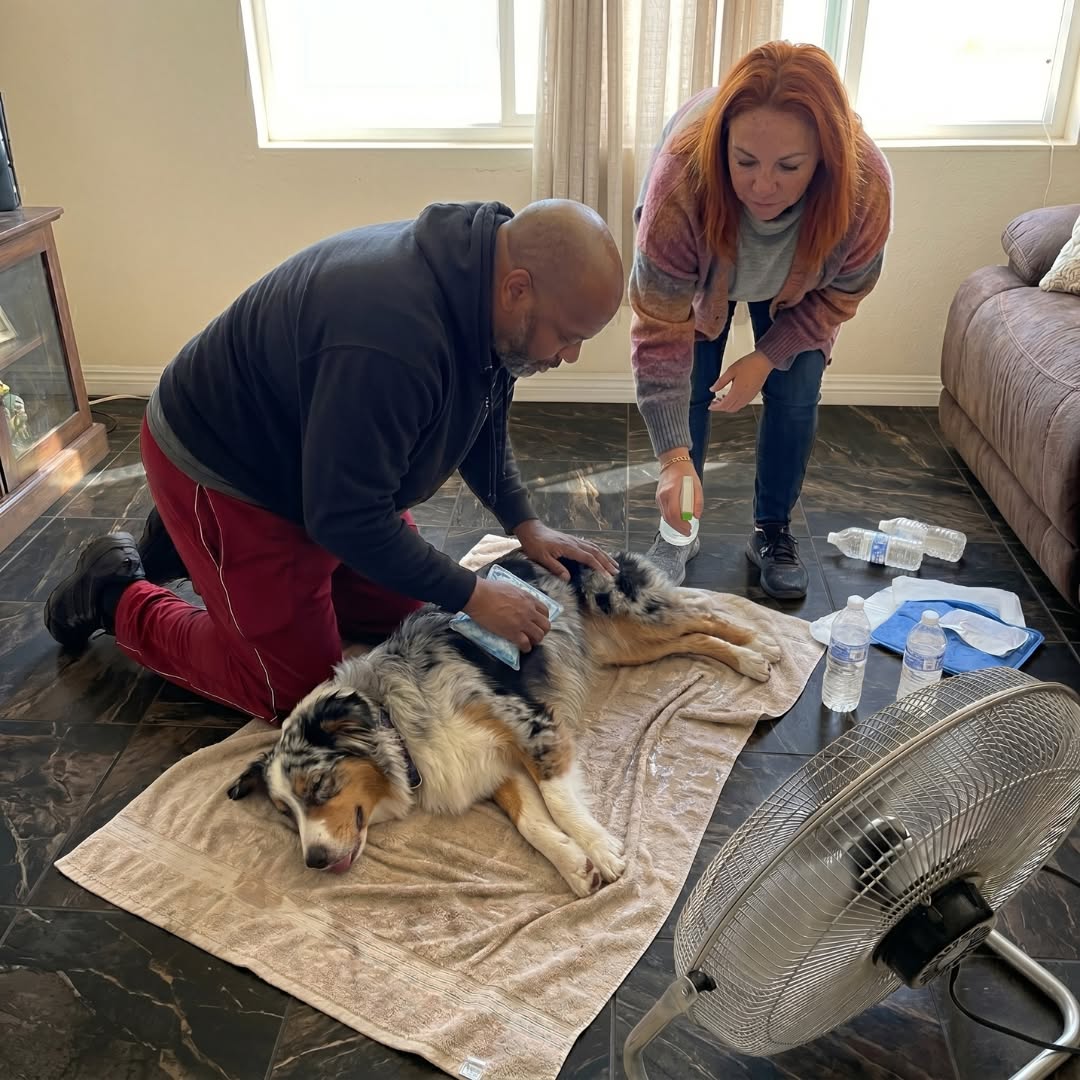
My dog died in an air-conditioned house and the vet said it's happening to dogs across the Southern States RIGHT NOW. Her name was Bailey. She was a six-year-old Aussie mix with one brown eye, one blue eye, and a personality that made everyone at the dog park stop and ask her name. And I need to tell you what happened to her, because the thing that killed her is probably happening to your dog right now. And you have no idea. Just like I had no idea. Bailey was smart. Too smart, honestly. She figured out how to open the pantry door by herself. Knew the sound of my car from three blocks away. Would stare at me until I said the word she was waiting for. She slept next to my side of the bed every night. Not at the foot like most dogs. Right next to me. Close enough that I could hear her breathing. Close enough that when I had a bad dream, I'd reach down and touch her head and fall back asleep. We moved to Austin in April for my husband's job. I remember the real estate agent saying: "Don't worry, all the houses here have great AC." I had no idea what I was signing up for. That first summer, our entire life became a prison. Up at 5:30 AM. Walk Bailey before the pavement could fry her paws. Back inside by 6:45. The rest of the day—sixteen hours—we were trapped in the house. The thermostat stayed at 72°F. My electric bill hit $520 in July. My husband looked at it and didn't say anything. Just set it on the counter and walked away. I told myself it was worth it. Bailey was safe inside. The AC was on. What else could I do? But every afternoon, around 2 PM, I'd find Bailey on the bathroom tile. She'd start on the living room carpet. Then drift to the kitchen tile. Twenty minutes later, the hallway. Then the bathroom. Then back to the kitchen. She'd circle, lie down, pant softly, stay for fifteen minutes, then get up and do it all over again. Not frantically. Not like something was wrong. Just… never settled. And she panted. Every single afternoon. Not the dramatic, emergency kind. Just heavier breathing than made sense for a dog lying still in a 72-degree room. I mentioned it to my neighbor. She has a Husky. She laughed. "Welcome to Texas. All dogs pant here. Just keep the AC cranked and they're fine." So I did. I bought Bailey a second water bowl. Made frozen treats. Added ice to her water every hour. Googled "Australian Shepherd heat tolerance" at midnight and found articles saying they adapt fine as long as they stay indoors during the day. So we stayed indoors. I looked into moving back to Colorado. My husband's contract wasn't up for two more years. We'd just signed a mortgage. We were stuck. And I felt like I'd trapped Bailey in a place that was slowly killing her. The day it happened was a Wednesday in July. 104 degrees outside. I had a doctor's appointment. Ninety minutes, maybe two hours. I set the AC to 70. Filled both water bowls. Kissed her head. Told her I'd be back soon. I got home at 3:15 PM. The house was silent in a way that felt wrong. Bailey always met me at the door. Always. Even if I'd just stepped outside for thirty seconds. I called her name. Nothing. I found her on the kitchen tile. On her side. Breathing fast and shallow. Eyes half-closed. I don't remember getting her into the car. I remember her weight—fifty pounds that felt like nothing and everything. I remember talking to her the whole drive. I remember running every red light. The emergency vet took her immediately. A tech came out nineteen minutes later. "I'm so sorry. She's gone. It was heatstroke." I said the AC was on. I said it was 70 degrees. I said she was only alone for two hours. She nodded. She told me they'd seen six dogs that month. Same thing. Every owner said the same words. The bill was $2,800 for nineteen minutes and a dead dog. I sat in the parking lot for over an hour. Engine running. AC blasting. I remember thinking: the AC was running for Bailey too. The vet called the next day. She said she wanted to explain what happened. That she doesn't usually do this, but she thought I deserved to understand. "Your air conditioning was working perfectly," she said. "The air in your house was 70 degrees. But that's not where Bailey was overheating." She explained it carefully. And I'll never forget it. Dogs run at 101°F internally. Every surface they lie on absorbs that heat. The carpet. The tile. The couch. Within minutes, the surface warms up from their body heat. And once it's absorbed enough, it stops pulling heat away. It just holds it there against their chest and belly. Then she said: "In extreme heat climates like Texas, this happens faster and worse. The ambient temperature is so high that surfaces can't dissipate the heat. They warm up and stay warm. Your AC cools the air above your dog. But it can't cool the floor beneath them. And that's where the problem is." I asked why nobody tells you this. "Because it looks normal," she said. "A dog moving to the tile, panting in an air-conditioned house—it looks like a dog being a dog. Until it's too late." Then she said something that destroyed me: "Think about when you flip your pillow to the cool side at night. You do it because your body heat warmed it up. That's what Bailey was doing. She was flipping the pillow. Except you can't flip a floor. Eventually there's nowhere cool left to go." Every single thing I'd watched for three months suddenly made sense. The moving from spot to spot. The bathroom tile. The panting in a 72-degree room. She wasn't restless. She was trying to survive. And I didn't know. I asked if it would have mattered if I'd set the AC to 65. "No," she said gently. "The air temperature doesn't solve the surface problem. You could set it to 60 and the floor would still warm up from her body heat." I didn't sleep for a week. I joined every Austin dog group. Every hot-climate pet forum. I called three other vets. And I started understanding why everything I'd been doing—everything every dog owner in hot climates does—doesn't actually work. The AC? Cools the air three feet above your dog. Does nothing for the tile they're lying on. Bailey was generating 101 degrees directly into that tile. The AC couldn't touch it. Gel cooling mats? I researched them. They absorb heat for 20-30 minutes, then they're saturated. Just a warm mat with chemical gel inside. And if your dog chews it, you're at the emergency vet for poisoning instead of heatstroke. Wet towels? Warm within minutes. Then they trap heat and moisture like a blanket. Actually worse than the bare floor. Fans? Move warm air around. Don't cool surfaces. Every solution out there either cools the air or absorbs heat until it stops working. None of them address the actual problem: surfaces that absorb your dog's body heat and stop cooling. The vet's words kept repeating in my head: "You need a surface that conducts heat away continuously. One that doesn't reach a saturation point." That's what would have saved Bailey. Two months later, my sister called from Phoenix. Her dog Max, a Golden, was doing the same thing. Panting every afternoon. Moving from carpet to tile to hallway. AC set to 68. She was panicking. I told her everything the vet told me. "So the AC doesn't help?" "It helps the air. Not what he's lying on." She asked what to do. I didn't have an answer yet. I kept researching. Reading studies on thermal conductivity. Talking to people in Arizona, Nevada, Southern California—anyone living in extreme heat with dogs. That's when I found a woman in Tucson posting in a group. She wasn't selling anything. Just sharing what worked. She described the same pattern. The tile-seeking. The afternoon panting. The constant moving. Then: "I got an ice-silk cooling mat three weeks ago. He hasn't left it. The panting stopped completely. I thought I was losing my mind but it's real." Someone asked what brand. PawLabs Cooling Mat. Not gel. Not water. Not something you freeze. A fabric that conducts heat away from the dog's body continuously instead of absorbing it and warming up. I researched the technology. Ice-silk fabric with mineral oxides that react to body temperature. It doesn't absorb heat—it moves heat through the material itself. Like how metal feels cool even in a warm room. It's not colder. It just conducts heat away better than any other surface. If the problem is surfaces that trap heat, the solution is a surface that never stops moving it away. I ordered one that night. Sent one to my sister in Phoenix. When mine arrived, I put it where Bailey used to lie in the living room. I sat next to it and cried for an hour. My sister texted me four days later. "Max hasn't moved from it all day. No panting. I put my hand on it after three hours—still cool. The tile next to it was warm." A week later: "The afternoon panting is completely gone. He settles now. I didn't realize how much I was dreading every afternoon until it stopped." Two weeks later: "I don't feel trapped anymore. I know that sounds dramatic but I was watching him suffer every day and there was nothing I could do. Now there is." She sent a photo. Max sprawled on the mat, sound asleep. Not moving. Not panting. Just settled. The kind of settled Bailey never had in Austin. My sister told me something yesterday I can't stop thinking about. "I thought panting and tile-seeking was just part of living in Phoenix. I thought the AC was all I could do. I didn't know there was something that actually worked." I know that feeling. The AC was never enough. Not in climates like ours. The surface was always the problem. If you live in Texas, Arizona, California, Florida, anywhere in the South where summer means months of 95+ degrees, and your dog seeks tile floors even with AC running— It's not normal. It's not "just what dogs do." It's your dog telling you the surface beneath them isn't working anymore. And that stress compounds. Every afternoon. Every day. Every summer. I can't bring Bailey back. But I can tell you what I learned too late. Here's what I wish someone told me: I spent $2,800 at the emergency vet. For nineteen minutes. For nothing. The PawLabs mat costs less than one emergency visit. Less than a gel mat that stops working and might poison your dog. Less than two months of the extra AC costs I racked up trying to keep Bailey safe. They have a 30-day money-back guarantee. If you put it down and your dog keeps panting, keeps seeking tile, keeps moving—you get every penny back. But if I'm right, you'll wish you'd known sooner. These mats sell out every year before summer peaks. By the time it's 110 degrees and you're watching your dog pant on the kitchen floor, they're gone. Waitlist for weeks. My sister tried to get a second one last August. Sold out for six weeks. Right now they're running their pre-summer sale. Once the real heat hits, prices go up and stock disappears. Max is on his right now. According to my sister's text. Same spot all day. Settled. Comfortable. She said: "I finally don't feel like Phoenix is killing him." The air temperature doesn't matter if the surface can't move heat away. And if you're in a climate where AC runs for months straight and your dog still suffers—you need something that actually works. I'd give anything to have known this in April. You still have time.
Where the ad sends people
pawlab.com
If You Have A Dog, Read This 👆
PawLab
Learn more: originalpawlab.com(opens in a new tab)