Robert Halverson
Robert Halverson Facebook ad: “The Morton's neuroma mistake most podiatrists never check”
Ran for 64 days, from June 6 to August 9, 2026, the last day Crush saw it.
Run by Robert Halverson on Facebook. Crush is not the advertiser and does not verify its claims. See this ad in Meta's Ad Library(opens in a new tab)
Want an ad like this for your product?
Crush makes new ad images for your product from this ad: your logo, your product photo, your offer.
Trials from $19.95 USD, then $79.95 USD a month. Cancel anytime.
About this ad
- Meta Ad Library ID
- 1019804847674641
- Platforms
- Facebook, Instagram, Audience Network, Messenger and Threads
- Relaunches
- 0
Ad text
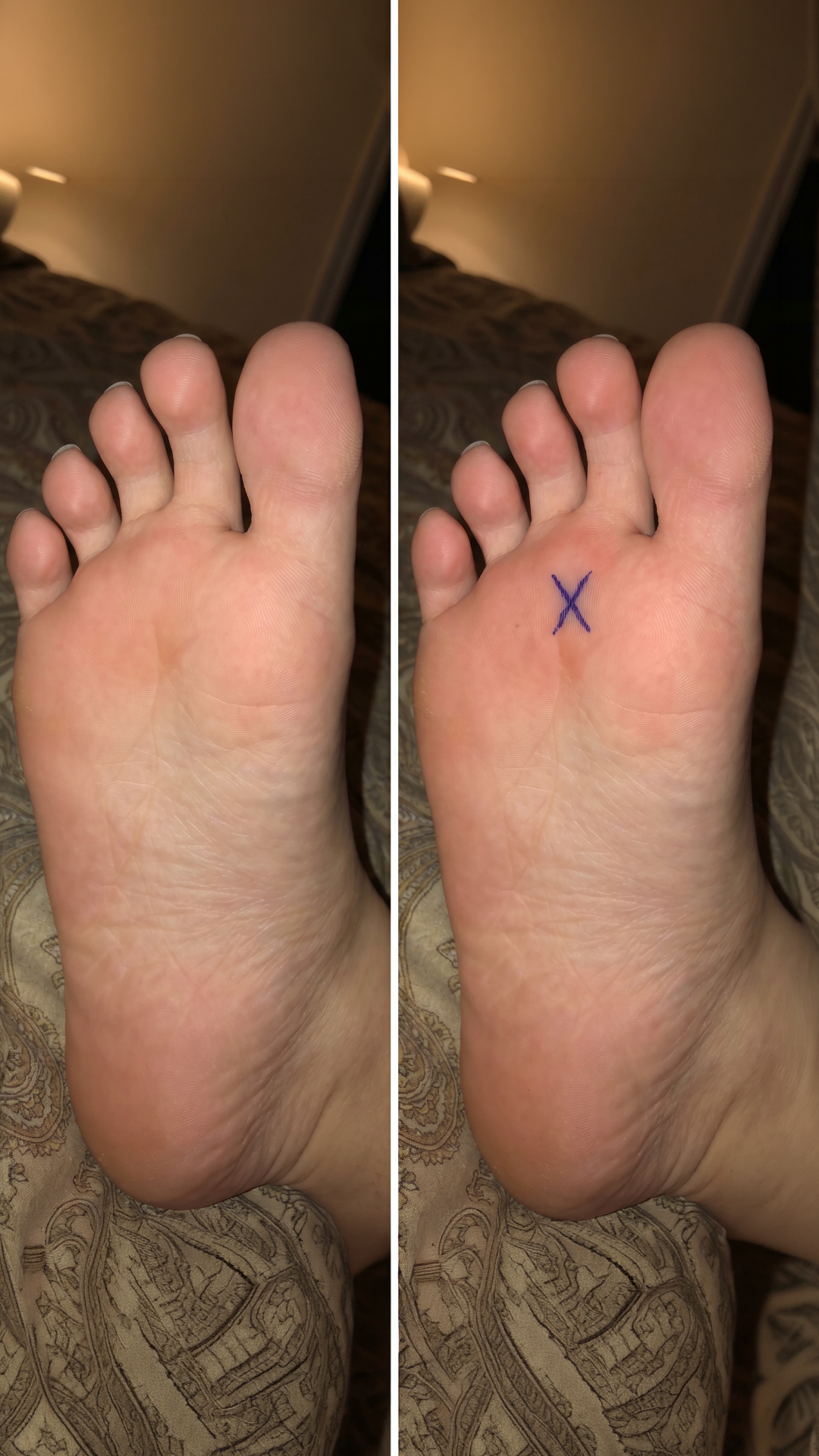
"It's like walking barefoot on rocks that are on fire. That’s the only way I can describe the pain." That's how Marie described it the first time she came into my room. 52, school administrator, on her feet six hours a day. She'd been diagnosed with Morton's neuroma in her right foot about two years earlier. Two cortisone shots. A metatarsal pad. Wide running shoes from her podiatrist. A pair of orthotics that cost more than her stand mixer. The pain still came back. She told me the worst part was unpredictability. Some mornings she'd get a clean walk in and think she was past it. Then a flare would hit by lunch and she'd be limping out of the parking lot at 4pm trying not to wince in front of her staff. "I'm 52," she said. "I'm not supposed to be lying on the couch with my foot up while my husband makes dinner." I've spent the last 7 years as a physical therapy specialist, and the last 5 deep in the barefoot movement. Marie's case is one I see almost every week. People who have done every reasonable thing their podiatrist recommended and are still hurting. People who have started cancelling things. People who have started to wonder if surgery is the only door left. For a long time, I missed the thing that was working against all of them. About 10 months ago I was sitting in my treatment room after a Marie consult. She'd left her shoe and sock on the bench while I worked on her foot, and I picked up the sock to hand it back to her. A nice running sock. Padded heel. Snug fit. The kind of sock a serious walker would buy on purpose. I turned it inside out and looked at the toe end. There was a band of compressed knit running across where the metatarsal heads sit. I stretched the toe box open with both hands. The second I let go, the elastic snapped the whole front of the sock back into a tight tube. That tube was the shape Marie's forefoot was being held in, for 15 hours a day, on top of everything else her body was already doing wrong. We tell Morton's patients to spend $200 on a wide toe box shoe so the metatarsals have room to spread. And then we wrap their forefoot in a sock that pulls them right back together the moment the shoe goes on. That was the moment for me. Here is what is actually happening with Morton's neuroma, in plain language. The nerve that gives sensation to the front of your foot runs between your metatarsal bones, the long bones leading to your toes. When those bones are repeatedly pushed toward each other, the nerve between them gets pinched. The body responds by thickening the tissue around the irritated nerve, the way a callus thickens on a finger that keeps getting rubbed. That thickened tissue is the neuroma. It is not a tumor. It is a chronic response to mechanical compression. This is why patients describe it the way Marie did. Burning in the ball of the foot, sharp points under specific toes, sometimes the sensation of a marble or BBs rolling around in the shoe when there is nothing there. The nerve is firing pain signals because the tissue around it is inflamed, and the tissue is inflamed because the bones above it are being squeezed together every time you take a step. This is why every reasonable treatment your podiatrist offers is built around the same goal: take pressure off that nerve. Cortisone shots reduce inflammation around it. Metatarsal pads lift the bones above it. Wider shoes give the forefoot room to spread. Surgery, if it gets that far, removes the thickened tissue itself. What no one tells you is that the sock between your foot and your shoe is the closest mechanical layer to the nerve. And almost every sock you own is built to do the exact opposite of what every other treatment is trying to do. A standard sock has one chamber for all five toes. The elastic across the front holds the forefoot in a closed, compressed shape. The metatarsal bones get squeezed back together every time you take a step. The nerve sitting between them gets irritated again, every step, all day. Wider shoe. Same sock. Net zero on the metatarsal spread. I ordered three different toe sock brands that night and started testing them. Not just on me. On six patients who agreed to be guinea pigs: four Morton's neuroma cases and two plantar fasciitis cases. The brand I kept coming back to, and the one I now hand to every neuroma patient who walks out of my room, is MARO. Here is what changed over the next 90 days. Marie, the rocks-on-fire patient, came back to me at the three-week mark and said something I didn't expect. The pebble feeling under her foot was still there sometimes, but the burning that used to wake her up at night was gone. By week six, she'd walked the loop around her local lake twice in one week, something she hadn't done since the spring before her diagnosis. The neuroma is still there. It doesn't disappear. But the flares stopped stacking on top of each other, and that changed what her week looked like. Her exact words at her last session: “I forgot what a normal foot was supposed to feel like at the end of the day.” Tom, 64, retired electrician. Plantar fasciitis in his left heel for over three years. He'd done the night splint, the calf stretches, the rolling-the-frozen-water-bottle thing, two pairs of insoles. Every morning his first 20 steps were a 7 out of 10. He told me he timed the walk from his bed to his coffee maker and tried to take fewer steps than the day before. I put him in merino toe socks for daily wear alongside the rest of the program. At his five-week check-in, his morning pain was a 2. He'd stopped counting the steps to the kitchen. The reason this works for plantar fasciitis is not obvious, so let me explain it. Your arch is not held up by your shoe. It is held up by the small muscles inside your foot, the ones that run from your heel to your toes. Those muscles activate when your toes can spread and grip. When your toes are jammed into a tube for 15 hours a day, those muscles stop firing. The arch loses its active support. The plantar fascia, the ligament that runs along the bottom of your foot, ends up taking load it was never designed to take by itself. That is when it gets inflamed. Toe socks give the toes room to spread. The intrinsic foot muscles start firing again. The arch gets supported the way it is supposed to be supported, from the inside, by living tissue, not from below by foam. The plantar fascia gets a break. This is why you can wear a $180 supportive shoe and still have plantar fasciitis. The shoe holds your arch up from underneath while the sock prevents the muscles that are supposed to hold it up from doing their job. Dana, 58, hiker, both feet, mild bunion forming on her left big toe and a developing neuroma on her right. She'd come in worried she was watching the slow start of two surgeries in her future. We did the standard work. She wore the toe socks every day for two months. At her follow-up, she said her right foot felt quieter than it had in a year, and her left big toe was tracking visibly straighter when she stood barefoot. Her words: "I think my feet are getting younger." I want to be honest about what I think is happening, because I don't want to overclaim this. The socks didn't cure anyone's neuroma. They didn't reverse a bunion. They didn't fix plantar fasciitis on their own. What they did was remove a mechanical input that was working against everything else my patients were doing all day, every day. Once that input was gone, the rest of the work started to land. You haven't been failing your foot treatment. You've been doing the right things for an hour a day while another input quietly undid them for the other fifteen. Now, here's the part I get DMs about. Normal socks don't support your foot health the way toe socks do. Smartwool. Darn Tough. Icebreaker. I own pairs of all three and recommend them for people who don't have foot issues. They make good socks. But every single pair they sell is a tube sock. Your five toes go into one chamber. The wool is high-quality, the construction is durable, but the metatarsal heads are still being pressed together exactly the same way they would be in a cheap pair from the drugstore. If you've got Morton's neuroma or plantar fasciitis, what you need isn't a better tube. It's a slot for each toe. MARO is the only brand I've found that builds true toe socks without any nylon or polyester in the toe pockets. They make two materials, and both work for the foot-health mechanism we just talked about. The merino is 80% Australian merino wool, 15% organic cotton, 5% BPA-free spandex fully encased in cotton so it never touches the skin. The organic cotton version is GOTS-certified organic cotton with the same 5% encased spandex. Same toe-pocket construction in both, just different fibers depending on what you actually need. I tell my patients to think about it like this. The merino is warmer, more moisture-wicking, and better under boots and work shoes for long days. The organic cotton is cooler, breathable, and better for warmer climates, indoor work, or anyone who already runs hot. Some patients keep both in their drawer and rotate by what they're doing that day. Most pick one and stick with it. I'm not the only practitioner saying this. A foot-health educator I respect on Instagram hands MARO to her one-on-one clients. They're being worn by pro athletes, recommended by movement coaches, and quietly handed out by physical therapists who figured this out before I did. I've bought pairs for my mother (she's had Morton's for years, the relief was almost immediate), my wife who's a teacher and stands all day, my brother-in-law who drives long-haul, and three patients who couldn't afford them themselves. I keep merino crews for clinic days under my work shoes, and a stack of the organic cotton no-shows for around the house and warmer-weather runs. If you've been doing the cortisone, the orthotics, the wide shoes, the pads, and the pain still comes back, this is the input you probably haven't addressed. Read the page. Pick whichever material fits your life. Decide for yourself. The toe socks are here: https://wearmaro.com/collections/socks — Bob P.S. If you've spent the last few years upgrading your shoes and your insoles and your stretching routine and you can't figure out why nothing fully holds, it's because the layer closest to your foot has been working against you the whole time. Send this to one person who's been told the next thing was going to fix it. They'll know who they are.
Where the ad sends people
wearmaro.com/toesocks
The Morton's neuroma mistake most podiatrists never check
The fix was hiding inside something my patients were wearing 15 hours a day.
Learn more: wearmaro.com(opens in a new tab)