Sandra Hillings
Sandra Hillings Facebook ad: “12 years of joint pain gone in 15 minutes?”
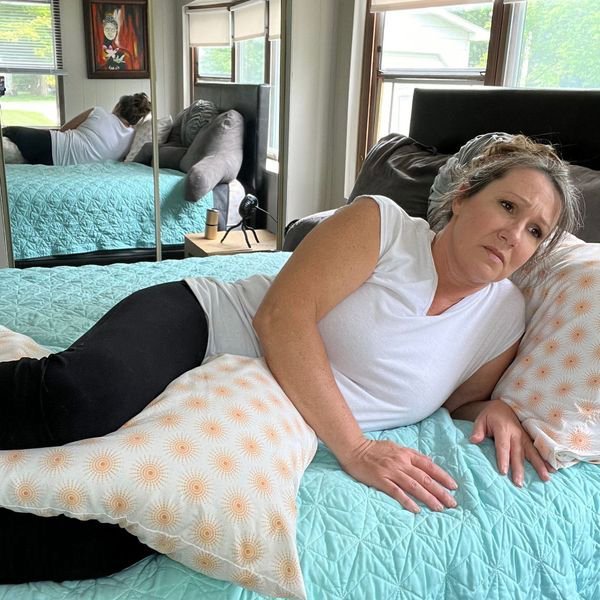
Ran for 19 days, from August 2 to August 21, 2026, the last day Crush saw it.
Run by Sandra Hillings on Facebook. Crush is not the advertiser and does not verify its claims. See this ad in Meta's Ad Library(opens in a new tab)
Want an ad like this for your product?
Crush makes new ad images for your product from this ad: your logo, your product photo, your offer.
Trials from $19.95 USD, then $79.95 USD a month. Cancel anytime.
About this ad
- Meta Ad Library ID
- 1019840327639459
- Platforms
- Facebook, Instagram, Audience Network, Messenger, WhatsApp and Threads
- Relaunches
- 1
Ad text
An A&E doctor in Italy told me something about my arthritis no British doctor ever had. He said if he scanned your heart tonight, after all the years you've had arthritis, you'd be shocked how much damage is already done. Except I only found this out because I spent five nights eating my way through Rome and ended up in an Italian A&E, both hands on my chest, waiting for my heart to give out. We'd been planning this trip for two years. Our 25th anniversary. The one we kept delaying. By night three, I was on a rooftop terrace near the Pantheon, wine in hand, watching the sun sink over the whole city. My husband laughing next to me. I remember thinking we should've done this ten years ago. Then about an hour later, I felt it. A tightness in the centre of my chest. Like a belt cinching one notch too far. I figured it was the food. We'd been eating through Rome all week. Heavy pasta, cured meats, rich sauces, wine at every meal. I told myself it was heartburn. I set my wine down and tried to breathe through it. Walked one slow lap around the terrace. It didn't ease. It spread, up into my jaw, down my left arm. By the time my husband saw my face, I was gripping the railing with both hands, grey and sweating, and couldn't get a full breath. He had his phone out before I could say anything. Twenty minutes later I was strapped to a stretcher in the back of an Italian ambulance. He was in the front seat, not speaking Italian, trying to explain something to a paramedic who didn't speak English. And I watched the doors close on his face. At the hospital they moved fast. An ECG, then bloodwork, and not just the basics. They pulled my cardiac markers and my inflammatory markers, the kind of thing nobody back home had ever once thought to run together. The doctor came in. Maybe 60, wire glasses, completely unhurried. His English was better than he let on at first. He looked at the numbers, then at me. "Good news first," he said. "Your heart is not failing tonight. This was not the heart attack." I started to breathe again. "But it was the first warning of one," he said, and sat down. "What you felt on that rooftop was your heart starving — not getting enough blood. The vessels that feed it have narrowed, and the moment you put it under strain tonight, it couldn't keep up. That pain was the earliest sign that a heart attack is coming. And most women are never told their heart is even in the picture. They're told it's their joints. Their weight. Their age. The first sign many of them get is the heart attack itself. You were given a warning they never get. And I can tell you exactly why it happened." He asked how long I'd had arthritis. I told him the truth. Diagnosed at 43. Fifteen years of it. A daily anti-inflammatory every morning, and still stiff every day, still aching, no matter what I did. He nodded like he already knew. "Your arthritis was never just a problem in your knees," he said. "It is the smoke. What you felt tonight is the fire." Then he explained something no doctor back home ever had. The pain in your knee and the damage under it are two different things. Your pill works on the pain. It quiets the alarm enough to get you through the day. But underneath, your joint is releasing enzymes that eat away the cartilage, the cushion that keeps bone from grinding on bone. The pill silences the alarm. It never touches the enzymes. They keep eating, every day, whether you feel it or not. Then he told me the part that actually scared me. That same fire that makes those enzymes doesn't stay in your knee. The inflammation that swells your joint has been running through the walls of your arteries too. Every year. Quietly. Hardening them a little more each time. "And your arteries have no nerve endings," he said. "You feel none of it. No pain. No warning. Your knee screams, so you run to a doctor. Your heart says nothing, year after year, until one night it finally does. Tonight it spoke. And you were lucky it only whispered. For most women, the first time they hear from their heart is the last thing they hear. Your X-ray shows the cartilage you've already lost. It cannot show the fire that's eating it — and the one place that fire does the most damage, your blood vessels, nobody is measuring at all. Quitting the stairs, losing the weight, none of it will save you now. The fire is already in the walls of your arteries, and it does not stop at the joint." I asked him what I was supposed to do. He leaned back. "We need to address the fire at its source. And the source is not where your pill is aimed." He explained it to me clearly for the first time in fifteen years of appointments. Inside your joint, damaged senescent cells — what researchers call zombie cells — have been accumulating for years. These cells refuse to clear out the way healthy cells do. Instead they sit in the tissue releasing enzymes called matrix metalloproteinases that dissolve the cartilage matrix from the inside, flood the joint with inflammatory chemicals, and block the repair signals your body keeps trying to send. That is the mechanism your anti-inflammatory never touches. It quiets the pain signal. The zombie cells keep working underneath it. The enzymes keep eating. And the same inflammatory fire they produce runs through your blood vessels, hardening them, narrowing them, year after year, until one night on a rooftop terrace you feel it in your chest. "To actually put the fire out," he said, "you need to address the zombie cells directly. And you need to do it at the source — in the tissue itself, not through the gut where most of it will be lost in digestion." He told me about two compounds the research consistently points to. The first is niacinamide. It supports NAD+ production — the molecule your cells need to clear zombie cells out and shift from breaking down to repairing. After 50, NAD+ levels fall sharply. The cellular cleanup system slows. Zombie cells accumulate faster than the body removes them. The inflammatory fire accelerates and compounds every single day. The second is magnesium. It is the cofactor your cartilage cells need to actually carry out the repair work — collagen synthesis, tissue regeneration, cellular energy production. Most women over 50 are severely deficient without knowing it. And every anti-inflammatory they take depletes it further. Without magnesium, even cells that have had their zombie cell burden reduced cannot do the repair work. "Niacinamide quiets the fire destroying the cartilage cells," he said. "Magnesium gives them the raw materials to rebuild. One without the other is only half the answer." "But here is the critical part," he continued. "You cannot take these as oral supplements and expect them to reach the joint at the concentration needed. They have to survive digestion, compete for absorption, and get routed through the liver before any of it reaches the tissue. Most of it never gets there." "Applied transdermally — directly to the skin over the joint — they bypass the gut entirely. They absorb straight into the tissue. Right where the zombie cells are. Right where the repair needs to happen." He said it the way you'd talk about reaching for paracetamol. When I got home I went looking for exactly what he described. The chemist didn't have it. Everything on the shelf was either an ibuprofen gel that masked the pain temporarily or a magnesium cream with no niacinamide at all. The same things that had already done nothing for me. So I called my sister-in-law. She's a nurse practitioner with over a decade in primary care. I read her the doctor's notes. She went quiet for a second. "The Italian doctor's right. Most of what's in chemists is useless for this. The only product I trust that actually delivers both transdermally, at the right concentration, with the right botanical support layer, is Magnesium Freeze from Radiance Labs." High-concentration niacinamide paired with pharmaceutical-grade transdermal magnesium in a cooling freeze base. No synthetic fragrance. No occlusive fillers. Third-party tested. Then a cool-to-warm wave — menthol, Coolact 10, camphor — opens the blood vessels and floods the starved joint tissue with oxygen-rich blood that chronic inflammation has been restricting. Hotact VBE follows with steady warming for up to two hours. Most topical creams fade in four minutes. This keeps working. And a final layer of botanicals — arnica, frankincense, aloe vera, vitamin E — calms the remaining inflammation and protects the tissue while the deeper repair work takes hold. Three layers. Twelve ingredients. One application. Directly at the joint. "Miss any one of those layers," she said, "and you're back to masking the surface. What you tried before wasn't the wrong ingredient. It was the wrong delivery and the wrong mechanism. The zombie cells were never touched." I ordered that night. Week one, nothing dramatic. By week two, the morning stiffness that used to greet me the second my feet hit the floor had eased. But it was the other thing I noticed. That tightness I'd started feeling on the stairs, the one I'd blamed on being out of shape, wasn't there anymore. By week four, I'd gone the longest I could remember without the deep ache in my knees, and I was taking the same stairs without once thinking about my chest. Then six weeks in, I went back for follow-up bloodwork. The doctor looked at the screen. Looked at me. "Your cardiac markers are down. Your blood pressure is down. Your cholesterol came down on its own. And your inflammatory markers are the lowest they've been in years. Whatever you're doing, keep doing it." That was the part that got me. I hadn't turned into a different person. Still had my wine with dinner, still spent my Saturdays down on my knees in the garden. And my numbers came back better than friends who'd given up everything they loved and still hurt every morning. My body just stopped punishing me for it. Most women don't end up in an Italian A&E. They just wake up to another stiff morning and blame it on getting older. The knees that take an hour to loosen. The afternoons lost on the sofa with an ice pack. The tightness on the stairs they write off as being out of shape. The way the whole thing creeps closer every year no matter how careful they are. That's not just arthritis. That's the same inflammation your heart is sitting in, asking for help. And the answer isn't on the shelf at Boots. Magnesium Freeze from Radiance Labs comes with a 180-day money-back guarantee. If you don't feel the difference, every penny back. No forms. No questions asked. Don't buy cheap imitations. Not properly formulated. Not transdermally absorbed. Just surface-level cooling gel with no mechanism behind it. The same thing that didn't work the first time. Your heart has been carrying that inflammation for you, every single day. Time to return the favour. Magnesium Freeze from Radiance Labs. 180-day money-back guarantee. I'll put the link below.
Where the ad sends people
radiancelabs.shop
"12 years of joint pain gone in 15 minutes?"
Learn more: radiancelabs.shop(opens in a new tab)