Yvette Brown
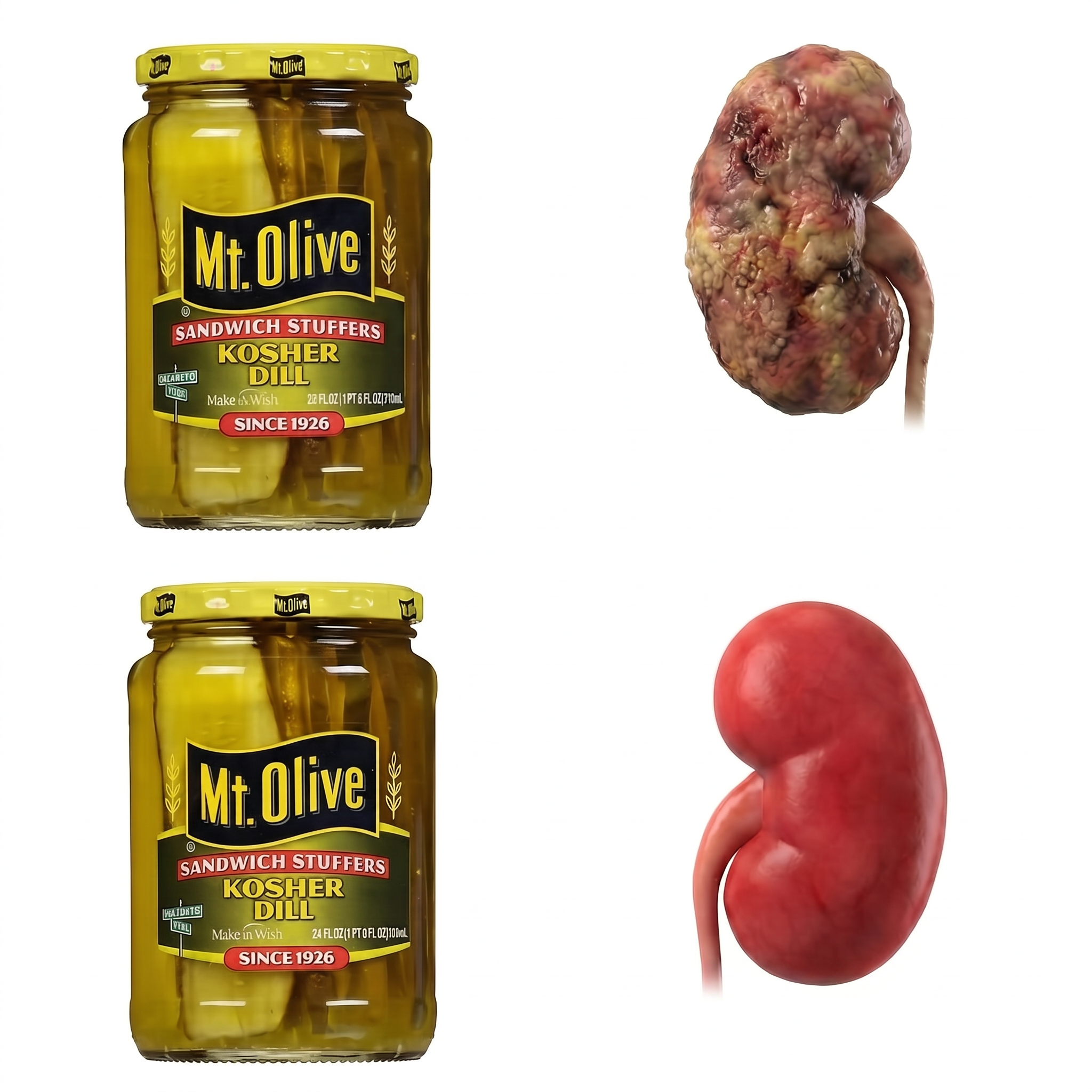
Yvette Brown Facebook ad: “Why your kidney numbers get worse every 90 days even when…”
Ran for 75 days, from July 8 to September 21, 2026, the last day Crush saw it.
Run by Yvette Brown on Facebook. Crush is not the advertiser and does not verify its claims. See this ad in Meta's Ad Library(opens in a new tab)
Want an ad like this for your product?
Crush makes new ad images for your product from this ad: your logo, your product photo, your offer.
Trials from $19.95 USD, then $79.95 USD a month. Cancel anytime.
About this ad
- Meta Ad Library ID
- 1024276516752845
- Platforms
- Facebook, Instagram, Audience Network, Messenger and Threads
- Relaunches
- 0
Ad text
I almost lost my husband to kidney failure, and the only reason he’s still alive is that I gave a grieving widow in Walgreens 5 minutes of my time. It was a Thursday morning in November. I was at the Walgreens on Piedmont Avenue, where I've been picking up Raymond's Lisinopril every ninety days for twelve years. The woman in front of me was small, put-together, holding her purse with both hands. She slid a bottle across the counter and asked the pharmacist, real quiet, to please take her husband out of the system. The girl behind the counter didn't understand at first. Asked if she wanted to switch pharmacies. "No, baby," the woman said. "He passed. Two weeks ago. And your system keeps texting his phone that his refill is ready. I need it to stop." The pharmacist went quiet. The whole line went quiet. And I stood there holding my ticket for a 90-day supply of the same little pills she was handing back. She got her paperwork sorted and walked out. And I don't know what got into me, because I am not a woman who talks to strangers, but I left my spot in that line and went after her. I caught her by the bench outside, near the sliding doors. "Ma'am, I couldn't help but overhear. I'm so sorry about your husband." She looked at me a long second. Then her eyes went down to the white bag in my hand, the one with the prescription stapled to it. "Lisinopril?" she asked. I said yes. My husband's. "For his pressure or his kidneys?" Both, I told her. His kidneys had been slipping a few years now. Her name was Kendra. We ended up on a bench outside the Walgreens. We talked for the better part of twenty minutes with people wheeling their carts past us like her world hadn't ended two weeks ago. Her husband Curtis started dialysis in July. He did everything his doctor told him. Cut the salt. Drank more water. Gave up the oxtail. Walked 3 miles a day. Took every single pill they handed him. He died of kidney failure on October 19th at 4:09 AM. “He was 63. He'd gone in for a regular checkup back in May of 2023, feeling fine. Better than fine.” said Kendra. "The man thought he was unbreakable, and honestly, so did I." Two days later the doctor called. Creatinine 2.1. eGFR 33. "That man came home and emptied out the whole refrigerator. The ribs. The ground beef. The brisket from Sunday. The hot sauce he put on everything. He said, 'Whatever I gotta do, I'm doing it.' And Lord, he meant it." She counted it off for me on her fingers. He gave up the red meat entirely. He weighed his food on a little scale. He stopped going out with his brothers on Friday nights because he couldn't sit there with a glass of water while everybody else got loose. He lost 22 pounds. He bought a juicer. "Curtis, with a juicer," she said, and for one second there was almost a smile on her face. "I still can't picture it." "The follow-up labs came back. Creatinine 2.9. eGFR 22. Worse. He did everything right and his numbers got worse." The doctor told them these things take time. Added a medication and kept monitoring. More Lisinopril, and that dry, violent cough that wouldn't quit. Then Prednisone for the swelling in his ankles. And every three months, the exact same visit. Same chair. Same screen turned toward them with numbers on it. They'd read his labs back to him and send him home. "‘We're managing the progression,’ the doctor would say.” Her hands tightened around her purse. “I will hate that phrase until the day I die. ‘Managing the progression.’ Managed it right out of stage 3 and into stage 4.” She took a slow breath. "Then the office called. Said they wanted Curtis to come in for a preparatory consultation. We both knew what that meant. The machine." He started dialysis that July. And she watched her husband disappear one session at a time. He'd come home gray in the face. Too weak to climb the stairs to their own bedroom. He slept down in the recliner because the climb was too much. Her voice stayed steady. She'd told this part to herself a thousand nights. Three months in, he woke up at 2 AM with his whole body swollen and heavy, red dots scattered up his legs and feet. “I drove him to the ER. Curtis spent 11 days in the ICU. His kidneys were failing. I learned things in that hospital about kidney failure that I will never be able to un-know.” “I learned that when your kidneys give out, the fluid your body can't release has nowhere to go, so it backs up into your lungs until you feel like you’re drowning. I watched my husband fight for every single breath.” “I learned that the poison the kidneys are supposed to clear builds up in the blood and crosses into the brain. By the second day, Curtis looked right at me and called me by his first wife's name. A woman he'd divorced back in 1984.” Kendra let out a shaky breath. "Day 11 — October 19th — I was in the family room down the hall. They'd asked me to step out while they intubated him. At 4:09 AM I heard the long beep. A doctor walked out to give me the news. I already knew." The hospital bills came to $71,000. The funeral, another $9,000. "His grill is still out back under the cover," she said. "I can't bring myself to uncover it. If I uncover it, then he's really gone." I didn't say anything. What is there to say. "He gave up everything he loved. Everything. And it didn't save him. And to this day, not one doctor has been able to tell me why." "Why does a man do everything right and get worse anyway? Why did his numbers never improve? Not once?" I had no answer for her. Nobody had ever given me one either. She stood up. Straightened her coat. "Whatever pills are in that bag, honey, they were in Curtis's bag too. Don't you sleep on this thing. It moves faster than they tell you." She pulled a grocery receipt out of her purse, wrote her number on the back of it, and pressed it into my hand. "If you ever need to talk to somebody who's been down this road, you call me." And she walked to her car. I drove home with Raymond's Lisinopril on the passenger seat and that receipt folded in my purse. When I walked in, Raymond was asleep in his recliner. Four in the afternoon. TV on, remote still in his hand. And I just stood there in the doorway looking at my husband like I was seeing him for the first time. Raymond is 66. A car man. Thirty years turning wrenches at Goodyear, and even after he retired, that garage of ours never went quiet. Somebody's brakes, somebody's alternator, half the church bringing their cars to him instead of the dealer. And under the tarp in the corner, the '72 Chevelle he'd been restoring for years, the one he promised our grandson Marcus would be his when he turned sixteen. Then his creatinine came back 1.9 on a routine panel three years ago. Then 2.4. Then 2.8. Last visit it was 3.3, with his eGFR down at 24. And the doctor said what he always says. Watch the sodium. Watch the protein. Come back in three months. We're monitoring it. Monitoring. That's all anybody ever did. I can read the man's labs to him myself, for free. Meanwhile I watched my husband shrink into somebody I didn't recognize. The tiredness was the worst of it. By two in the afternoon he was asleep in his chair, every single day. This is a man who used to spend whole Saturdays under a hood in July heat. Now he'd lift the hood, stand there a minute, and have to come inside and sit down. By evening his ankles swelled up so tight I had to help him pull his socks off. He was up three times a night to the bathroom. And one morning I heard him go quiet in there, too long, and when I asked, he finally told me about the foam. Sitting in the toilet like somebody poured dish soap in it. He looked at me like he'd done something wrong. His lower back ached on both sides, months on end. The doctor told him kidneys don't usually hurt. Raymond told me, "I live in this body. It's not hurting for no reason." And the eating. Lord, the eating. Everything on his plate got measured and weighed and worried over. No salt, no red meat, no this, no that. He ate like he was being punished. He did all of it. Every rule, every pill, every glass of water. And the numbers kept climbing anyway. By spring, the garage had gone silent. The church folks started taking their cars to the dealer. And the Chevelle sat under that tarp with the driver's door still off its hinges, right where he'd stopped. Marcus turns sixteen in the fall. Raymond stopped talking about it. That night after the pharmacy, I lay next to Raymond and listened to him breathe. Same Lisinopril Curtis was on. Same cough. Same swollen ankles. Same foam he went quiet about. Numbers a step or two behind where Curtis's were when they called him in for that preparatory consultation. My husband was walking a dead man's road, and every doctor we had was telling him to keep walking. I didn't sleep that night. Or the next. Kendra's question wouldn't leave me alone. Why does a man do everything right and get worse anyway? So I did something I have never done in my life. I started researching. I read for weeks. Medical articles I could barely make sense of. Kidney forums at two in the morning. Studies out of Japan, out of Germany. And one thing kept coming up over and over, that no doctor had said to us once in three years of appointments. The reason the numbers never come down is that doctors only care about what goes IN. Nobody had ever stopped to think about what can't get OUT. Your kidneys have their own lymphatic system. A network of tiny drainage vessels that carry waste out of your kidney tissue every single day. When those vessels are clear, your kidneys filter clean. When they're clogged, the waste backs up inside the tissue. That's the creatinine climbing. That's the eGFR dropping. That's the foam sitting in the toilet every single morning. Think about it… Your kidneys filter a whopping 50 GALLONS of blood every day. And every single day, a little bit of the waste that gets left behind builds up inside your renal lymphatic vessels. One day is nothing. One month is nothing. But ten, twenty, thirty years of buildup? Decades of accumulated toxic sludge. Sludge that hardens. Calcifies. Coats the inside of your kidney's drainage… Until the waste backs up inside your kidneys the same way sewage backs up behind a blocked drain. No ACE inhibitor dissolves that buildup. Low-protein diets control what goes in, but they cannot clear what's blocking the way out. Dialysis manages the backup. It never touches the source. So your creatinine sits at 1.9, then 2.4, then 2.8, then 3.3. And one day the doctor's office calls about a "preparatory consultation." You already know what that means. The machine. Three mornings a week, for the rest of your life. This is why Black folk end up on dialysis at 3 times the rate of white people with the very same diagnosis. Not because of our genetics. Because we're handed treatments that were never designed to touch the real problem. And the worst part is... Almost no doctor talks about this. They don't even teach it in medical school. Mainly because clogged kidney drainage is something that disproportionately affects Black folk... And the American medical system DOES NOT care about you. That's why so many Black folk die after spending years confined to a dialysis machine. The system just isn't set up to cater to you. I sat with that for three days straight. Then I called my cousin's daughter, who's a doctor up in Charlotte. Somebody with a medical degree I actually trusted. I told her everything. Kendra, Curtis, Raymond's numbers, the drainage vessels, all of it. I told her Raymond had been taking a cranberry supplement every morning for a year, the one his doctor "wasn't against." She laughed. Not mean. But she laughed. "Auntie, cranberry supplements help reduce inflammation, but they don't do anything to clear out what's blocking the drainage." Then she said something I'll never forget. "If that man Curtis had been on something that actually reactivated his renal lymphatic drainage, the picture might have been very different." I stopped breathing for a second. "Then why didn't his doctor prescribe that? Why hasn't Raymond's?" She was quiet a long time. "Because we don't prescribe supplements. And the version that works isn't a prescription." The next morning I was back at that same Walgreens. Standing in the supplement aisle for a solid forty minutes, three counters down from where I'd met Kendra. Found a bottle that said Lymphatic Drainage Support. Capsules. Twenty-some dollars. Raymond took them for two weeks. Nothing moved. So I went back to researching, and what I found made me throw that whole bottle in the trash. A kidney that's already backed up can't absorb a capsule properly. The capsule has to pass through a body that's already struggling before the active ingredients ever reach the bloodstream. Most of what you paid for, you flush right back out. Liquid bypasses this entirely. Liquid hits the bloodstream directly. I had been doing the right thing in the wrong form. And that wasn't the only problem with that bottle. Because the deeper I read, the clearer it got that a real lymphatic formula has to contain six specific ingredients that work together, or it's a waste of your money. Astragalus Root. Chinese emperors used it for 2,000 years to extend their lives, and modern science has finally shown how. A 2019 study found astragalus goes after the toxic buildup smothering the drainage vessels, breaking it down so waste can finally move again. Burdock Root. Traditional medicine called it "the blood purifier." It flips on a process called autophagy, your body recycling its own dead and damaged cells, while flushing years of backed-up waste straight out of the kidney tissue. Echinacea. Most folks know it for colds. Almost nobody knows it supercharges your NK cells, your body's "Natural Killer" cells, helping break up the blanket of buildup clogging the drain. And the last three work together as a lymphatic flush. Cleavers acts like a power wash for the drainage vessels. Red Clover reactivates the circulation that pumps the waste through. And Calendula calms the inflammation in the vessel walls so the drainage can finally hold open instead of closing right back up. Together, all six target the actual problem. Not what's going in. What can't get out. I went back through every bottle in that drugstore aisle. Not one of them did all six. Most did one. The expensive ones did two. And not a single one of them was liquid. That's when I found Flow+ by Elavyn. All six ingredients. A liquid dropper you take under the tongue, morning and night. Tastes like honey. Formulated in the US. And a 30-day money-back guarantee. If your numbers don't move, you get every penny back, no questions asked. I ordered it before I could talk myself out of it. Raymond took it because I asked him to. Stubborn as a mule, but he listened. "Tastes like honey," he said, surprised. Week two, he slept the whole night through for the first time in a year. Woke up and asked me if he'd really not gotten up at all. He sat on the edge of that bed a long minute, just thinking. Week four, the socks came off easy. The skin around his ankles wasn't shiny and stretched tight anymore. And the two o'clock nap started losing its grip on him. Week six, I heard something I hadn't heard in over a year. The garage radio, and a ratchet working under it. He was out there past ten that night with the tarp pulled back, hanging that driver's door back on the Chevelle. Came in with grease on his hands and more himself than I'd seen him in two years. Every morning and every night, the same. A few drops under the tongue. Week eleven, Raymond had his labs pulled, and then his appointment. The doctor came in, pulled up the chart, frowned, and looked again. "Creatinine 2.2. eGFR 38, Mr. Hayes." Then he pulled up the numbers from three months back, 3.3 and 24, and read them side by side twice, like he was checking his own eyes. "Mr. Hayes, your kidney function is the best it's been in three years. Whatever you've been doing, don't stop. I'll see you in three months." I made it as far as the hallway outside that exam room before I started crying. Raymond put his arm around me and the nurse asked if I was alright, and I laughed and cried at the same time and couldn't get a single word out. In the car, Raymond didn't start the engine. He reached over, took my hand, and said, "You still got that woman's number?" I did. Folded in my purse, right where it had been since November. I called Kendra that same afternoon. She came to the house that Saturday. I put two bottles in her hands on my front porch. One for her, because her own labs had come back borderline at her last physical. One for her brother Frank, who'd just called her with a creatinine of 2.6 and no clue what to do. She held those bottles a long time. "I'm going to take it," she finally said. "And I'm going to mail this one to Frank today with a note that says if he doesn't take it every single morning I will never speak to him again." She did, too. A few months later, it was Frank's turn at the doctor. Creatinine 1.5. Down from 2.6. He hadn't changed his diet. Hadn't started exercising. The only thing he changed was those drops he took every morning. He called Kendra crying. Her big brother. 64 years old. Crying on the phone like a child. He said, "Kendra, I think Curtis died because nobody ever told him about this." She had to hang up. This past Sunday, Raymond backed that Chevelle down the driveway, finished. First time it's run in two years. Marcus rode shotgun with a grin you could see from the porch, and Kendra stood next to me watching them roll off down the street, and I had to look away so she wouldn't see my face. I keep thinking about how close it came. If Kendra had picked a different pharmacy to cancel those refills. If I'd minded my business and stayed in that line. If she hadn't looked at the white bag in my hand and asked me one question. Every one of those was a hinge. My Raymond would be sitting in a dialysis chair three mornings a week, and I'd be the one walking up to a counter one day asking them to stop texting a dead man's phone. I'm telling you all of this because I think you might be standing right where I was standing a year ago. Watching yourself or somebody you love slip away in little pieces. The naps getting longer. The ankles puffing up by evening. The foam in the toilet bowl. The back that aches on both sides while the doctor swears it’s nothing. Doing everything right, and getting worse anyway. I'm not a doctor. I'm not a scientist. I'm not selling you a thing and I don't get one dime from any of this. I'm a 63-year-old woman who almost lost her husband, and the only reason I didn't is that a grieving widow in a pharmacy line took five minutes to tell me her story. There's a page that explains all of it. The lymphatic drainage. Why the numbers never move when you only watch your diet. What your doctor doesn't know about why Black folk end up on dialysis at three times the rate. All of it. Not controlling what goes in. Clearing what can't get out. That's the line that finally made all of it make sense to me. I want you to read it. Not for me. For whoever you'd leave behind. 👇 https://getelavyn.com/pages/adv-2-k2-sm-nd — Yvette Hayes, age 63, Atlanta, GA P.S. Twelve years I stood in that line picking up Raymond's Lisinopril, and not once did anybody behind that counter or in any doctor's office mention the word drainage. It took a widow with a canceled refill to tell me more in twenty minutes than the medical system told us in three years. And there's a 30-day money-back guarantee. If the numbers don't move, you get every penny back. The pills never came with one of those. P.P.S. Curtis's refill texts kept coming for weeks after he passed. The system knew how to bill him. It just never knew how to save him. If somebody you love is on that same little white pill, watching their numbers climb while the doctor says "we're monitoring it," send them this. Even if they swear they're fine. Please. 👇 https://getelavyn.com/pages/adv-2-k2-sm-nd
Where the ad sends people
getelavyn.com
Why your kidney numbers get worse every 90 days even when you do everything right (it's not what your doctor told you)
Elavyn
See details: getelavyn.com(opens in a new tab)