
Inactive· since May 14, 2026
- 3
- days it ran
- 0
- relaunches
- 5
- EU reach
Ad copy
Megan follows her cousin into the kitchen under the pretense of helping with dessert, closes the door behind her, and says: "He proposed. And I don't know if I can say yes because I've never had an orgasm with him and I don't know what's wrong with me." She says it fast, like if she slows down she'll lose her nerve. Amber turns around from the counter. Looks at her for a second. "Okay," she says. "How long have you been holding that?" "Four months." "Since he proposed?" "Since before he proposed." Megan leans against the door. "I've been waiting for it to fix itself. It hasn't." Megan is thirty-two. She has been with Ryan for two and a half years. Ryan is the kind of man her mother approves of, which used to feel like a warning sign and turned out not to be. He is steady and funny and genuinely good — the kind of good that isn't performed, that doesn't require an audience. He remembers things. He shows up. He proposed at her parents' kitchen table with her grandmother's ring and her whole family watching through the window from the backyard, which should have been mortifying and was actually perfect. She said yes. She meant it. She has also, for two and a half years, never finished with him. She's tried to explain it to herself in ways that don't sound like what she's afraid it sounds like. She's told herself it's normal — that lots of women have this, that it's about communication, that it takes time. She's read the articles. She's tried being more present, less in her head, more relaxed. She's tried different times of day, different approaches, the wine beforehand that helps with the relaxing but not with the finishing. She's told herself it's because of the relationship before Ryan. The one that lasted three years and ended in a way she doesn't describe in detail to anyone, not even her closest friends. The one that left her feeling like something in her had been recalibrated to a frequency she couldn't quite get back from. She's told herself it'll pass. That she just needs more time. That Ryan is patient and kind and it'll work itself out. It's been two and a half years. It hasn't worked itself out. And now there's a ring on her finger and a date being discussed at a table twenty feet away and she is standing in her aunt's kitchen with her heart going faster than it should, thinking: what if this is just how I am now? Amber is thirty-six. She is Megan's father's sister's daughter, which means they grew up at every holiday table together but never quite in each other's daily lives — close enough to know each other, far enough to still have things they've never said out loud. Until now, apparently. Amber looks at her cousin for a long moment. Then she does something Megan doesn't expect. She turns back to the counter, picks up the knife she'd been using, sets it down again. Like she's deciding something. "I'm going to tell you something," she says. "And you cannot tell anyone at that table." Megan looks up. "Okay." "I mean it. Not your mom. Not my mom. Nobody." "Amber—" "I had the same thing." She says it to the counter first. Then she turns around. "With Daniel. For almost two years. I thought I was broken. I thought there was something wrong with me that therapy couldn't fix and time couldn't fix and love couldn't fix." She pauses. "I almost ended it. Not because I didn't love him. Because I thought it wasn't fair to him to stay." The kitchen is very quiet. Outside the door, someone laughs at something. A chair scrapes. The ordinary sounds of a family gathering continuing without them. "What happened?" Megan says. "I found out what was actually happening," Amber says. "And it wasn't what I thought it was." She leans against the counter. Crosses her arms — not defensively, just like someone settling in to say something that takes a minute to say properly. "You know what your body does when it's been through something hard? When it's been in a situation where it didn't feel safe for a long time?" She doesn't wait for an answer. "It learns. It gets very good at staying alert. At scanning. At being ready for something to go wrong. And it keeps doing that — even after the hard thing is over. Even when you're with someone who is genuinely, completely safe." "Ryan is safe," Megan says. "I know. Your mind knows that. But your nervous system doesn't update on your timeline." Amber looks at her steadily. "And a nervous system that's still running protection mode — still braced, still scanning, still waiting for something to go wrong — cannot fully let go. It physically cannot. Because letting go requires feeling safe all the way down. Not just in your head. In your body." Megan is very still. "So it's not him," she says. "It's not him." "And it's not — it's not damage that can't be fixed." "It's not damage at all," Amber says. "It's a nervous system doing exactly what it learned to do to protect you. It just hasn't gotten the message yet that it doesn't need to anymore." Something crosses Megan's face. Not relief — not yet. The thing that comes just before relief. The moment when you've been carrying something for so long that the possibility of putting it down feels almost too large to hold. "How do you fix that?" she says quietly. "You don't fix it," Amber says. "You work with it. You help your nervous system understand that it's safe now. That it can come down. That it doesn't have to stay braced anymore." "How?" Amber picks up her phone from the counter. Amber had found the answer on a Tuesday night fourteen months ago, sitting in her car in the parking lot of a grocery store because she hadn't been able to make herself go inside. She'd been with Daniel for eighteen months. She loved him in the specific, certain way that you love someone when you've stopped pretending you have a type and just admitted this is the person. She also couldn't finish with him, couldn't fully land in her body when they were together, couldn't shake the feeling of being slightly outside herself at the exact moments she most wanted to be inside herself. She'd typed into her phone: why can't I relax with someone I love. She went deep. Past the communication articles. Past the advice about presence and breathing and slowing down. Into a forum where women were describing, in careful and specific detail, the exact texture of what Megan would recognize as her own experience. One post stopped her completely. A woman had written: "My body wasn't broken. My relationship wasn't wrong. My nervous system had been in survival mode for so long — from years of not feeling safe — that it had lost the ability to register safety even when safety was completely real. The inability to finish wasn't a physical problem. It wasn't a relationship problem. It was a nervous system still running the old program. And once I understood that, I stopped trying to fix the symptom and started working with the system underneath it." The post mentioned Liven. Not a therapy app. Not a relationship program. Something that worked directly with the nervous system — to bring it out of the state where it reads genuine safety as something to be suspicious of. Amber took the quiz sitting in that parking lot. It didn't ask about her history or her relationship. It asked whether she felt a specific tension that had no clear source. Whether she found it hard to be fully present even in moments that should feel good. Whether her body felt like it was always slightly braced, even when nothing was wrong. She said yes to everything. She sat in that parking lot for a long time after. Then she went and bought the groceries. Then she went home and told Daniel she loved him and didn't explain why she was crying and he held her and didn't ask. "Week three," Amber says, "I noticed I was actually there. Not watching from outside. Just — present. It lasted maybe fifteen minutes. But it was the first time in almost two years." Megan is listening the way you listen when someone is describing your own life back to you. "Week five, something shifted. I finished. And I cried, which confused Daniel, and I tried to explain it and the only thing I could say was: I'm here. I'm actually here." She pauses. "He didn't need more than that." "And now?" "And now it's different. I still have moments where I feel myself starting to brace. But I know what it is. I know it's not him and it's not me. It's just the old program. And I know how to work with it." Megan looks at her cousin. This woman she has sat across from at every Christmas and Thanksgiving and Easter for thirty-two years, who she thought she knew, who has apparently been carrying the same thing she's been carrying and never said a word until right now, in this kitchen, with dessert going unfinished on the counter. "Why didn't you ever tell me?" Megan says. Amber almost smiles. "Same reason you waited four months to tell me." Outside the kitchen door, someone is calling for them. Dessert. Come on. What's taking so long. Amber holds out her phone. Liven is open on the screen. "Take the quiz tonight," she says. "Before you go to sleep. It's a few minutes. It won't ask about Ryan or about before Ryan. It'll ask about you. About how your body has been running. About what your nervous system learned to do to keep you safe." Megan looks at the screen. Then at her cousin. "And then what?" "And then you'll understand what you're actually dealing with," Amber says. "And it'll be a lot less scary than what you've been telling yourself it is." Someone knocks on the kitchen door. "Guys. Seriously. Grandma wants cake." Amber raises her eyebrows. Megan almost laughs — the surprised kind, the kind that comes out when something releases. "Coming," Amber calls. She squeezes Megan's hand once before she opens the door. Quick, firm. The kind of squeeze that means: I've got you. The kind that means: you're not alone in this. They go back to the table. Grandma gets her cake. Nobody knows anything happened. It wasn't broken. It wasn't the relationship. It wasn't damage that couldn't be undone. It was a nervous system that had learned, over years of not feeling safe, to stay braced even when the threat was long gone. And a body that is braced cannot fully let go — not in the way that requires complete, unguarded presence. Not in the way that requires trusting, all the way down, that nothing is coming. A friend told me about Liven — my cousin, actually. In a kitchen at a family party, while everyone else was waiting for cake. She didn't tell me to fix myself. She told me to understand what my nervous system had been running on. Liven has a quiz. A few minutes. It doesn't ask about your history. It asks about the braced thing. The being-slightly-outside-yourself thing. The tension that has no name. Link is below. 💙 P.S. — I said yes to Ryan. We got married last spring. My cousin was at the wedding — standing in the second row, watching me walk down the aisle. She caught my eye and nodded once, just slightly. I knew what it meant. On our wedding night I was actually there. Fully, completely there. And I thought about that kitchen, and the cake, and the squeeze of her hand. And I thought: that was the moment everything changed. Not the quiz, not the weeks after — that moment in the kitchen when someone finally told me the truth.
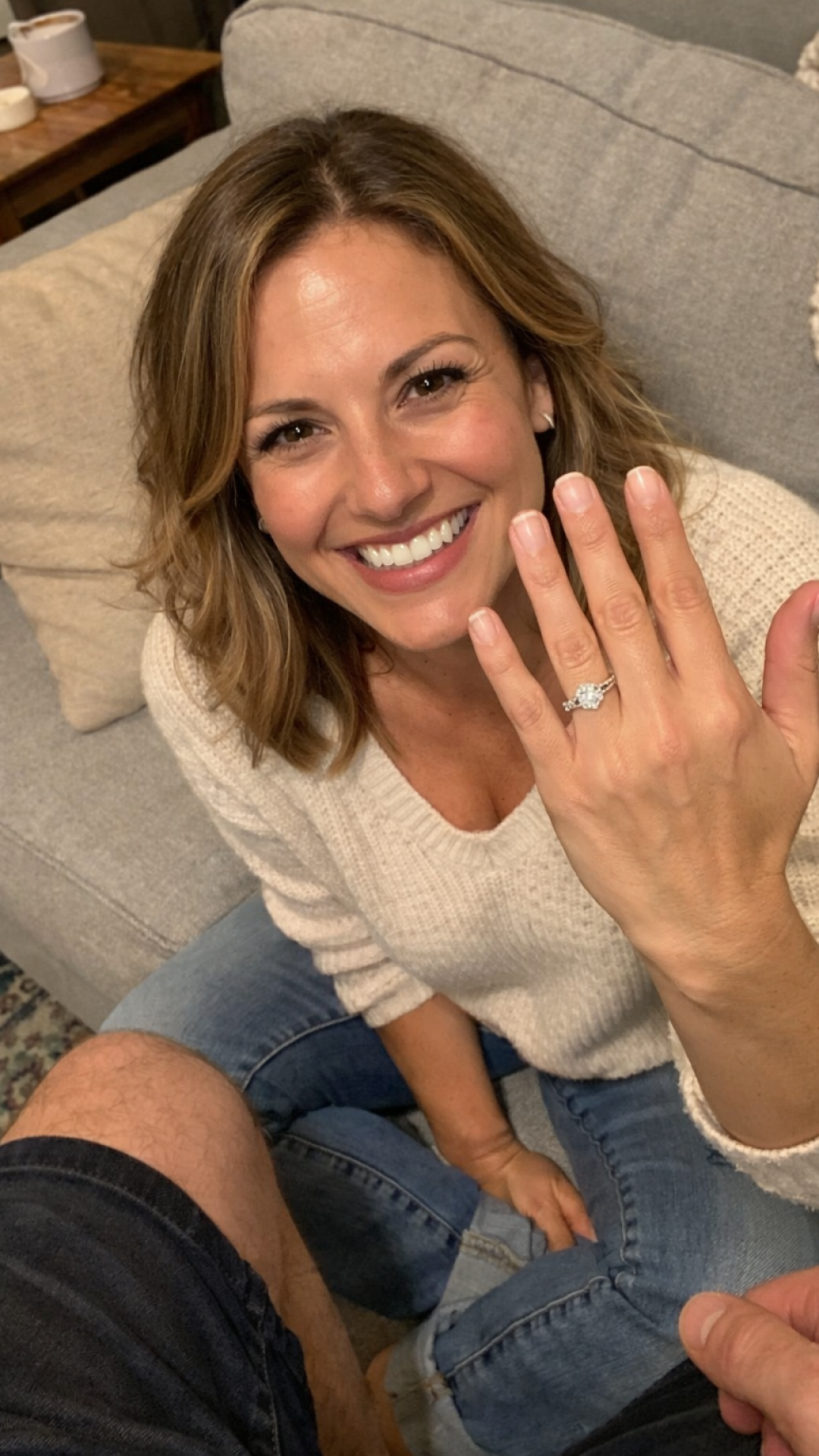
Ring on finger, can't finish in bed
LEARN MORELike this ad? Make it yours.
Crush rebuilds this exact creative around your product — your brand, your colors, your offer — in about a minute.