Carol Anderson
Carol Anderson Facebook ad: “Want to improve your T-score Naturally? Read this”

Ran for 6 days, from September 30 to October 6, 2026, the last day Crush saw it.
Run by Carol Anderson on Facebook. Crush is not the advertiser and does not verify its claims. See this ad in Meta's Ad Library(opens in a new tab)
Want an ad like this for your product?
Crush makes new ad images for your product from this ad: your logo, your product photo, your offer.
Trials from $19.95 USD, then $79.95 USD a month. Cancel anytime.
About this ad
- Meta Ad Library ID
- 1028752680188387
- Platforms
- Facebook, Instagram, Audience Network, WhatsApp and Threads
- Relaunches
- 0
Ad text
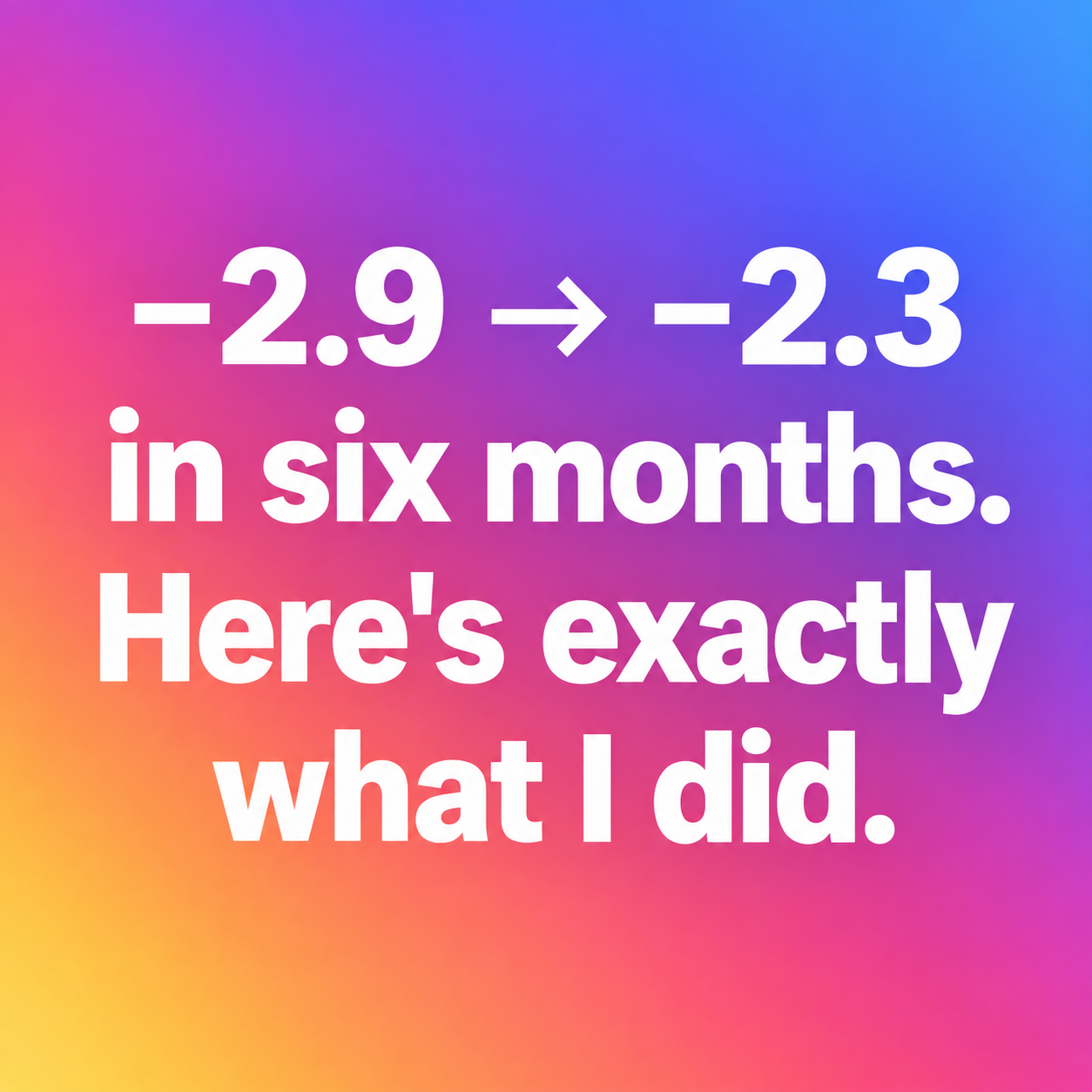
My doctor of thirty years prescribed me Fosamax. He knew my mother died on that exact drug. He told me he'd write "non compliant" in my chart if I refused. I'm 63. I have been taking calcium every morning since the week we buried my mother. Her name was Eleanor. She was 69 when she went and I was 51. She had been on Fosamax for the last two years of her life. Two years of doing exactly what her doctor told her. She never missed a dose. I know that because I filled the pill organiser for her on Sundays. Her number on paper looked steady the whole time. Negative 2.4, then negative 2.4, then negative 2.4. Her doctor used the word holding. That is what he kept saying. The drug is holding it. He said it at every appointment and she repeated it to me in the car afterwards, every time, like it was good news. Then on the afternoon of Tuesday the 1st of October 2013, she caught the edge of the kitchen rug. Not a hard fall. She went down maybe two feet. Her hip cracked when she hit the floor. Six hours of surgery. They replaced the joint. She came home in a wheelchair. The pain never went. She couldn't stand on the new joint long enough to get anywhere. The stairs were finished. So was the garden. By December she had stopped trying to get out of the chair at all. The pneumonia came in the middle of January. Three months in that chair. She didn't have the strength left to fight it. The strongest woman I ever knew. Raised four of us. Worked forty years. Never once sat down in her own life. Dead in a hospital bed on the 2nd of February 2014, four months after a hip that broke on a kitchen rug. Two years of doing everything they told her. And a number her doctor kept calling holding. A broken hip at sixty-nine is not just a bone. It is the start of a cascade. The hip goes, you stop moving, and your body comes apart faster than it can put itself back together. Then something like pneumonia comes, and there is nothing left to fight it with. I did not understand any of that at the time. It took a diagnosis of my own, years later, to work out what had really happened to her. I was 51. I started the week after the funeral. Calcium citrate, not carbonate. Vitamin D3. K2 once I'd read enough to know it should be the MK-7 form. Walking every day. Protein at every meal. I did that for ten years before anybody told me there was anything wrong with me. And at 61, my first scan came back at negative 2.7. Osteoporosis. My mother broke her hip at negative 2.4. That is osteopenia. That is the stage before. My mother never started any of that until she was in her sixties. I had a decade on her, I did every single thing they say to do, and my very first result was already worse than the number she was holding at when she went down. Dr. Michael has been my doctor for thirty years. He sat with me the week we buried my mother. When I started on the calcium and the D3 and the K2 that same week, he told me I was doing the right thing, and he kept telling me that for ten years. And at 61 he was the one who sent me for the scan. He looked at that scan and said Fosamax. "Margaret, I know what I'm asking you. I know what happened to your mom." "Then you know I can't take it." He didn't argue straight away. He sat there for a while. "I have to tell you what happens if you don't. At negative 2.7 you are at real risk of a fracture. And if you refuse treatment I'm required to document it in your chart as non compliance against medical advice. That is not me being difficult. That's the note that has to go in the file." "Write it." I said it faster than I meant to. He looked at me, then he nodded, slowly, and turned back to the screen. He typed the note in while I sat there watching him do it. Then he stood up and that was the appointment. Seven minutes. I sat in the car afterwards and told myself I was never going to take the drug my mother died on. So I took the year to find out what else was out there. The scan would be the judge. I have never worked harder at anything in my life than I worked at that year. I kept the calcium, the D3, the K2. Then I added everything there was to add. Magnesium glycinate at night. Collagen with the bone peptides in my coffee. AlgaeCal. Strontium for six months. Boron. Protein up from 80 grams a day to 110. Brazil nuts every morning because a forum told me to. Prunes by the bowl. Heavy lifting, four reps to failure, at a weight I could barely move. A hundred heel drops a day. Pilates twice a week. A weighted vest on every walk. Eight percent of my body weight, then ten, then twelve. I did not miss a day. Not one, in twelve months. Then the twelve-month scan came. Negative 2.9. Worse than the negative 2.7 I had started at. I sat across from the same man, in the same room, and watched my year land on the screen between us. "This is what happens when you refuse medical treatment, Margaret." Then, quieter, "This is the sign that you should start the Fosamax now." And I said no again. I cried in the car park afterwards. Not because of anything he said. Because the number was real and I still could not do it. The first no was easy. The first no I had a year of hope behind me and a plan I believed in. The second no I had nothing at all. My own year had just failed in front of both of us. Every reason I had was gone, and I still could not make my mouth say yes to the thing that took my mother. Nine minutes. That is what that appointment was, start to finish. Thirty years of that man, and nine minutes to tell me my year had failed and I should take the drug my mother was on when she died. Not because he didn't care. Because nine minutes is what he is given. Then I called my husband James. "How did it go?" "It's worse. Negative 2.9." Silence. Then, "So you'll take it." "No." "Margaret." His voice went careful, the way it does. "You gave it a year. You did everything. It got worse anyway. What else is there?" "I don't know yet." "That's not an answer." "I know it isn't." He didn't say anything for a moment. Then, quieter, "I can't lose you." And I had nothing to give him. That night I lay in bed and did the thing you do at two in the morning, which is count. Negative 2.7 at 61. Negative 2.9 at 62. Two tenths gone in the year I tried hardest. So negative 3.1 by 63. Negative 3.3 by 64. Negative 3.5 by 65, and that is only if it keeps losing at the same speed. Somewhere in the middle of all that, a rug. Or a kerb. Or a wet floor at the shops. My mother broke her hip at negative 2.4 and she was gone four months later. I had been worse than she ever was since the day he diagnosed me, and calling it managing. I got up, went downstairs, and opened the laptop at the kitchen table. The first thing I searched was whether I was being an idiot. is a hip t-score 2.9 dangerous what happens if you don't treat osteoporosis Everything said the same thing. Fracture risk. Spinal compression. The cascade. Sometimes death. Then I searched fosamax side effects. Jaw necrosis. Esophagus damage. Atypical femur fracture, which is a thigh bone that snaps on its own in women who have been on it for years. And the rebound when you stop, fractures that come with no warning. Neither answer helped me. One road ended where my mother ended. The other road was the road my mother took. So I stopped looking for which one to pick. I started looking for why my number was going down at all. Not what to take. Not which brand. Why a woman who had done every recommended thing for over ten years was still losing bone every single year. It wasn't a wellness blog that answered it. It was the U.S. National Library of Medicine. Peer-reviewed papers, most of them going back forty and fifty years. One of the ones I read that night was first published in 1937. I read for four nights, two and three hours at a time, after James went to bed. And the sentence that stopped me was this one. The bricks were never your problem. The crew was. I read it three times before I understood what it meant. Let me put it the way I had to put it to myself. Your bones are not stone. They are not a finished thing you were handed at twenty and have been slowly using up. They are alive. Every day of your life old bone is taken out and new bone is laid down in its place, and it never stops. The new bone is laid by cells. Tiny cells inside your bones with one job. They take the raw material, the calcium I had been swallowing every morning for over ten years, the K2, the vitamin D, and they lay it down as fresh bone. Think of them as a crew working on a building that is never finished. And there is a second crew whose job is to take the old bone out. To clear away what's worn so the first crew can lay something new. They are not the enemy. They have been doing that your whole life. When the two crews are matched, the same amount comes out as goes back in, and your number holds. Then comes menopause. The crew that takes bone out speeds up. Estrogen was the brake on them. Estrogen is gone, so they get aggressive and start pulling out more than they ever did. And at the same time, the crew that builds slows almost to a stop. Here is why. Every cell in your body runs on a fuel called NAD+, and the cells that build your bone are no different. NAD+ falls as you age. At thirty your tank is full. By forty you are at about half. Past sixty you are down to roughly a quarter of what you had in your twenties. The crew that builds your bone is supposed to be running on a full tank. Past sixty they are running on fumes. So one crew is tearing bone out faster than it ever has. And the other one is sitting down on the curb. It no longer has the energy to pick up a single one of the bricks I had been hauling in by the truckload, every morning, for over ten years. That was the whole thing. That was what happened inside my mother. That was what was happening inside me while I sat there reading about it. I said it out loud at my own kitchen table at two in the morning, because there was no other way to take it in. Over ten years of delivering material to a building site where the workers had quietly run out of the energy to lay any of it. And here is the part that explained the year I had just lost. The less bone the builders lay, the thinner what's left becomes. The thinner it gets, the easier it is for the other crew to chew through. The more they take out, the more the builders are supposed to put back. But the builders have less fuel every year, so they fall further behind. The cycle feeds itself. That is why my number kept dropping. Not because I was doing less. Not because I stopped lifting or stopped taking anything or stopped trying. The fuel underneath was draining out a little more every year. The gap between what came out and what went back in kept widening on its own. And it widens faster the longer it runs. Which means the year I tried hardest was always going to be worse than the year before it. Not despite the effort. Underneath it. And then I got to the part that explained what the drugs actually do. Fosamax, Reclast, Prolia and the rest. They go after the crew that takes bone out, and they freeze it. So the old brittle bone that was due to come out stays exactly where it is. And they do nothing at all for the builders. Not one thing. Nothing new goes up. You are frozen at whatever bone you have left. That is the best a drug can do for you. And the day you stop taking it, the rebound is real and the compression fractures are real. That is not a criticism of my doctor. That was everything he had. And here is the part that explained my mother. When you freeze the tearing down and give the builders nothing, the bone you have left never gets replaced. Old bone, brittle bone, dead bone. It just sits there. The scan looks steady. The file looks fine. The doctor says the word holding. Underneath it, that bone gets older and drier and more brittle every single day, because no new layers are going in. That is why my mother's number held at negative 2.4 for two years. And it is why she still broke her hip on a kitchen rug. The drug froze the crew that clears bone away, so what she was left holding was the old brittle bone. The drug was not building her anything new. What she had aged underneath it while her doctor watched the number and told her she was fine. We were all watching the wrong thing. I had been watching the wrong thing for over ten years. The calcium, the K2, the magnesium, the lifting, the vest. I had done every bit of it right. I had every brick that building needed. I had never once been missing materials. I had been missing the workers. So I stopped looking for something to take and started looking for something that went after the workers. I needed to give those cells their fuel back. Not from the outside, the way you swallow something and hope. From the inside, where the cells actually use it. I thought NAD+ itself would be the answer. It isn't. You cannot just swallow it. The molecule is too big, and your stomach breaks it apart long before it gets anywhere near a cell. But there is a smaller piece your body uses to make NAD+ in the first place, and your cells can take that one in. It is called NMN. NMN is small enough to cross into the cell, and once it is inside, the cell builds the fuel itself, right where the workers need it. And what I was reading wasn't theory. Studies on women in our range. Past menopause. Women who had been losing bone for years. The ones who got their NAD+ back weren't just slowing the loss the way a drug does. Their numbers were going up. Up. In all those years I had never once heard anybody use that word about a woman's bones. I read that paragraph three more times before I let myself believe it. And then I did the thing I want to warn you about, because it cost me six months. I ordered the cheapest NMN I could find. Sixteen dollars, off Amazon, bare capsules, first result on the page. James saw the bottle on the counter. "NMN? Since when do you take that?" "Since now. Maybe." Two capsules every morning with my coffee for six months. Then I paid for a scan myself, out of my own pocket. Because I wanted to know before he did. The report came in the post and I was so certain of it that I handed it to James to open. It hadn't moved. Not a tenth of a point. So I went back to the research, and this time I wasn't reading about NAD+. I was reading about why it hadn't worked for me. The first thing I worked out on my own. The tearing-down crew was still running fast. Feeding the builders was never going to be enough on its own if the other crew kept taking bone out quicker than the builders could put it back. Those two had to be brought back into step, the way they were in my thirties. Then the research confirmed it and gave me the name. Resveratrol. It settles that crew back toward the pace it ran at when I was younger. Not frozen the way a drug freezes it, because old bone does still have to come out. Just back in step with the builders instead of running away from them. And the same papers gave me two more jobs I had never thought about. The first is that turning NMN into fuel is not free. Your body has to put something in to get something out, and when that runs low the conversion slows right down and starts taking what it needs from you. TMG is what you give it so it doesn't have to. Nobody selling you a plain bottle of NMN mentions that. The second is that the building site gets crowded as you age. Worn-out cells build up in the bone and take the room the crew needs to work in. Quercetin clears them out of the way. So, four things. The fuel. Keeping the fuel coming. Clearing the site. And bringing the two crews back into step. The bottle I bought was one of the four. And no way of knowing how long it had sat on a shelf before it reached me. I stopped taking it that night. The next problem was finding a version that wasn't junk. All four, at the amounts the studies actually used, made recently enough to still be worth taking. I spent the next two nights at the kitchen table looking. One name kept coming up, and I did not buy it that first night. I read their research. I checked the amounts against the studies I had open. I read what women were saying, and I found ones posting their own numbers going up. Volera Bone Complex. All four. NMN with the TMG, the quercetin and the resveratrol, at the amounts the studies used, not a token of one and a sprinkle of the rest. Every milligram printed on the label instead of hidden in a blend. Third-party tested. Made in small batches in the United States and sold from their own site, so it isn't sitting in a warehouse for months before it gets to you. I ordered six months of it that night. Not one bottle. Six. I had just learned the hard way that a scan is the only thing that tells you anything, and a scan needs six months. It arrived eight days later. Two capsules with water every morning. That was the whole protocol. I kept everything else exactly as it was. The calcium, the D3, the K2, the lifting, the vest. I didn't stop a single thing. I added the piece that had been missing. Now, what those six months were actually like. Every other thing I have ever bought promised me something fast. This was not that. They said outright that I would not feel anything in the first month, and they were right. I didn't. Month two was my mornings. For three years I had been getting out of bed stiff for the first half hour, the way an eighty-year-old feels. That quietly started to lift. I was making coffee one Tuesday and realised my hips hadn't told me to slow down all morning. By the end of month two I had my afternoons back. I stopped reaching for the second coffee at two o'clock. The walk back from the mailbox stopped tightening me up. Month three, James said it first, on a Saturday, watching me unload the dishwasher. "You're moving easier lately. You know that?" I hadn't told him anything. I didn't want to be wrong out loud again. He was right, though. I was. By month five something else had gone, and it took me a while to find the word for it. The fear. Since the day he diagnosed me I had moved through my days like a woman waiting for the rug to come up from under her. Waiting for the small ordinary moment that would put me in my mother's wheelchair. That let go. None of it was proof and I knew it at the time. You cannot feel bone. That is fear letting go before the number does, and I will take every bit of it, but it is not the answer. The answer is a scan. At six months I asked Dr. Michael to scan me again. It took some convincing. I think he expected to be having a very different conversation with me. He pulled the results up and went quiet. Looked at the screen. Looked again. Then looked at me. Negative 2.3. Up from negative 2.9. Out of osteoporosis and into osteopenia. Better than the number my mother was holding at when she went down. He asked me, and I could tell he was choosing his words, whether I had been doing something I hadn't told him about. So I told him. That I had spent four nights in the National Library of Medicine and not in his office. That the crew which builds bone runs on a fuel that drains away with age, and that I had been putting it back. He didn't argue. And I could see on his face that nobody had ever taught him that part. "What exactly are you taking?" "Volera. NMN with TMG, quercetin and resveratrol. Third-party tested. I can send you all of it tonight if you want. The studies, the sourcing, the testing. I saved everything." He read for a long time. Then he said, "Margaret. Keep doing it. Back in six months. No Fosamax." Thirty years, and I had never once heard that man say that about anything. I sat in the car for ten minutes before I called James. "Negative 2.3." He went quiet. Then, "From 2.9?" "From 2.9. No medication." He didn't say anything for a moment, and when he did his voice was tight. "I knew you'd find something." That was six months ago. Last week I went in for the follow-up. Negative 2.0. Still moving. No medication. And Dr. Michael took the non compliance note out of my chart himself. You did the prevention. Or you did the year. Or both. And your number went down anyway, and now somebody wants you on Fosamax or Prolia or Reclast, and you are the one who has to decide. Two things I wish somebody had told me at the very start. The first is that it was never your fault. Every single thing on your list is material. Calcium, D3, K2, collagen, magnesium, the vest, the walking. All of it is correct and none of it was ever the problem. You have been the most reliable delivery that building site has ever seen. Nobody gave the crew the energy to pick any of it up. And nobody ever told you there was a crew. You did not fail. You were working from an incomplete set of instructions, and so was your doctor. The second is that it is your body. You are allowed to ask what else there is before you swallow something. You are allowed to want to try the gentler thing first. And you are allowed to be told what a drug actually does to a woman, and what it does not do, before you agree to take it for the rest of your life. My mother was never told. She just kept hearing that it was holding. Non compliant is what they write down when a woman reads the research and disagrees with the plan. I had that note in my chart until my own doctor took it out. And you should know what happens if nothing changes, because I did that calculation myself at two in the morning and nobody had ever done it with me. The gap does not stay the same size. It widens. Every year the builders have a little less fuel, so every year a little more comes out than goes back in, and the year after that is worse than the year before it. Which is exactly why your next scan does not have to be another one going the wrong way. Mine wasn't. Volera was the only thing I found that matched what the studies actually used. I don't know whether it's the only one out there that fits. I know it's the one that worked for me. Negative 2.7 at 61. Negative 2.9 after the hardest year of my life. Negative 2.3 six months after I found what was actually missing. Negative 2.0 today. If you feel cornered the way I did, give it six months and let the scan settle it, the same way I did. There's a 180-day money-back guarantee, which is exactly how long a scan needs. If your number hasn't moved, you get your money back, no questions. They are willing to be judged by the same scan your doctor is. They make it in small batches, which is also why they sell out a few times a year and you wait for the next one. Numbers are the only thing that changes a doctor's mind. Start now, and give yourself something to show him. 👉 https://getvolera.com/products/c89b53 — Margaret P.S. Those six months on the cheap bottle were the most useful mistake I ever made, so please don't repeat it. One of the four is not the four. The fuel on its own builds nothing, and I have a scan that didn't move to prove it. P.P.S. About your doctor. Do not stop a medication you are already on without talking to him first. Some of them are genuinely dangerous to come off without a plan. But you do not have to choose. Keep taking what you are on, start this alongside it, and ask him to scan you in six months instead of twelve. Then watch his face when he reads it. Mine could not explain it either. 👉 https://getvolera.com/products/c89b53
Where the ad sends people
getvolera.com
Want to improve your T-score Naturally? Read this
VOLERA
Learn more: getvolera.com(opens in a new tab)