Consciousness Awakening Psychology Healing Jung Spinoza Einstein Alan Watts
Consciousness Awakening Psychology Healing Jung Spinoza Einstein Alan Watts Facebook ad: “Is Jesus God?”
Ran for 71 days, from June 23 to September 2, 2026, the last day Crush saw it.
Run by Consciousness Awakening Psychology Healing Jung Spinoza Einstein Alan Watts on Facebook. Crush is not the advertiser and does not verify its claims. See this ad in Meta's Ad Library(opens in a new tab)
Want an ad like this for your product?
Crush makes new ad images for your product from this ad: your logo, your product photo, your offer.
Trials from $19.95 USD, then $79.95 USD a month. Cancel anytime.
About this ad
- Meta Ad Library ID
- 1030661552722354
- Platforms
- Relaunches
- 0
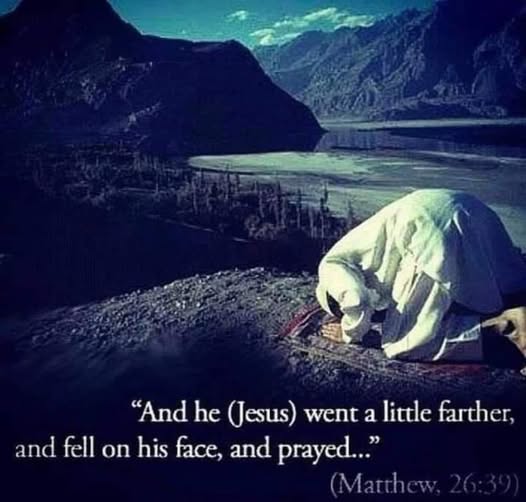
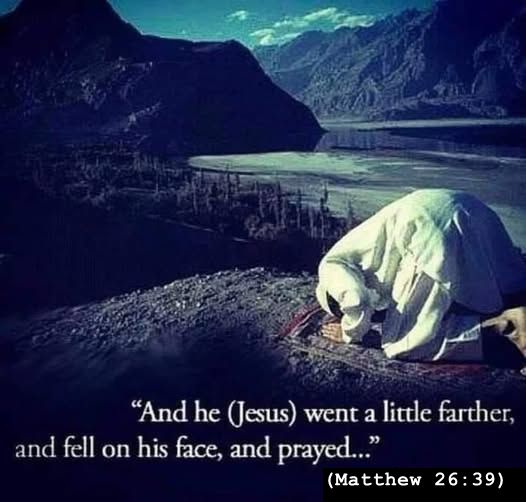
Ad text
Is Jesus God? “God is not a man, that he should lie; neither the son of man, that he should repent.” (The Bible, Book of Numbers 23:19) https://www.youtube.com/watch?v=0IORSWpGcMU "I am God, and not man." — Book of Hosea 11:9 Was Jesus a man? Yes. “For there is one God, and one mediator between God and men, the man Christ Jesus.” — First Epistle to Timothy 2:5 Was Jesus the son of man? Yes. “The foxes have holes, and the birds of the air have nests; but the Son of man hath not where to lay his head.” — Gospel of Matthew 8:20 God is immortal, He does not die but did Jesus die? Yes. "Who only hath immortality, dwelling in the light which no man can approach unto; whom no man hath seen, nor can see: to whom be honour and power everlasting. Amen." — First Epistle to Timothy 6:16 "For I delivered unto you first of all that which I also received, how that Christ died for our sins according to the scriptures." — First Epistle to the Corinthians 15:3 God is omnicient (knows everything) but did Jesus know everything? No. “But of that day and hour knoweth no man, no, not the angels of heaven, but my Father only.” — Gospel of Matthew 24:36 “But of that day and that hour knoweth no man, no, not the angels which are in heaven, neither the Son, but the Father.” — Gospel of Mark 13:32 You can't be God if you have a God. Did Jesus have a God? “I ascend unto my Father, and your Father; and to my God, and your God.” — Gospel of John 20:17 “Jesus answered, ‘The most important is, Hear, O Israel: The Lord our God, the Lord is one.’” — Gospel of Mark 12:29 God does not pray to Himself. Did Jesus pray to God? “And in the morning, rising up a great while before day, he went out, and departed into a solitary place, and there prayed.” — Gospel of Mark 1:35 “And he withdrew himself into the wilderness, and prayed.” — Gospel of Luke 5:16 God is omnipotent (Can do anything). God is the greatest. Could Jesus do anything? Was Jesus the greatest? “I can of mine own self do nothing: as I hear, I judge: and my judgment is just; because I seek not mine own will, but the will of the Father which hath sent me.” — Gospel of John 5:30 “My Father is greater than I.” — Gospel of John 14:28 God is absolutely good. Was Jesus good in the absolute sense? “And Jesus said unto him, Why callest thou me good? there is none good but one, that is, God.” — Gospel of Mark 10:18 Can one be both the sender and the sent at the same time? No. “For I have not spoken of myself; but the Father which sent me, he gave me a commandment, what I should say, and what I should speak.” —Gospel of John 12:49 Is Jesus God or God's servant? “Behold my servant, whom I have chosen; my beloved, in whom my soul is well pleased: I will put my spirit upon him, and he shall shew judgment to the Gentiles.” —Matthew 12:18 Does Jesus explicitly distinguish himself from “the only true God”? “This is eternal life: that they know You, the only true God, and Jesus Christ whom You have sent.” — John 17:3 Jesus never says: “I am God.” Nor does he ever explicitly teach: “God is three persons.” Instead, he points people toward the One God of Israel. The Trinity Was Developed Later The fully developed doctrine of the Trinity was formalized centuries after Jesus, especially through councils such as the First Council of Nicaea. The philosophical language later used by Trinitarian theology: “co-equal” “co-eternal” “same substance” does not appear directly in Jesus’ teachings. Many historians acknowledge that the earliest followers of Jesus held multiple views about him: prophet Messiah heavenly agent Son of God servant of God The later metaphysical system developed gradually through theological debate. Conclusion The non-Trinitarian argument rests largely on reading the Bible plainly and consistently. Poem: God is not man, the scriptures say, Not born of dust, not formed from clay. Yet Jesus came in human frame, “The Son of Man” was still His name. He walked the earth in flesh and breath, Yet faced all pain and tasted death. He never said, “I am that One,” But called on God as greater One. “My God,” He cried in grief and pain, As blood fell down like crimson rain. He knelt and prayed to God above, In solitude, in fear, in love. “All night in prayer to God,” it’s told, A Son who sought the Father’s hold. If God needs none, then why would He Bow down in prayer on bended knee? The Father knew the final hour, The Son confessed no equal power. “Not even angels, not the Son,” But only God knows what is done. “My Father’s greater,” Jesus said, While walking paths where truth was led. “My will is not the same as Thine,” Two voices shown, yet both align. One submits and one commands, Not one self speaking through two hands. The God of Jesus stands above, The One of justice, truth, and love. “Blessed be God,” the letters write, Above all names, all strength, all might. Jesus calls Him “God” alone, Not seated on the highest throne. For God is One, the ancient call, The Lord who governs over all. “No man has seen Him, lived and stayed,” Yet Jesus lived the path He made. And when He died, He breathed His last, His earthly journey fully passed. “For God alone hath life always,” Yet Jesus met His final days. Immortal God cannot decay, Yet Jesus’ life slipped far away. So line by line the texts agree, They speak of two, not mystery. The Father God above all breath, And Jesus walking unto death. Mediator sent from above, To teach, to guide, to show God’s love. Not God Himself upon the earth, But servant sent of sacred worth. One God remains, both firm and true, And Jesus points that God to you. Google Gemini Commentary: The arguments presented focus on a simple idea: if the Bible defines God in a certain way, and describes Jesus in a different way, then they cannot be the exact same being. Here is a breakdown of how this argument works, written to make the main points clear and easy to follow. The Conflict of Traits The core of the argument is that God and Jesus have completely different characteristics. For two things to be identical, they must share the exact same qualities. Human vs. Divine: The Old Testament explicitly states that God is not a human. However, the New Testament repeatedly calls Jesus a man. Knowing Everything: God knows everything past, present, and future. Yet, Jesus openly admitted that he did not know the exact time of the final judgment, stating that only the Father knows. All-Powerful: God needs no help to do anything. Jesus, however, stated that he could do nothing on his own and that his power came entirely from the Father. Death: The scriptures state that God is immortal and cannot die. Jesus experienced a real, physical death on the cross. The Relationship Between Two Beings The argument also points out that Jesus behaved like a separate person who was lower in rank than God, not an equal. Prayer: Jesus spent long nights praying to God. If Jesus were God, he would be praying to himself, which defies the purpose of prayer. Authority: Jesus often talked about being sent by God. In any chain of command, the person who sends holds the authority, and the person who is sent obeys. Jesus explicitly said that the Father was greater than he was. Identity: Jesus referred to the Father as my God and your God. A supreme being cannot have a God above them. The History of the Idea The text notes that the idea of the Trinity—the belief that God exists as three co-equal persons—is not something Jesus ever plainly taught. Historically, Jesus' earliest followers had many different views of who he was. Some saw him as a great prophet, others as the chosen Messiah, and others as a servant of God. The highly complex language used today to describe the Trinity was not formulated until centuries later during large church meetings, such as the Council of Nicaea. Extra Points to Consider To build on this list, non-Trinitarian thinkers often point to a few other key examples from the scriptures: Temptation: The Bible says that God cannot be tempted by evil. However, the Gospels record that Jesus was tempted by the devil in the wilderness. The Future: In the letters of Paul, it describes the very end of time. It states that after everything is conquered, Jesus will hand over the kingdom and subject himself to the Father. An equal partner would not become a subject. Summary In short, this viewpoint relies on a straightforward reading of the text. It concludes that God is the supreme, all-powerful creator, while Jesus is a separate, human servant who was sent by God to guide humanity. Chatgpt Commentary: The argument being made is trying to show, in a simple way, that the Bible describes God and Jesus as two different kinds of beings, not the same being. It works by comparing what the Bible says about God with what it says about Jesus, and then pointing out the differences. First, it starts with the idea that God is not human. Verses like Numbers 23:19 say God is not a man. The argument then points out that Jesus is clearly described as a man, and even calls himself the Son of Man. So the conclusion is that one is non-human while the other is human, which seems like a basic difference in nature. Second, it focuses on knowledge. God is described as all-knowing, but Jesus says he does not know certain things, like the exact time of the end. The argument takes this to mean Jesus does not have full knowledge, while God does. So they are not equal in awareness or understanding. Third, it looks at power and dependence. Jesus often says he cannot do anything on his own and that he follows the will of the Father. He also prays to God. The argument says that if someone prays to God and depends on God, then that person cannot be the same as God. Instead, they are in a lower position. Fourth, it looks at life and death. God is described as immortal, meaning He cannot die. Jesus, however, is described as dying on the cross. The argument says this is a strong difference because death and immortality cannot belong to the same being in the same way. Fifth, it looks at relationship language. Jesus calls the Father “my God” and says he was sent by God. The argument says that a sender and the one sent are not the same person, so this again shows separation between Jesus and God. Sixth, it points out that Jesus never clearly says “I am God” or directly teaches the later doctrine of the Trinity in simple form. The argument says that because this idea appears later in history in more technical language, it may not have been part of Jesus’ original teaching. When all of these points are combined, the conclusion being drawn is that Jesus is best understood as a servant or messenger of God, not God Himself. The reasoning is basically: different abilities, different roles, and different statements about identity suggest they are not the same being. At the same time, it’s important to understand what this argument depends on. It assumes that when the Bible says things like “God is not a man” or “the Father is greater,” those statements are absolute and literal descriptions of God’s nature. Other interpretations try to explain these differences in a different way, such as saying Jesus has both a divine role and a human role. So the disagreement is really about how to interpret the same texts, not just about the verses themselves. Part 2: Fully God and fully Man? Trinitarians often say that Jesus was “fully God and fully man.” At first, this sounds like a way of combining different biblical descriptions of Jesus—some presenting him as divine, others presenting him as human—into one coherent teaching. The idea is that Jesus has two complete natures: one divine and one human, united in a single person. However, when examined closely, this claim raises important questions about meaning, consistency, and how biblical language is being interpreted. First, it is important to note that the exact phrase “fully God and fully man” is not found in the Bible. It is a later theological summary used to connect different passages. The Bible itself does not explicitly explain how divinity and humanity are combined in one person. Instead, it presents different descriptions of Jesus that must be interpreted together, which is where the debate begins. A major difficulty appears when the word “fully” is taken seriously in both directions. If “fully God” means possessing unlimited knowledge, unlimited power, and complete divine independence, then it describes a state without limitation. If “fully man” means real human limitation—such as growth, dependence, fatigue, and restricted knowledge—then it describes the opposite state. When applied to the same subject, these become opposing conditions. The question then becomes how one person can fully embody both without changing the meaning of either term. A simple analogy helps clarify the issue. If someone says a glass is “100% oil and 100% water at the same time,” the statement becomes difficult to maintain in a literal sense. Oil and water are both complete substances, but they do not function as identical realities occupying the same condition without qualification. If both are said to fully fill the same space in the same sense, the meaning of “fully” is no longer straightforward. Either the terms are being redefined, or the description is shifting categories to avoid direct contradiction. In response to this tension, the doctrine introduces the idea of “two natures.” Jesus is said to be one person with both a divine nature and a human nature. However, this raises a further question: if all divine attributes belong to one nature and all human limitations belong to another, then in what sense is there still one unified subject? The description begins to sound like two complete sets of properties placed under a single name, rather than one clearly unified mode of existence. This issue becomes clearer when looking at how key biblical terms are used in context. For example, John 10:30 states: “I and my Father are one.” (John 10:30, KJV) This verse is often used to support the idea of essential unity between Jesus and God. However, the same Gospel also records Jesus praying for believers: “That they all may be one; as thou, Father, art in me, and I in thee, that they also may be one in us: that the world may believe that thou hast sent me. And the glory which thou gavest me I have given them; that they may be one, even as we are one: I in them, and thou in me, that they may be made perfect in one; and that the world may know that thou hast sent me, and hast loved them, as thou hast loved me.” (John 17:21–23, KJV) If “one” in John 10:30 means strict identity of essence, then John 17 would imply that believers also become God in the same sense, since they are said to be “one” just as the Father and Son are one. But the context of John 17 makes it clear that this “oneness” refers to unity of will, love, purpose, and relationship—not literal identity or shared essence. This suggests that “one” in John’s Gospel is flexible and context-dependent. Therefore, John 10:30 does not automatically require the meaning of ontological identity. It can be read consistently with John 17 as expressing deep unity between Jesus and the Father rather than strict sameness of being. This weakens the claim that “fully God and fully man” follows directly and unambiguously from these passages. In conclusion, the phrase “fully God and fully man” is a theological attempt to hold together different descriptions of Jesus found in scripture. However, when examined carefully, it depends on interpreting terms like “fully” and “one” in specific ways that are not explicitly defined in the biblical text itself. As a result, the doctrine is not a simple statement taken directly from scripture, but an interpretive framework used to reconcile multiple and sometimes tension-filled descriptions of Jesus. Poem: They say “fully God and fully man,” a claim so wide and deep, A bridge between two natures held in paradox they keep. But “fully” means completion, not a half of this or that, So how can two opposites both fully hold their stat? One speaks of boundless power, no limit to His might, The other walks in weakness, grows weary in the night. Unlimited in knowledge, yet learning as He goes, How do these fit together? The question only grows. A glass cannot be fully oil and water at once, it seems, Two complete realities don’t blend as simple dreams. So words must shift their meaning to keep the claim intact, And “fully” bends its borders to soften what it lacked. They answer with “two natures,” distinct but joined as one, Yet then we ask the deeper thing that logic has begun: If all the power is divine, and all the limits man, What single self remains there beneath the stated plan? For John says “I and Father are one,” yet also prays the same That all may share that oneness too, though not in being’s name. So “one” becomes a language of will and shared accord, Not proof of shared essence in one undivided Lord. Thus “fully God, fully man” stands careful, tense, and tight, A system built to hold together both day and night. But meaning shifts beneath it, when language is pressed hard, And simple words grow complex when guarded like a guard. Google Gemini Commentary: The presented text and accompanying poem offer a critical examination of the traditional Christian theological concept known as the hypostatic union—the doctrine that Jesus Christ is simultaneously fully divine and fully human. The analysis approaches this central tenant of Trinitarian theology not from a standpoint of absolute dismissal, but through a lens of linguistic, logical, and exegetical scrutiny, highlighting the inherent tensions that arise when finite language is used to define the infinite. The Logical Tension of the Dual Nature The core of the argument rests on a semantic analysis of the word fully. In standard linguistics, fully denotes completion, a total saturation that leaves no room for lack or modification. The commentary correctly observes that when this term is applied to both divinity and humanity simultaneously, it creates a profound paradox. Divine attributes are inherently characterized by a lack of limitation: Omniscience (unlimited knowledge) Omnipotence (unlimited power) Immutability (changelessness) Conversely, human attributes are defined by their limitations: Finite knowledge (the capacity to learn and grow) Physical frailty (susceptibility to fatigue, hunger, and death) Spatial and temporal boundaries The text effectively uses the analogy of oil and water in a single vessel to illustrate that two complete, distinct substances cannot occupy the exact same definition without one compromising the other. To claim a subject possesses both sets of characteristics at the same time requires a shift in how language functions. If Jesus is omniscient but also does not know the hour of his return, the word know must mean two different things in the same context, which strains the boundaries of literal logic. The Fragmented Subject Versus the Unified Person The analysis moves from the attributes themselves to the entity possessing them. When theology attempts to resolve the logical tension by introducing the concept of two natures, it inadvertently creates a secondary dilemma regarding the unity of Christ's personhood. If all the unlimited power and knowledge reside in the divine nature, and all the weakness and ignorance reside in the human nature, the psychological and existential unity of the individual is called into question. The poem addresses this keenly by asking what single self remains beneath the stated plan. The critique suggests that rather than presenting a single, integrated individual, the two-natures framework risks depicting a fragmented subject—two distinct minds or modes of operation operating under a single name. Exegetical Flexibility and the Oneness of John A significant strength of the provided text is its engagement with biblical hermeneutics, specifically looking at the Gospel of John. The argument challenges the common proof-texting of John 10:30, where Jesus states that he and the Father are one. By contextualizing this statement with the later prayer in John 17, where Jesus prays that his followers may be one just as he and the Father are one, the text demonstrates that the Greek concept of oneness in Johannine literature is not strictly ontological. If the oneness in John 10 implies a shared, identical divine essence, then a literal application to John 17 would elevate human believers to the status of Godhead essence, a position rejected by standard orthodoxy. Therefore, the commentary argues that oneness is better understood as a harmony of will, purpose, love, and mission rather than an identity of metaphysical substance. Conclusion: An Interpretive Framework Ultimately, the text concludes that the phrase fully God and fully man should be recognized for what it is: a post-biblical, systemic formula designed to harmonize diverse scriptural descriptions rather than a direct, self-explanatory biblical statement. The poem beautifully encapsulates this by describing the doctrine as a system built to hold together both day and night. It acknowledges the historical and theological utility of the framework, which was constructed to avoid heresies on either side—those that denied Christ's true humanity and those that denied his true divinity. However, it leaves the reader with the reminder that when language is pressed to its absolute limits, the definitions of simple words must bend, revealing that the doctrine is an act of profound theological interpretation rather than a simple repetition of scriptural fact. Chatgpt Commentary: The argument presented is a structured critique of how later theological language attempts to describe the identity of Jesus Christ and the internal consistency of that description when placed under close logical and linguistic examination. It focuses on the tension between descriptive categories rather than denying the religious significance of the subject. At the center of the reasoning is the claim that language such as fully God and fully man is not found in the biblical text itself, but emerges as a later synthesis meant to hold together multiple strands of scriptural description. The analysis treats this as an interpretive development rather than a direct statement from scripture. From this starting point, the argument explores whether the meaning of fully can remain stable when applied to two categories that appear to carry opposite implications. Divinity is associated with limitlessness, including complete knowledge and unrestricted power, while humanity is associated with limitation, growth, fatigue, and dependence. The critique suggests that when both are affirmed without qualification, the meaning of each term risks being stretched beyond its ordinary use. A key philosophical concern raised in the reasoning is whether a single subject can coherently possess two complete and contrasting sets of attributes without those attributes either changing meaning or becoming compartmentalized in a way that affects the unity of the subject. The introduction of the idea of two natures is treated as an attempt to preserve both sets of claims without contradiction. However, the analysis questions whether this solution preserves genuine unity or instead results in a conceptual structure where distinct properties are assigned to separate domains while still being attributed to one name. This raises a deeper issue about what is meant by personal unity when attributes are divided in this way. The discussion of biblical interpretation centers on the Gospel of John and the language of oneness. The argument highlights that when the statement attributed to Jesus Christ about unity with the Father is read alongside the later prayer for believers to also be one, the term oneness appears to function in a relational and functional sense rather than a strict metaphysical identity. In this reading, oneness expresses alignment of purpose, will, and relational harmony rather than shared essence. This creates an interpretive tension with readings that treat the earlier statement as evidence of ontological identity, since the same language is applied to both divine relationship and human community. From this perspective, the reasoning concludes that the doctrine being examined operates as a harmonizing framework rather than a simple transcription of explicit biblical definitions. Its purpose is understood as bringing coherence to diverse descriptions that, when isolated, appear to point in different directions. The strength of the framework is seen in its ability to preserve multiple scriptural affirmations simultaneously. Its difficulty, as the critique presents it, lies in the philosophical cost of maintaining both full divinity and full humanity in a single subject without redefining how fullness is understood. Overall, the commentary portrays the argument as a careful examination of meaning under pressure. It does not dismiss the theological tradition outright, but instead questions whether its key terms retain their ordinary force when extended across such radically different categories. The result is a reflection on how language, when used to describe ultimate reality, often shifts from direct description toward structured interpretation, where coherence is achieved through conceptual design rather than literal equivalence. Part 3: Did Early Christians Worship Jesus? Early Christianity did not begin with a single, fixed understanding of who Jesus was. Instead, it developed across different communities, languages, and interpretations, each trying to make sense of what they believed they had experienced. Because of this diversity, it is reasonable to say that many early Christians did not worship Jesus as “God” in the later, fully defined Trinitarian sense. In the earliest stages, Christianity was still deeply rooted in Jewish monotheism. Most followers of Jesus would have continued to affirm the belief that there is only one God, while also trying to understand Jesus’ unique role within that framework. For many, Jesus was seen as the promised Messiah, a chosen figure sent by God to restore Israel and bring divine truth to humanity. This already gave him an extraordinary status, but not necessarily the status of God Himself. Over time, different interpretations emerged. Some communities viewed Jesus as a heavenly being who acted as God’s supreme agent. Others emphasized his human nature as a prophet or teacher empowered by God. A group later associated with the Ebionites reportedly held a strictly human view of Jesus, rejecting claims of his divinity altogether. These early differences show that Christianity was not originally unified in its theology. At the same time, other early Christians held very exalted views of Jesus. The writings of Paul the Apostle, for example, describe Jesus in highly elevated terms, involving cosmic authority and divine function. However, scholars still debate whether Paul understood Jesus as literally identical with God or as the highest representative of God’s will. The New Testament itself reflects this development. The Gospel of Mark presents Jesus in a more mysterious and human-centered way, where his divine identity is not openly declared in the same way as later texts. By contrast, the Gospel of John explicitly presents Jesus as the pre-existent “Word” and speaks in far stronger divine language. This difference suggests a gradual theological intensification over time. By the 4th and 5th centuries, Christian doctrine became more formally defined through councils such as the First Council of Nicaea and the Council of Chalcedon, where the relationship between Jesus and God was clarified in terms that would later become orthodox Trinitarian belief. Taken together, the historical evidence suggests a spectrum rather than a single belief. Early Christianity contained multiple understandings of Jesus’ identity, ranging from human messiah to exalted heavenly agent to divine Word. What later became standard doctrine was the result of gradual theological development and debate, not a single uniform starting point. In this sense, it is fair to say that many early Christians did not worship Jesus as God in the later, fully defined theological sense, even though they still regarded him as uniquely chosen, deeply connected to God, and central to salvation. Early Christians who were definitely not trinitarian: Here’s a clean recompiled list of early Christian groups and positions that were not Trinitarian in the later Nicene sense, with brief indicators for each. 1. Marcionites Marcionites Not Trinitarian indicators: Two divine principles (good God vs creator God) No unified Father–Son–Spirit framework No co-equal divine triad 2. Ebionites Ebionites Not Trinitarian indicators: God is strictly one (Father only) Jesus is a human messiah, not pre-existent divine No Father–Son–Holy Spirit triadic structure 3. Adoptionism Adoptionism Not Trinitarian indicators: Jesus becomes Son at a point in time (baptism/resurrection/etc.) Son is not eternally divine Father alone is fully eternal God 4. Dynamic Monarchianism Dynamic Monarchianism Not Trinitarian indicators: God is one person only (Father) Jesus is a human empowered by divine power/Spirit No distinct eternal Son person 5. Modalism (Sabellianism) Modalism Not Trinitarian indicators: Father, Son, Spirit are modes/roles, not distinct persons No eternal interpersonal relations within God Rejects “three persons” distinction 6. Arianism Arianism Not Trinitarian indicators: Son is created and not co-eternal Father alone is uncreated God No shared divine essence (ousia) between Father and Son (in Nicene terms) Holy Spirit not treated as co-equal divine person 7. Early “Logos subordinationist” theology (proto-Arian stream) Subordinationism Not Trinitarian indicators: Son is divine but lower than the Father Hierarchy within divinity Not co-equal or co-eternal persons Core summary pattern All these systems differ from Nicene Trinitarianism because they reject at least one of these key points: Co-equality of Father, Son, Holy Spirit Co-eternity of all three One shared divine essence (one God in three persons) Instead, they tend to fall into one of four patterns: One God, one person One God with modes One God with a created or exalted Son Two divine principles Poem: Early voices tell a varied story of Jesus lifted high in early glory Some saw him wrapped in sacred name others questioned every bold divine claim For some there was only One alone no second throne beside the throne They read the texts that had been seen and found more layers in between In Paul’s own letters, soaring word a cosmic role for Christ is heard Yet Mark stays quiet, grounded way where mystery shapes what people say John speaks brighter, light on light the Word made flesh, eternal sight Some held Christ in exalted form yet not equal to the divine norm Ebionite hearts stayed strict in mind a human messiah they thought to find Marcion split the world in two with different gods in what was true Adoptionist thought ran through the school that Sonship came by divine rule Modalists said there’s One divine voice not three, but modes in shifting choice Arius drew a sharp-edged line the Son not equal, not divine Subordinationists too would say the Father stands above the way Across these views the truth would bend from many starts toward later end Google Gemini Commentary: The provided text presents a detailed historical overview of the diverse landscape of early Christology and the gradual development toward later Trinitarian orthodoxy. By breaking down the various early theological positions, from the strictly human view of the Ebionites to the cosmic frameworks of early subordinationism and Arianism, the text captures the fluid, debate-driven environment of the first few centuries of the Christian era. The inclusion of the poem serves to artisticly synthesize these complex theological debates, mapping out how different communities interpreted scripture, apostolic letters, and oral traditions in drastically different ways before the imperial councils established a uniform doctrine. The historical reality of the early Church was far more complex than a simple, linear progression from a uniform starting point to a fixed conclusion. In the earliest decades, followers of the movement operated primarily within the bounds of traditional Jewish monotheism. For these early believers, honoring a figure as the Messiah or the supreme agent of the divine did not automatically mean equating that figure with the Creator. The transition from recognizing a unique prophetic or messianic status to attributing full, co-equal divinity involved centuries of intense debate, linguistic translation between Hebrew and Greek philosophical concepts, and political shifts within the Roman Empire. The text correctly highlights that the New Testament itself captures different stages of this theological evolution. The simpler, more reserved presentation of divinity in the Gospel of Mark contrasts noticeably with the highly elevated, pre-existent Logos theology found in the Gospel of John. This internal variation within the canonical texts demonstrates that even among the earliest writers, multiple ways of conceptualizing the relationship between the divine and humanity were actively being explored. Furthermore, the detailed list of non-Trinitarian groups emphasizes that later orthodoxy was not the only logical conclusion drawn from the texts. Groups like the Modalists, Adoptionists, and Marcionites each offered coherent frameworks that attempted to solve the philosophical problem of how to honor the memory and impact of Jesus without compromising the fundamental oneness of the divine. The eventual dominance of the Nicene framework was achieved not through immediate consensus, but through centuries of rigorous debate, excommunication, and imperial intervention, showing that the definition of orthodoxy was as much a historical process as it was a theological one. Chatgpt Commentary: The passage presents early Christianity as a field of competing interpretations rather than a single unified system, and a historical reading of the material largely supports that broad framing while requiring more caution in how sharply the differences are drawn. In academic study, early Christian belief is usually reconstructed through texts that are themselves already the product of developing communities, which means they reflect both earlier traditions and later theological shaping. As a result, any description of “early Christianity” is necessarily a synthesis of partial and sometimes conflicting evidence rather than a snapshot of one stable moment. From a historical perspective, the claim that early followers of Jesus held diverse views about his status is well supported. The surviving writings associated with Paul present a highly exalted role for Jesus, involving pre existence and cosmic significance, while still maintaining a strong monotheistic framework centered on the God of Israel. This creates interpretive space in which Jesus can be understood in different ways, ranging from the highest agent of God to sharing in divine identity in a more integrated sense. The difference between texts such as Mark and John reflects not simply disagreement but also the broader development of early Christological language as communities attempted to express experiences of revelation and authority in increasingly philosophical terms. The discussion of groups such as the Ebionites and Marcionites reflects real currents within early Christianity, although surviving descriptions of them often come through their theological opponents, which complicates reconstruction. Movements associated with views like strict monotheistic human messiahship or radical separation between the creator and the highest God show that early Christianity was not a single doctrinal system but a spectrum of interpretive frameworks. However, modern scholarship tends to treat these categories as fluid rather than fixed schools, since boundaries between groups were often porous and identities shifted across regions and generations. The development toward later doctrinal definition is best understood as a gradual process shaped by theological debate, philosophical vocabulary, and institutional consolidation within the Roman world. The authority of the Father Son and Spirit language becomes more precisely defined over time, culminating in conciliar formulations such as the First Council of Nicaea and later the Council of Chalcedon, which formalized boundaries of acceptable interpretation within what became orthodox Christianity. These councils did not simply invent belief from nothing but codified positions that had been developing in tension with alternative readings for centuries. The list of non Trinitarian positions reflects real theological options that existed in the early centuries, but they should not be understood as a single coordinated alternative system to later orthodoxy. Instead they represent different attempts to resolve a shared problem of interpretation, namely how to preserve strict monotheism while accounting for the language, experiences, and worship practices directed toward Jesus in early communities. Some frameworks emphasized divine unity to the point of minimizing personal distinctions, while others emphasized hierarchy or adoption to protect the uniqueness of God the Father. A more cautious synthesis would say that early Christianity contained multiple and evolving ways of speaking about Jesus that ranged from prophetic and messianic categories to highly exalted divine language, and that practices of devotion likely developed alongside theological reflection rather than strictly following it. Worship language in the earliest period is therefore best understood as diverse in meaning, not uniform in content, with different communities expressing reverence for Jesus in ways that did not always map neatly onto later doctrinal definitions. Overall, the material reflects a historically plausible insight that early Christian belief was not monolithic, but it also requires the qualification that later doctrinal categories can sometimes distort how that diversity is interpreted. The historical record suggests development, negotiation, and consolidation over time rather than a simple linear shift from low to high Christology or from plurality to uniformity. https://facebook.com/pantheistic #jesus #god #bible #scripture #gospel #christ #messiah #prophet #faith #theology #doctrine #trinity #monotheism #christianity #israel #kingdom #father #prayer #miracles #resurrection #crucifixion #disciples #apostle #truth #wisdom #spirit #lord #salvation #religion