Foot Care Tips
Foot Care Tips Facebook ad: “Get Heel Pain Relief”
Ran for 2 days, from July 9 to July 11, 2026, the last day Crush saw it.
Run by Foot Care Tips on Facebook. Crush is not the advertiser and does not verify its claims. See this ad in Meta's Ad Library(opens in a new tab)
Want an ad like this for your product?
Crush makes new ad images for your product from this ad: your logo, your product photo, your offer.
Trials from $19.95 USD, then $79.95 USD a month. Cancel anytime.
About this ad
- Meta Ad Library ID
- 1032533902805376
- Platforms
- Facebook, Instagram, Audience Network and Messenger
- Relaunches
- 0
Ad text
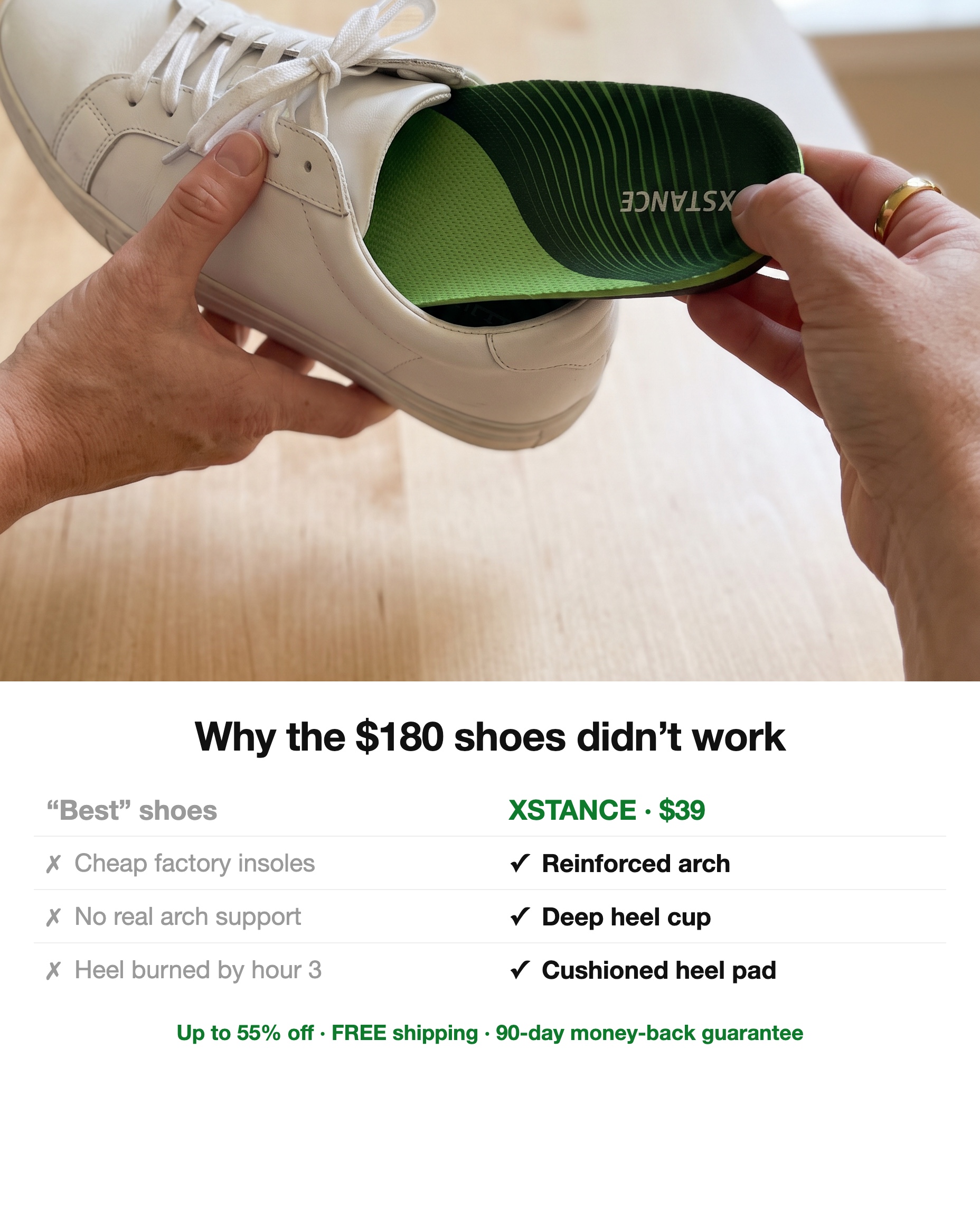
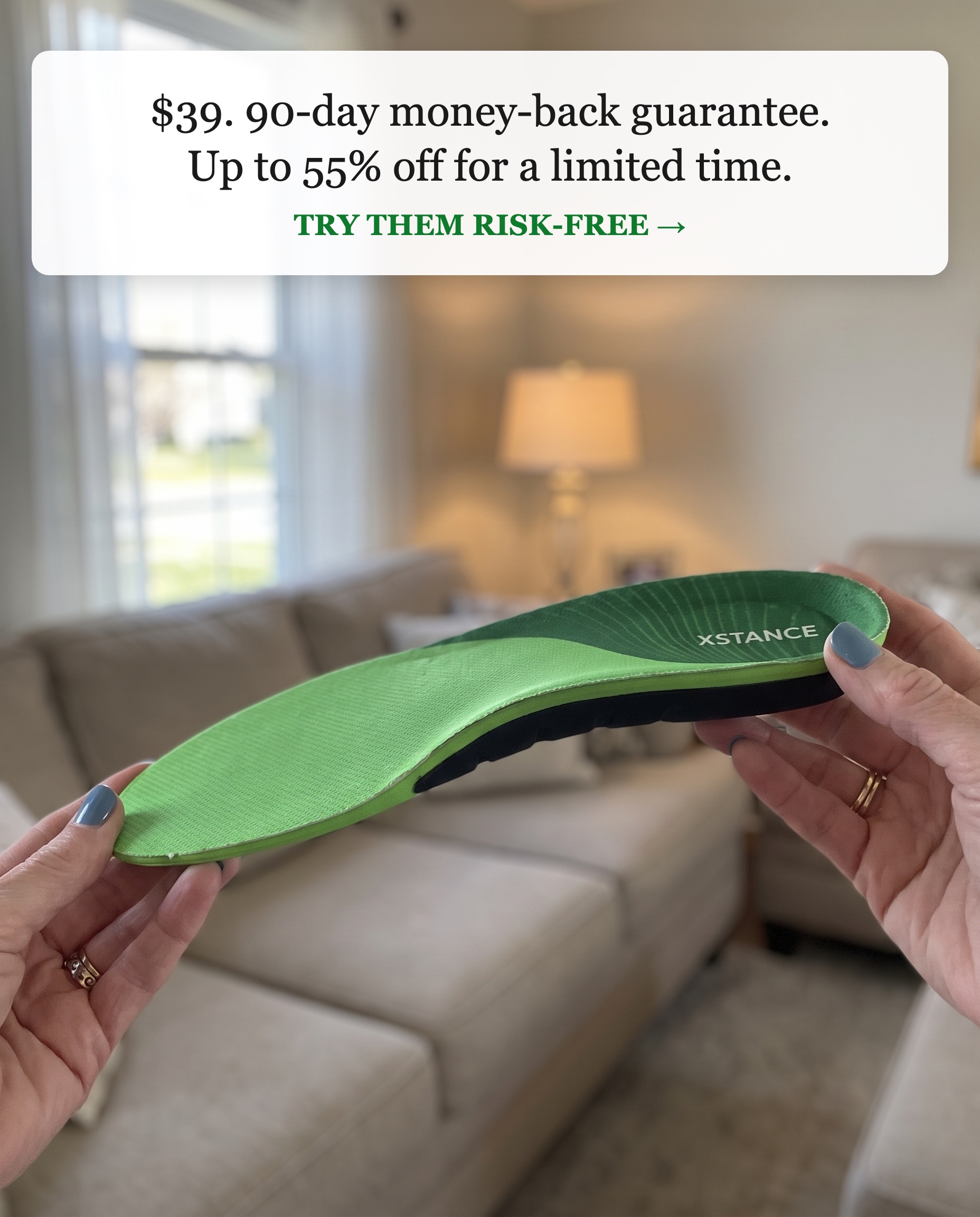
I watched my coworker walk across the parking lot after a double shift and I just stood there holding my car keys. I'm not exaggerating. I watched her the whole way. Carol Jensen. Sixty-one years old. Same diner, same section, same worn-out white sneakers for the nine years we've worked together. Except she wasn't wearing the worn-out sneakers. And she wasn't doing the walk. If you've worked on your feet long enough, you know the walk. The end-of-shift walk. Short steps. Weight on the outside of the foot. One hand touching the cars as you pass them, just in case. Carol had done that walk to her Buick every night for as long as I'd known her. That night she walked across the lot like a person going somewhere. Normal steps. Both feet. No hand on the cars. She caught me staring and stopped by my bumper. She smiled at me in a strange way and said, "Brenda. Sit in the car with me for a minute. I need to tell you something." I got in. She said, "Honey. It was never my heel." My name is Brenda. I'm 56 years old. I've been waiting tables at the same diner outside Dayton, Ohio for 27 years. Same floor. Same twelve tables. Mostly the same customers, truck drivers and retired couples and nurses coming off nights who order coffee and tell me everything. Here's something people don't know about waitresses. We watch feet. I can tell you which of my regulars has a bad knee by the way he slides out of the booth. I can tell which nurse had a brutal shift by how she steps down off the stool. I knew one of my Tuesday ladies was headed for a hip replacement a year before her doctor said the word. I notice everything about how people move. And I want to be honest with you. For about five years, I had been hiding how I move. Not in a dramatic way. Quietly. The way most people like me hide it. Every morning, the first step out of bed felt like stepping on something sharp. Not sore. Sharp. Like a knife going into my heel. I had a whole system for it. Sit on the edge of the bed. Flex the foot. Stand up holding the nightstand. Small steps to the bathroom on the outside edge of my foot. I did this every single morning and I never told my husband how bad it was. By the fourth hour of my shift, my heel would start burning. By hour eight I was shifting my weight at the register, leaning on the counter, standing on one foot like a bird. By closing time I was limping to my car and hoping nobody was watching me the way I watch everybody else. I kept a frozen water bottle in the freezer at home. Every night I rolled my foot on it in front of the TV. Twenty minutes of relief. Gone by morning. I have a drawer in my closet. In that drawer there are, I counted them, seven pairs of insoles. Gel ones. Green ones from the pharmacy. A hard plastic pair that cost real money and hurt so much I took them out after two days. Every one of them felt like something for about a week. Then nothing. I went to my doctor about it three years ago. She looked at my foot, pressed on the heel, and said the thing I think they say to everybody. Rest it. Ice it. Stretch your calves. Take ibuprofen. Then she said, "Brenda, you're on your feet ten hours a day. At your age, with your job, this is just something you're going to have to manage." So that's what I told myself. This is the job. This is my age. This is just what happens. I had no idea it wasn't supposed to. Carol is the kind of person you'd trust with your house keys. Sixty-one, raised three kids, works the morning shift so she can watch her grandson in the afternoons. She's never once called in sick in nine years. She's also the person I'd watched do the parking lot walk a thousand times. Some mornings I'd see her holding the door frame of the kitchen with one hand, waiting for her heel to accept the day. So when she sat me down in her Buick, I listened. She said, "About three months ago my brother Ray came through town. You remember me talking about Ray. He carried mail in Columbus for thirty years." She said, "He watched me get up off the couch and cross the living room and he said, Carol, how long have your mornings been like that." She said, "I told him it was nothing. And he sat me down at my own kitchen table and asked me questions like he had a list in his head. Is the first step out of bed the worst one. Does it ease up a little and then come back worse by the end of the day. Have you got a drawer full of insoles that worked for a week. Does ice help for twenty minutes. Did a doctor tell you to stretch and rest and live with it." She said, "Brenda. He named every single thing. Things I never even told my husband. Things I had decided were just my age and my job." She said, "And then he told me what somebody had finally explained to him after his own heel wrecked three years of his life. And I'm going to tell you. Because I have watched you hide that limp for five years, and I want you to hear this sitting down." I said, "Tell me." Here is what Ray had figured out, after trying everything I've tried and everything you've probably tried. The pain in your heel is real. But the heel is not the problem. The heel is where the problem shows up. The problem is what your foot is doing on every single step. For a lot of us, especially after years on hard floors, the foot rolls too far inward when it lands. You can't feel it happening. It's a tiny motion. But there's a band of tissue that runs along the bottom of your foot, from your heel to your toes, and every time the foot rolls in, that band gets stretched further than it should. Think of a rubber band. Stretch it a little, it's fine. Stretch it too far, over and over, thousands of times, and it starts to fray. It gets irritated. It gets angry. Now here's the part that explained my whole life to me. At night, while you sleep, that tissue finally gets a chance to settle down. It starts to calm and tighten up. Then you wake up, you take that first step, and you stretch it hard all over again. That's the knife. That's why the first step is the worst one. You're pulling on tissue that spent all night trying to recover. And then you do it again. Every step. All day. On concrete and tile. Thousands and thousands of little pulls. Ray called it a loop. The overnight settling, the morning tear, the all-day pulling, the overnight settling, the morning tear. Around and around. Carol looked at me in that car and said, "Brenda. Do you understand what that means? It means it's not that you're not doing enough. You ice it, you stretch it, you rest it on your day off. But every step you take is undoing it. You're re-injuring the same spot every single day and then wondering why it never gets better." I sat there with my keys in my lap and I didn't say anything for a while. Because I want you to understand what was happening in my head. She wasn't describing someone else. She was describing me. Every line. The first step. The wall. The burn at hour four. The bottle in the freezer. The drawer of dead insoles. The doctor shrugging. And I had a reason for every one of those things. The morning pain was my age. The burning was the job. The failed insoles were cheap junk. The relapses were my own fault for not stretching enough. I actually blamed myself. I'd tell people, it came back because I got lazy with my stretches. I had a perfectly good explanation for every single piece of it. And not once, not one time in five years, had I considered that it was all one thing. One motion. One small roll of the foot, repeated ten thousand times a day, quietly pulling apart the same spot faster than my body could put it back together. Everything clicked at the same time. Why the ice only lasted twenty minutes. Why rest days helped and workdays erased them. Why every insole felt good for a week and then didn't. I said, "Carol. What did you do about it." She reached down to her purse, and she pulled out an insole. Just held it up in the car like it was nothing. I started to laugh. I couldn't help it. I said, "Carol. I have a drawer full of those." She said, "I know you do. So did I. So did Ray. Now be quiet for one minute and let me finish." I got quiet. She said, "Every insole in your drawer did one job. The soft gel ones cushioned your heel. That's it. They made the landing softer, but your foot still rolled in exactly the same way, so that tissue still got pulled on every step. You cushioned the problem. You didn't stop it." She said, "And that hard plastic pair that hurt? That one actually tried to fix the roll. But it was so stiff you couldn't stand it, so it went back in the drawer after two days. And a fix you can't wear for a full shift is not a fix. It's a drawer ornament." She said, "That's the trap, Brenda. Soft ones you can wear all day, but they don't correct anything. Hard ones correct, but you can't wear them all day. And the only thing that breaks the loop is correcting the roll on every step, all day long, every day. Which means you need both at once. And nothing in that drawer of yours does both." Then she turned the insole over in her hand and showed me. She said, "These are called XSTANCE. Ray found them after everything else failed him. There are three parts, and all three matter." She said, "There's a firm piece under the arch. That's the part that stops your foot from rolling in too far. That's the part your gel ones never had. It takes the pull off that tissue on every single step." She said, "There's a cushioned pad under the heel, with a deep cup that holds it. That's for the landing. Your heel hits the ground thousands of times a shift and this takes the shock out of the exact spot that's angry." She said, "And the whole top is a soft layer, so it feels like a comfortable insole instead of a medical device. That's not a luxury. That's the whole point. Because if it isn't comfortable, you won't wear it for a ten-hour shift, and if you don't wear it, the loop starts right back up." She said, "Support to stop the roll. Cushion for the landing. Comfort so you actually keep them in your shoes. All three at the same time. That's the difference. That's why the drawer is full and the foot still hurts." I asked her the practical questions right there in the car. She'd asked Ray the same ones. They slide into regular shoes. Work sneakers, walking shoes, the kind of shoes people like us actually wear. You don't need special footwear. She'd had hers in the same pair of new sneakers for three months, on tile floors, six shifts a week, and they hadn't flattened out or gone dead the way the gel ones do. And she said, "They give you 90 days. You wear them for your shifts, your real life, your real floors. If your mornings and your shifts don't feel different, you send them back and they refund you. Ray checked. It's real. That's the only reason I tried them, honestly. I was done gambling on my feet." Then she told me her own story, and I'm going to tell it to you the way she told me. She said the first few days, the main thing she noticed was her arch. She could feel something under it, holding it, in a way that felt strange for a day and then felt like the most normal thing in the world. Around the end of the first week, she noticed her feet weren't screaming at hour six. Tired, yes. Screaming, no. Week two, she said, was the morning. She stood up out of bed, braced for the knife, and it was more like a dull complaint. She stood next to her bed and waited for it to get worse. It didn't. Week four, she worked a double on a Saturday, went home, and cooked dinner standing up. She said she was halfway through the dishes before she realized she hadn't gone straight to the couch with the frozen bottle. The bottle was still in the freezer. It had been in the freezer for two weeks. And week six was the parking lot. The night I watched her. She said, "I'm 61 years old, Brenda. I had accepted that limping to my car was part of my job. It took a piece of foam and plastic in my sneakers to show me it never was." Now I want to be honest with you, because I had every objection you're having right now, wherever you're reading this. I thought, I've tried insoles. Seven pairs. But then I sat there and really thought about those seven pairs. Every single one was a cushion. Softness. Padding. Not one of them ever did anything about the way my foot moves. I had been buying the same product seven times in different colors and calling it trying everything. This was the first time anyone had explained a reason my drawer was full. Not bad luck. Wrong job. The insoles were doing the wrong job. I thought, if this was real, my doctor would have told me. Then I remembered my doctor telling me to rest and ice and manage it. She wasn't wrong that rest helps. But rest was never going to happen. I work six shifts a week. Nobody in that office ever talked to me about what my foot does during the forty thousand steps I take on a shift. That's not what a twelve-minute appointment is for. I thought, they'll flatten out like all the others. But Carol's hadn't, three months in, six shifts a week, and she is not a small woman and she said so herself. And there was the 90-day thing sitting there. If they died in two weeks, they'd go back in the mail. I thought, it can't be this simple. A piece of foam. And then I remembered what she said in the car. It's not the foam. It's the three jobs done at once. Stop the roll, soften the landing, stay comfortable enough to wear every hour of every shift. Nothing in my drawer had ever done all three. Most of them had only ever done one. I ordered a pair that night on my phone, sitting in my own car in that parking lot. They came, and I put them straight into my work sneakers, and I want to walk you through what happened, because I didn't know what to expect and you probably don't either. The first shift, I'll be honest, was mostly just different. I could feel the support under my arch and the cup around my heel. Not painful like the hard plastic pair. Just present. By the end of that shift my feet were still tired. I remember thinking, here we go, drawer pair number eight. Day five is when something odd happened. It was almost nine at night, end of a long one, and I was wiping down my last table and I realized I was standing flat on both feet. Not shifted over. Not perched on one leg like a bird. Just standing. I stood there with the rag in my hand doing the math on how long it had been since hour eight felt like that. Week two was the morning. I sat on the edge of the bed, did my little routine, braced myself, and stood up. It wasn't gone. I want to be honest. But it was so much quieter that I actually took a second step just to check. Then a third. I walked to the bathroom on the whole bottom of my foot. Week three, I stopped doing the routine. I just got out of bed like a person. Week five, my Sunday regular, a retired truck driver who's been sitting in my section for eleven years, watched me cross the floor with four plates and said, "Brenda, you got new knees or something?" I told him it wasn't my knees. He wrote the name down on a napkin. I've had them for four months now. The frozen bottle is still in my freezer. My husband asked if he could finally throw it out. I said leave it. I like seeing it in there, not being needed. I'm not going to tell you my feet are twenty years old. I work ten-hour shifts on tile. My feet earn their tiredness. But tired is not the same as pain, and I had forgotten there was a difference. Mornings are just mornings now. The last hour of my shift is just the last hour of my shift. And I walk to my car at night with my keys in my hand, thinking about dinner, not about my heel. Two other girls at the diner have a pair now. One of them, our weekend cook, came in last Tuesday and said, "Brenda. I stood through both church services on Sunday and didn't think about my feet once." She's been cooking on concrete for nineteen years. I'm telling you all this because I spent five years hiding a limp in a parking lot, blaming my age and blaming my job and blaming myself for not stretching enough. And nobody ever told me the whole thing was one small motion, happening on every step, undoing everything I tried. If your first step out of bed feels sharp. If your heel starts burning halfway through your shift. If you've got a drawer of insoles that each worked for a week. If ice buys you twenty minutes. If a doctor told you to rest when resting is not a thing your life allows. If you've quietly started planning your days around your feet. You might not be getting old. You might not be falling apart. Your foot might just be re-pulling the same spot on every step, and nothing you've tried has ever once addressed the step itself. XSTANCE insoles have all three parts in one insole. The arch support that stops the inward roll. The cushioned heel pad that softens every landing. The soft comfort layer that makes them easy to wear for a full shift. They slide into your regular shoes. Over 300,000 people are wearing them, a lot of them people like us, nurses and servers and warehouse people who never get to sit down. Right now they're running a buy one, get one free offer. Carol told me most people do what she did. One pair for the work shoes, one pair for the everyday shoes, so your feet get the support on every step, not just the ones on the clock. And you get 90 days. Wear them for your real shifts on your real floors. If your mornings and your workdays don't feel different, send them back and they refund you. Every penny. That's how sure they are. I'm 56 years old. I'm a waitress in Ohio. I'm not a doctor and I'm not a foot expert. I'm the woman who has been watching people walk in and out of a diner for 27 years, and who hid her own limp the whole time. I'm telling you what Carol told me in the front seat of her Buick. Don't keep gritting through it. Every shift you push through is another day of pulling on the same spot. 👉 https://getxstance.com/article/5-reasons/ P.S. The guarantee runs 90 days from when your pair arrives, and it covers any reason. You don't have to keep them in perfect shape. Wear them, work in them, and if you're not feeling a difference, send them back for a full refund. I asked Carol about it before I ordered because I've been burned before. Ray checked it before her, and she checked it before me. You do have to actually mail them back to get the refund. Fair enough. P.P.S. If you're a nurse, or you work retail, or a warehouse, or a kitchen, and you've been telling yourself that limping to your car is just the price of doing an honest job on your feet, I want you to think about something. The people you work with who walk out fine at the end of a shift don't work less than you. Their feet just aren't undoing themselves on every step. It was never about how tough you are. Nobody who watched you work a double would ever question that. P.P.P.S. Carol sat in my section last week on her day off. She ordered pie and she watched me work the floor for an hour, and when I brought her check she said, "You don't do the walk anymore." I said I know. She said, "Best thing about it is you didn't even notice when it stopped." She's right. I don't remember my last bad morning. It just quietly stopped being part of my life. That's the kind of thing I want for you. 👉 https://getxstance.com/article/5-reasons/
Where the ad sends people
getxstance.com
Get Heel Pain Relief
Shoes and traditional insoles could actually be making people’s feet worse. They may feel comfortable in the moment, but might ignore the root cause. It’s time to upgrade to Xstance.
Learn more: getxstance.com(opens in a new tab)