

Quilting Art Studio
Active· since Jun 28, 2026
- 88
- days running
- 0
- relaunches
Ad copy
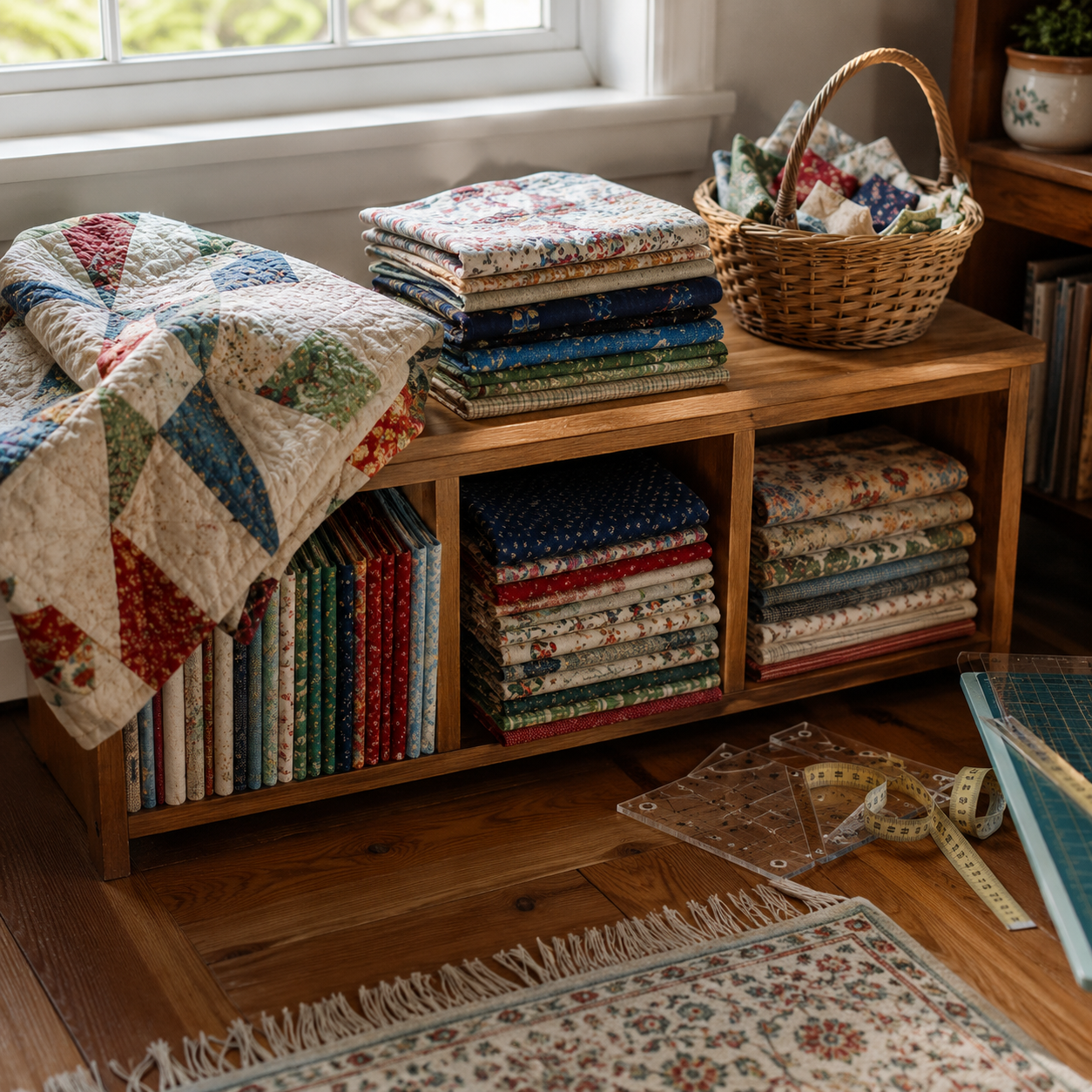
My neighbour had packed nearly $6,000 worth of quilting fabric into paper bags before I stopped her. She was planning to donate everything. Fabric she had collected for almost twenty years. Beautiful florals she had been saving for her daughter. Traditional prints meant for family quilts. Bundles that were no longer available in stores. And dozens of unfinished projects she had quietly decided were never going to be completed. Eighteen months later, fabric from those same shelves had become a small home quilting business. During her strongest holiday month, Christine brought home more than her daughter earned working full-time in an office. But the real reason she packed those bags had nothing to do with money. She had stopped believing anything she made was good enough for another person to want. Let me tell you what happened. Christine was 67 when her husband passed away. A few months later, she retired from the medical office where she had worked for more than thirty years. The retirement they had planned together disappeared before it began. There were no trips. No slow mornings together. No shared projects around the house. There was only Christine, living alone in a home that suddenly felt much too quiet. At first, people checked on her constantly. Her daughter visited. Friends brought food. Neighbours stopped for coffee. But gradually, ordinary life continued for everyone else. The visits became less frequent. The phone rang less often. Christine began spending entire days without speaking to anyone in person. Whenever I asked how she was doing, she gave me the same answer. “I’m keeping busy.” She was not keeping busy. She was trying to make the hours disappear. She watched television until lunchtime. Scrolled through her phone. Cleaned rooms that were already clean. Moved things from one cupboard to another. One afternoon, I stopped by without calling first. Her curtains were still closed even though it was nearly two o’clock. Christine was sitting at the kitchen table with a cup of tea that had gone cold. The television was on, but she was not watching it. I sat across from her. For several minutes, neither of us said anything. Then she looked at me and said: “I don’t think anybody needs me anymore.” That frightened me. Christine had spent most of her life being needed. By patients. By her husband. By her children. By her grandchildren. Now every day belonged to her, but she had no reason to get up and begin it. A week later, she showed me her spare room. That was where I saw the paper bags. The room was filled with fabric. Shelves stacked from one side to the other. Baskets of quilt blocks. Half-finished table runners. Quilt tops waiting for borders. Boxes of patterns she had purchased and never opened. Every stack had once been connected to a plan. Blue florals for her daughter. Pink and cream fabric for her granddaughter. Traditional prints for a quilt she wanted to make for her sister. But most of those plans had never left the room. I asked why she was giving everything away. Christine picked up an unfinished star block. “Because I ruin everything I touch.” One point stopped slightly before the seam. Another corner sat lower than the others. I would never have noticed unless she showed me. But Christine noticed immediately. That was what happened with almost everything she made. A block came out slightly too small. Two seams did not meet perfectly. A border became uneven. One binding corner looked different from the other three. She would stare at the mistake until it became the only thing she could see. Then she folded the project and placed it in the cupboard. Starting a new quilt made her feel hopeful. Finishing one made her feel exposed. She imagined people examining every seam and noticing every place she had gone wrong. So the projects accumulated. The fabric stayed folded. And the room slowly became a collection of everything Christine had almost made. I picked up a blue-and-cream table runner from the bottom shelf. It was nearly finished. Only the binding remained. “Why did you stop this one?” She pointed toward a corner. “These two points don’t meet.” They were off by less than the width of my fingernail. “I would put this on my dining table.” “You’re only saying that because you feel sorry for me.” “I’m not.” I asked what she wanted for it. She refused to name a price. So I placed fifty dollars on the table. “Finish the binding. I’m buying it.” She tried to give the money back. I refused. Two days later, she brought the runner to my house. I placed it on the dining table. The following weekend, my sister visited. She noticed it immediately. “Where did you buy that?” “My neighbour made it.” “Does she make them in green?” That became Christine’s first real order. She already owned several coordinated green fabrics. She chose a simple design and started working. Then the old fear returned. She unpicked the first block three times. Remade two sections because the points were not identical. Spent almost two weeks making one table runner. My sister loved it. She showed it to a friend. That friend wanted quilted cushion covers. Someone else asked about Christmas placemats. Within one month, Christine had six requests written on scraps of paper. Instead of feeling excited, she became overwhelmed. She did not know which order to start first. She mixed fabric from different projects. Bought more material because she was afraid she had measured incorrectly. Checked every seam repeatedly. And because she treated each small item like a competition quilt, she was earning almost nothing for her time. One evening, she called me. “I knew this was a foolish idea.” Nobody had complained. Nobody had returned anything. People were asking when they could order more. The problem was not Christine’s quilting. The problem was that she had no repeatable process. She was making every decision from the beginning for every order. She was also spending hours correcting tiny handmade differences that her customers did not consider mistakes. That changed after she met Ruth at a local quilting group. Ruth had sold quilted home pieces for years. Table runners. Cushion covers. Baby quilts. Wall hangings. Memory cushions. She looked through Christine’s work and said: “You are trying to make handmade pieces look factory-made.” Christine showed her the imperfect points. Ruth asked: “Is the seam secure?” “Yes.” “Is the piece flat?” “Yes.” “Is it the correct size?” “Yes.” “Does it look balanced when you step back?” “Yes.” “Then stop taking it apart.” Ruth explained that quality mattered. But quality did not mean removing every sign that a real person had made the piece. It meant creating consistency where consistency mattered. Accurate cutting. Reliable seam allowances. Correct pressing. Squaring blocks before assembly. Secure stitching. Clean finishing. Christine had been trying to repair everything at the end. Ruth showed her how to prevent small problems at the beginning. She also encouraged Christine to stop making every order completely different. Together, they chose three repeatable products: Table runners. Quilted cushion covers. Small wall hangings. Christine began preparing projects in batches. First, she selected and prepared the fabrics. Then she cut the pieces. Labeled each stack. Pieced similar units together. Pressed and trimmed everything before assembly. Finally, she added the backing, quilting, and binding. Same sewing machine. Same hands. Same spare room. A completely different process. Ruth also showed Christine the guide she used when helping newer quilters. Quilting Made Simple. Christine almost ignored it. She already owned shelves of quilting books. But most of those books showed finished quilts and assumed she understood everything between the diagrams. This guide explained the steps she had always guessed at. How to prepare fabric before cutting. How to maintain a consistent seam allowance. How to press without stretching the pieces. How to square blocks before joining them. How to add borders without creating waves. How to quilt and bind a project without becoming overwhelmed at the end. It also showed practical ways to fix common mistakes without tearing the entire project apart. For the first time, Christine stopped asking: “Can I make this perfectly?” She began asking: “What is the next clear step?” That question changed the room. The shelves were still filled with fabric. But now the stacks had labels. To cut. Ready to piece. Waiting for backing. Completed orders. She kept a simple notebook with: The customer’s name. The project. The measurements. The fabric. The deposit. The deadline. And the next action. Instead of thinking: “I have five orders to finish.” She thought: “Today I cut the pieces for two runners.” “Tomorrow I piece the cushion covers.” “Thursday I press, trim, and assemble.” The work became calmer. Faster. And far less confusing. Her first proper test was the community Christmas market. She prepared six table runners, eight cushion covers, four wall hangings, several sets of quilted coasters, and two baby quilts she could finish to order. The evening before the market, Christine called me. “I made too much. Nobody is going to buy any of it.” She almost stayed home. The next morning, we arranged everything on one folding table. Christine stood behind it looking terrified. The first customer picked up a blue table runner. “My mother had fabric like this,” she said. She bought it. A young couple purchased two cushion covers. A grandmother chose several quilted coasters as Christmas gifts. Another woman asked whether Christine could turn shirts belonging to her late husband into memory cushions. By lunchtime, more than half the table was empty. Christine kept looking at me as though she could not understand what was happening. She had spent years believing people would inspect every point and seam. They did not. They touched the fabric. Talked about their mothers and grandmothers. Imagined where the pieces would sit inside their homes. Asked whether she could make something in another color. They saw the complete piece. Christine had always seen the smallest mistake. By the end of the market, she had sold almost everything. She also had a page filled with new requests. That first month covered her materials and several household bills. The following month was stronger. Then customers began recommending her to friends. Christine learned which products were worth making. Which designs customers repeatedly chose. How much fabric each one required. How long the work genuinely took. How to price without apologizing. The paper bags she had once planned to fill with donations became bags for finished customer orders. Her daughter noticed the emotional change before she noticed the income. “You sound different,” she told Christine. “What do you mean?” “You sound busy. Not pretending to be busy. Actually busy.” Christine began opening the curtains in the morning. Making tea. Checking her order notebook. Entering the spare room knowing exactly what needed to happen next. Some days she sewed for two hours. Other days she worked longer. Some mornings were used for cutting and piecing. Others for packaging orders or meeting local customers. The business grew gradually. But Christine changed quickly. She started attending the quilting group every week. Leaving the house again. Speaking with customers. Making plans. Looking forward to Mondays. Last Christmas was her strongest month. She sold table runners, cushion covers, memory pieces, and several baby quilts. After subtracting fabric, batting, thread, packaging, postage, and selling fees, she took home more than her daughter earned from her office job that month. Her daughter checked the figures twice. Then she laughed. “Mom, your little quilting hobby paid you more than my job.” Christine laughed too. But later, she told me: “The money is wonderful. But knowing someone is waiting for something I made feels even better.” Customers now send her photographs. A runner beneath a family’s Christmas dinner. A baby wrapped inside one of her quilts. Memory cushions held by someone missing her husband. A wall hanging displayed inside a new home. Eighteen months earlier, Christine sat alone in a quiet kitchen believing nobody needed her anymore. Today, there are people waiting for work only she can make. Her hands never became perfect. Some points still finish early. Her binding corners are not always identical. But she no longer allows one imperfect corner to decide whether the whole piece deserves to leave the room. Christine did not build a home business because she was born with special talent. She built it because she finally had clear guidance, repeatable projects, and enough confidence to finish what she started. Of course, results depend on the projects, prices, costs, available time, and customer demand. But even without starting a business, the same process can help turn stored fabric into completed quilts, useful gifts, and work worth sharing. Quilting Made Simple teaches the complete beginner process: Fabric preparation. Accurate cutting. Consistent piecing. Pressing and trimming. Block assembly. Borders. Quilting. Binding. And practical ways to fix common mistakes. It also includes guided projects and more than 1,000 quilting patterns and ideas. The guide normally costs $100, but it is free today during the one-million-order celebration. You only cover the small processing fee. Christine once looked at her fabric-filled shelves and saw years of projects she had failed to finish. Today, she sees future orders. Future gifts. And work that gives her days a reason to begin. Sometimes the difference between bags of unused fabric and a home-based business is not talent. It is finally knowing what to do next. I will leave the link below. https://quilting-art.com/products/quilting-art
This Fabric Closet Became Her Home Quilting Business
At 67, Christine stopped hiding unfinished projects and started completing work people wanted to buy.
SHOP NOWLike this ad? Make it yours.
Crush rebuilds this exact creative around your product — your brand, your colors, your offer — in about a minute.