Foot Care Tips
Foot Care Tips Facebook ad: “Get Heel Pain Relief”
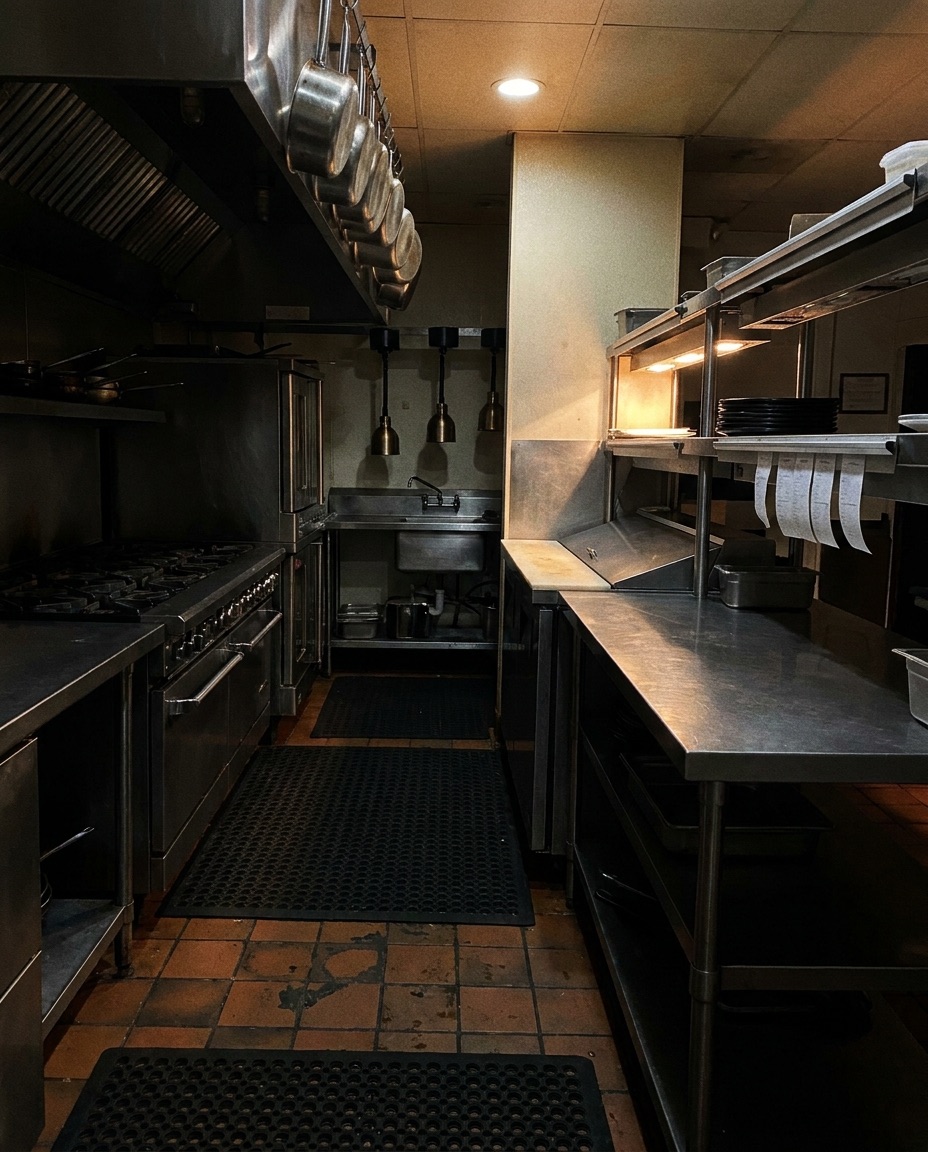
Ran for 12 days, from July 17 to July 29, 2026, the last day Crush saw it.
Run by Foot Care Tips on Facebook. Crush is not the advertiser and does not verify its claims. See this ad in Meta's Ad Library(opens in a new tab)
Want an ad like this for your product?
Crush makes new ad images for your product from this ad: your logo, your product photo, your offer.
Trials from $19.95 USD, then $79.95 USD a month. Cancel anytime.
About this ad
- Meta Ad Library ID
- 1033827985716497
- Platforms
- Facebook, Instagram, Audience Network and Messenger
- Relaunches
- 0
Ad text
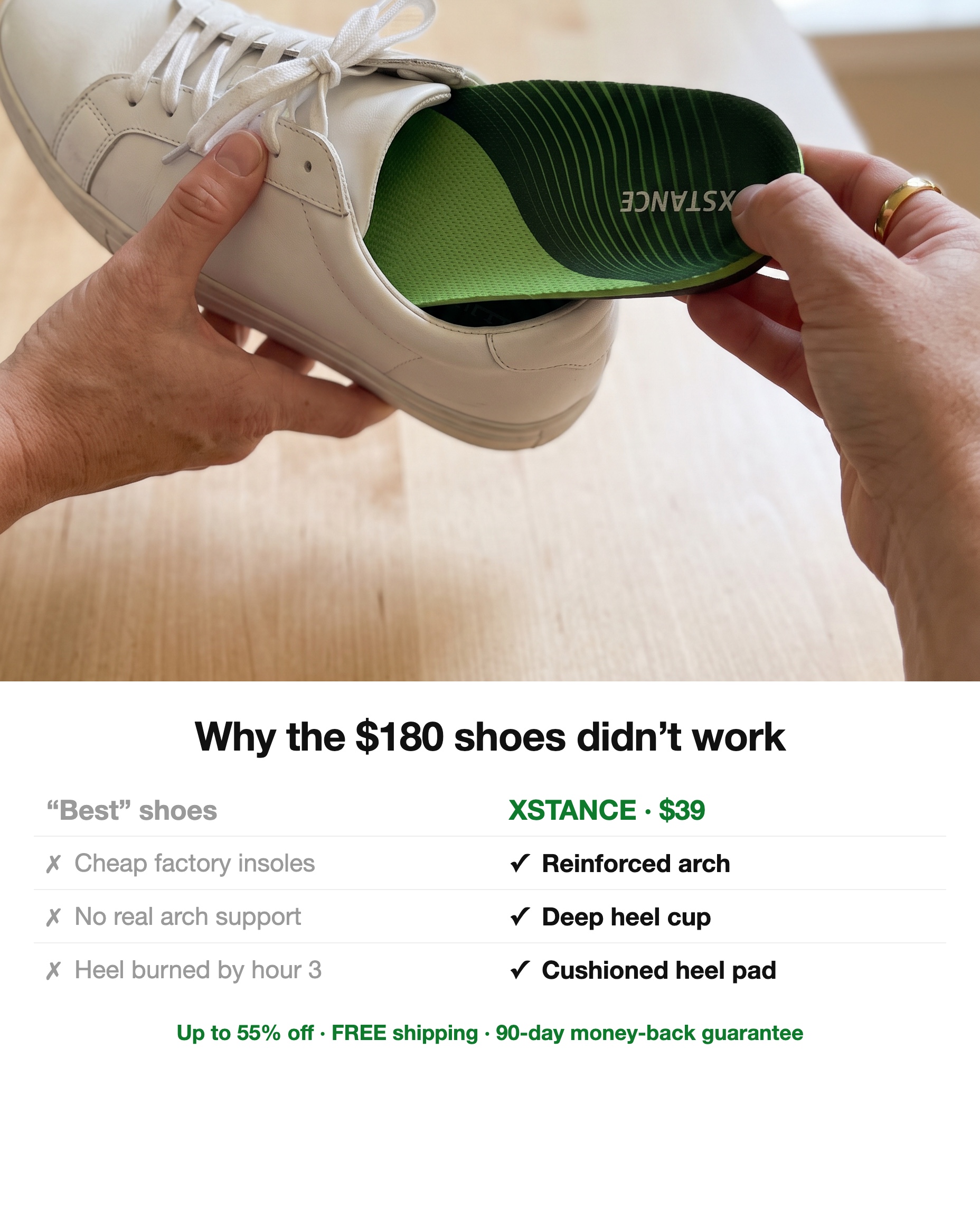
Chef Sal worked a Saturday double, four hundred covers, and at one in the morning he was standing at the pass telling war stories, and I stood there with a squeeze bottle in my hand doing the math on his feet. If you've never worked a kitchen, let me explain what Saturday at 1 a.m. looks like for the rest of us. It looks like the ice bucket. It looks like guys sitting on milk crates in the walk-in doorway with their clogs off. It looks like the special end-of-service walk, flat-footed, careful, that every cook over 35 does out to their car while pretending they're just tired. In a kitchen, your feet are the first thing the trade takes, and everybody knows it, and nobody says it, because saying it sounds like the beginning of your exit. Sal is 55. He's been in kitchens since he was 16. Two years ago he'd basically promoted himself off the line, expo only, office in the afternoons, the classic old-chef retreat that everyone respectfully doesn't mention. Then a couple of months back, he started jumping back on sauté during rushes. Then working full services. Then doubles. At 55. And standing at the pass at 1 a.m. telling stories, on his feet, by choice, when the milk crates were right there. I closed my station and said, "Chef. What is going on with your feet." He laughed, poured two coffees, and said, "Marco, sit down for five minutes. Somebody finally explained this to me, and I've been angry for two months that I spent thirty-nine years in kitchens and never heard it once." My name is Marco. I'm 41. I've cooked on the line for twenty-two years, since I was a dishwasher who got pulled onto fry station one short-staffed Friday and never left. Ten, twelve, fourteen hours a day on tile and rubber mats over concrete. I know exactly what my feet do for a living, and for the last four years, I've known it every single minute. Here's my honest day. First step out of bed, around ten in the morning because kitchen hours, a knife in my heel like I stepped on a shell. I've got the routine, hand on the wall, first steps on the edge of the foot. Prep goes fine, I loosen up, and prep fools me every day into thinking today's a good day. Then service starts, and somewhere in the second push, around hour eight of the day, the heel starts burning. By the end of service I'm shifting weight at my station like I'm standing on a boat. After close, I do the walk to the car. At home, the ice bucket. My girlfriend calls it my nightcap, and she's only half joking. And I've thrown the whole kitchen playbook at it. The good clogs, the hundred-and-forty-dollar ones every cook swears by, which were the answer for about six weeks. Then the other brand of good clogs. Gel insoles, several, each nice for a week before they flattened. Thicker mats at my station, which the chef actually approved, and which helped the way a softer boat helps seasickness. Ibuprofen on the shelf next to the salt. And one urgent-care visit on a rare Monday off, where a tired PA pressed my heel, said plantar fasciitis, handed me a stretch sheet, and said, "The real fix is rest. Can you get off your feet for a few weeks?" A few weeks. Off my feet. In a kitchen. I laughed, and she laughed, because she knew it too. That's not a treatment plan for a cook. That's a career change wearing scrubs. So I believed the kitchen math. The trade takes the feet, the ice bucket is the pension plan, and one day you either move to expo like Sal did or you move to a food truck with a stool, and either way the line is done with you before you're done with it. I'm 41 and I'd already started that math, which is the part I never said out loud. Then Sal sat me down with the coffees and told me his story. He said, "My physical therapist neighbor watched me get out of a lawn chair at a cookout and cross my own backyard, and he said, Sal, how long have you walked like that. And I gave him the chef speech. Thirty-nine years on the line, my friend. The kitchen collects." He said, "And Marco, he asked me questions like he was reading tickets off my rail. Is the first step after you sleep the worst one. Does prep feel fine and does the burn show up mid-service. Did the famous clogs work for exactly six weeks. Have you flattened a drawer of gels. Is there an ice bucket at home with your name on it. Did you promote yourself off the line and tell everyone it was about mentoring." Sal looked at me over the coffee and said, "I told everyone it was about mentoring, Marco. Everyone. He read it off me in one look." And then the neighbor explained it, and Sal explained it to me at the pass, and I'll plate it for you simply. The pain is in your heel. The problem is not in your heel, and it's not the hours either. The problem is inside each step, and a service is thousands of them, tiny ones, pivots and half-steps between the stove and the pass, plus hours of standing loads in between. There's a band of tissue that runs along the bottom of your foot, heel to toes. In a lot of us, when the foot lands, or even when you pivot your weight onto it, it rolls too far inward. Small motion. Invisible. But every load, that band gets stretched further than it's built to go. Rubber band. Stretch it gently, fine. Overstretch it a few thousand times a service, on tile over concrete, shift after shift, and it frays, and it stays inflamed. Overnight, whatever's left of your night after a close, the band settles and starts to knit. Your first step at ten a.m. tears it back open. That's the shell under your heel. That's why the first step is the worst one, and why prep feels fine, the count hasn't caught up, and why the second push is when it collects. Every day. Like a ticket rail. Because that's what it is, a counter, and your day runs it to the same number at the same hour, every shift. Sal said, "It's a loop, Marco. Knits at night, tears in the morning, pulls all service. And look at the playbook. Ice calms the tissue. Ibuprofen calms the tissue. The clogs and the gels and the fat mats cushion the tissue. Expo rests the tissue. Every single thing this industry has ever handed either of us was aimed at the tissue. Nothing was ever aimed at the roll. I didn't mentor myself off the line, Marco. I cushioned and rested a wound that got torn open again every single morning, for two years, and then wondered why expo never healed me." I stood at that pass and heard four years fall into place. Why the famous clogs were the answer for exactly six weeks. Fresh cushion, same roll. Why the gels died in a week under a cook's day. Why my rare two-day weekends helped and the Friday double erased them. Why the ice bucket never got me one net inch better in four years. It was calming, every night, a wound I re-opened every morning. I said, "Chef. What did the neighbor give you." He reached under the pass, into his knife bag of all places, and set an insole on the counter. I laughed out loud. I said, "Sal, I have a shelf of those at home next to the ibuprofen." He said, "So did I. Now drink your coffee and listen, because this is the part he made me say back to him. Everything on your shelf does one job. Cushion. Softer landings on a roll that never stops rolling. And the hard orthotics podiatrists make, those fight the roll, but nobody can stand a fourteen-hour double in them, so they die in lockers. Comfort that fixes nothing, or a fix no cook can wear. That's the entire market we've been shopping in our whole careers." He said, "This is XSTANCE. Three parts, like a proper mise. A firm support under the arch that actually stops the inward roll, on every step and every pivot, that's the piece your shelf never had. A cushioned pad under the heel in a deep cup, for the landings on that tile, right at the sore spot. And a soft top layer, so it's comfortable at hour thirteen, and Marco, that's not a nicety, that's the mechanism. If it isn't comfortable at hour thirteen, it comes out of the clog by Sunday, and the loop starts back up Monday." He said, "Stop the roll. Soften the landing. Comfortable for a full double. All three at once, every shift. That's why the shelf is full and the heel still hurts. The shelf only ever sold one job." I asked the kitchen questions. They fit in the clogs, in kitchen sneakers, in whatever's on your feet during service. His had two months of full services on them, doubles included, and hadn't flattened, and Sal reminded me the gels never survived three weeks of a cook's day. And he said, "Ninety days, money back, any reason. You work real services in them, and if your first steps and your second pushes don't change, ship them back for every dollar. My neighbor checked, I checked. Marco, this industry has never once offered either of us a refund on anything for our feet. That alone made me pay attention." His timeline, plated small, the way Sal talks. Week one, felt the arch holding, weird through one prep, then normal. Week two, the second push came and went without the burn firing. Week three, first steps went from shell to grumble. Week five, he jumped on sauté for a Friday rush because a kid called out, and the next morning was normal, and he said that's the day he got angry about the thirty-nine years. Week seven, he worked the Saturday double. Week eight, he was telling stories at the pass at 1 a.m., which is where I came in. He said, "I gave up my line, Marco. My line. Over one small motion that not one person in this business ever mentioned to me. Don't you give up yours at 41." My objections, fired quick, because they're yours. The famous clogs were supposed to be the answer, and they were, for six weeks, which is exactly how long fresh padding outruns an unfixed roll. Everything flattens under a cook's day, but everything foam flattens, and this has structure where those had gel, two months of Sal's doubles and holding, and if it quits, ninety days, back it goes. The PA said rest, and the PA wasn't wrong that rest helps, but rest was never on my menu, and nobody at that urgent care ever asked what my foot does when it lands, because that's not what those visits are. And the quiet one, the real one, I'm 41 and I'd already started the exit math. Sal is 55, thirty-nine years in, and he's back on sauté. The math was wrong. I ordered a pair that night, sitting in my car in the alley behind the restaurant, which used to be where I gathered myself for the walk and is now just where I park. My honest timeline. Week one, solid under the arch, cupped at the heel, feet still cook-tired after close. Figured I'd bought the deluxe version of the shelf. Day nine, a slammed Friday, second push, and somewhere around ticket forty I realized I was standing square at my station, not doing the boat dance. I stood there with tongs in my hand doing the math on how long it had been. Week three, the first step at ten a.m. Braced on the wall out of habit, got a mutter instead of a shell. Not gone. Chefs don't oversauce and I won't either. Quieter, clearly, and quieter again the next week. Week five, I got home after a close and realized in the shower that I'd forgotten the ice bucket. Just forgot it. It's been in the cabinet since. Week seven, Saturday double, four hundred covers, and at one in the morning I was the one at the pass telling stories, and I caught Sal watching my feet and grinning. Four months in. Same pair, still holding, through a summer of services. Three cooks at our place have them now, and our dishwasher, who is 58 and has stood at that sink longer than I've been alive in kitchens, pulled me aside last week and said, "Marco. Sunday I took my wife to the flea market after a Saturday close. Walked the whole thing. She thought I was sick." Fifty-eight years old, on that rubber mat six days a week. I'm telling you this because I spent four years icing my heel at 2 a.m., cycling through famous clogs, doing exit math at 41, and believing the kitchen collects and the ice bucket is the pension. And the whole time it was one small motion, a few thousand times a service, tearing the same spot, while everything this industry sells cushioned around it. If your first step after sleep is a shell. If prep feels fine and the second push is when it collects. If the famous clogs worked for exactly six weeks. If there's an ice bucket at home with your name on it. If you've quietly started the exit math, expo, catering, the food truck with the stool. The kitchen didn't collect your feet. One small motion did, on every step and pivot, and nothing on that shelf ever addressed it. That's fixable, and fixable means the line isn't done with you. XSTANCE insoles do the three jobs at once. A firm arch support that stops the inward roll on every step and pivot of a service. A cushioned heel pad in a deep cup for thousands of landings on tile over concrete. A soft top layer that's still comfortable at hour thirteen, so it stays in the clog, which is the whole mechanism. They fit clogs, kitchen sneakers, whatever you cook in. Over 300,000 people wear them, and plenty of them smell like fryer oil at the end of the day, same as us. Buy one get one free right now. One pair in the kitchen shoes, one in the day-off shoes, because the loop doesn't check the schedule, and your day off has steps in it too. Ninety days, money back, any reason. Real services, real doubles. If your first steps and your second pushes don't change, ship them back for every dollar. First refund this industry has ever offered your feet. Take it. I'm 41. I've cooked on the line for twenty-two years, and I've stopped doing exit math. I'm not a doctor. I'm the cook who watched a 55-year-old chef work a four-hundred-cover double and stand at the pass at 1 a.m. telling stories, and had the sense to close his station and ask. Don't give the line one more year of the ice bucket. Every service you grit through is thousands more pulls on the same spot. 👉 https://getxstance.com/article/5-reasons/ P.S. The guarantee is 90 days from delivery, any reason. Cook real services in them, doubles included. If nothing changes, ship them back for a full refund. I read the terms in the alley before I ordered, because twenty-two years of "chef-recommended" products made me a skeptic. You do have to actually mail them back. Fair enough. P.P.S. To the dishwashers, the prep cooks, the servers, the bartenders, the bakers who start at 4 a.m., everyone on that same tile without a station of their own. Same floor, same loop, same fix. The step count doesn't check the org chart. And to every cook doing quiet exit math at 38, 41, 45, from one line cook to another, run Sal's numbers before you run yours. Fifty-five, thirty-nine years in, back on sauté by choice. The math you're doing assumes the pain is the trade. It never was. P.P.P.S. Last Saturday after close, Sal and I were the last two out, and in the alley he stopped and said, "You know what I missed most up at expo? Not the cooking. The last hour. The stupid stories at the pass when service is won and everybody's still standing there because nobody wants to leave yet." Then we stood in that alley for twenty more minutes doing exactly that, two cooks with sixty years of tile between us, on our feet, for fun. That's the whole thing I want for you. 👉 https://getxstance.com/article/5-reasons/
Where the ad sends people
getxstance.com
Get Heel Pain Relief
Shoes and traditional insoles could actually be making people’s feet worse. They may feel comfortable in the moment, but might ignore the root cause. It’s time to upgrade to Xstance.
Learn more: getxstance.com(opens in a new tab)