
Inactive· since Aug 10, 2026
- 10
- days it ran
- 1
- relaunches
- 384
- EU reach
Ad copy
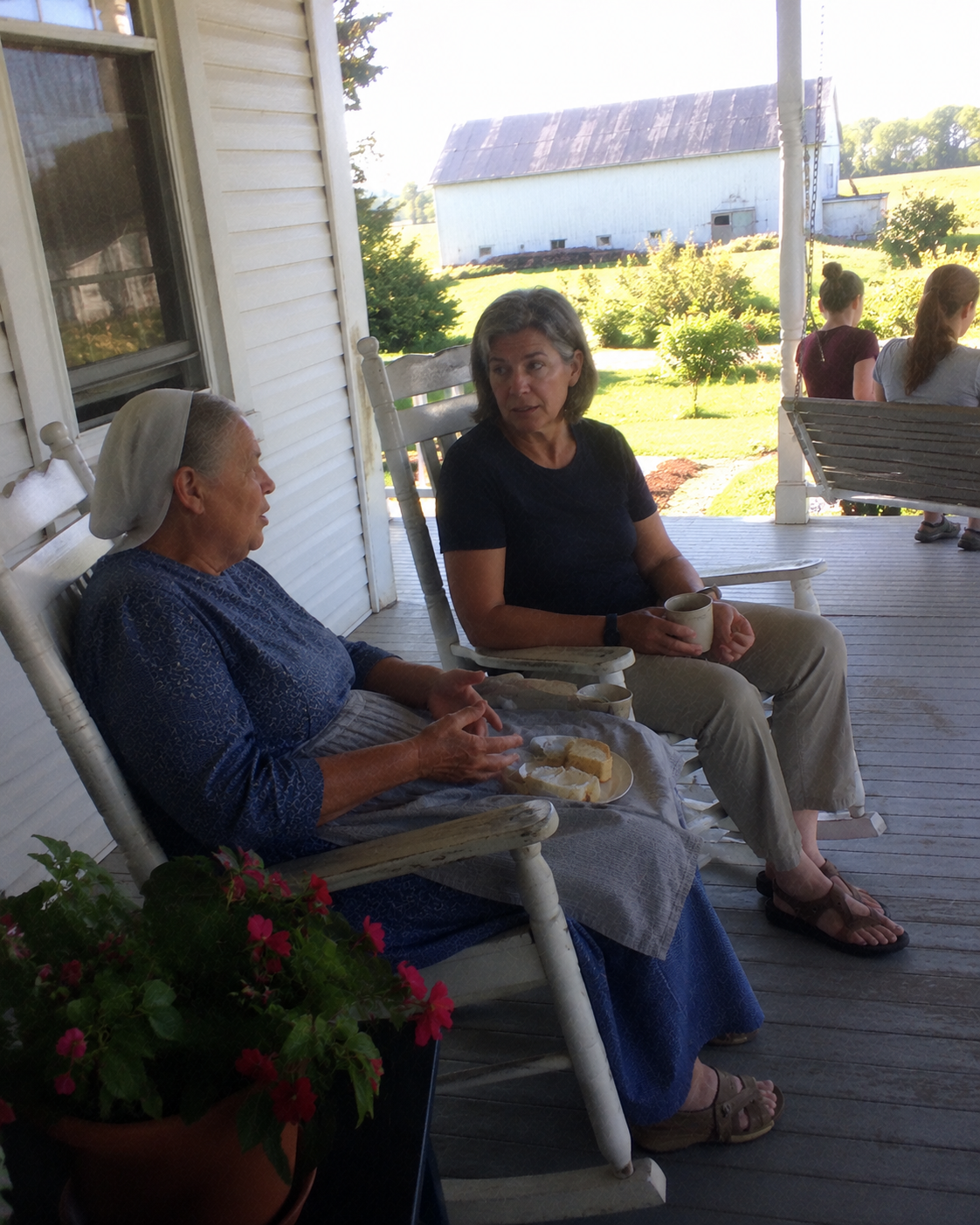
For two years I have been doing every single thing the wellness literature told me to do — the same wellness literature I taught for thirty years — and my body has not been quite giving me back what I have been putting in. My name is Kathleen. I am sixty-two years old. I was the corporate wellness program director at a mid-sized manufacturing company for twenty-eight years. I designed walking challenges. I ran biometric screenings for eight hundred employees. I taught stress management workshops. I retired at sixty. My husband Roger is sixty-four. He was the director of the small funeral home in our town for thirty-two years. He retired the year after I did. We have been married thirty-seven years. Two grown daughters. Three grandchildren. I want to tell you about a Tuesday afternoon in mid-August at an Amish farmhouse porch forty minutes from our small city, because it is when a woman I had only met twice in thirty years said something to me on her porch that I have been thinking about ever since. I taught wellness for thirty years. I told eight hundred employees a year to walk. To eat well. To sleep. To manage stress. To stay social. To do their annual bloodwork. I did every single one of these things myself for thirty years while I was telling them to do it. I have kept doing every single one of these things for the two years since I retired. I walk five miles a day. I eat well. I sleep seven and a half hours most nights. I stay social. I do my annual bloodwork. And for two years I have been quietly feeling off. Nothing dramatic. My energy has been a shade lower than it used to be. Same walk, less lift. My sleep has been fine on the clock but I have been waking up feeling like I slept for six hours instead of seven and a half. My mood is fine. Not depressed. Just a shade less spring in it than I used to have. I look in the mirror and I think I look like a woman two years older than I did two years ago. Not seven years older. Two. My annual bloodwork last spring came back within range. Everything. My doctor is a good doctor. She looked at the numbers and she looked at me and she said, "Kathleen. You are doing well for a woman your age. Keep doing what you are doing. Come back next year." I said, "Alright." I drove home. I did not know what to do with an answer that was not an answer. I kept doing what I was doing. Roger's funeral home has served the Amish and Mennonite families in a Plain community about forty minutes from us for over thirty years. When someone in the community passes, Roger has quietly worked with the family to help with the paperwork the community needs from the outside world. The death certificate. The transportation. The state. He has been at it for so long that many of the Plain families in the community know him by name. He knows them by name. It is a professional relationship that has slowly warmed over three decades into a real friendship with several of the families. One of those families is the Millers. Roger has served them three times over thirty years — a grandfather thirty years ago, a grandmother fifteen years ago, and a young cousin killed in a farming accident eight years ago. Each time the family invited Roger to the meal after the funeral. Twice I went with him. The current matriarch of the Miller family is Lydia. She is seventy-three. Lydia is a small woman with a warm face and quick hands. Her husband John is seventy-six. He still walks the fields with their oldest son every day. I had met Lydia twice in thirty years. This August Lydia called our house from the phone at the end of their farm lane. She invited Roger and me to a small Tuesday-afternoon get-together for John's seventy-sixth birthday. Roger said yes. I said yes. We drove out on a Tuesday afternoon in mid-August at two-thirty. The get-together started at three. The Miller farm sits at the end of a gravel lane. A white farmhouse. A large barn. A small dairy operation. A kitchen garden Lydia was pulling green beans from as we drove up. Lydia met us at the porch steps. She hugged Roger. She looked at me. She said, "Kathleen. Come sit on the porch with me." She led me to a small painted rocking chair on the porch. She sat down next to me in another rocking chair. The men — Roger, John, their four grown sons — went out to walk the fields. Rebecca, Lydia's daughter-in-law who is forty-eight, brought coffee out. Two of Lydia's granddaughters — Sarah and Anna, both in their early twenties — sat on the porch swing. Rebecca cut John's birthday cake and passed it around. For the first twenty minutes we talked about the weather. About Rebecca's cake. About my small city and how it had changed since Lydia had last been there ten years ago. Then Lydia said, "Kathleen. May I ask you something." I said, "Please." Lydia said, "Roger told me at John's grandfather's funeral thirty years ago that his wife was a corporate wellness director." "He told me at his grandmother's funeral fifteen years ago that his wife walked five miles every day and ran a walking program at her company." "He told me at Ezekiel's funeral eight years ago that his wife had just done her fortieth annual physical and everything was fine." She said, "I have been thinking about you for thirty years. Roger has been telling me about a woman who was walking five miles a day and running a wellness program for eight hundred people. I have been walking to the barn and back and running a household for fifty-one years." Lydia said, "How are you feeling." I laughed, a little. I said, "Lydia. That is a specific question." Lydia said, "It is. I ask it because Roger did not mention you at Ezekiel's funeral. He mentioned his own retirement. Not yours." "And this year when he called about the birthday get-together, he mentioned you had retired two years ago. And he mentioned you had been quiet since." I set my coffee cup down on the porch railing. I said, "Lydia. I have been feeling off for two years." Lydia said, "You have been doing everything right." I said, "Yes." Lydia said, "May I tell you what I have been on for four years?" I said, "Yes." Lydia said, "I was sixty-nine when I first noticed. Not tired. Not sick. Just running with a shade less than I used to have." "I went to Dr. Fisher. He has been our doctor here for thirty years. He did the workup. Everything came back within range. He said, 'Lydia, you are sixty-nine and you have been in your kitchen since five in the morning for forty-seven years. Your body is fine. Keep doing what you are doing.'" "I kept doing what I was doing. It kept feeling the same." She said, "About that year I read a small article in a magazine that circulates in our community. It was in the health section at the back. Two paragraphs on a growing body of research on molecular hydrogen and cellular wellness. About twenty years of studies." "Not new. Not a fad." "I read the article twice. I took it to Dr. Fisher. He said it was a sensible thing to add to what I was on, which was a multivitamin. No interactions to worry about. Mention it at the next visit." "I ordered a bottle. I have been on it for four years now. I am seventy-three." Lydia said, "Kathleen. I want to tell you what I honestly think about that." "I am seventy-three because I have been in this kitchen since five in the morning for fifty-one years. Because I eat what our farm grows. Because I sleep because my body is tired at the end of every day. My mother lived to eighty-nine. My father lived to ninety-one." "Dr. Fisher credits the kitchen and the farm and the sleep and the family longevity." "I do not credit the tablet for my mornings." She said, "But I have been on it for four years and my mornings have been mine." Then Lydia said the thing I have been thinking about ever since. She said, "Kathleen. I have been running my rhythm for fifty-one years because I did not decide to run it. My mother ran her rhythm for fifty-nine years because her mother ran hers. I have not been following the wellness literature. I have been living in a kitchen and on a farm." "You have been running your rhythm because you decided to. That is a different thing." "You have been doing every part of what I have been doing. But you have been doing it as a project." "And a project takes something out of you that a life does not." "I do not know if that has anything to do with why you have been feeling off. I know it has been part of my own noticing at sixty-nine. Not the whole of it. But part of it." She said, "The tablet does not fix that. Nothing fixes that. What I can tell you is that the tablet has been part of what I have been on for four years, and my mornings have been mine." Lydia reached into her apron pocket for a small folded piece of paper and a pencil. She wrote the brand. PrimeCell H2. She said, "Rapid-dissolve tablet. Drop it in a tall glass of cool water. It fizzes. Drink it fresh, right away." "Hydrogen is the smallest molecule that exists. It escapes the moment it meets heat or is left sitting. So the tablet dissolves fresh and you drink it right away. Tablet, cool water, drunk fresh, right away." "Third-party tested for purity. One tablet, once a day. Added to whatever else you are already on." She said, "It is looked at for supporting the body's natural antioxidant balance at the cellular level, along with supporting cellular wellness and healthy circulation." "That is what it is. A supplement that supports what the body is quietly trying to do at the cellular level." She handed me the paper. She said, "Kathleen. Talk to your doctor. If your doctor thinks it is a sensible thing to add to what you are on, add it. If not, don't. That is the whole of what I have to tell you today." "But the other thing I said — about running your rhythm as a project — no doctor can help you with that one. That is yours." I put the paper in my purse. I said, "Thank you, Lydia." Lydia said, "Come back for John's birthday next year. Let me know how you have been." Roger and I drove home in the evening. Roger said, "What did Lydia say to you on the porch." I said, "She said I have been doing everything right and it has not been enough." Roger was quiet for a while. Then he said, "Kathleen. Do you want to talk to Dr. Sullivan?" I said, "Yes." I called Dr. Sullivan Monday morning. The nurse called back Tuesday afternoon. Dr. Sullivan said it was a sensible thing to add. No interactions to worry about. Mention it at my next visit. I ordered a bottle Tuesday night. It came Friday. Saturday morning I sat at the kitchen table with my coffee. Roger sat across from me. I dropped a tablet into a tall glass of cool water. It fizzed. I drank it fresh, right away. It tasted like water with a small mineral edge. Roger said, "Is that the thing from Lydia." I said, "Yes." He said, "Good." I drank one every morning after that. I am one woman. My body is my body. What has happened for me might not happen for the woman reading this. Bodies are different. The first three weeks I noticed nothing. Lydia had told me it was a slow thing. The layer it supports builds up gradually. I drank my glass of cool water every morning. I walked my five miles. I went about my week. I did something else too. I stopped tracking my walks in the app I had been using for seven years. I stopped logging my meals. I stopped color-coding my biometric screenings on the spreadsheet I had kept on my desk since 2007. I just walked. I just ate. I just slept. Around the middle of the third month I woke up on a Wednesday morning in November and lay in bed for a minute. I felt like I had slept seven and a half hours. I had slept seven and a half hours. For the first time in two years the clock and the way my body felt were the same. I got up. I made coffee. I did not tell Roger. I did not write it down. I put my head on the kitchen table for a minute. Over the next couple of months there were other small things. My morning walk started giving me a small lift again. Not every morning. Most mornings. I decided at a Thursday-evening dinner with Roger in December that I wanted to start volunteering one afternoon a week at the community center helping seniors sign up for library cards. I had been thinking about it for two years and I had been too tired to start. I called them Monday. Roger said, "Kathleen. You have color in your face." I said, "I know." The following August we drove back to the Miller farm for John's seventy-seventh birthday. I sat on the porch with Lydia. She looked at me. She said, "Kathleen. You have color in your face." I said, "I know." Nothing dramatic. I stopped running my rhythm as a project. I want to be honest. I am not the woman I was at fifty. I do not need to be. There are still mornings when I wake up and lie in bed for a minute and my body feels a shade slower than the clock. There are still afternoons when the small lift from the morning walk did not quite come. I am not saying this supplement did any specific thing for me. My doctor at my last visit did not credit the tablet. She credited the walking I have been doing and the fact that I have kept volunteering and the fact that I stopped color-coding my biometric screenings on a spreadsheet. She is a good doctor. What I can tell you is what Lydia told me on her porch on a Tuesday afternoon in mid-August. And what has been true for my mornings for over a year. I stopped running my rhythm as a project. That is enough for me. Here is what the product is, plainly. It is a rapid-dissolve tablet you drop in a tall glass of cool water. It fizzes. You drink it fresh, right away. It supports the body's natural antioxidant balance at the cellular level. It supports cellular wellness. It supports healthy circulation. That is what it is for. A supplement that supports what the body is quietly trying to do at the cellular level. It is a slow thing, taken steadily. The layer it supports builds up gradually. It is a glass of water you drink every morning, whether the last morning was easy or the last morning was hard. If you are a woman reading this and you have been doing everything the wellness literature says to do — the walking, the eating, the sleeping, the annual bloodwork, all of it — and you have still been quietly feeling off for a year or two, and your doctor has told you the workup is within range and to keep doing what you are doing: Talk to your doctor or your pharmacist. Both, if you can. Ask the plain question: is this a sensible thing to add to what I am already on? If they say yes — and there is a fair chance they will — it is a tablet in a tall glass of cool water in the morning. Added to what you are already on. If they say no, then no. Either way, you have had a conversation you weren't going to have. And if there is a Lydia in your life — a woman who has been living her rhythm for fifty years and can see the difference between a life and a project — sit on her porch and drink her coffee. I had been running my rhythm as a project for thirty years. It took an Amish woman I had met twice in thirty years to sit down next to me on her painted porch rocker and tell me plainly. That is the whole of it. That is what a Tuesday afternoon at a small dairy farm, and a folded piece of paper from an Amish apron pocket, and a phone call to my doctor's office, between them left me with. I would be a poor sort of wellness director not to pass it on. P.S. Lydia sent me a small jar of apple butter she made in October. Rebecca brought it over when she was in our small city for supplies. Rebecca had my address from Roger. She dropped the jar off at the front door and left a small note in Lydia's handwriting: "Kathleen. For your kitchen table. Not for your spreadsheet." I laughed when I read it. Then I put it on the kitchen table. P.P.S. I keep a spare bottle in the cupboard now. PrimeCell is a small company and they've sold out before, and a woman who spent thirty years running wellness programs for eight hundred people is not about to run low on the thing she adds to a morning that has been feeling like her mornings. It sits next to my coffee, every day. P.P.P.S. The steps, in order: Call your doctor or pharmacist first. Ask if it is a sensible thing to add to what you are already on. If yes, drop one tablet in a tall glass of cool water each morning and drink it fresh, right away. Then give it a few weeks. Be patient with yourself. P.P.P.P.S. PrimeCell H2 has a 90-day money-back guarantee — not satisfied for any reason, every penny back, no questions. For a supplement, that is the only sensible policy. Enough time to actually tell, instead of deciding in a week. I'd take the full ninety days. P.P.P.P.P.S. Our older daughter Rachel came over last Sunday afternoon with her family. She has been running a wellness program at her mid-sized company for six years now — the same job I had at a different company for twenty-eight years. She was in the kitchen with me while I made coffee. She said, "Mom. You seem different." I said, "How so." She said, "You look like you are not counting things." I said, "Rachel. I stopped counting things." She said, "Mom." I said, "Rachel. There is a woman named Lydia I want you to meet someday." She said, "Alright." Then Rachel's little boy Ben, who is five, came into the kitchen and asked if he could have a cookie. Rachel said yes. I gave him a cookie. He ran back into the family room. Rachel sat down at the kitchen table. She said, "Mom. I have been feeling off for about a year." I looked at her. That is not a headline. It is a daughter at a kitchen table. But a woman who spent two years running her rhythm as a project will tell you a daughter at a kitchen table saying she has been feeling off is the whole thing. https://track.getamalahealth.com/5548c06d-d9c3-4785-b466-fec64a6fdb28 Individual experiences vary. These statements have not been evaluated by the FDA. This product is not intended to diagnose, treat, cure, or prevent any disease.
Fix Yourself at the Cellular Level
PrimeCell H2 is a next-generation molecular hydrogen tablet formulated to support your body's natural antioxidant defenses — helping you feel sharper, more energized, and more like yourself.
LEARN MORELike this ad? Make it yours.
Crush rebuilds this exact creative around your product — your brand, your colors, your offer — in about a minute.