Foot Care Tips
Foot Care Tips Facebook ad: “Get Heel Pain Relief”
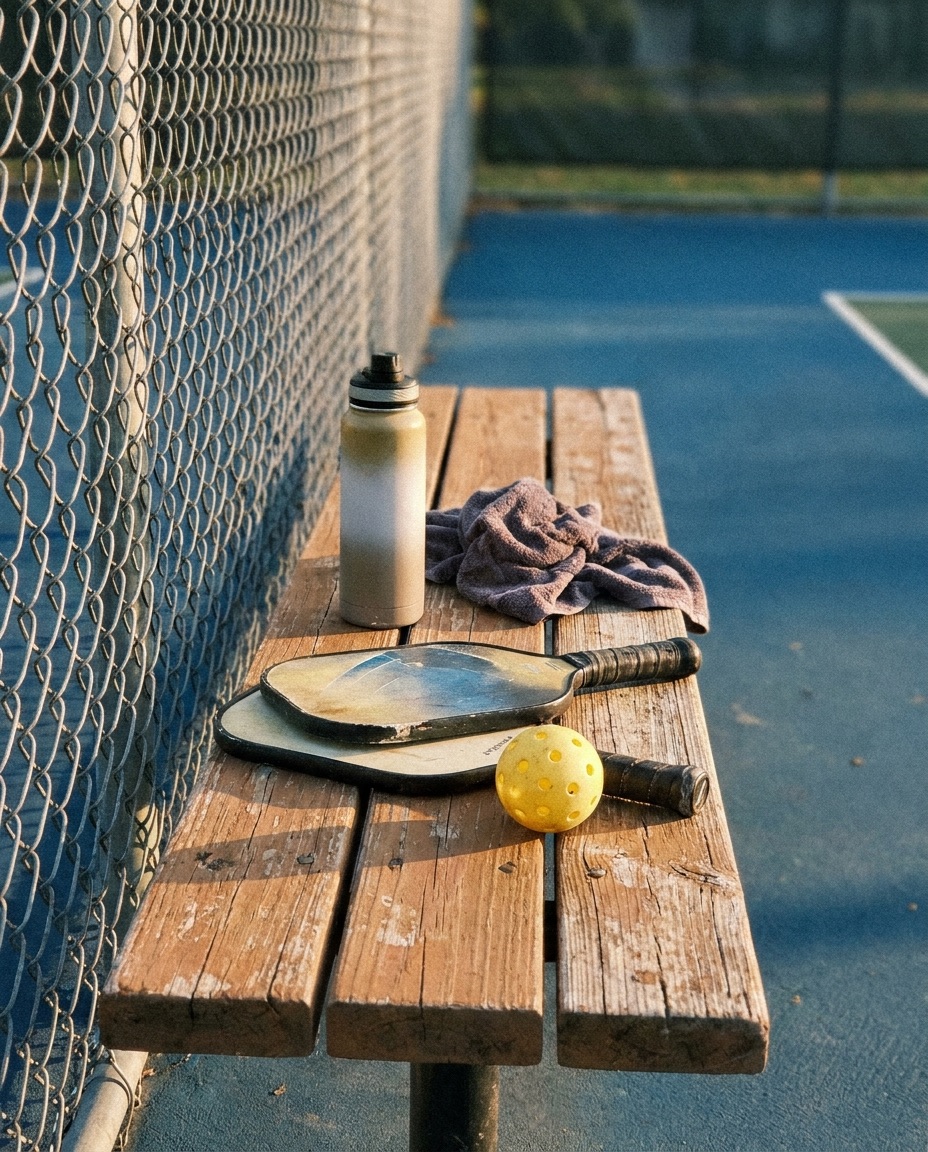
Ran for 12 days, from July 17 to July 29, 2026, the last day Crush saw it.
Run by Foot Care Tips on Facebook. Crush is not the advertiser and does not verify its claims. See this ad in Meta's Ad Library(opens in a new tab)
Want an ad like this for your product?
Crush makes new ad images for your product from this ad: your logo, your product photo, your offer.
Trials from $19.95 USD, then $79.95 USD a month. Cancel anytime.
About this ad
- Meta Ad Library ID
- 1036389282221174
- Platforms
- Facebook, Instagram, Audience Network and Messenger
- Relaunches
- 0
Ad text
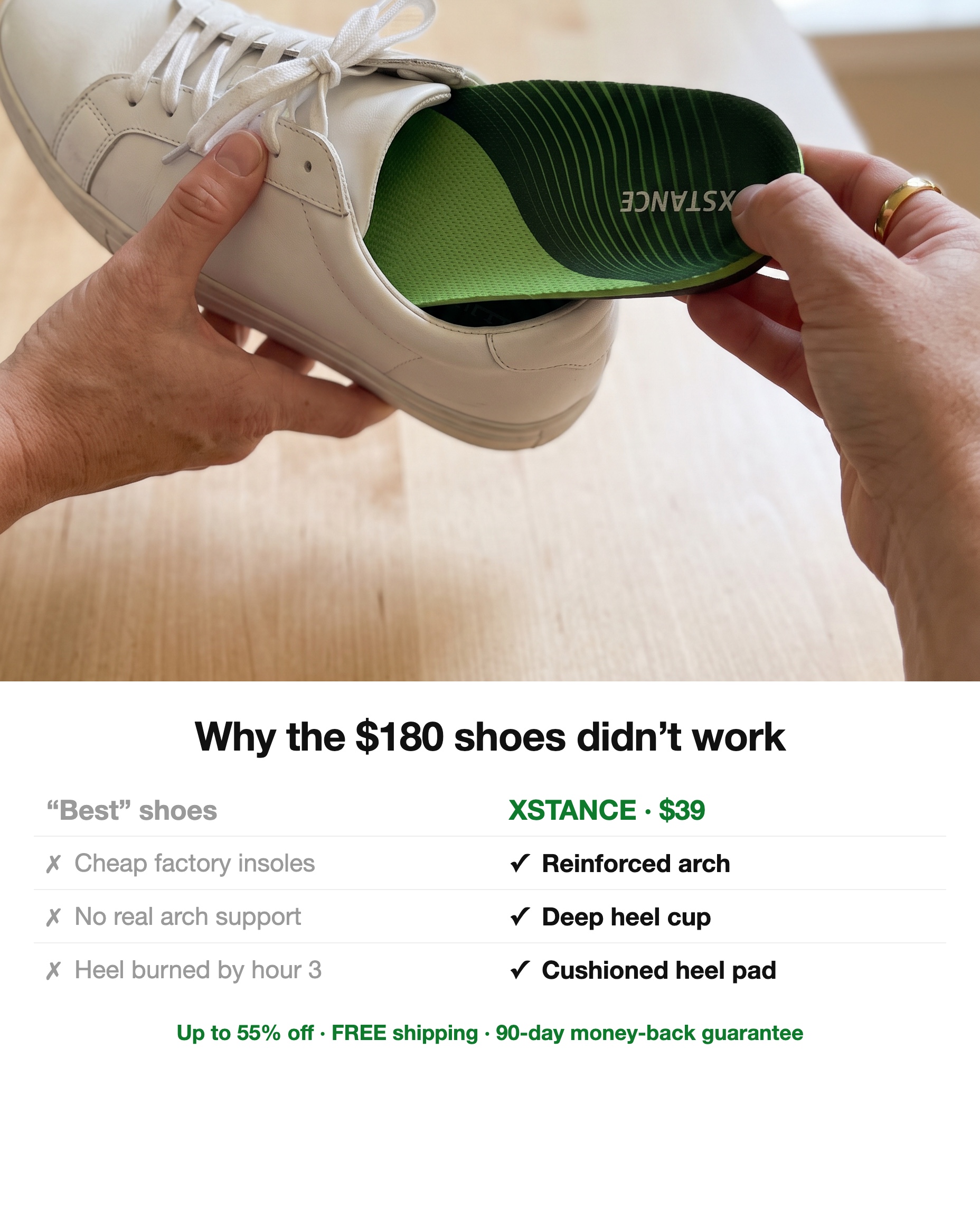
A woman who quit our pickleball group a year and a half ago showed up on a Tuesday morning, played four straight games, and I missed three easy shots because I was watching her feet. I'm not exaggerating. Her name is Carol Ann. She's 66. She was one of the original members of our morning group, and a year and a half ago her heel retired her. She didn't announce it. Nobody announces it. She just started sitting out games, then started coming to watch, then stopped coming, because watching is worse than not coming. Everybody at those courts understood, because everybody at those courts is one bad heel away from the same bench. That Tuesday she walked onto court two, and I want to be specific about what I saw, because at our courts we all watch each other's feet whether we admit it or not. She split-stepped. She shuffled sideways for a dink and pushed back off that foot. She stopped hard at the kitchen line. Four games. And when we rotated off, she walked to the bench like a person, not like a person landing an injured plane. I sat down next to her and said, "Carol Ann. Out with it. All of it." She handed me her water bottle like we were about to be there a while and said, "Linda. What I'm going to tell you, somebody should have told both of us two years ago." My name is Linda. I'm 63. I've played pickleball four mornings a week for six years, since about ten minutes after my neighbor dragged me to a beginner clinic. If you play, I don't have to explain what those mornings are. It's not exercise. It's the coffee group, the laughing, the tiny rivalries, the reason Tuesday is different from Monday. My husband calls it my congregation, and he's not wrong. And for the past year, I had been quietly negotiating my way out of it. Here's what my feet were doing. The morning after playing, the first step out of bed was a sharp stab in my heel, like stepping on a jack. I had a whole routine, sit on the bed's edge, flex the foot, stand up holding the nightstand. During play, I'd start fine, and somewhere in the second hour the heel would start burning, and the burn was worst on exactly the moves that make the game the game. The side shuffles. The hard stops at the kitchen line. Pushing off to chase a lob. I'd started declining that third hour. Then I started picking partners who don't make me run. Then, and this is the part I never said out loud, I'd started being a little relieved on rain days. Relieved. On rain days. That's when you know something is stealing from you. And I did try things, plenty of them. Court shoes, the proper kind, a hundred and thirty dollars, better for a month. Gel insoles from the pharmacy, two brands, each nice for a week. Ice after playing. Calf stretches every morning. My doctor examined my heel, said the words plantar fasciitis, and gave me the sheet. Rest it, ice it, stretch. Then she said, "Linda, you might think about lower-impact activities. Swimming is wonderful." Swimming is wonderful. I drove home from that appointment and cried in my garage, because I understood what had just been prescribed. Not a treatment. A goodbye. To the congregation. So when Carol Ann sat me down on that bench, I listened like it was a will reading. She said, "My son-in-law is a physical therapy assistant, and at Christmas he watched me get up from the table and take my first steps, and he said, how long has that been going on. And I gave him the speech. I'm 66, I played too much pickleball, the doctor says swim." She said, "And Linda, he asked me questions like he had our whole group's chart in his hand. Is the first step the morning after you play the worst one. Is the burn worst on side shuffles and hard stops. Did the good court shoes work for exactly a month. Did a doctor prescribe swimming. Did you quit before you wanted to." She said, "Then he told me something that made me so angry I had to put my fork down. He said, quitting probably didn't even fix your mornings, did it. And Linda. It hadn't. A year and a half off the courts, and my first steps still hurt. I gave up the thing I loved and the heel kept the pain anyway." I got a chill when she said that, because I was one season away from making the same trade. Then he explained it to her, and she explained it to me on that bench, and here it is. The pain is in your heel. The problem is not in your heel, and it is not pickleball either. The problem is inside each step. There's a band of tissue along the bottom of your foot, from heel to toes. In a lot of us, when the foot lands, it rolls too far inward. Tiny motion, invisible, but every landing stretches that band further than it's built to go. Rubber band. Stretch it gently, fine. Overstretch it thousands of times, and it frays and stays irritated. Now here's the pickleball part, and this put my whole last year in order. Walking rolls the foot some. But side shuffles, split steps, and hard stops load the foot sideways and roll it much harder. One hour on the court overstretches that band more than a day of errands. That's why the burn shows up in hour two. That's why the shuffles and the kitchen-line stops hurt most. It was never that we're too old for the game. It's that the game's best moves happen to be the roll's favorite moves. And overnight, the band settles and starts to knit. The first step the next morning tears it open. That's the jack under your heel. The morning after isn't your body punishing you for playing. It's the night's healing being ripped by one step. Carol Ann said, "And Linda, here's the part that explains me. It's a loop. Tears every morning, pulls all day, knits at night, tears again. Every step runs it. Kitchen floors run it. The grocery store runs it. That's why quitting didn't fix my mornings. I removed the hardest pulls and kept ten thousand gentle ones a day. I rested a wound that got reopened every single morning for a year and a half. The game was never the villain. The roll was. And nobody ever once addressed the roll." I sat on that bench and felt the whole year reorganize. Why the expensive court shoes were the answer for exactly one month. Fresh cushion, same roll. Why ice bought me an evening. Why rain days helped and Tuesdays collected. Why the doctor's swimming prescription was never going to work, because you still have to walk to the pool. I said, "Carol Ann. What did he give you." She reached into her paddle bag and pulled out an insole, right there on the bench. I laughed. I said, "Carol Ann, I have a kitchen drawer full of those." She said, "So did I. Now hush, because this is the part he made me repeat back to him. Everything in your drawer does one job, cushion. Softer landings on a roll that never stops rolling. And the hard orthotic kind, the podiatrist kind, fights the roll but feels like standing on a ruler, so nobody our age wears them past a week. Comfort that fixes nothing, or a fix you won't wear. That's all anyone's ever sold us." She said, "This one is called XSTANCE, and it does three jobs at the same time. A firm support under the arch that actually stops the inward roll, on every step, and especially on the sideways ones, which is where our game lives. A cushioned pad under the heel in a deep cup, for the landings and the hard stops, right at the sore spot. And a soft comfortable top layer, which sounds like a nicety and is actually the whole mechanism, because if it isn't comfortable, it goes in the drawer, and the drawer doesn't stop the loop." She said, "Stop the roll, soften the landing, comfortable enough to wear every day and not just on court days. All three at once. That's the difference between this and the drawer." I asked my practical questions. They slide into court shoes and regular shoes both. Hers had two months in them, court mornings included, and hadn't flattened, which is longer than any gel pair of mine survived. And she said, "There's 90 days on them, Linda. Full refund, any reason. Wear them for real life and real Tuesdays. If your mornings after don't change, send them back for every penny. My son-in-law told me that's the only reason to trust anything in this category, and after the drawer we've both funded, he's right." Then her timeline, which I made her give me game by game, more or less. Week one, she mostly felt the arch, present and holding, strange for a day, then normal. Week two, her mornings went from stab to murmur, and she stood by her bed waiting for the real pain to arrive, and it didn't. Week four, she walked the mall with her daughter, two hours, and nothing collected the next day. Week six, she came to watch us play, on purpose, to see if she'd feel the pull to come back or the fear. She said it was the pull, by a mile. Week eight was the Tuesday I watched her feet instead of the ball. She said, "I'm 66, Linda. I thought I'd aged out of my own congregation. Turned out I quit over one small motion that nobody, not one professional I paid, ever mentioned." My objections, quickly, because they're yours. I've tried insoles, a drawer of them. Cushions, all of them, and cushion was never the job. If this worked my doctor would have said so, except my doctor's answer was swimming, which tells you exactly how closely anyone looked at what my foot does when it lands. The court shoes were supposed to be the answer, and they were, for one month, which is precisely how long fresh padding outruns an unfixed roll. And the last one, the real one, I'm afraid to hope, because hoping and losing the congregation twice would be worse than losing it once. That's what the 90 days is for. The guarantee does the hoping. You just do the wearing. I ordered a pair on that bench before we finished the water bottle. My honest timeline. Week one, nothing but a held arch and a cupped heel, comfortable, suspicious. Week two, the morning after Tuesday play was quieter. Not silent. Quieter, clearly, for the first time in a year. Week three, I played the third hour. I didn't plan to, I just noticed at the end of hour two that I wasn't negotiating, so I stayed. The next morning I took my first step braced like always, and got a grumble. I sat back down on the bed and laughed. Week five, I stopped checking the weather with hope in the wrong direction. Week seven, I chased a lob, a real one, full stop at the fence, and my partner yelled something rude and delighted, and it wasn't until we rotated off that I realized my heel hadn't voted on the play at all. Four months now. Four mornings a week, three hours when I feel like it. Two of the women in our group have pairs, and one of them, who's 71 and had moved herself to the "social only" list, pulled me aside last Tuesday and said, "Linda. I played six games and made coffee standing up this morning." Seventy-one. I'm telling you this because I watched a friend disappear from our courts, and I was one season behind her, quietly trading hours and partners and rain-day relief for a heel that wasn't going to get better anyway, because rest can't fix a wound that reopens every morning. If the morning after you play is a stab. If the side shuffles and hard stops burn worst. If the good court shoes worked for exactly a month. If a doctor prescribed swimming. If you've started sitting out third hours, picking easy partners, feeling relieved on rain days. You are not aging out. Your foot has been re-tearing the same spot on every step, on court and off, and nothing you've tried has ever addressed the step itself. That's fixable, and fixable means the congregation is not done with you. XSTANCE insoles do the three jobs at once. Firm arch support that stops the inward roll, including on the sideways moves our game is made of. A cushioned heel pad in a deep cup for the landings and hard stops. A soft top layer comfortable enough to live in daily, which is what makes any of it work. They fit court shoes and everyday shoes. Over 300,000 people wear them, and a good number of them are back on courts like ours. There's a buy one, get one free offer. One pair for the court shoes, one for the everyday shoes, because the loop runs on kitchen floors too, and the everyday pair is honestly the one doing most of the healing. And 90 days, full refund, any reason. Real Tuesdays, real mornings after. If nothing changes, send them back for every penny. I'm 63. I play pickleball four mornings a week with people I love, and I intend to be doing it at 75. I'm not a doctor. I'm the woman who missed three easy shots watching a 66-year-old's footwork, and had the sense to sit down on the bench and ask. Don't give the game one more season. Every rain-day you feel relieved about, the loop runs anyway. 👉 https://getxstance.com/article/5-reasons/ P.S. The guarantee runs 90 days from delivery and covers any reason. Play in them, live in them. If your mornings after don't change, send them back for a full refund. I checked the terms on the bench before I ordered, because my drawer of failures has made me a careful shopper. You do have to actually mail them back. Fair enough. P.P.S. If you've already quit, this part is for you, because Carol Ann was you. Quitting probably didn't fix your mornings, and there's a reason. The loop runs on every step, not just the court ones. Which means the game was never the price of the pain, and getting the mornings back and getting the game back turn out to be the same project. She's 66 and playing four-game Tuesdays. The bench is not a life sentence. P.P.P.S. Last Tuesday, Carol Ann and I were the last two at the courts, putting the net strap away, and she said, "You know what I missed most? Not the games. This part. The putting-things-away part, with somebody, after." Then we walked to the parking lot, two women in our sixties, at full speed, arguing about a line call from an hour ago. That's the congregation. That's the whole thing I want for you. 👉 https://getxstance.com/article/5-reasons/
Where the ad sends people
getxstance.com
Get Heel Pain Relief
Shoes and traditional insoles could actually be making people’s feet worse. They may feel comfortable in the moment, but might ignore the root cause. It’s time to upgrade to Xstance.
Learn more: getxstance.com(opens in a new tab)