
Inactive· since May 14, 2026
- 6
- days it ran
- 0
- relaunches
Ad copy
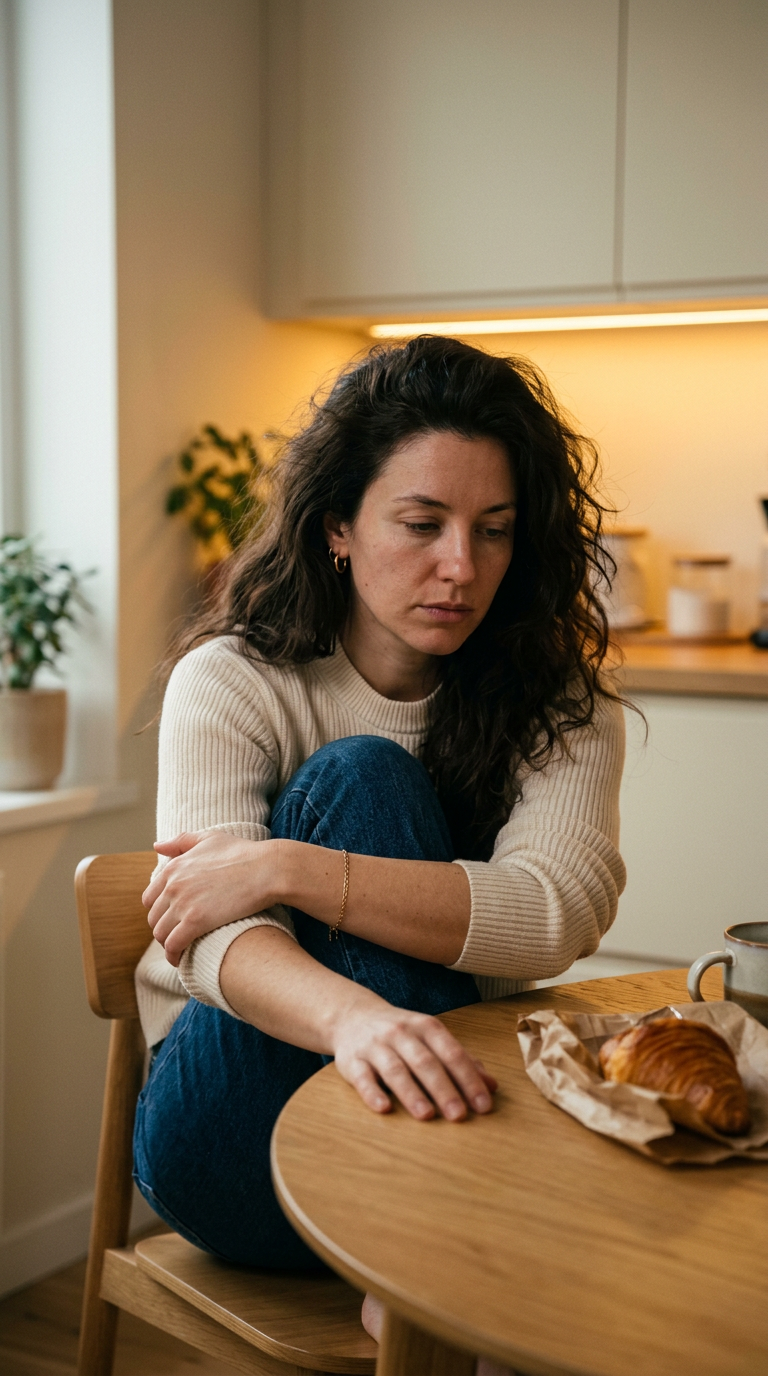
Ryan puts his hand gently over hers and says, quietly enough that it almost gets lost under the music: "Hey. I don't want this." She pulls back. Looks at him. He's not uncomfortable. He's not looking for the door. He's just sitting there on her couch looking at her with an expression she doesn't have a category for — not rejection, not pity. Something that looks almost like he's actually seeing her. Which is exactly the problem. "What do you mean you don't want this," she says. "I mean I don't want this version," he says. "The music and the wine and the — momentum. I want the version from the bar. The one who was telling me about getting lost in the mountains and laughing about it." He pauses. "Where did she go?" Lauren doesn't have an answer. She knows where she went. She just hasn't told anyone. Lauren is 29. She has a system. The system works like this: meet someone, keep it light, keep it moving, keep it at the exact temperature where it's warm enough to feel something but not hot enough to burn. She's good at the bar version of herself — easy, funny, present in the specific way that makes people feel chosen. She knows how to make someone feel like the most interesting person in the room. What she doesn't know how to do is let them stay. She's been doing this for 3 years. Since Jake. Jake lasted 2 years and ended on a Tuesday in March when he said, very calmly, that he didn't think she was capable of actually letting someone in. That she was warm on the surface and unreachable underneath and he was tired of knocking on a door that was never going to open. She didn't argue. She knew he was right. She just didn't know what to do with being right about something like that. Before Jake there was the understanding she'd carried since she was 8 years old, sitting at the top of the stairs in her parents' house, listening to her father tell her mother that she was too much. Too emotional. Too needy. Too loud about what she felt. She learned that night that what you feel is something you manage quietly, alone, where it can't inconvenience anyone. She's been managing quietly ever since. "I'm fine," she says. Automatic. The word she's said so many times it's stopped meaning anything. "I didn't ask if you were fine," Ryan says. She looks at him. 27, maybe 28. Works in something with architecture — she'd half-listened at the bar, which she feels bad about now. He has the kind of face that looks like it's used to being patient. "You're going to be disappointed," she says. "If you're looking for the bar version. She's not — that's not really—" She stops. "Not really what?" "Not really all of me," she says. "The bar version is the easy part." "What's the hard part?" She laughs — short, surprised. "You don't want the hard part." "I drove 40 minutes to get here," he says. "I think I get to decide what I want." She gets up. Goes to the kitchen. Fills the kettle because she needs something to do with her hands. He follows her. Leans against the doorframe. "You don't have to tell me anything," he says. "We can just make tea and talk about something else entirely. I'm good at talking about something else entirely." "What would we talk about?" "You mentioned a dog earlier. At the bar. You said you had a dog growing up named something ridiculous." She almost smiles. "Captain Biscuit." "Captain Biscuit," he repeats. "Tell me about Captain Biscuit." She tells him about Captain Biscuit. The kettle boils. She makes the tea. They move back to the couch — closer this time, without either of them deciding to — and somewhere between Captain Biscuit and the story about the school play where she forgot every line and just stood there for 45 seconds in complete silence, something in her chest loosens slightly. Just slightly. "Can I ask you something?" she says. "Yeah." "Why did you stop? Earlier. Most people don't stop." He thinks about it. "Because you were somewhere else," he says. "And I didn't want to be with somewhere else. I wanted to be with you." She looks at her tea. "I do that," she says quietly. "Go somewhere else. I've done it my whole life." "Where do you go?" She doesn't answer right away. Outside, the city is doing its 2am things. A siren somewhere far away. The particular silence of a building full of people asleep. "When I was 8," she says, "I heard my dad tell my mom that she was too much. Too emotional. He said it like it was a diagnosis. Like being too much was something you should be ashamed of." She pauses. "I was sitting at the top of the stairs. I don't think they knew I was there." Ryan doesn't say anything. Just listens. "I decided that night that I wasn't going to be too much," she says. "I got very good at being exactly enough. Not more. Never more." She wraps both hands around her mug. "And then I grew up and I met people and every time it started to feel like something real I'd just — go somewhere else. Before they could tell me I was too much. Before they could leave." "Did they leave anyway?" "Jake did," she says. "2 years. He said I was warm on the surface and unreachable underneath." She says it flatly, the way you say something you've repeated to yourself so many times it's lost its texture. "He wasn't wrong." "He wasn't entirely right either," Ryan says. She looks at him. "How would you know?" "Because unreachable people don't sit on their kitchen floor at 2am telling strangers about their dad and Captain Biscuit." He says it simply. Not as a compliment — just as an observation. "You're reaching. You're just scared of what happens when someone reaches back." She doesn't say anything for a long time. The thing about being seen accurately by someone you met 4 hours ago is that there's nowhere to put it. No category. No script for what comes next. "My therapist said something similar," she says finally. "She said I learned early that love comes with conditions and I've been managing those conditions ever since." She pauses. "Knowing it and changing it are different things. I understand exactly what I do. I just can't always stop doing it in the moment." "What does it feel like? In the moment." She thinks about it. Really thinks about it, the way she doesn't usually let herself. "Like a door closing," she says. "Somewhere inside. And I'm on one side of it and everything that could matter is on the other side and I just — stay where I am. Because staying where I am is safe." Ryan is quiet for a moment. Then he takes out his phone. "Can I show you something?" he says. He opens Liven. Hands her the phone. "I found this about 6 months ago," he says. "I'd been doing my own version of the door-closing thing. Different reasons, same result." He pauses. "It's a quiz. It's not going to tell you anything your therapist hasn't touched on. But it asks different questions. Specific ones — about how your nervous system learned to work. About what you learned before you knew you were learning anything." He pauses. "It helped me name something I'd been circling around for years. And once I had the name, I could actually work with it instead of just watching myself do it." She looks at the screen. Reads the 1st question. Reads it again. "This is me," she says quietly. "I know," he says. "Take it tomorrow morning. With coffee. Not tonight — you're tired and it deserves your full attention." She hands him back his phone. They sit there for a while longer — not talking about anything important, just talking. She tells him about the school play. He tells her about the time he cried at a furniture commercial, which he deeply regrets. She laughs so hard she has to put down her mug. At 4am she falls asleep mid-sentence. She wakes up at 6am. He's gone. On the kitchen counter: a croissant in a paper bag. A note on the back of a receipt. "The Liven quiz. Tomorrow morning. Coffee first. Also I need to know what happened in the school play after the 45 seconds of silence. Did you recover? Did anyone? — Ryan 0XX-XXX-XXXX" She stands in the kitchen in the early light and reads it twice. Then she makes coffee. Sits down at the table. Opens her phone. She takes the quiz. It asks about the tension she carries even when nothing is wrong. About the difficulty of being present in moments that matter. About learning early that what you feel is something to manage quietly, alone. About the door that closes. She says yes to almost everything. She sits there for a long time after. The coffee goes warm, then cold. She doesn't notice. She's somewhere else. But this time, somewhere else is inside herself. Looking at something she's been circling for a very long time. It's uncomfortable. It's also, somehow, a relief. If you know the going-somewhere-else. If you learned young that being too much is dangerous and you've been being exactly enough ever since. If you understand your patterns and still find yourself on the wrong side of the door — The quiz doesn't fix it. But it asks the right questions. And the right questions are where it starts. Liven has a quiz. A few minutes. It asks about what you learned before you knew you were learning anything. Link is below. 💙 P.S. — She did recover from the school play. Eventually. She delivered 1 line, bowed slightly, and walked offstage with as much dignity as a 10-year-old can manage after 45 seconds of public silence. Ryan said that was the most relatable thing he'd ever heard. She told him on their 2nd date, over dinner, which she almost cancelled 3 times. She went anyway. She's still going.
The bar version wasn't really all of her
LEARN MORELike this ad? Make it yours.
Crush rebuilds this exact creative around your product — your brand, your colors, your offer — in about a minute.