
Inactive· since Jul 16, 2026
- 51
- days it ran
- 0
- relaunches
Ad copy
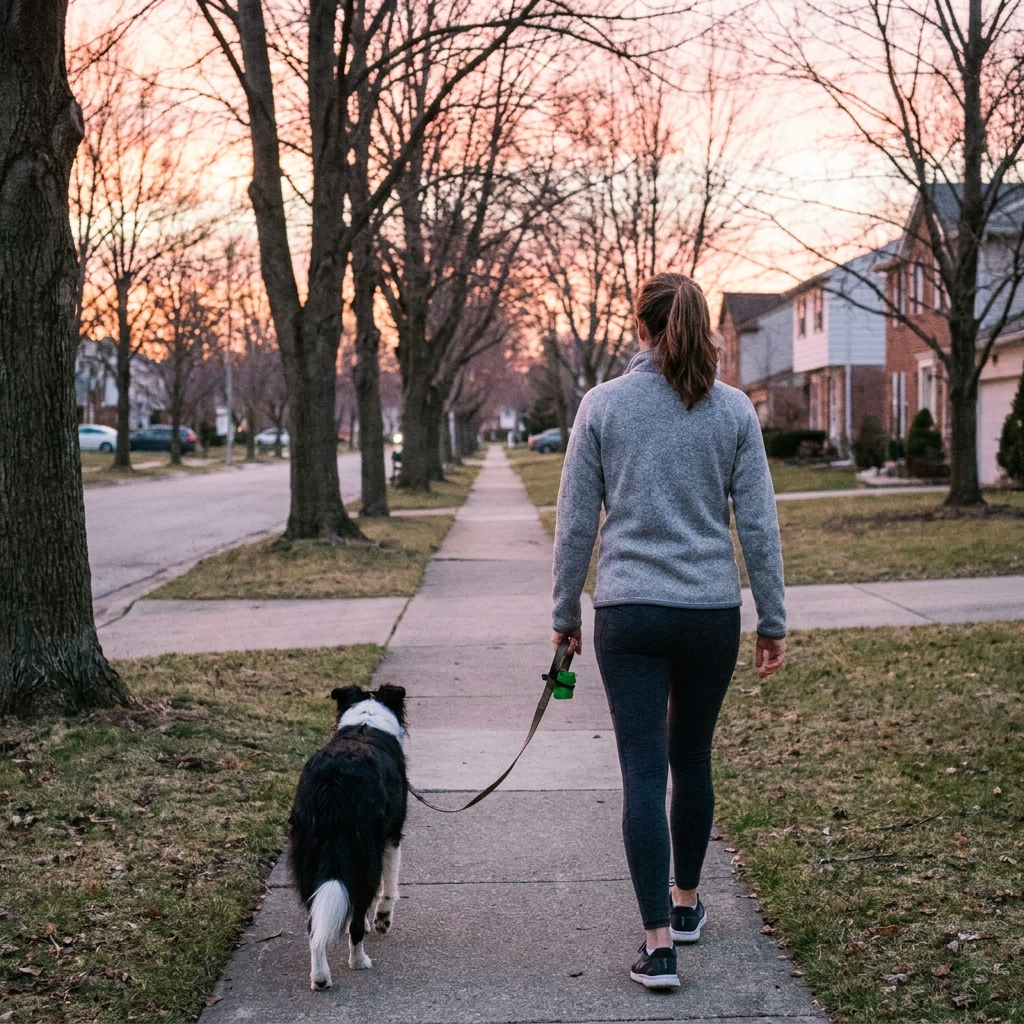
I looked out my kitchen window at 6:47 on a Tuesday morning in October and I saw my neighbor Linda doing something I hadn't seen her do in almost a year. She was running. Not jogging. Not power walking with her arms pumping the way she used to. Running. Down the sidewalk past the Hendersons' house, past the big oak that drops acorns all over the street, past the corner where the mailbox post has been leaning since that pickup truck clipped it in 2022 and nobody ever fixed it. Running. I stood there at my kitchen window with my coffee cup going cold in my hand and I just watched her go. My name is Deborah Kelso. I'm 54, and I live in a suburb of Columbus called Pickerington, in a tan house with a red door that I keep meaning to repaint. I've lived here for 19 years. My kids grew up in this house. My youngest left for college 3 years ago, and now it's just me and my husband Greg, who gets up at 5:15 every morning and drives 40 minutes to a job he doesn't love and comes home and falls asleep in his chair before 9 o'clock. Linda Prater has lived 4 houses down since before my children were in school. We were never best friends, not the kind who call each other or know each other's extended family situations. But for years we were walking friends, and walking friends are their own category. You know things about a person from 45 minutes a day walking a neighborhood together that you might not know from seeing them at holiday parties. You know how they talk about their husband on a bad week versus a good one. You know the pauses. You know what they say when they've been sitting on something. Linda and I walked together most mornings for about 4 years. 6:30 AM, meet at the mailbox, do the loop that goes past the elementary school and comes back through the cut-through behind the Kroger. About 2.4 miles. We did it in rain, in cold, in the kind of August heat that feels like opening an oven door at face level. And then I stopped. Not because I wanted to. Because my body stopped cooperating in ways I didn't have good words for at the time. The tiredness started first. I don't mean I was a little sleepy. I mean I woke up after 7 and 8 hours of sleep and felt like I hadn't slept at all. The alarm would go off at 6:08 and I'd lie there doing the math on whether I really needed to go anywhere and the math would always come out wrong and I'd hit snooze and then I'd miss the walk and then I'd feel guilty about it for the rest of the morning. I told myself it was the change in seasons. Then I told myself it was perimenopause. Then I told myself it was the stress of Derek leaving for school. Then I ran out of explanations and started just accepting it. The walks got shorter. Then they became every other day. Then they became occasional. Then one morning in late winter I looked at my phone at 6:30 and the idea of putting on shoes and going outside felt genuinely impossible, not dramatic impossible, just quietly actually impossible, and I put the phone face-down and went back to sleep. I texted Linda that I needed to take a break for a while. She texted back: "Take all the time you need." That was almost 8 months before that October morning. Eight months where I told myself I was going to get back to it. Eight months where I meant to and didn't. Eight months of the alarm going off and the math not working out. And Linda, apparently, had not stopped. She'd done something. I set my coffee cup down on the counter next to the sink and watched her until she turned the corner and disappeared. And I stood there for probably longer than made sense, looking at the empty street where she'd just been. That afternoon I walked over. I knocked on her door at 3:45, which I realize now was just showing up unannounced like a neighbor did in 1987, but I didn't have a better plan and she answered on the second knock in workout clothes, hair still damp, like she'd been doing something active. She looked at me for half a second and then opened the door wider. "Deborah. Come in. I was going to call you." I sat down at her kitchen table with the big window that faces her backyard, the one with the bird feeder that her youngest daughter keeps stocked because Linda always forgets. She put coffee on and sat down across from me. "I saw you this morning," I said. "Running." She smiled. Not a surprised smile. A settled one, like she'd been waiting for this conversation. "Yeah," she said. "I know." I asked her what changed. She took a breath and thought about it the way Linda always thinks about things, carefully, like she's trying to get it right. "You know how you feel like you're carrying something?" she said. "Not sad, not sick, just heavy. Like your body got heavier while you weren't paying attention. And you try to push through it and pushing through it costs twice what it used to cost." I didn't say anything. I just looked at her. "That was me," she said. "That was me for almost 2 years." She told me she'd kept walking after I stopped, but she'd been doing it out of obligation more than anything else. Dragging herself out every morning because she was afraid if she stopped she wouldn't start again. Not enjoying it. Just grinding through it. Coming home from a 2-mile walk and needing to sit down. She said she'd started going to bed earlier and waking up more tired. That the fogginess she'd chalked up to getting older had gotten into everything. Her concentration at work. Her mood. The way the simplest tasks at the end of the day started to feel like they required more energy than she had left. "Greg said I seemed checked out," I said. "Paul said the same thing about me," Linda said. There was a pause where we both looked at our coffee. Then she said: "I fell down a rabbit hole about 5 months ago. About what actually causes that. The heavy thing. And what I learned changed how I understood what was happening to me." She got up, refilled both our cups, and came back. "You've heard of mitochondria," she said. "The powerhouses of the cell. Everybody knows that much from middle school biology. But what I didn't know is what happens to them as you get older. And what happens is they accumulate damage. Oxidative stress, which is basically cellular wear and tear, builds up faster than your body can clear it. And mitochondria are particularly sensitive to that damage. They start running inefficiently. Old, damaged ones pile up and crowd out the healthy ones. Your cells produce less energy. And that shows up in your body as fatigue that sleep doesn't fix, as fog that coffee doesn't cut, as a heaviness that doesn't have an obvious cause." I was leaning forward over the table. "That's not aging?" I said. "That's not just what 54 feels like?" "It's associated with aging," she said. "But it's not inevitable. And it's not irreversible. There's a process your body has for clearing the damaged mitochondria. It's called mitophagy. Your body basically does its own cellular housekeeping, clears out the damaged ones, makes room for healthy mitochondria to function better. When that process is working, your cells make more energy. When it's not, they don't." She told me about what she'd read. That certain compounds in the peel of pomegranates, specifically the ellagitannins that break down in the gut into something called urolithin A, have been studied for their role in supporting that mitophagy process. The cellular housekeeping. That research in this area suggested urolithin A may help support the body's ability to clear damaged mitochondria more effectively, which is associated with improved cellular energy production. She said: "It's not adding energy in from the outside. It's supporting the system that makes energy on the inside. There's a difference." She pulled out her phone and showed me what she'd been taking. Alevia Pomegranate. A peel extract, not juice. She was specific about that. "Pomegranate juice is mostly from the fruit itself," she said. "The peel is where the ellagitannins concentrate. Most pomegranate supplements on the market don't standardize to those compounds. They standardize to something called ellagic acid, which is in a lot of fruits. What Alevia uses is standardized to the punicalagins, which is the compound in the peel that converts to urolithin A downstream. That's where the research is pointing." She put her phone down on the table between us. "I know how it sounds," she said. "It's a supplement. I was skeptical. I'd tried things before. But I was about 3 weeks into it and I noticed one morning that I'd gotten dressed and made breakfast and packed my bag for work and I hadn't thought about sitting down. I wasn't managing my energy. I was just using it. And I realized I couldn't remember the last morning that felt like that." I sat at Linda's kitchen table until almost 5 o'clock. I drove home, fed the cat, started dinner, and sat down at my laptop. What she'd said about mitochondria and cellular housekeeping was something I'd never read about before, and I went looking. The connection between pomegranate's ellagitannins and urolithin A was real. Urolithin A is a compound that your gut bacteria produce when they process those ellagitannins. It's been studied specifically in the context of mitophagy, the cellular process Linda had described. Research suggests it may support the process by which cells clear away old damaged mitochondria and allow healthier ones to function better. It's not stimulant energy. It's not masking tiredness. The proposed mechanism is that when your cells are doing that housekeeping more effectively, they produce energy more efficiently. You feel the difference from the inside out. The compound in the peel, the punicalagins, are what the research is built on. Not the juice. Not ellagic acid from a generic fruit extract. The specific concentrated peel compounds that Alevia uses. I ordered a bottle before Greg got home from work. Here's what happened. Week 2, I went to bed at 10:30 and woke up at 6:08 and the math worked. I'm not saying I leapt out of bed. But I didn't lie there calculating whether I had to. I just got up. It was unremarkable. Which was remarkable. Week 3, the fog that had been sitting over me at about 2 PM every afternoon was thinner. Not gone. But thinner. I made it through a Tuesday at work that had 3 back-to-back Zoom calls and a deadline I'd been dreading and I got to the end of it and made dinner without sitting down in the middle of the kitchen first. I noticed that I noticed. Week 4, I went for a walk. Not a real walk. Short. Just to the corner and back. But I went. And I didn't have to talk myself into it the whole way like I was running a negotiation with myself. I just went. Week 6, I texted Linda. "I'm going tomorrow morning at 6:30 if you want to go." She replied in under a minute. "I'll be at your mailbox." We went together for the first time in 8 months. It was cold, the end of November, and we both wore gloves and I wore the wrong socks and my feet were damp by the time we got back. And we walked the whole loop. Past the elementary school and back through the cut-through behind the Kroger. 2.4 miles. I wasn't fast. I was slower than I used to be. My lungs complained a little on the hill behind the church. But I finished it. And when I got home and came through the red door and took off my wet socks in the entryway, I didn't need to sit down. I went and made coffee. That was the moment, right there. Standing in my own kitchen making coffee after a walk, the ordinary unremarkable morning version of myself, not managing or rationing or planning around my energy. Just living inside it. I cried a little, which I wasn't expecting. Greg came down and found me standing there with red eyes and I told him what had happened and he looked at me for a second and said "the walk?" and I said "the walk." He didn't fully understand. But he didn't have to. I've been walking every morning since. I've missed a few days here and there, weather, the holidays, a work thing that couldn't wait. But most mornings now there are 2 sets of footprints on the wet sidewalk going past the elementary school at 6:30 and they belong to me and Linda. If you've been tired in a way that sleep doesn't fix, if you've been in a fog that coffee doesn't cut, if you've been telling yourself this is just what this age feels like and the ceiling is just lower now, what Linda told me is worth hearing. It might not be age. It might be what's happening inside your cells. And there may be something that supports that process that nobody mentioned to you yet. Alevia Pomegranate has a 90-day guarantee. If it's not right for you, you return it within 90 days and they refund you completely. No risk. I'm just a woman in Pickerington who looked out her kitchen window one October morning and saw something she wanted back. I got it back. 👉 alevia.com/pom/5 P.S. The specific thing Linda showed me and what I've been taking ever since is a pomegranate peel extract, not juice, standardized to punicalagins. That matters because punicalagins are the compounds found predominantly in the peel, not the fruit, and they're what converts in your gut to urolithin A, the compound the mitophagy research specifically points to. Most pomegranate supplements on store shelves are standardized to ellagic acid, which is a different compound found in lots of fruits and isn't what the cellular energy research is built on. Alevia uses peel extract standardized to punicalagins, made in the USA, and they back it with a 90-day money-back guarantee. Worth knowing before you reach for something else and wonder why it didn't work the same way. P.P.S. The thing Linda said that I keep coming back to is this: it's not adding energy from the outside. It's supporting the system that makes energy on the inside. That framing changed how I thought about everything I'd tried before, all the B vitamins and the iron supplements and the extra sleep that never quite worked. I wasn't addressing the right thing. The tiredness wasn't a deficiency. It was a system that had gotten overwhelmed and needed different support. If that resonates with you the way it resonated with me, you might be in the right place. P.P.P.S. 90-day money-back guarantee. Return the bottle, get your money back. 2 capsules a day. Made in the USA. That's it. 👉 alevia.com/pom/5
Like this ad? Make it yours.
Crush rebuilds this exact creative around your product — your brand, your colors, your offer — in about a minute.