
Inactive· since Jul 5, 2026
- 31
- days it ran
- 3
- relaunches
- 23,692
- EU reach
Ad copy
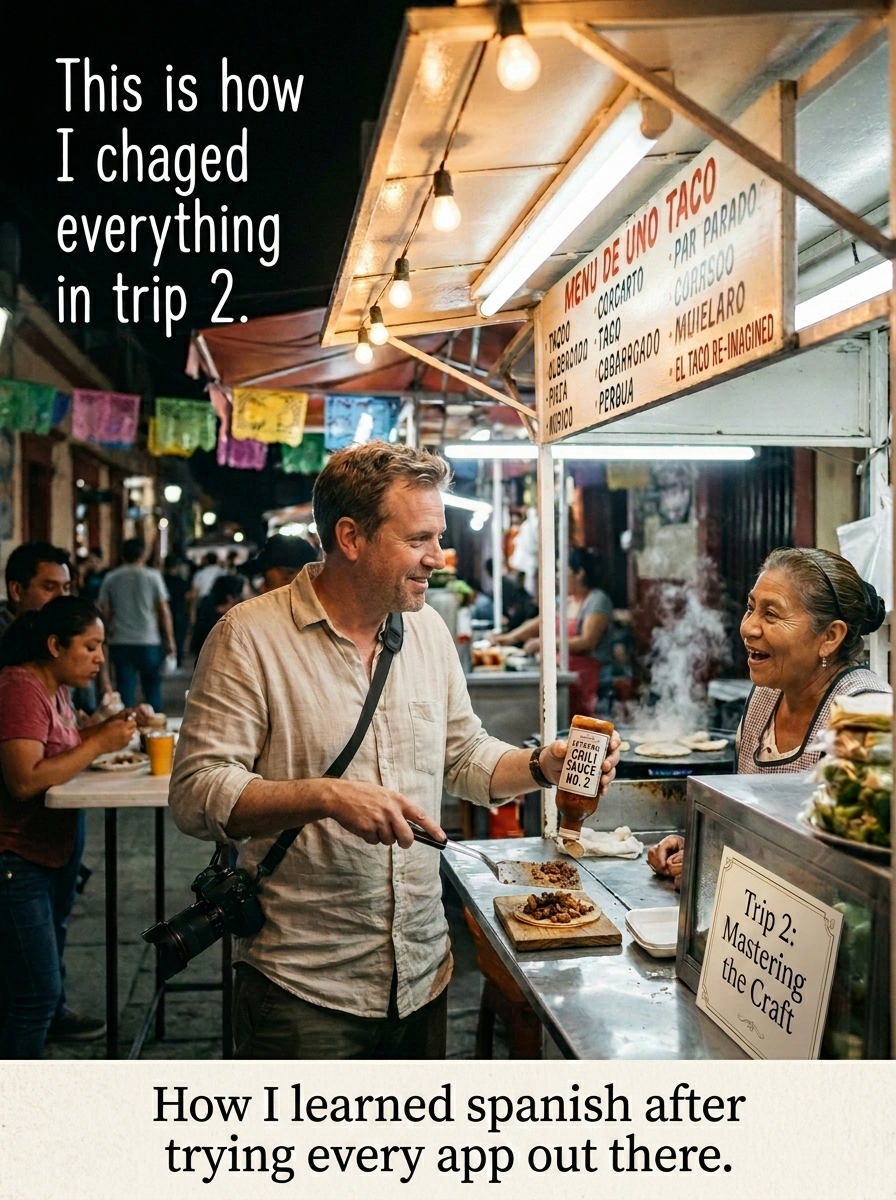
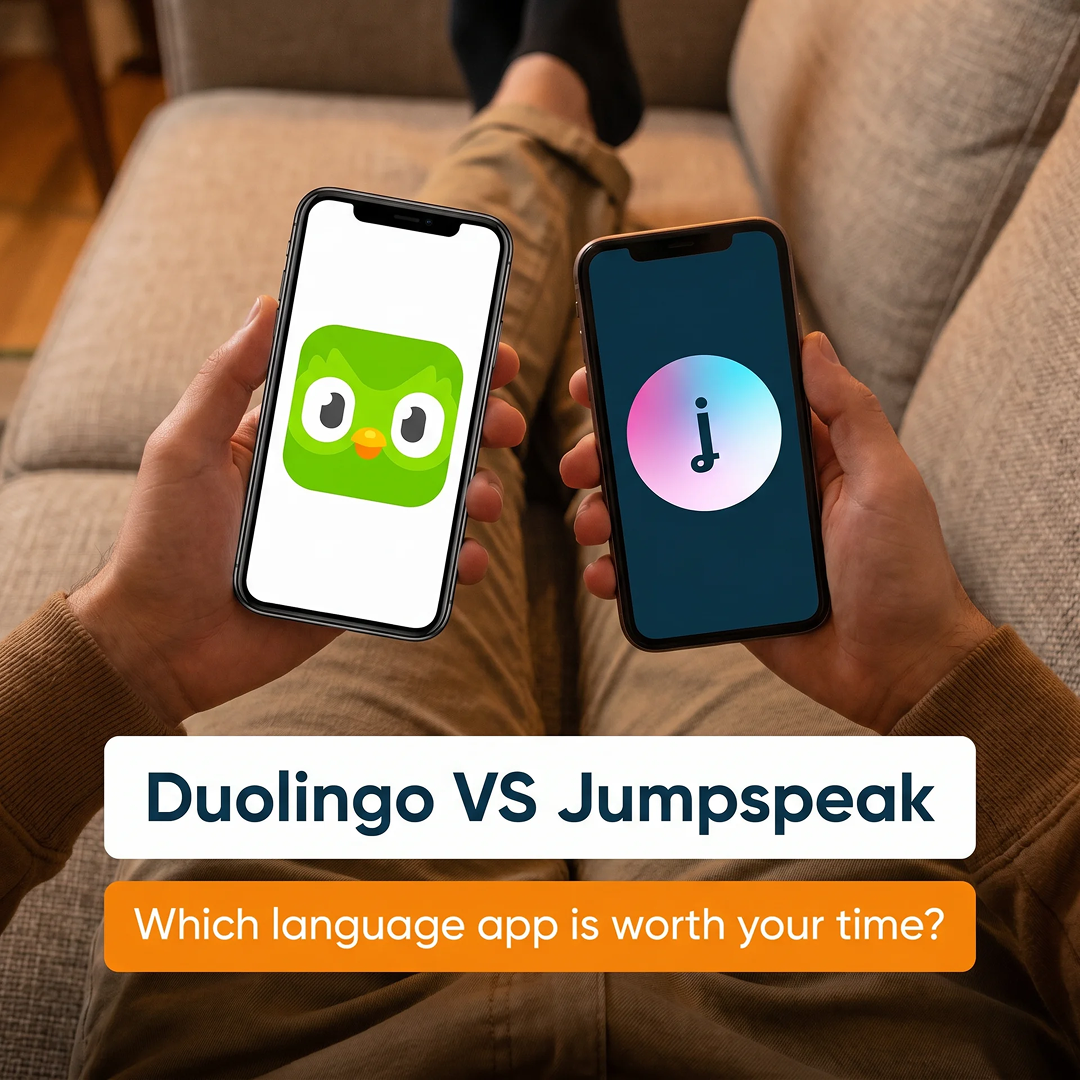
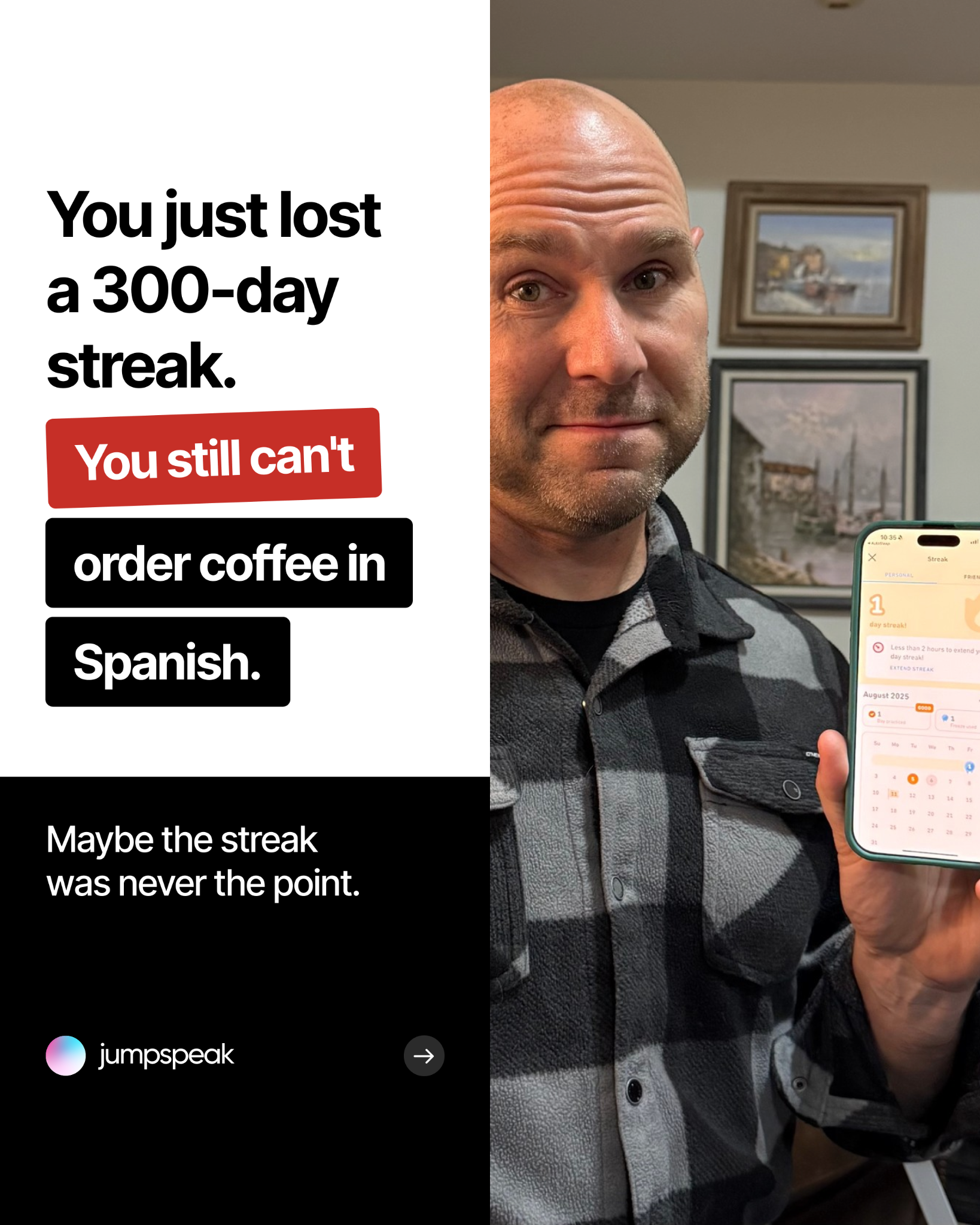
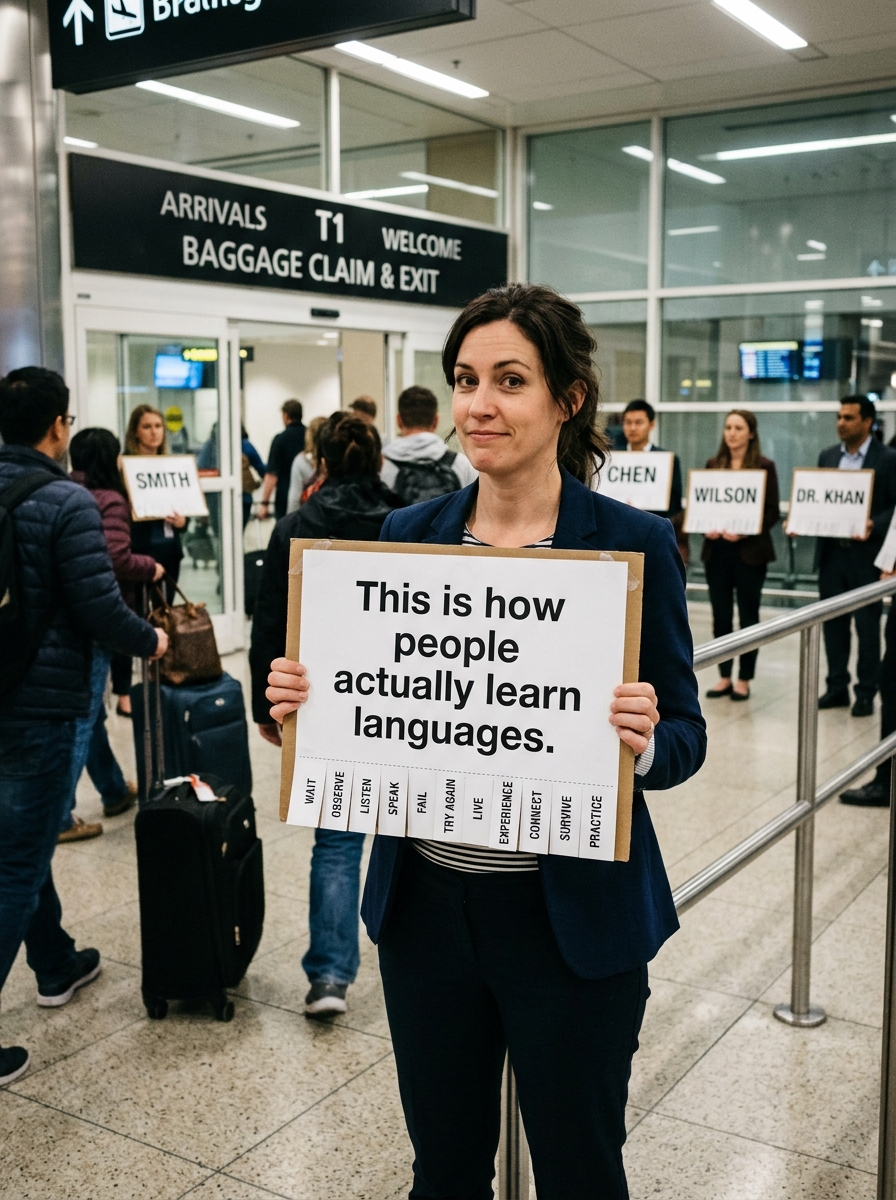
3. I have tested every major language app on the market against one standard: does it actually produce speakers? Most of them fail. Here is why, and what one app does differently I have spent twenty years studying language acquisition. How adults learn languages, why they stop, what the research shows versus what the marketing says. The gap between those two things is where most people get lost. Here is what the science of language learning actually shows, and how the most popular apps on the market measure up against it. **What fluency actually requires** Language acquisition research draws a clear distinction between two fundamentally different cognitive skills: recognition and production. Recognition is passive. The ability to understand a word when you see or hear it. Reading a sentence in French and knowing what it means. Hearing a phrase and recognising it. This is what most people think language learning is. Production is active. The ability to generate language under pressure. to form and speak a sentence in real time while someone waits for your response, without translating in your head first. This is what fluency actually is. These are not the same skill. They are processed differently in the brain, stored differently in memory, and built through entirely different kinds of practice. You can train recognition for years and production will remain at zero. This is the most important thing I can tell you about why language apps consistently fail people, and almost none of them address it. **What the most popular apps are actually training** **Duolingo** The most downloaded language app in history. Genuinely effective at building daily habits. What Duolingo trains at its core is recognition, reading, matching, translating, selecting correct answers. Speaking exercises exist but are peripheral to the core loop. After six months of consistent use, most learners can pass in-app exercises and fail a basic real-world conversation. That is not a coincidence. That is the natural result of training the wrong skill. **Babbel** More structured than Duolingo, more adult in its approach, a better grammar foundation. Still trains primarily recognition, reading and listening comprehension, vocabulary retention, grammar understanding. Users who complete Babbel courses consistently report the same frustration: they understand more than they can say. The gap between comprehension and production remains. **Pimsleur** The most scientifically serious competitor. Dr. Paul Pimsleur's research on spaced repetition is legitimate and the audio-first format is genuinely superior to screen-locked apps. The limitation is structural: Pimsleur's format is listen → wait → repeat. You echo a voice rather than generate your own responses. This builds strong prompted recall and weaker ability in unscripted real conversation, where no voice gives you the cue to repeat. **Rosetta Stone** The legacy brand. Image-based immersion, decades of iteration. The method assumes that recognition exposure will eventually produce speaking ability through volume and time. For some learners, over years, it might. For adults with a real reason and a real deadline, the pace is prohibitive. **What the research says should happen instead** The Foreign Service Institute, the body responsible for training US diplomats and government agents to reach working fluency in foreign languages — has produced the most rigorous acquisition data available. Their finding: Spanish and French require approximately 600-750 hours to reach professional proficiency. Japanese, Mandarin, and Arabic require roughly 2,200 hours. Those numbers are built around output-based immersion. Speaking from the first session. Making mistakes, receiving corrections, speaking again. Not studying toward speaking, speaking. The neuroscience supports this. Research published in peer-reviewed journals confirms measurable neural changes after even short periods of language production training. The key variable is not exposure but output. Not how much you hear a language but how much you produce it under real conditions. Active immersion — being required to generate language in real time, under the conditions actual conversation creates — has been shown to accelerate acquisition by up to 3.5 times compared to passive recognition methods. **What JumpSpeak does differently** JumpSpeak is the only major language app I have tested that is structurally built around production from session one. It does not ask you to study. It places you in a real conversation and requires you to respond — out loud, in the target language, in real time. The AI listens. It identifies errors in grammar, vocabulary, and pronunciation immediately. You correct and continue. There are no multiple-choice answers. No reading along. Every minute of a JumpSpeak session is a speaking minute, which means every minute trains the skill that actually produces fluency. Over 1,000 real-life conversation scenarios across 20 languages. Audio-first, no screen required, which means sessions run during commutes, workouts, or daily tasks without interruption. Real-time spoken correction from the first exchange. Most significantly: JumpSpeak is not a variation on what other apps do. It is a structural departure. Where every other major app trains recognition and hopes production follows, JumpSpeak trains production directly. The difference in outcome is not marginal. **The conclusion** Most language apps are recognition tools marketed as fluency tools. They are not dishonest about their features, they are simply not built to produce the outcome people are paying for. If you have tried multiple apps and failed to reach conversational ability, the problem is not your age, your consistency, or your aptitude. The problem is that you have been training the wrong skill. Recognition is not production. Studying is not speaking. JumpSpeak trains speaking. From the first session. This is how people actually learn languages. Seven days free. No credit card required. First session, you are already in a real conversation. *Try JumpSpeak today.*
From Zero To Bilingual In 90 Days.
Learn how to speak English, Spanish, French, German and more by speaking on day one in real-world conversations, powered by AI.
SEE DETAILSLike this ad? Make it yours.
Crush rebuilds this exact creative around your product — your brand, your colors, your offer — in about a minute.