Judy Callihan
 Facebook ad: “What they don’t tell you about spinal stenosis…”
Ran for 60 days, from September 7 to November 6, 2026, the last day Crush saw it.
Run by Judy Callihan on Facebook. Crush is not the advertiser and does not verify its claims. See this ad in Meta's Ad Library(opens in a new tab)
Make your own version of this ad
Crush makes it, launches it in your own Meta ad account, scales the winners and pauses the losers.
About this ad
- Meta Ad Library ID
- 1039736782298860
- Platforms
- Facebook, Instagram, Audience Network, Messenger and Threads
- Relaunches
- 0
- EU reach
- 68,156
Ad text
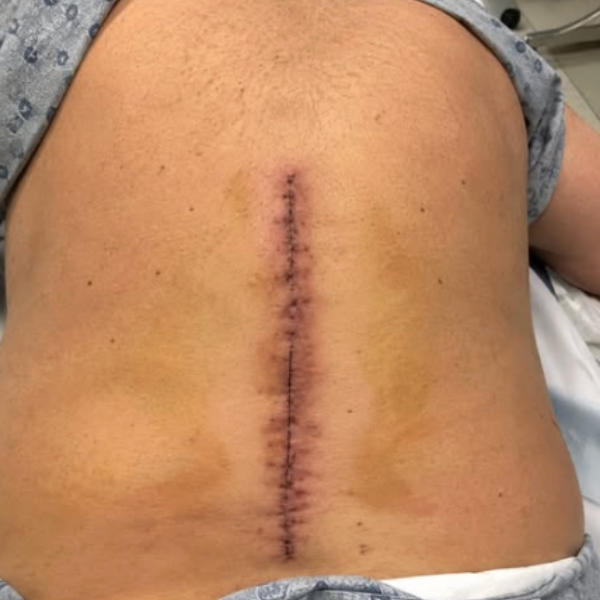
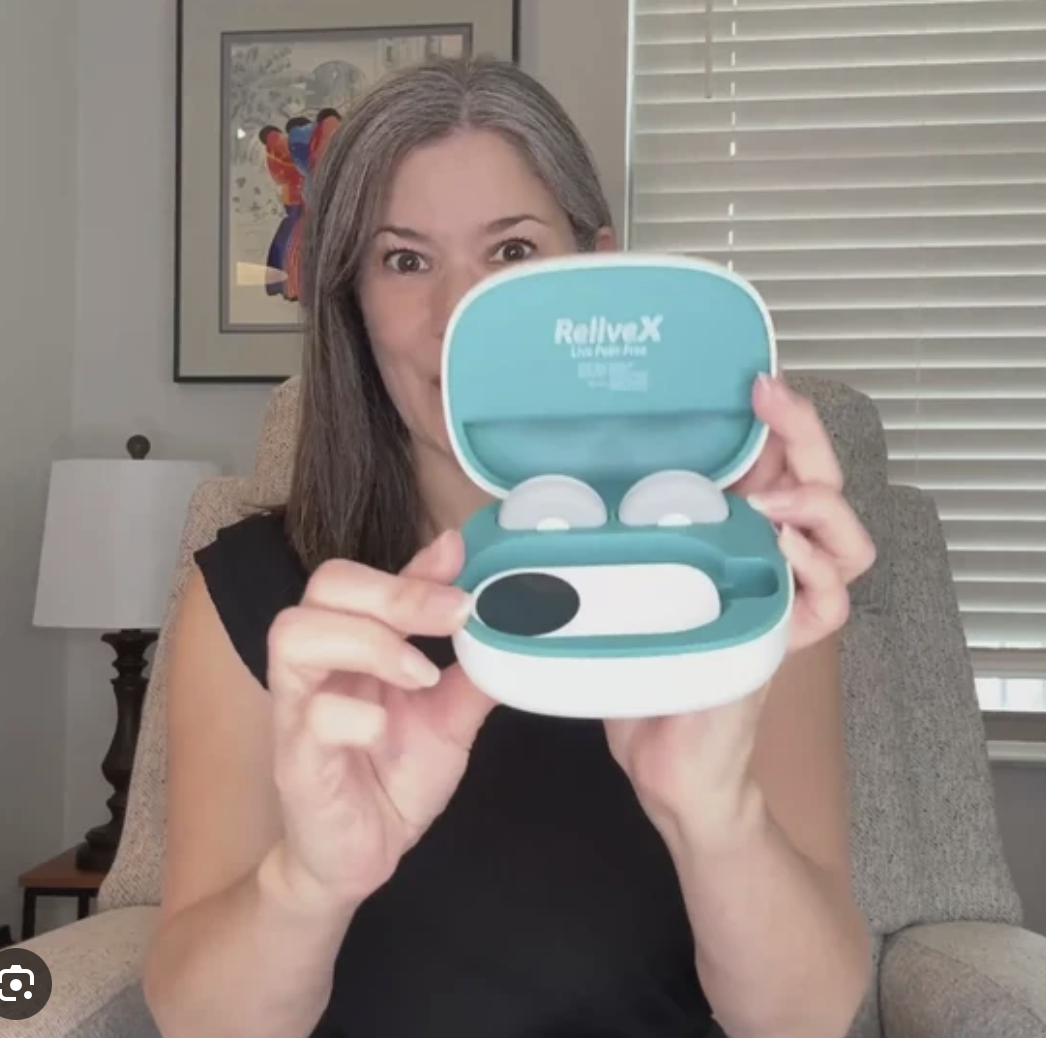
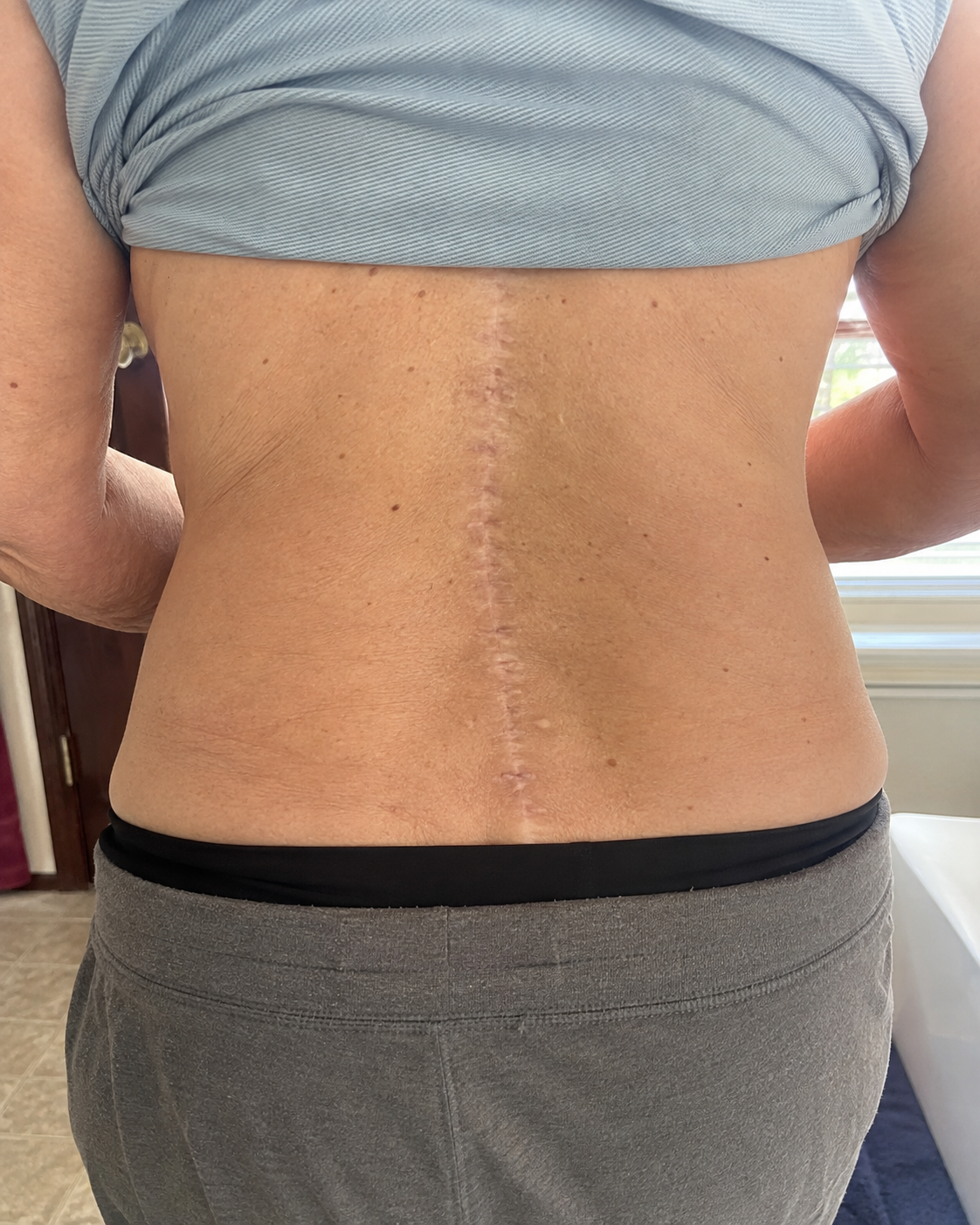
I don't give a f*ck if this upsets you. I'm going to say something that nobody with spinal stenosis wants to hear. I performed my 1,100th spinal fusion on October 3rd, 2024. Sixteen days later, at 2:47 AM on October 19th, I was on the receiving end of one. I was 58 years old. I'm a board-certified orthopedic spine surgeon. Twenty-two years of practice. My own fusion was performed by a colleague I'd trained alongside for a decade. The recovery bill, between the surgery, the hospital stay, and three months of follow-up care, was well past what most families can absorb without thinking twice. They'll let me operate again. My hospital privileges are intact. But I will never wheel a patient into that OR again without remembering what it felt like to be the one on the table, with someone I'd trained running the instruments, because everything I'd prescribed for myself for six years hadn't been enough. I'm writing this because I know exactly what some of my colleagues will say when they see it. I don't care. If you have spinal stenosis, or someone you love does, please read the whole thing. I know it's long. I know you're scrolling. I know you have things to do. Fifteen months ago I would have given anything for someone with my credentials to sit me down and tell me what I'm about to tell you. Nobody did. I was diagnosed with spinal stenosis six years ago at 52. Moderate canal narrowing at L4-L5. Some at L3-L4. The diagnosis surprised me and it didn't. My mother had spent the last decade of her life managed for the same thing. Physical therapy. Injections when the pain flared. A cane by 68. A walker by 71. She never had the surgery, her doctors kept saying "let's hold off a little longer," and by the time anyone seriously discussed it, she'd lost so much strength that recovery was never going to be simple. She died at 74, and the years before that were not years I want for myself, or for you. I'd watched that pattern in my own family. I'd built my entire practice on trying to prevent it in other people's mothers. I did what any spine surgeon would prescribe. Physical therapy twice a week from the year of diagnosis. My own physiatrist colleague added epidural injections eighteen months later when the burning down my right leg started interrupting my OR days. I stayed active. I walked. I did the exact core-strengthening program I hand my own patients after their first flare-up. I lost the fifteen pounds I'd been meaning to lose for a decade. I checked every box on my own protocol. By last spring, I was, by every chart note my colleagues would have written, managed. The MRI showed the stenosis hadn't dramatically progressed. My pain was "well controlled on conservative management." That phrase again. Managed. I want to tell you what managed actually looked like. It looked like leaning on my own kitchen counter every morning for a full minute before I trusted my legs enough to walk to the coffee maker. It looked like a shopping cart I gripped a little harder every single month, not because I needed groceries, but because I needed something solid under my hands to get through the store. It looked like waking at 3 AM most nights with my right leg on fire, lying there doing the same breathing exercises I teach my post-op patients, waiting for it to settle enough to sleep again. I told myself I had time. I told myself I was the exception, the one who'd caught it early enough, done everything right enough, to be different from my mother. Three weeks ago I was carrying laundry down to the basement. My right leg went out from under me with no warning at all. Completely numb from the knee down. I fell the rest of the way down the stairs. My husband found me at the bottom. I couldn't feel my foot. He drove me to the ER at a hospital that wasn't mine, because I didn't want the residents I'd trained to see me on that gurney. They saw me anyway. The on-call orthopedic surgeon was a woman I'd mentored through her fellowship four years earlier. She walked in, saw me on the stretcher, and her face did the thing. Emergency imaging confirmed what six years of "managed" had been quietly building toward. Severe compression. Real neurological compromise, not just pain. She told me I needed surgery within days, not weeks. I had the fusion at L4-L5 that same week. I came home with two rods, four screws, a walker, and a stack of the exact discharge instructions I'd handed hundreds of my own patients over twenty-two years. Rest. Gentle walking. Follow-up in six weeks. The fusion looked solid on imaging. My colleagues told me I was healing exactly on schedule. I still couldn't stand at the counter long enough to make coffee. I still woke at 3 AM. I still leaned on everything within reach. Three months post-op, I sat in my own office at 6 PM and made myself actually look at my own life instead of my own chart notes. My right hip had started aching from months of compensating for the leg that still wouldn't fully bear weight the way it should. My left knee had started clicking, doing extra work my right side wasn't doing. I hadn't slept a full night in six years. I'd stopped going on the evening walks my husband and I used to take, so long ago now that I couldn't remember exactly when they'd stopped. Five separate things. Five different parts of my body and my life, all quietly breaking down. I understood, sitting there, that every one of them traced back to the same place. I did something that night I hadn't done since my own fellowship. I stopped reading the surgical outcomes literature I read every month for my practice, and I started reading the muscle physiology literature I hadn't opened in years. I found what my training had covered lightly and never in the depth it deserved. Most people, including most surgeons, think spinal stenosis and post-fusion pain are bone problems. The canal narrows, or the fusion needs time to settle, that's the whole explanation. It's not wrong. It's half the story. Deep in the spine, wrapped around each vertebra, sits a small stabilizing muscle called the multifidus. It's the spine's internal brace. When it's working, it holds the vertebrae apart, keeps the canal open, and protects the nerves from being compressed. During a posterior fusion, and I know this better than almost anyone, because I've done it 1,100 times myself, the surgeon has to cut directly through that muscle to reach the spine. Within 72 hours, it begins to atrophy. The nervous system shuts it down as a protective reflex. And it does not turn back on by itself. Not with rest. Not with the exact physical therapy protocol I'd been prescribing to patients for two decades. I had spent my entire career treating the bone. I had never once, in 1,100 surgeries, addressed the muscle. That was the piece none of my training had ever put in front of me with any real weight. Two weeks after that night in my office, I saw a follow-up patient who had no business being as far along as she was. Her name was Diane. Post-fusion at L5-S1, four years earlier. Her chart at intake had looked like a hundred others I'd seen, slow, incomplete recovery, ongoing pain despite a technically successful fusion. I'd expected to be discussing a possible revision. She walked into the room without a cane. I asked her what she'd done differently. She was quiet for a moment. Then she said her cousin was a spine specialist in Italy, and had flown in to visit family two years earlier, and had told her something no one in the U.S. had ever explained to her. She wrote a name down for me. I called Diane's cousin myself the following week. We spoke for close to two hours. She'd spent her career at a rehabilitation clinic outside Milan that treats post-surgical spine patients almost exclusively. She told me something I'll paraphrase, because I've now said a version of it to a dozen colleagues myself. "Your fusion is solid. The hardware is perfect. But you're treating the bone and ignoring the muscle that's supposed to hold everything together from the inside. Every physical therapy protocol you've ever prescribed strengthens the surface muscles your patients can feel. The multifidus sits underneath all of it, completely offline, and none of that work ever touches it." She explained that the only technology proven to reactivate a muscle the nervous system has switched off is called NMES, Neuromuscular Electrical Stimulation. Not a TENS unit, which only reaches 2 to 4 millimeters and buzzes the surface. NMES bypasses the nervous system entirely and sends an electrical pulse 30 to 50 millimeters deep, straight into the muscle itself, forcing it to contract again. "You cannot ask a patient to voluntarily flex a muscle their brain has disconnected," she told me. "It's like asking someone to turn on a light in a room where the wiring's already been cut. You have to bypass the switch entirely." Her clinic had been using clinical NMES on post-surgical patients for over a decade. It's why her outcomes, and Diane's outcomes, looked nothing like the outcomes I'd been quietly accepting as normal in my own practice. I asked her the obvious question. Why wasn't this standard in the U.S.? She told me clinical NMES runs $200 to $300 a session in a rehab setting, two to three times a week, for months. Most patients, mine included, can't sustain that. So it stays a clinic-only therapy, available to the people who can afford the schedule, and invisible to everyone else. She told me about a device a spine specialist and a team of biomedical engineers had built specifically to solve that, delivering the same clinical-grade NMES at home. Two wireless pads. One button. Fifteen minutes. It's called ReliveX. I was skeptical. I'd been managing this for six years, I'd just had major surgery, and the idea that a device could reach something 1,100 surgeries never had was hard to sit with. But it came with a 90-day money-back guarantee. I had, genuinely, nothing left to lose. I placed the pads on either side of my incision and pressed the button that first evening. Week one, I felt something during the first session I'd never felt from any TENS unit, a deep, unmistakable contraction, well below the surface. My husband asked why I looked so surprised. Week two, I stood at the kitchen counter and made a full breakfast without leaning on anything. I didn't notice until I was already sitting down to eat it. Week four, I walked to the end of our street and back without stopping. I hadn't done that since before my mother's decline started, over a decade ago. Week six, I slept through 3 AM. Not once. Consistently. I woke my husband up to tell him, at 6:40 in the morning, because I genuinely didn't trust it. Week eight, my right hip, the one that had been silently compensating for months, stopped aching by the end of the day. Week twelve, my husband and I took the evening walk we used to take, the one I'd quietly stopped mentioning years ago because I'd assumed it just wasn't coming back. I sat on our porch that evening and understood I was looking at a recovery I hadn't seen in my own body in six years, and hadn't reliably seen in a fusion patient's chart in twenty-two. I brought my own post-op notes to my practice partner, the surgeon who'd performed my fusion. I didn't say anything. I just put my three-month notes next to my three-and-a-half-month notes and let her read. She looked up and asked what I'd done. I told her all of it. Diane. The Italian clinic. The multifidus. The device. She's been recommending it to her own post-fusion patients for the last six weeks. She called me last week. Eleven of the fourteen she's tracking have reported meaningful improvement in walking distance and pain. Three have had their surgeons push back a planned second surgery. I'm still fused at L4-L5. That part doesn't change, the hardware is exactly where it should be. What's changed is everything the hardware was never going to fix on its own. I don't lean on the counter anymore. I don't grip the shopping cart. I sleep through the night more often than not. I placed 1,100 fusions before I understood what I'm telling you now. I don't know how many of my own patients are still walking around managed, the way my mother was managed, the way I was managed, with the actual cause of their pain never once addressed. If you have spinal stenosis, or you've had a fusion and the pain never fully left, or you're watching a parent lose ground the way I watched mine, please hear this. The bone is not the only thing keeping you from getting better. There's a muscle underneath it that almost nobody checks, and it does not fix itself. ReliveX uses clinical-grade NMES to reach that muscle directly, the same technology that's been standard in rehabilitation clinics abroad for over a decade, now available at home for a fraction of the clinical cost. Over 140,000 patients are already using it. FDA cleared. 90-day money-back guarantee. If you don't feel a real difference, you send it back, full refund, no argument. Right now it's 50% off, with free shipping and 3 free gifts included. The system that trained me didn't hand this to me when I needed it. I'm handing it to you now. try.relivex.com/lander P.S. My mother spent the last decade of her life "managed" for spinal stenosis. A cane at 68. A walker at 71. She never had the surgery, her doctors kept saying to wait, and by the time anyone was serious about it, there wasn't much recovery left to have. I built my entire career trying to prevent that outcome for other people's mothers. I ended up walking the same road myself. The difference is I got a warning at 58 that she never got in time. Please don't let your family's warning come later than mine did. P.P.S. I'm sharing this because a patient of mine six weeks ago showed me post-fusion imaging that looked, functionally, better than my own three-month mark. She'd found ReliveX after her own sister sent her a similar story. This is the second time in two months I've recognized my own recovery in a stranger's. If you love someone with spinal stenosis, or a fusion that never fully healed, please pass this along. I promise you, "managed" is not the same thing as better.
Where the ad sends people
try.relivex.com
What they don’t tell you about spinal stenosis…
After 11 years of stenosis, a failed L4-L5 fusion, and being told "this is just your life now" — a retired librarian from Ohio writes the letter she wishes someone had sent her two years ago.
Learn more: try.relivex.com(opens in a new tab)