Age Spot Reset
Age Spot Reset Facebook ad: “If You Have Age Spots, You'll Want To Read This”
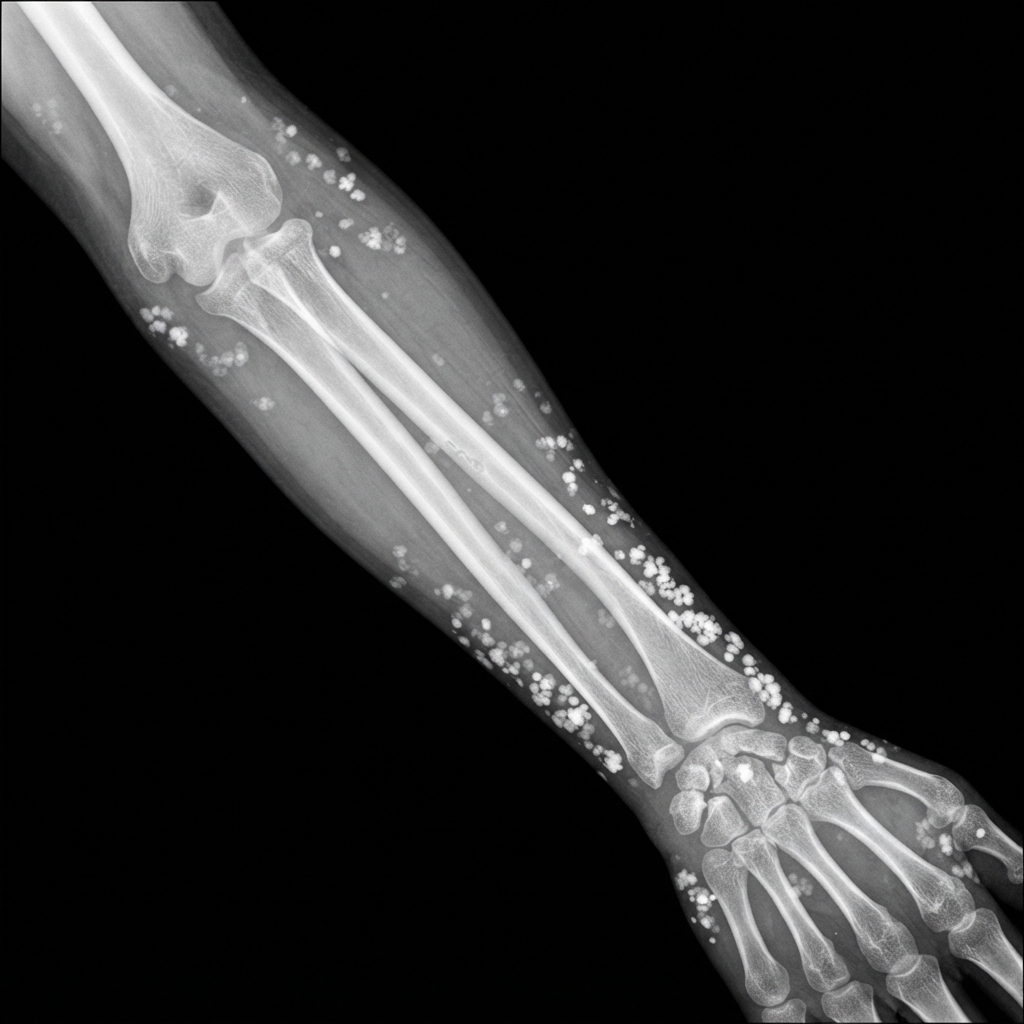
Ran for 14 days, from August 19 to September 2, 2026, the last day Crush saw it.
Run by Age Spot Reset on Facebook. Crush is not the advertiser and does not verify its claims. See this ad in Meta's Ad Library(opens in a new tab)
Want an ad like this for your product?
Crush makes new ad images for your product from this ad: your logo, your product photo, your offer.
Trials from $19.95 USD, then $79.95 USD a month. Cancel anytime.
About this ad
- Meta Ad Library ID
- 1040806911908205
- Platforms
- Facebook, Instagram, Audience Network, Messenger and Threads
- Relaunches
- 1
Ad text
I had a skin problem on a Mediterranean cruise. The ship's doctor was from Austria. She asked me ONE question that made my American dermatologist look 15 years behind. I'm 58 years old. My husband and I saved for two years for this cruise. Two weeks through the Mediterranean. Greece, Italy, Spain. Day four, we're walking through Santorini. Cobblestone streets. Steep hills. Beautiful. Bright sun. But I'm wearing a long-sleeved linen shirt in 90-degree heat. My hands are hidden. My forearms are covered. The dark spots on the backs of both hands and trailing up my forearms — the ones I've been hiding for five years — are sealed under fabric while every other woman on the island is in sleeveless tops reaching for everything without a thought. By the time we get back to the ship, my husband can see I'm miserable. Not from the heat. From the hiding. From watching women my age reach for a glass of wine on a terrace with bare hands while I kept mine in my lap. "Something's bothering you," he says. "More than the heat." I don't want to talk about it. I've been hiding my hands for four years. Not from strangers. From everyone. Even from him in good lighting. But that evening, sitting on our balcony watching the sunset, I broke. I pulled my sleeves up and showed him my forearms. The mottling. The dark clusters on my knuckles. The brown that had been spreading for five years. He was quiet. Then he said, "We need to talk to someone about this." The next morning, I go to the ship's concierge. "I need to see a doctor about my skin." She makes a call. Gets me an appointment that afternoon with the ship's physician. Her office is small. Clean. On Deck 3 near the medical center. Dr. Weber. Austrian accent. Maybe mid-50s. She examines my hands. Turns them over under the light. Looks at my forearms. "These spots have been progressing for some time," she says. "How long have you been treating them?" "About five years," I say. "My dermatologist back home has me on a brightening cream. Clinical strength. Every morning." "Has she discussed oil-soluble lipid barrier delivery for your hyperpigmentation?" I stare at her. "What's that?" She looks at me for a moment. Then sets down her instruments. "Your skin has a lipid barrier," she says. "It's a layer of fats and oils sitting above the deep dermis. It's water-repellent by design. Less than a fraction of any water-based cream crosses it in chronic cases like yours." "But the bigger issue is underneath. The pigment cells in your deep dermis have been locked into permanent overdrive by years of UV. They pump melanin nonstop. Your brightening cream sits on the surface of a barrier that blocks water. The deep cells are behind a shield your cream was never designed to cross." I'm listening. But I don't understand why my dermatologist never explained this. "My dermatologist never said anything about a lipid barrier." Dr. Weber nods slowly. "It's not commonly discussed in American dermatology practice," she says. "Most focus on topical brightening protocols and hydroquinone as the escalation. But in European pigmentation research, lipid-barrier-mediated treatment failure has been understood for over a decade." "So what do I do?" I ask. "There's extensive research on oil-soluble barrier delivery," she says. "Lipid-soluble compounds — specifically Bakuchiol and oil-soluble Vitamin C — that merge with the lipid barrier and pass through from the outside. Reaching the deep pigment cells directly. Calming the overdrive. It's been showing significant results for chronic age spots — especially in patients who've failed topical protocols." "My dermatologist never mentioned anything like that." "It's well-established in European clinical practice," she says. "But not standard protocol yet in the US. If I were you, I'd look into it when you get home." She paused. Then added: "Five years on a water-based cream that bounces off the lipid barrier is not treatment. It's monitoring the decline." I thank her and leave. But I can't stop thinking about it. For the rest of the cruise, it's in the back of my mind. Five years. My dermatologist had been prescribing brightening cream. Checking my hands every few months. Watching the spots spread from one hand to both hands to both forearms. Telling me to keep applying. But she never once mentioned that my skin has a lipid barrier and the cream can't cross it. Or that the pigment cells underneath are in permanent overdrive. Or that there was research on crossing the barrier with oil-soluble compounds. When we got home, I couldn't let it go. The night we unpacked, I opened my laptop. It was 11:45 PM. I started searching. "lipid barrier age spots penetration" "oil-soluble Bakuchiol hyperpigmentation" "European barrier delivery protocol age spots" At 1:30 AM, I found it. Peer-reviewed pigmentation research. Published in clinical journals. Study after study confirming exactly what Dr. Weber had told me. Water-based creams achieve negligible lipid barrier penetration in chronic cases. The lipid barrier blocks every serum and prescription cream. Bakuchiol demonstrates direct barrier crossing and pigment-cell calming. Oil-soluble Vitamin C neutralizes UV damage keeping deep cells in overdrive. Both delivered through the barrier from the outside. The research was there. Published. Peer-reviewed. Some of it over a decade old. I read the studies three times. I felt something rising in my chest. Not anger. Something else. Disbelief, maybe. My dermatologist had been prescribing brightening cream since 2019. Five years. And there was published research — from before she even started treating me — showing that creams can't cross the barrier and that oil-soluble delivery could address the actual deep layer. Why hadn't she mentioned it? I kept reading. More studies. European research. Clinical data. All showing the same mechanism. Same results. At 2:50 AM, I started looking for products. Most brightening oils were garbage. Water-based serums with a drop of oil mixed in. Ascorbic acid that oxidizes in the bottle. Trace Bakuchiol buried on the label with no working dose. But I found one company making a properly formulated oil. Dermiqua. Bakuchiol at a genuine working dose. Oil-soluble Vitamin C, Ascorbyl Tetraisopalmitate, in lipid-stable form. Cold-pressed botanicals. Pure oil base for barrier delivery. I read the reviews. Women describing exactly what I was going through. Years of cream that never crossed. Then spots fading within weeks of switching to oil-soluble delivery. I ordered a bottle at 3:15 AM. When it arrived, I started immediately. A few drops rubbed into the backs of both hands and forearms. Morning and night. No concealer first. No SPF layered underneath. Just the oil on clean skin. Sixty seconds. Done. Week one: The tight papery dryness — that constant tension across the backs of my hands I'd carried for years — was gone. Something was reaching the deep layer from outside. Week two: I looked closely at the darkest cluster on my right hand. At the edges — a fading I'd never seen before. Not surface lightening. The edges dissolving inward. Like the brown was releasing from underneath. Week four: The fading was visible without looking closely. Three areas showing the same pattern. Clusters calming. The mottling on my forearms starting to even out. Week eight: I took a photo and compared it to one from two months earlier. The difference was visible. The dark clusters had faded to faint shadows. The forearm mottling was evening out. No new spots had appeared. The spreading had stopped. At three months, I went back to my regular dermatologist. She examined my hands. Then she stopped. "Your spots have faded significantly," she said. "Actually, your tone is more even than I've seen in years. That's unusual on topical protocol alone." "I stopped the brightening cream three months ago." Her head came up. "You stopped?" "I found something else. A botanical body oil. Bakuchiol and oil-soluble Vitamin C. Oil-based delivery through the lipid barrier. Reaches the deep cells the cream couldn't cross to." My dermatologist looked at my chart. "I'm not familiar with that approach," she said. "But the results speak for themselves. Keep doing whatever you're doing." I left her office feeling something I hadn't felt in years. Not angry. Not betrayed. Just aware. My dermatologist wasn't hiding anything from me. She just didn't know. The research existed. The studies were published. The results were documented. But it wasn't part of her training. It wasn't standard protocol in American dermatology. So she did what she was taught: prescribe brightening cream, monitor the spots, consider hydroquinone or laser if they spread further. Meanwhile, in European pigmentation clinics, they'd been using oil-soluble barrier delivery as a treatment approach for over a decade. I'm 59 now. My hands are clearing. And I think about that cruise ship doctor all the time. The one who took ten minutes to explain what a lipid barrier is. What the deep cells do. Why brightening cream can't cross. Something my dermatologist had never mentioned in five years. If your dermatologist is prescribing brightening cream and telling you to "be patient" with no improvement after months or years, you need to know something. The research exists. Published pigmentation studies. Peer-reviewed clinical data. Showing that water-based creams achieve negligible barrier penetration and that oil-soluble Bakuchiol at a working dose can cross the lipid barrier and calm the deep cells. Your dermatologist probably hasn't seen it. Not because she's incompetent. But because American dermatology training focuses on topical brightening protocols and hydroquinone escalation. Oil-soluble lipid barrier delivery with plant-derived compounds isn't standard protocol yet. So when your dermatologist says "keep applying the cream," she's telling you what she was trained to recommend. But she's not telling you about the research that could actually address why the spots survive behind a barrier her creams were never designed to cross. The brand I use is Dermiqua Sun Damage Repair Body Oil. Bakuchiol at a working dose. Oil-soluble Vitamin C in lipid-stable form. Sea Buckthorn Omega-7. Camellia Oil. Sixteen active botanicals. A few drops morning and night. I don't get anything from sharing this. I just know what it's like to apply brightening cream every morning for five years with no improvement. And I know what it's like to have a doctor on a cruise ship — someone I met by accident because I broke down on a balcony in Santorini — explain in ten minutes what my dermatologist never mentioned in five years. If you're being told to "just keep applying," you deserve to know there's research your dermatologist might not have seen. Research that could cross the barrier without prescription drugs or laser. Research that's been understood in European dermatology for over a decade. You don't have to wait for your dermatologist to learn about it. You can look into it yourself. 👉 https://dermiqua.com/pages/age-spots 90-day money-back guarantee. If you don't see your spots fading, full refund. — Christine Novak, 59 P.S. — My husband took a photo of me in Santorini. Long-sleeved linen shirt in 90-degree heat while every other woman wore tank tops. Last month, we went to dinner and I wore a sleeveless dress. He looked at my arms and said, "I haven't seen that dress in years." It had been in the closet since before the spots spread to my forearms. It fits perfectly now that my hands are clear enough to stop hiding.
Where the ad sends people
dermiqua.com
If You Have Age Spots, You'll Want To Read This 👆
Dermiqua
Learn more: dermiqua.com(opens in a new tab)