Glow Guide 40+
Glow Guide 40+ Facebook ad: “Can't Cure It? You Can Cover It”
Ran for 7 days, from August 16 to August 23, 2026, the last day Crush saw it.
Run by Glow Guide 40+ on Facebook. Crush is not the advertiser and does not verify its claims. See this ad in Meta's Ad Library(opens in a new tab)
Want an ad like this for your product?
Crush makes new ad images for your product from this ad: your logo, your product photo, your offer.
Trials from $19.95 USD, then $79.95 USD a month. Cancel anytime.
About this ad
- Meta Ad Library ID
- 1042310398583448
- Platforms
- Facebook, Instagram, Audience Network, Messenger and Threads
- Relaunches
- 0
Ad text
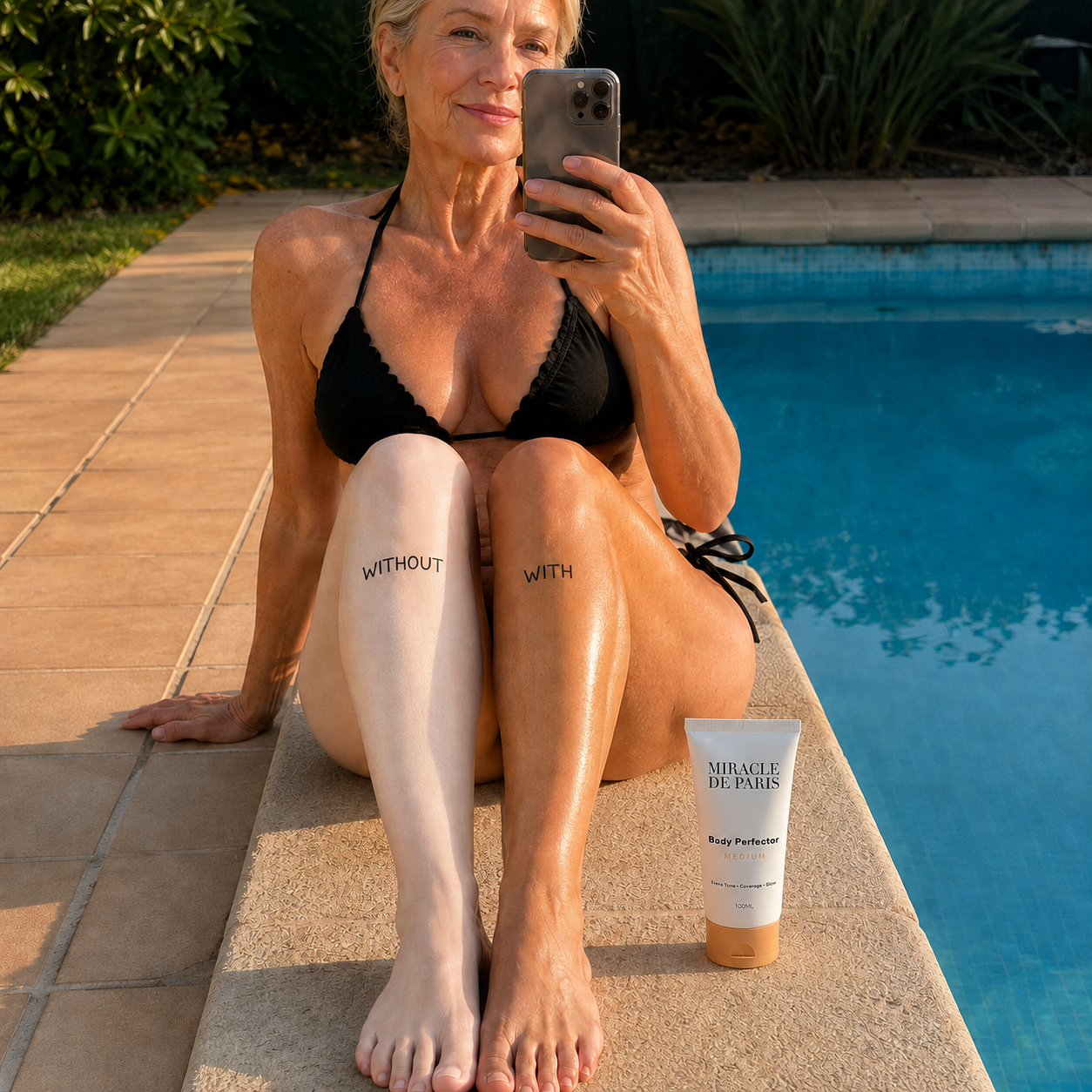
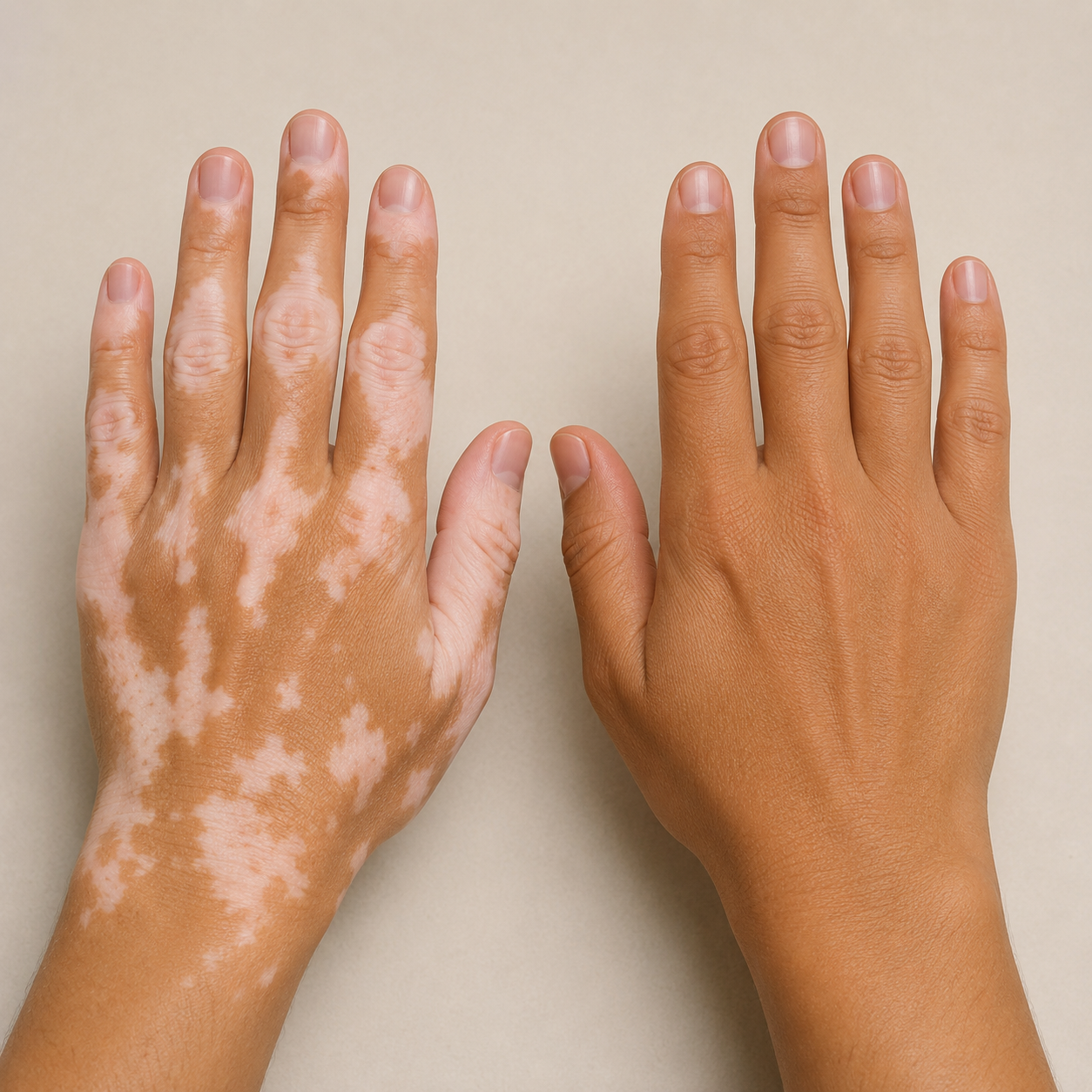
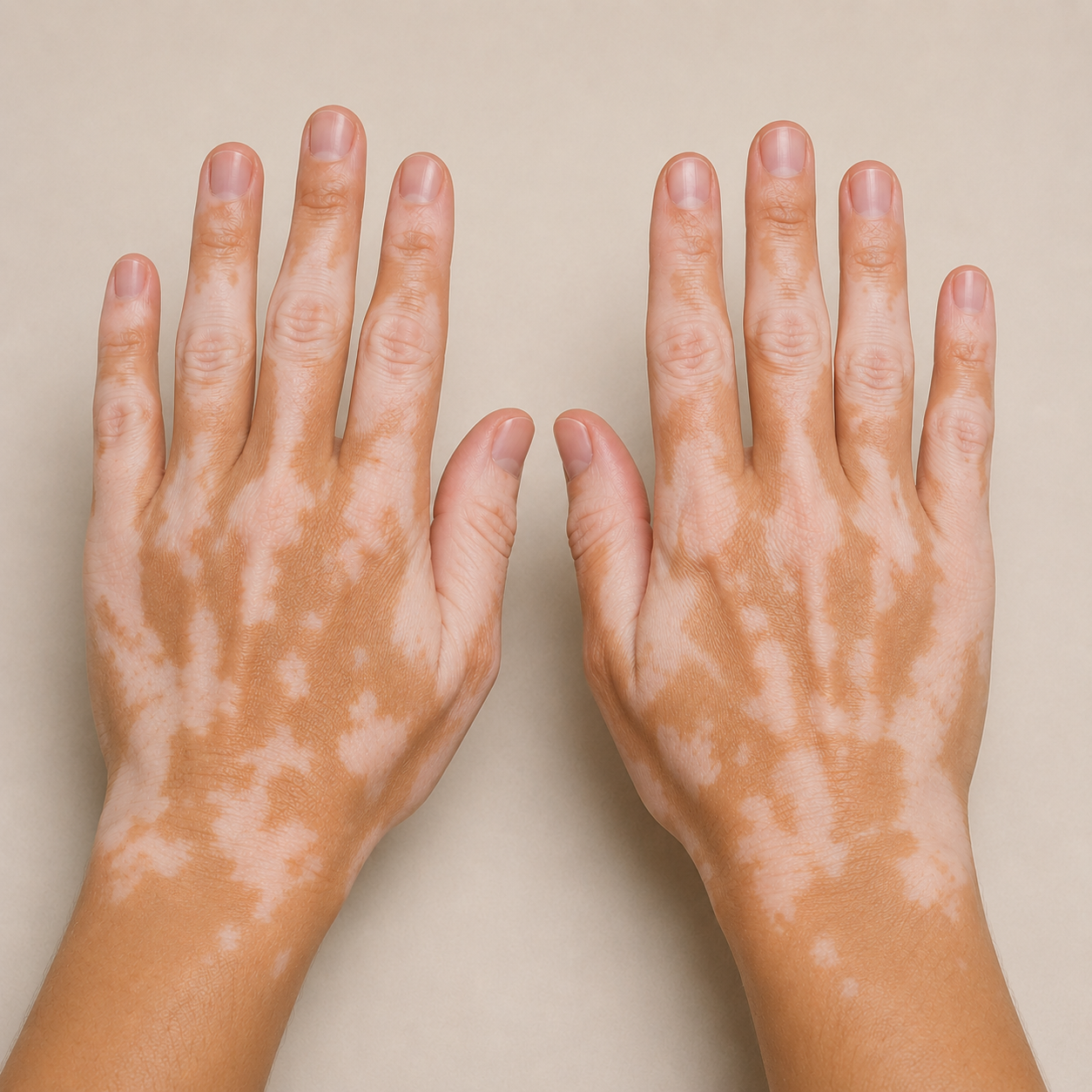
I stopped hiding my hands the day I stopped trying to fix them. I have vitiligo. If you have it too, you already know everything that sentence contains. The white patches that appeared out of nowhere — mine started on my hands and forearms at 41. The dermatologist who delivered the news in ninety seconds flat: "It's vitiligo. There's no cure. You'll learn to live with it." And then the part nobody warns you about: the years of trying anyway. If you've ever googled "vitiligo treatment," you know exactly what I found. Hundreds of creams. Supplements. Special diets. Light therapy. Some of it is real medicine that helps some people — I'm not here to knock anyone's treatment. But I sat in seven different dermatologists' offices over four years, and I'll tell you what I learned: the hands are the hardest place. Even the treatments that show promise elsewhere barely touch them. Mine stayed exactly as they were, growing slowly, while I spent a small fortune waiting. And here's the thing I never said out loud in any of those offices. I wasn't chasing beautiful hands. I wasn't trying to look younger, or tanned, or airbrushed. I just wanted to look normal. Normal as in: hand over my card and the cashier looks at the card. Normal as in: a stranger shakes my hand and thinks about the handshake. Normal as in: nobody's eyes flicker down, nobody's about to ask the question, nobody means well at me. If you have vitiligo somewhere visible, you know exactly the kind of normal I mean. It's not about the patches being wrong. It's about being looked at when you just want to buy groceries. Meanwhile, I was living a smaller life than I admit out loud. I stopped wearing my rings because they drew eyes to my hands. In photos, my hands are behind my back or under the table — go look at ten years of family pictures and you'll barely find them. In summer, I wore sleeves. I stopped swimming. Then I tried the thing half of us secretly try: self-tanner. The logic seems perfect. The patches have no pigment, everything around them does — so darken it all and it blends, right? Wrong. Chemically, painfully wrong. Fake tan works through DHA, which reacts with your skin's surface. But here's what I didn't understand until I'd already done it: it develops unevenly, it clings to some areas and skips others — and the overall effect on skin like ours is that everything shifts a shade while the patches announce themselves louder than ever. I made my contrast WORSE. Twice. Plus the streaks, the smell, the colour on my cuffs, and the special comedy of tanned hands that stop abruptly at white patches. That was the night I actually cried about it, if I'm honest. Because if the treatments couldn't reach it and the tan made it worse, what was left? Here's what was left. And I found it, of all places, in a comment from a makeup artist. She said something that rearranged my whole head: "You're asking one question — how do I get rid of it — and getting no answer. But there are two separate questions. Can it be cured? That's between you and your dermatologist, and no bottle from the internet changes it. Can it be SEEN? That question you can answer yourself. Today. Because here's what nobody tells you: looking normal was never a medical problem. It's a colour problem. And colour problems have had a solution for a hundred years — it's called body makeup, and film sets have used it forever." Not treatment. Not tan. Makeup. For the body. She pointed me to Miracle de Paris Body Perfector — a brush-on body makeup made for exactly this: covering what you'd rather not show, on the days you'd rather not show it. The first time I used it, I brushed it over the back of my hand, waited for some minutes for it to dry, and then I sat at my kitchen table and stared for a long time. It was just... a hand. A normal hand. Not a beautiful hand, not a younger hand — an unremarkable, ordinary, nobody-would-ever-look-twice hand. I hadn't seen one of those on the end of my arm in seven years. I didn't expect what that would do to me. Here's what matters if your patches are where mine are: It's pigment that sits ON the skin — nothing develops, nothing reacts, nothing turns my patches into a darker joke. The shade matched my actual skin tone, which is the entire game for us: you're not trying to be tanned. You're not trying to be anything. You're trying to be unremarkable — and that means one even, ordinary, YOUR-colour tone from wrist to knuckle. It dries in a few minutes and then it does not move. Not onto my clothes, my handbag, or my white sofa. And — I tested this obsessively before I trusted it — it survives handwashing. For anyone with vitiligo on their hands, read that sentence again. It's the one that changes everything. At night, it washes off properly, when I decide. My skin underneath stays my skin. Now, the part I want to say carefully, because it matters. I follow the vitiligo community. I've seen the women who wear their patches loud and proud, and honestly? They're magnificent. Some days I'm one of them — my patches are part of my story and I'm not ashamed of a single one. And they're right about something important: there's nothing abnormal about vitiligo. Two million people in the UK and beyond live with it. But "normal" was never really about my skin. It was about the looking. And there were days I skipped my nephew's pool party. Days I kept my cardigan on through a heatwave. Days the stares were one stare too many. Days I didn't want to be brave, or unique, or an inspiration, or a conversation. Days I wanted to be nobody in particular, buying her groceries. Now I can be. Any day I choose. That's the belief I wish someone had handed me in that first ninety-second appointment: you cannot cure it — and you can still look completely normal, any morning you want to, in about sixty seconds. Those two things were never in conflict. Nobody just tells you. Some days I wear my vitiligo. Some days I wear my Body Perfector. Both days, it's my decision — and having that decision, after years of having none, healed the part of this no cream ever reached. Mine are back in the photos. And nobody looks twice. Which, if you have vitiligo, you know is the entire point. Miracle de Paris Body Perfector. Water and transfer-proof body makeup. Try it on one hand. Compare. Then decide — because with a full money-back guarantee, deciding is all you risk.
Where the ad sends people
miracledeparis.com
Can't Cure It? You Can Cover It
Get smooth, even-toned skin in seconds. Covers scars, stretch marks & more. Waterproof & transfer-proof. Available in 3 colours. Bundle & save today.
Learn more: miracledeparis.com(opens in a new tab)