EverWell
EverWell Facebook ad: “My doctor told me I was the healthiest 62-year-old she'd…”
Ran for 27 days, from July 27 to August 23, 2026, the last day Crush saw it.
Run by EverWell on Facebook. Crush is not the advertiser and does not verify its claims. See this ad in Meta's Ad Library(opens in a new tab)
Want an ad like this for your product?
Crush makes new ad images for your product from this ad: your logo, your product photo, your offer.
Trials from $19.95 USD, then $79.95 USD a month. Cancel anytime.
About this ad
- Meta Ad Library ID
- 1044686321644774
- Platforms
- Facebook, Instagram, Audience Network, Messenger and Threads
- Relaunches
- 0
Ad text
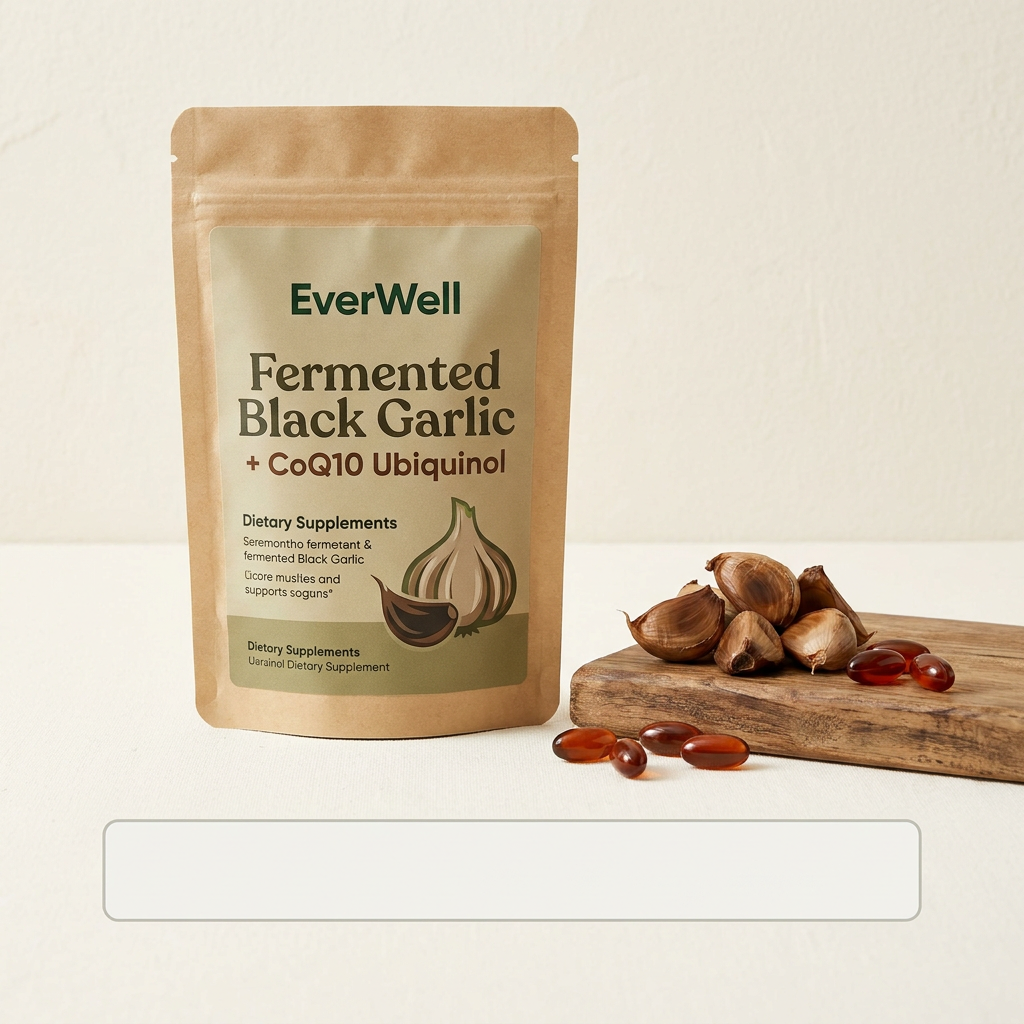
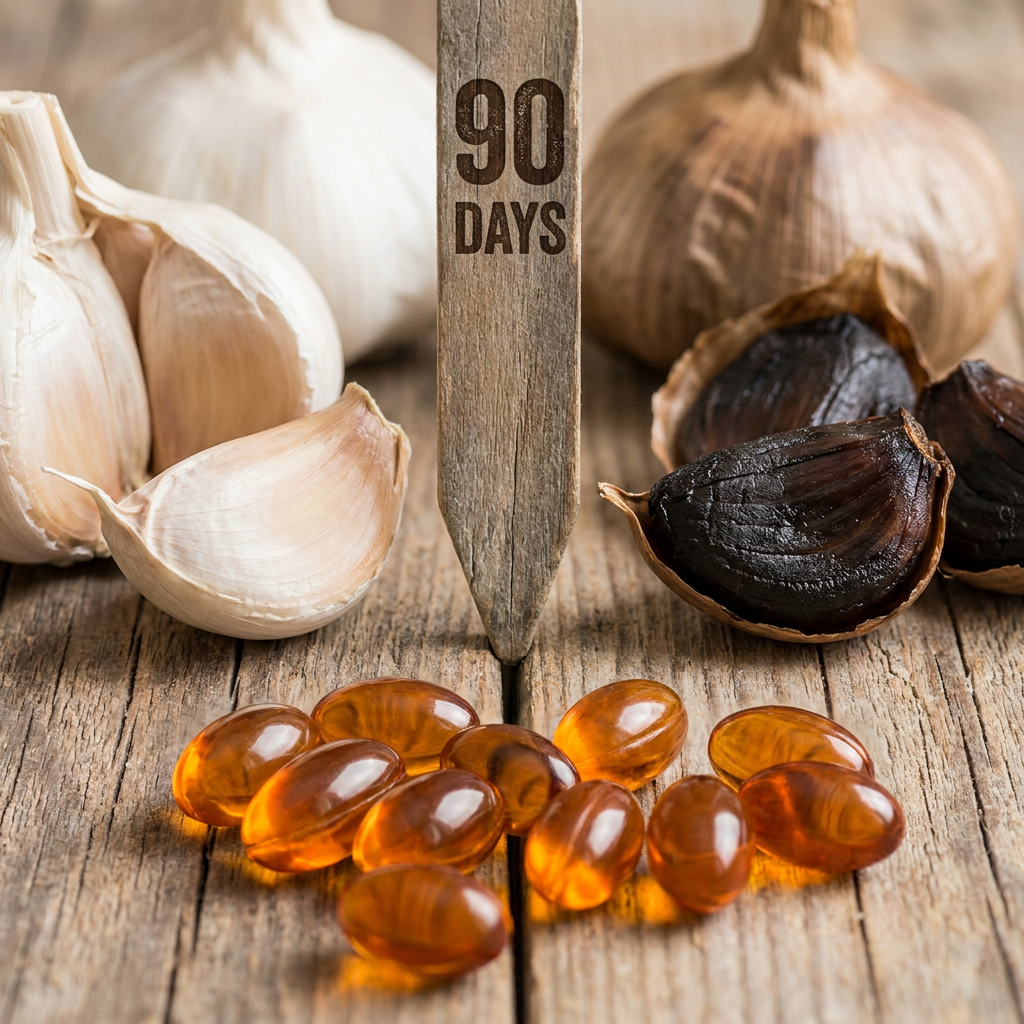
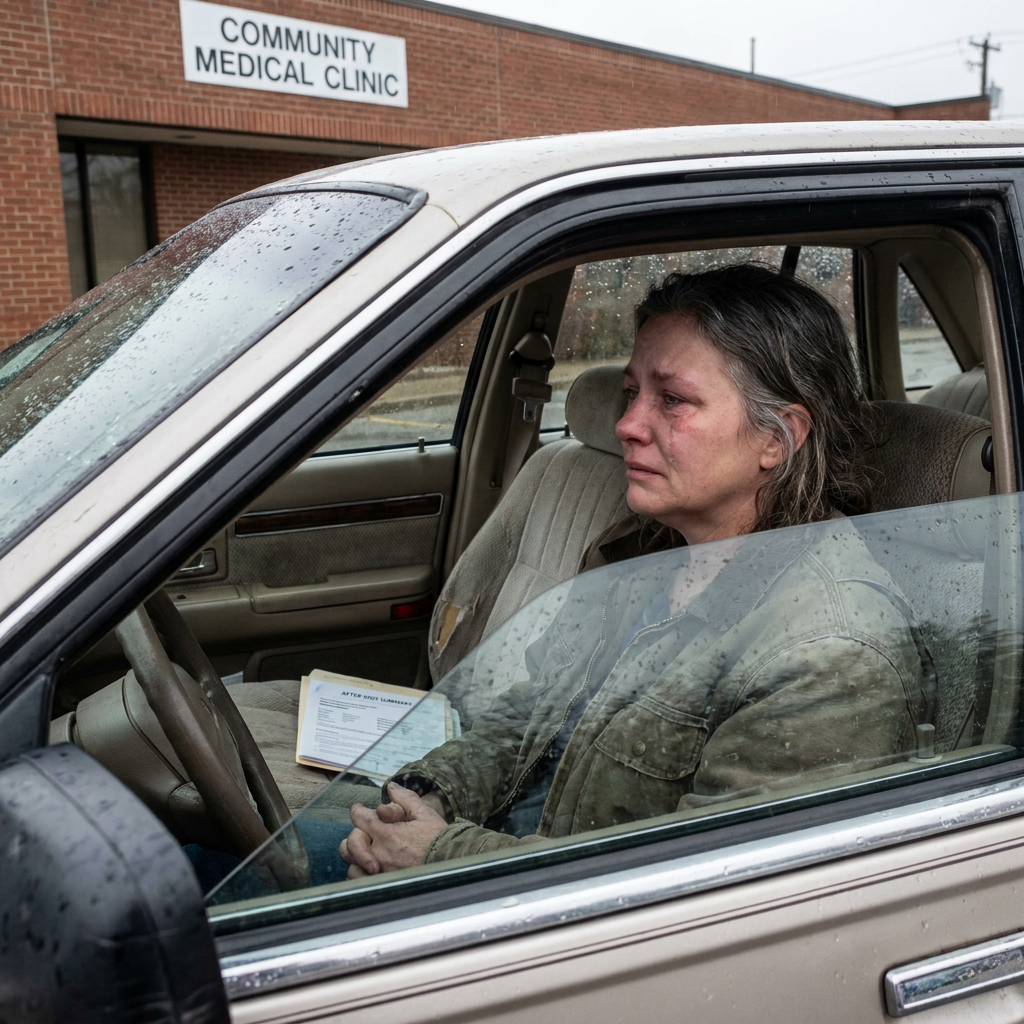
My doctor told me I was the healthiest sixty-two-year-old she'd seen all week. I thanked her, walked out to my car, and cried in the parking lot for ten minutes. Let me explain how both of those things were completely true at the same time. My name is Susan. I'm sixty-two years old. I live outside Madison, Wisconsin, in the kind of neighborhood where people wave from their driveways and the oaks go gold every October in a way that still catches you off-guard. I spent twenty-six years running the front office of an elementary school -- roughly four hundred and twenty kids at peak enrollment. If you've never worked a school front office, let me translate: I was the person who knew every child's name. I knew which ones needed an extra minute in the morning before they could face the hallway. I knew which parents were going through a hard year. I scheduled and rescheduled and soothed and remembered and held things together, six hours a day, ten months a year, for twenty-six years. I loved it. I was genuinely, deeply good at it. When I retired, I made myself a promise. I was going to do this right. I have watched plenty of people retire and dissolve -- lose the structure, spend the first year waiting to feel free, the second year not knowing what to do with the freedom. I was not going to do that. I made a list the way I used to make lists for the office and I checked things off. I started walking every morning -- a real walk, forty to fifty minutes, not a stroll. I bought a fitness tracker and watched those numbers the way I used to watch school attendance figures. I cleaned up my eating: more vegetables, less sodium, less processed food. I kept my weight where it belongs. I took my calcium and my vitamin D, which I had been doing faithfully for fifteen years. I saw my doctor twice a year without being asked. By every single measure that gets written down about a person, I was doing everything right. My doctor used the word "beautiful" about my bloodwork. Not once -- every visit. Blood pressure textbook. Cholesterol where they'd want it. Blood glucose fine. Thyroid normal. Bone density appropriate for my age. The normal-range indicators ticked along in a row like the world's most orderly checklist, and I thought: this is what it looks like to do retirement right. And I felt like I was wading through wet sand. Let me describe what that actually means, because "tired" is too simple a word and it doesn't capture it. From the outside, anyone watching would have said I looked like a healthy, active woman in her early sixties living a full life. I walked, I cooked, I visited my daughter in Milwaukee, I helped with the grandkids on Thursdays, I went to book club. But on the inside, every single thing cost more than it used to. I'd wake up and the day already had weight on it. Not sadness -- I've had real grief and this wasn't that. It was a heaviness that sat between me and the things I wanted to do. Like wading through wet sand: you can get through it, but you're working twice as hard to cover the same ground. The mornings were the worst. I used to be a morning person -- twenty-six years of arriving before the building unlocked, coffee in the parking lot, I ran on mornings. After I retired, mornings started requiring a pep talk I'd never needed before. A flat quality to everything, a low-grade resistance. I'd have to talk myself into the day the way I used to talk anxious third-graders into the hallway. By two in the afternoon, I was done. I would sit down, and once I sat down, whatever I'd been doing stopped. I don't mean I fell asleep, though sometimes I did nap, which was something I had never done in my adult working life. I mean the engine went quiet, and restarting it was an effort that didn't always feel worth making. The afternoon hours started to feel like something to get through rather than something to use. The walks got shorter. That was the one that really bothered me, because the walks were supposed to be my anchor, my evidence that I was doing this right. I started cutting the route. I'd take the shorter loop instead of the longer one, telling myself it was fine, I'd do the long one tomorrow. Then tomorrow I'd take the shorter loop again. Then shorter than that. And then one morning -- this was maybe eighteen months into retirement -- I stood at the end of my driveway with my walking shoes on and my fitness tracker on my wrist and I just didn't want to go. I went anyway, because I'm stubborn, but the whole time I was walking I was thinking about how glad I'd be when it was over. The thing that was supposed to make me feel well was something I had started to dread. My hands and feet were cold. This one sounds small but it was constant and it was strange. I live in Wisconsin, so I know cold. But this was different -- cold in my own kitchen, with the heat on, in July. Cold feet under two blankets at night. I started keeping a pair of wool socks at the foot of the bed because otherwise I couldn't get comfortable enough to fall asleep. The best way I can describe the overall feeling is this: it was as though someone had quietly lowered the ceiling of what was available to me. Not a dramatic loss. No single morning where I woke up and everything was obviously different. Just a slow, steady compression, like the top gear of the engine had been quietly removed and I hadn't quite noticed until I tried to use it. I thought: maybe this is sixty-two. Maybe the magazines lied. Maybe all those articles about "active aging" and "your best decade" are about people who are constitutionally different from me, and the rest of us just have to adjust. So I'd go to the doctor -- and I want to tell you what that felt like, because I suspect you know. I would be in the waiting room doing a kind of silent, shameful bargaining: please let there be something, just something small, so there's a name for it and a thing to do and I don't have to accept this is just the new version of me. And then my doctor would come in with that warm smile, pull up my results, and say "Susan, everything looks wonderful" and "You're the healthiest patient on my schedule today." And I would smile and thank her and walk out to my car and cry. Not dramatic crying. Just the quiet kind, where you realize the saddest thing is that there's nothing to point at. That "nothing is wrong" and "something is wrong" are simultaneously true. The conclusion I was edging toward -- and I suspect I am not the only woman who went here -- was that this was simply me now. That I had done everything correctly, and the reward for doing everything correctly was twenty or thirty more years at half-brightness. That fine was the ceiling, and I was already there. That conclusion was wrong. I know that now. The thing that interrupted it was a podcast I listened to on one of my short dreaded walks -- a Tuesday morning in early autumn, that low golden October light through the oaks. A doctor was talking about exactly this. The gap between the numbers and the feeling. He called it the "healthy on paper, hollow in the chair" problem, and when he said it I actually stopped walking. That was the phrase. That was the exact interior experience I had been trying to describe to myself for two years. He explained two things that don't appear on a standard blood panel -- things that decline quietly with age without affecting the markers your doctor checks, and that have a real relationship with how much life you feel in a given afternoon. The first was nitric oxide. Nitric oxide is a molecule your body produces that helps your blood vessels stay relaxed and your circulation move freely -- think of it as part of the signaling system that keeps blood flowing smoothly to your hands, your feet, your muscles, your heart. When you're younger, your body makes plenty of it. As you age, production declines. This is not something a routine checkup measures. It doesn't show up on the form. Your blood pressure could be textbook while this underlying function is quietly declining, because blood pressure and nitric-oxide production are measuring different aspects of the cardiovascular picture. The second was CoQ10 -- specifically, cellular energy. Your cells contain mitochondria, which are essentially tiny power generators. They run on a compound called coenzyme Q10, or CoQ10. Your body produces CoQ10 naturally when you're young, and production declines with age. Your heart is particularly dependent on CoQ10, because your heart is the one organ that never rests -- it beats a hundred thousand times a day, and those contractions require a constant supply of cellular energy. When CoQ10 availability drops, you don't necessarily see it on the cholesterol panel. It's operating at a different level, below the things your routine bloodwork is checking. I sat down on a park bench and listened to that man talk for another twenty minutes. The thing that struck me hardest was not the science -- it was the framing. He said: these two systems genuinely decline with age, and a standard wellness checkup was never designed to catch them. It is entirely possible to be "healthy" by every standard metric and still feel at half-brightness, because those metrics were never measuring the two things that are actually declining. I had been graded on a test that didn't include the two subjects I was failing. Once I heard it that way, I stopped concluding that something was wrong with me and started asking a different question. I went home and I read for three weeks. This is what I do. I am the person who, before approving a new supply vendor for the school district, read the procurement guidelines, compared three bids, and called two references. I do not act on a podcast alone. Here is what I learned about fermented black garlic. Ordinary garlic comes with two problems: the smell and a compound called allicin, which is unstable and your body has to convert before it becomes useful. Fermented black garlic is regular garlic aged under controlled heat and humidity for roughly ninety days -- and during that process, several things happen. The allicin converts into a stable, bioavailable compound called S-allyl-cysteine, or SAC. The polyphenol content increases. The antioxidant activity increases. And the smell disappears entirely, because the sulfur compounds that create garlic odor are chemically transformed. The fermentation is not a shortcut. It is the point. The ninety-day timeline exists because that is how long the chemical transformations take to complete. A shorter fermentation produces a different product. Researchers are specific about the timing. Fermented black garlic is studied in relation to cardiovascular wellness and healthy circulation -- specifically, nitric oxide signaling and blood vessel function. Not as a drug, not as a treatment. As a support: compounds associated with healthy vascular function in people whose systems are already largely working, but whose production of certain molecules is quietly declining with age. "Supports healthy circulation." "Supports nitric-oxide production." The language is careful and the science warrants the care. What I wanted was a product pairing fermented black garlic with CoQ10, specifically in the form called ubiquinol. The form matters: CoQ10 comes in two versions, ubiquinone and ubiquinol. Ubiquinol is the active form -- what the body actually uses at the cellular level. Your body can convert ubiquinone to ubiquinol, but that conversion becomes less efficient with age, precisely when you most need the compound. The ubiquinol form removes the conversion step. The research on older adults is consistent: the active form tends to be better absorbed. If you are going to supplement CoQ10, the form matters. Circulation and cellular energy. The two systems. The two things that weren't on the form. A supplement that addressed both in one place was exactly what I was looking for, if such a thing existed and was made correctly. I want to talk about my hesitation, because it was real and I suspect some of you are sitting with the same one. It was garlic. Specifically, the social implications of garlic. I have a life. I have lunch with friends every other Thursday. I volunteer at the library twice a month. I go to church. I sit next to people. And I was not -- I want to say this clearly -- I was not prepared to become the garlic lady. The woman who walks into a room and carries a faint announcement of her supplement choices ahead of her. That was not on my retirement checklist. But fermented black garlic -- ninety-day process, done right -- is odorless. Not "less smelly." Odorless. The sulfur compounds that produce garlic smell are transformed by the fermentation. The product that comes out the other end has no identifiable garlic smell, no breath implications, no aftertaste. Zero social risk. When I confirmed this with a real phone call, it removed what I realized had been my last remaining excuse. And I was a little embarrassed to notice I had been holding onto that excuse -- because a part of me, the part that had concluded "fine is the ceiling," was still not entirely sure I was allowed to want more. The brand was EverWell -- EverWell Fermented Black Garlic Extract plus CoQ10 Ubiquinol. I called. I asked office-manager questions: How is it made. How long is the fermentation. What are the amounts per serving. How is it tested. The person who answered was patient, which I appreciated. Here is what I learned: fermentation ninety days under controlled conditions; each serving equivalent to approximately 6,000mg of fresh garlic -- a meaningful amount, not a token amount; CoQ10 at 200mg per serving in ubiquinol form; odorless; non-GMO; gluten-free; lab-tested for purity and potency. Two softgels with breakfast. Two softgels with breakfast. I want to be honest about what happened next, because this is the part where I am most careful. I do not have a fireworks story. I am not the kind of person who has fireworks stories, and I would not trust myself if I did. What I have is a methodical account of what I noticed over several weeks, offered by someone who was paying close attention. The first couple of weeks: nothing dramatic. I want to say that plainly. There was no morning in week one where I leaped out of bed feeling transformed. If there had been, I would be suspicious of it. Support for biological systems that have declined gradually over years is not a light switch; it is more like turning a dial, which is also how the decline happened in the first place. Week three. This is when I noticed the first thing, and the way I noticed it matters. I was on my walk. I had taken what I thought was the shorter loop -- the one I'd been defaulting to for months because the longer one felt like too much. But I got to the corner of Whitmore and Oak Hill where I usually turned back, and I just... kept going. Not because I decided to. I kept going the way you keep reading a good book -- the momentum carried me. I realized I was on the long loop somewhere around the fourth block, and the thing that struck me was that I hadn't had to decide. I was just walking. The way I used to walk. Without the overhead of the walk, without the cost. I stood at my mailbox at the end of the driveway and I counted the time on my fitness tracker: fifty-three minutes. I had not walked fifty-three minutes in over a year. I did not make a story out of that one walk. I walked it again the next day, and the day after. The long loop stopped being a thing I had to decide to take. It became, again, the default. The two o'clock wall. One afternoon I realized I had sat down because I was choosing to, not because I had run out of something. There is a meaningful difference between choosing rest and defaulting to rest because the option of continuing has closed. The option started staying open longer -- until three, until four. Afternoons became something I could do things in again. My feet were warm. My hands were warm. This sounds small and I am telling you it is not small. The cold hands and feet had been a constant background texture of wrong for two years, and when it lifted -- gradually, over the first six weeks or so -- it was like taking off a coat you'd forgotten you were wearing. I slept better. Not dramatically, not a transformation, but the quality was different. I stopped reaching for the wool socks in July. The best way to describe it overall: the ceiling went back up. The gear that had been quietly removed came back. Nothing about my external life changed -- same neighborhood, same walks, same friends, same Thursday grandkids. But the interior quality of those things changed, the way a room changes when someone turns the lights back to their proper setting. Not a different room. The same room, at the brightness it was always supposed to have. And here is what matters most to me, as someone who is precise about cause and effect: my numbers did not change. At my next checkup, my doctor said the same thing she always says. Healthiest patient all week. Beautiful bloodwork. Textbook blood pressure. Normal range across the board. My numbers were fine before and they were fine after, because my numbers were never the problem. They were never measuring what was declining. This time when I walked out to my car I did not cry. I sat in the driver's seat and I looked at the same "normal" printout I had been looking at for two years, and for the first time, the outside matched the inside. My numbers said I was fine, and I actually was. I want to say this one more time, as directly as I know how, to the person who is in the place I was two years ago: If you are healthy on paper and hollow in the chair, if the walks have gotten shorter and the afternoons heavier and your hands are cold in a warm house and you have started to accept that "fine" is the ceiling -- please hear this: fine is a floor. It is the lowest acceptable level. It is not the top of the range. There are pieces of how you feel that a standard blood panel was never designed to measure. Nitric oxide and cellular energy do not appear on the form. The test your doctor is running was not designed to test those subjects. A perfect score on it is wonderful, and it does not tell the whole story. You are allowed to want more than fine. You are allowed to ask real questions, make a real phone call, take two softgels with your breakfast, and see whether the ceiling goes back up. Go find your half-brightness lights. Then go turn them back up. -- S. P.S. The odorless thing is the reason a woman who lunches with friends every other Thursday, volunteers at the library, and sits in church pews would ever consider a garlic supplement. Properly fermented black garlic -- ninety-day fermentation, done correctly -- has no smell. No garlic breath. No aftertaste. No social implications whatsoever. The sulfur compounds responsible for the odor are chemically transformed by the fermentation. If "I am not becoming the garlic person" has been your reason for not looking into this, it was mine too, and the fermentation makes it a complete non-issue. P.P.S. The CoQ10 component is what spoke to my real complaint. I was not, at bottom, having a circulation problem that I could see. What I was having was an energy problem -- the wet sand, the 2 p.m. wall, the engine in the lower gear. That is the cellular-energy piece. That is what the CoQ10 ubiquinol addresses: the mitochondrial function that supports how much cellular energy your body can generate and sustain through the course of a day. The fermented black garlic speaks to the circulation side; the CoQ10 speaks to the energy side. The two together were the combination I needed, which is why I specifically wanted both in one product rather than taking them separately. P.P.P.S. Before you order, ask the company about their guarantee the way I did. Ask about the return policy. I called EverWell because I spent twenty-six years on a school phone and I can tell in forty-five seconds whether I am talking to a real person or someone reading a script. The person I spoke to answered my process questions without deflecting to sales language. A company that makes something they believe in tends to employ people who are comfortable with questions. P.P.P.P.S. One last time, the sentence that changed everything for me: "Fine" is a floor, not a ceiling. The numbers on your beautiful bloodwork represent the minimum threshold for the things they are measuring -- not the full picture of how well you are supported, energized, and functioning. If you are hitting every number and still feeling at half-brightness, you are not imagining it and you are not being told the full story. Go find out what the test is missing. These statements have not been evaluated by the Food and Drug Administration. This product is not intended to diagnose, treat, cure, or prevent any disease. Individual experiences vary.
Where the ad sends people
tryeverwellhealth.com
My doctor told me I was the healthiest 62-year-old she'd seen all week. I thanked her, walked to my car, and cried in the parking lot for ten minutes -- and both of those things were completely true.
EverWell
Learn more: tryeverwellhealth.com(opens in a new tab)