Menopause Skin & Hair
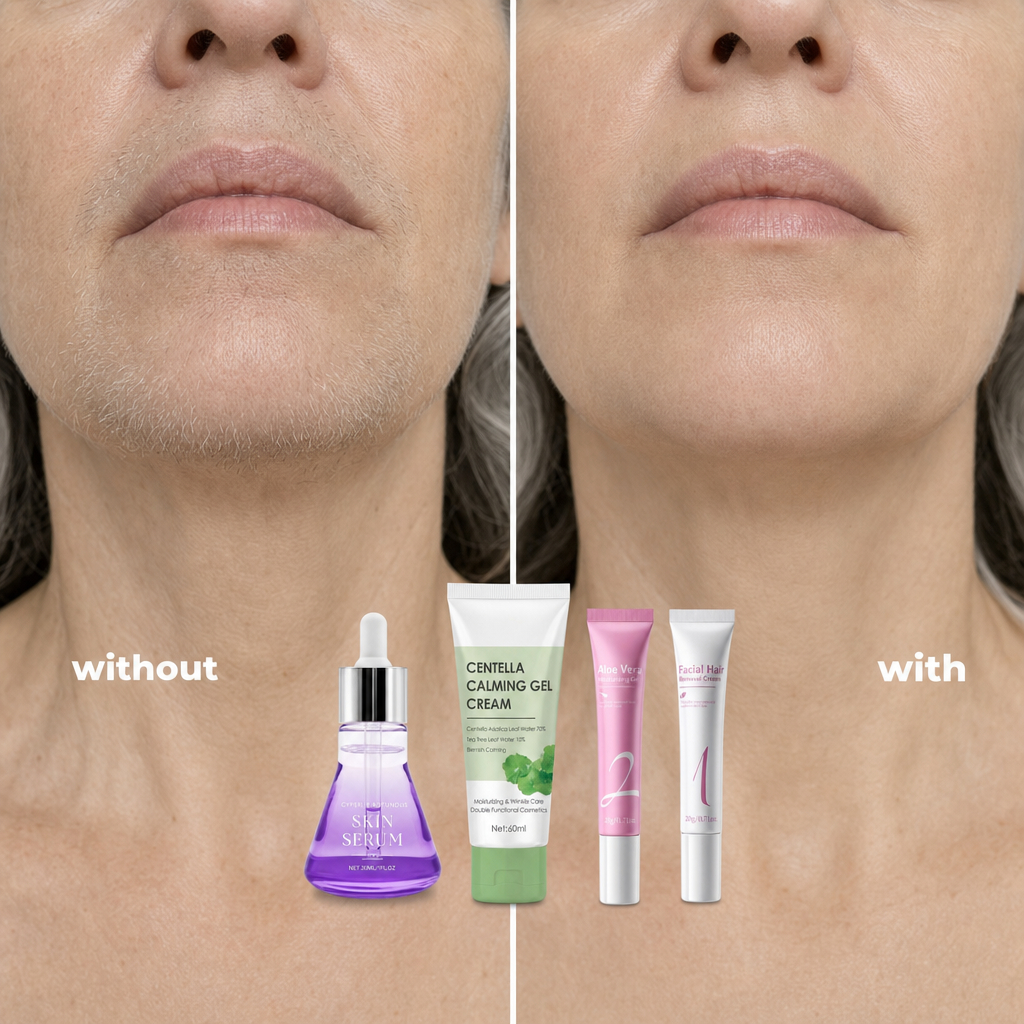
Menopause Skin & Hair Facebook ad: “Laser Can’t See Gray Hair. This Can.”
Ran for 27 days, from August 8 to September 4, 2026, the last day Crush saw it.
Run by Menopause Skin & Hair on Facebook. Crush is not the advertiser and does not verify its claims. See this ad in Meta's Ad Library(opens in a new tab)
Want an ad like this for your product?
Crush makes new ad images for your product from this ad: your logo, your product photo, your offer.
Trials from $19.95 USD, then $79.95 USD a month. Cancel anytime.
About this ad
- Meta Ad Library ID
- 1045325624910509
- Platforms
- Facebook, Instagram, Audience Network, Messenger and Threads
- Relaunches
- 0
- Niche
- Hair Care
Ad text
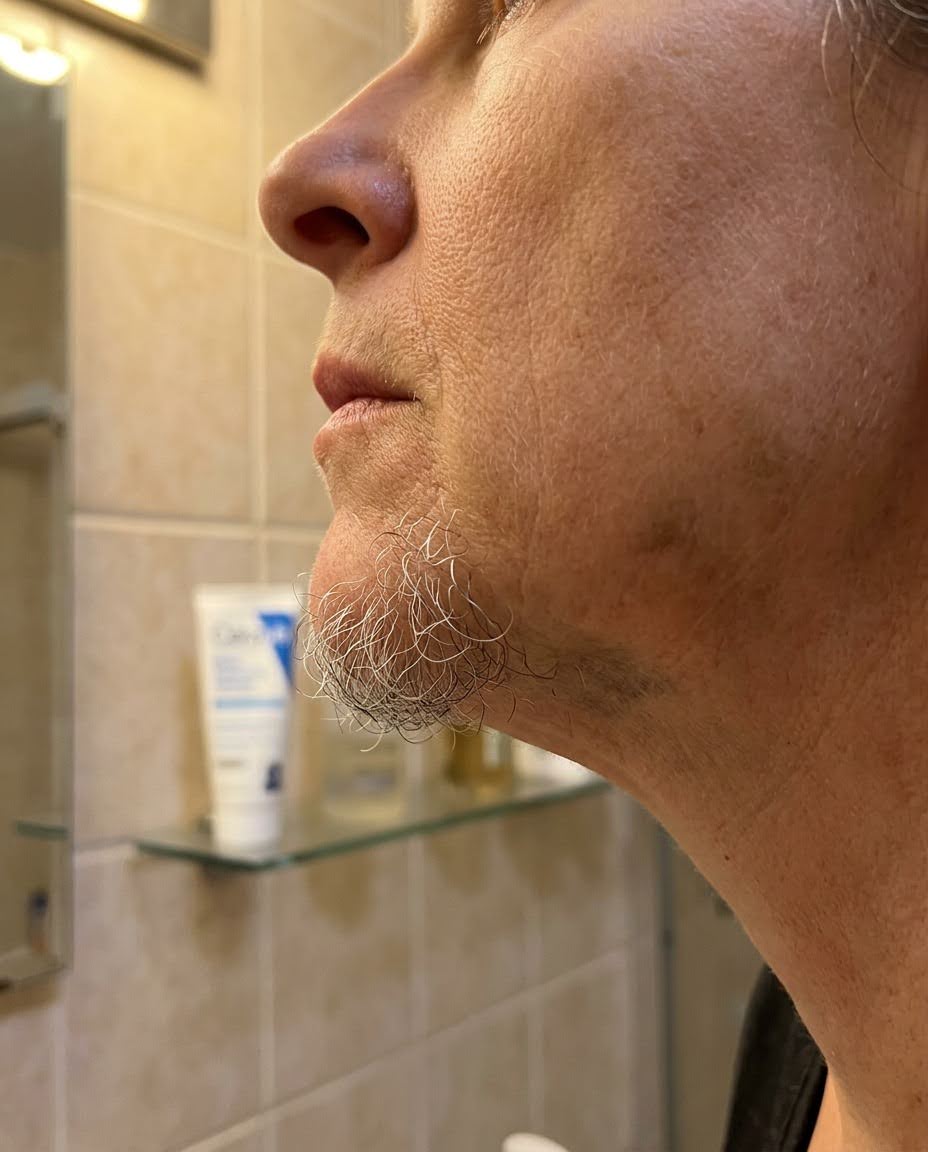
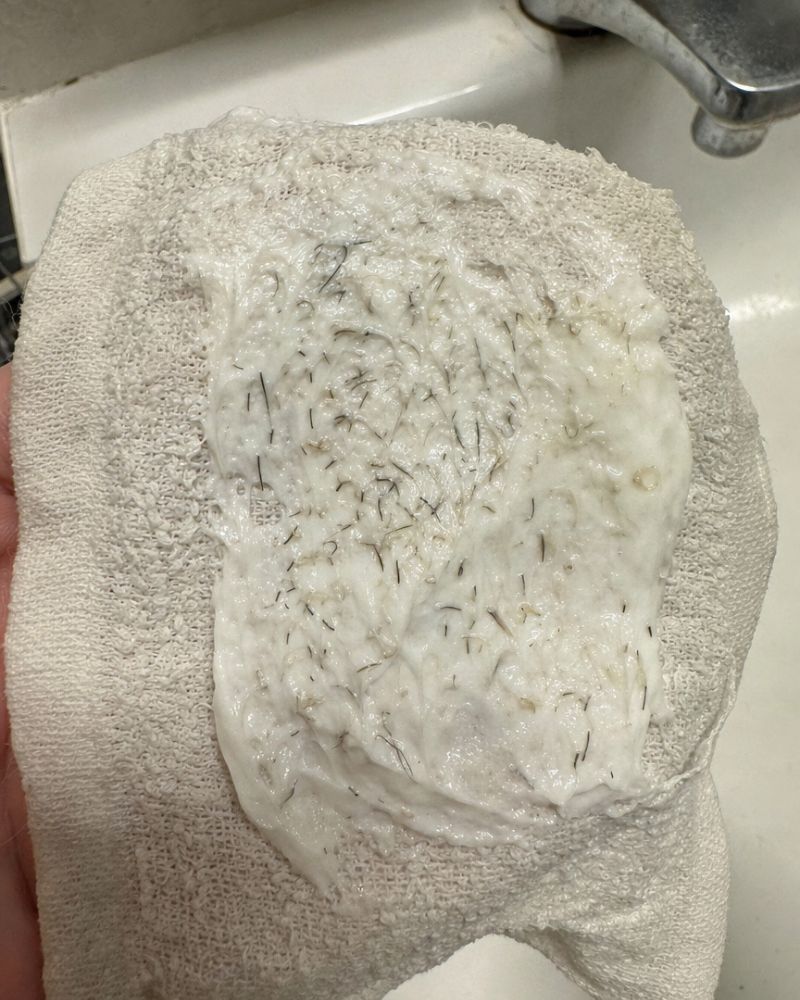
My laser technician stopped mid-session. Put the handpiece down. Looked at my chin under the light for a long time. Then she said, “I need to be honest with you about something.” Fair warning: by the end of this you're going to be angry. But not at yourself. I was four sessions into a six-session package. $2,400. I'd saved for it for months. “The dark hairs are responding. But the gray ones?” She paused. “I can't treat those. The laser needs pigment to lock onto. Your gray hairs don't have any. They're invisible to the machine.” I stared at her. “You're telling me this at session four?” She looked uncomfortable. “We usually see how the dark hairs respond first before we...” “Before you what? Before you tell me that half the hair on my chin can't be treated by the thing I'm paying you $2,400 for?” She didn't answer. I drove home and sat in my driveway for twenty minutes. Because here's what she didn't understand. The gray ones weren't just half the problem. They were the worst ones. The thickest. The coarsest. They grew back the fastest. I could feel them pushing through by dinnertime even if I'd plucked that morning. And they were the ones the laser couldn't even see. Nobody warned me about this. Not my doctor. Not the laser clinic. None of the articles I'd read about “managing menopause symptoms.” Hot flashes. Night sweats. Mood changes. That's what they covered. Nobody mentioned the beard. I was 49 when the first chin hair showed up. I'd never had facial hair. Not as a teenager. Not in my twenties or thirties. Never even thought about it. The woman who didn't own tweezers for her eyebrows. Just never needed them. Then menopause happened. It started with the hot flashes. Then the night sweats. Then the sleep stuff. My doctor walked me through all of it. Gave me pamphlets. Talked about HRT. Told me what to expect. She never mentioned chin hair. Not once. I found the first one on a Tuesday morning. I was putting on mascara and I saw it in the mirror. One thick hair on my chin. Dark gray. Coarse. I touched it and it was stiff. Like a bristle. I plucked it and threw it away. Weird. Move on. A week later there were two more. Then four. Then I stopped counting. By six months in I was plucking every morning. Not 10 minutes like the women who've been dealing with this since their twenties. But 15. Then 20. Then 25. It crept up. The hairs got thicker. And most of them were gray or white. Not fine little peach fuzz. Thick. Wiry. The kind you can feel with your fingertips even when you can't see them. I felt like I was becoming someone else. I'd look in the magnifying mirror and I didn't recognize the face looking back. This wasn't me. I'd never dealt with this. I didn't know the vocabulary. Didn't know the routines. I didn't know that you're supposed to pluck in a certain direction or that some lighting shows things other lighting hides. Women with PCOS have been fighting this since their twenties. They know the tricks. They know the products. They've built the systems. I was learning at 49. From scratch. Alone. My friends didn't have it. Not like this. One of them had a few stray hairs she waxed once a month. She'd joke about it. “Menopause is so fun, right?” She didn't know I was spending 25 minutes every morning on mine. She didn't know I'd stopped meeting her for coffee on days I didn't have time to pluck. I didn't tell anyone. Not my friends or my husband. Not even my daughter. My daughter is 24. She called me one Sunday. I didn't pick up. Mid-pluck. My chin was red and I didn't want to FaceTime looking like that. I called her back an hour later. Said I was in the shower. That's when I realized this wasn't just hair. It was changing how I lived. I started avoiding morning plans. Needed the time. Started saying no to pool days and beach trips. Started wearing scarves indoors. In June. My husband asked if I was cold. I said I just liked the scarf. I went to my doctor at the one-year mark. Told her about the hair. She nodded and said, “That's very common in menopause. Your estrogen drops and the androgens become more dominant. The hair follicles respond.” Very common. She said it like it was a footnote. I asked what I could do about it. She said I could try laser. Said it was “the gold standard.” That's how I ended up paying $2,400 for a machine that can't see gray hair. After the laser appointment I came home and did something I never do. I poured a glass of wine at 2 PM and sat at my kitchen table with my laptop. I typed “laser hair removal doesn't work on gray hair.” And I found out what that technician should have told me at session one. Laser works by targeting melanin. That's the pigment in your hair. The dark stuff. The laser locks onto it and uses it to heat the follicle. That's how it kills the hair. Gray hair has no melanin. White hair has no melanin. The laser can't lock onto something that isn't there. It passes right through. Like shining a flashlight through a window. This isn't a side effect. It isn't bad luck. It's how the physics works. Laser CANNOT treat unpigmented hair. And menopause hair is mostly unpigmented. So the treatment every doctor recommends. The “gold standard.” The one that costs $400 a session. It was built for 30-year-olds with dark hair on light skin. It was never designed for women like me. I sat with that for a minute. Then I kept reading. What about electrolysis? That works on gray hair. I'd heard of it. I looked it up. Found forums where women my age were sharing their experiences. It works. It does. One hair at a time. A tiny needle in each follicle. Zaps it. Kills it. Permanent. But here's what they don't mention in the brochures. You have to grow it out between sessions. All of it. You can't pluck or shave between appointments. The technician needs to see the hair to treat it. One woman wrote: “I go every two weeks. For three to four days before each session I walk around with full growth on my chin. I wear a mask when I leave the house.” Another one wrote: “I've been doing this for 14 months. $300 a month. I still have visible hair most of the time because I'm always in between sessions.” Fourteen months. Over $4,000. Still growing it out every two weeks. Still hiding. I closed that tab. So laser can't see it. Electrolysis works but you have to walk around with a visible beard for days every other week. Plucking and waxing rip the hair out and it grows back just as thick. I started to think maybe this was just my life now. Maybe this is what menopause looks like and I needed to accept it. I almost closed the laptop. Poured more wine instead. Then I found a comment buried at the bottom of a forum thread. A woman who was 56. She wrote, “I spent three years and $6,000 on electrolysis before someone told me about dissolution. I wish I'd started there.” Dissolution. I didn't know the word. I looked it up. It's a chemical process. Instead of ripping the hair out or burning it with a laser it breaks down the protein structure of the hair. The hair dissolves on the surface. You wipe it away. No pulling. No heat. Pigment doesn't matter. That last part stopped me. No pigment needed. It doesn't matter if the hair is dark or gray or white. The chemical breaks down the hair itself. Not the color. The protein. Keratin. Gray hair has keratin. White hair has keratin. Every hair has keratin. Dissolution works on all of them. I stared at my screen. Three years of plucking. $2,400 on a laser that couldn't see half my hair. And the answer was a chemical process that doesn't care what color the hair is. I went back up the thread and kept reading. The replies under that comment were all women like me. One wrote: "I keep tweezers in my purse, in my car, and in my desk at work. I check my chin at every red light. I haven't felt like myself in years." Another one wrote: "I spent over a thousand dollars on laser before anyone admitted the machine can't treat gray. Mine are almost all gray now." A third: "My granddaughter's birthday party was outside this year. I sat in the shade the whole afternoon so nobody would get a close look at my face." That first one was ME. Word for word. Down to the tweezers in the car. But then I hesitated. Because I'd tried creams before. Nair once. Burned my upper lip so bad I had a red mark for three days. My skin is thinner than it used to be. Menopause does that too. Less collagen. Less elasticity. More sensitive to everything. So I kept reading. Because if dissolution was the answer it needed to be gentle enough for my skin. Not just strong enough for the hair. Both. And that's where I found out something that explained why Nair burned me. And why one specific kit didn't. Every hair removal cream runs at a very high pH. Around 12. That's what dissolves the hair. But pH 12 also strips this thin protective layer off your skin. Your acid mantle. It's the shield that keeps your skin calm and keeps irritation out. When the cream comes off your barrier goes with it. That's why it burns later. Why your skin turns red and stays red. Why those dark marks show up a few days after. And for women my age that's even worse. Because our skin barrier is already thinner. Already more fragile. pH 12 on a 25-year-old's skin is rough. pH 12 on a 52-year-old's skin is devastating. Most kits don't address this at all. Cream in a tube. Maybe a little moisturizer. Done. But I found one that did something different. After the cream there was a second step. A recovery gel. 70% centella. Green tea. pH of about 6. Designed to bring the skin back down from that alkaline spike. Put the barrier back before the damage kicks in. I'd been reading product pages for hours at that point. This was the only one where the second step actually made sense for what was happening to the skin. And the cream itself used the gentlest version of the dissolving ingredient. Fragrance free. No ammonia smell. Not the drugstore stuff that's made for leg hair on a 20-year-old. Gray hair. Mature skin. A recovery step that actually works. I ordered it before I finished my wine. It showed up two days later. I opened it at the kitchen table. Same spot I'd been sitting with my wine. Three tubes. Simple packaging. No pink. No “for women over 40” in curly script. Just a kit. I used it that evening after my husband went to watch TV. Cream on. Set a timer. The first thing I noticed. No smell. I've used Nair once in my life and the ammonia made my eyes water. This smelled like nothing. I actually leaned into the mirror to check it was on. Ten minutes. I wiped it off. Everything came off. The dark ones. The gray ones. Even the white ones I usually can't see until they're long enough to feel with my fingertip. All of them. Gone. I ran my hand over my chin. Smooth. Actually smooth. The gray ones were gone. The wiry thick ones that the $2,400 laser couldn't even find. A cream dissolved them in ten minutes. I stood there for a second just holding my own chin like I'd never touched it before. Then the gel. The recovery step. I put it on. Cool on my skin. This slight calm that settled over my face. The tight dry feeling I got after Nair that time. It never came. My skin just felt quiet. I went to bed nervous. Because every cream I'd ever heard of burns later. Not during. After. And my skin is 52 years old. Thinner. Drier. More reactive than it was at 30. I woke up the next morning and touched my chin before I opened my eyes. Smooth. No redness. No burn. Just calm skin. I got up. Went to the bathroom. Looked in the mirror under the overhead light. The same light that shows every hair. Every mark. Every shadow. Nothing. Just skin. Calm. Clear. Smooth. I made coffee. Sat at the kitchen table. My husband came down. “You look rested,” he said. I almost laughed. Wasn't rested. Just relieved. Day two. Still smooth. I put on my makeup and it went on flat. No texture to catch on. No stubble poking through the foundation. My chin felt like the rest of my face for the first time in three years. Day four. I ran my hand across my jaw out of habit. The checking habit. The one where you run your fingers along your chin every hour to see if anything's growing back. Nothing. Just soft skin. Day seven. Fine hairs starting to come back. But soft. Not that wiry bristle that used to push through by noon. Not the thick gray ones that felt like pins. Just soft fine hair. Day ten. I looked at my chin in the magnifying mirror. The dark marks from three years of plucking were lighter. Not gone. But lighter. The shadow that sat across my chin even after plucking. It was fading. By week three I used the kit again. Same routine. Cream. Gel. Bed. No burn the next day. By month two something shifted. I stopped checking. Not all at once. But I noticed one afternoon that I'd gone from breakfast to 3 PM without touching my chin. Without thinking about my chin. Without going to the bathroom to check under the light. I was just living. Having a regular day. Not managing the hair. I called my daughter that week. On FaceTime. Didn't think about it. Just called her. She said, “Mom you look different.” I said, “Different how?” She said, “I don't know. You just look like you.” I bit the inside of my cheek to keep it together. Like me. She said I look like me. That's the thing about menopause facial hair that no article prepares you for. It's not just the hair. It's the feeling that you're becoming someone you don't recognize. That the face in the mirror isn't yours anymore. That menopause took one more thing from you that nobody warned you about. By month three my friend invited me to the pool. Saturday afternoon. Direct sunlight. Swimsuits. I said yes. No scarf. No excuse about feeling sick. I just said yes. I put on a swimsuit. Put my hair up. Walked out to the pool. Sat in a lounge chair in full sun and talked to my friends for three hours. My chin was smooth. My skin was clear. I didn't touch my face once. On the way home I pulled down the visor mirror at a red light. Not to check for hair. Just to look. And the woman looking back at me looked like someone I hadn't seen in three years. She looked like me. I need to be straight with you. This doesn't stop menopause. Your hormones are going to keep doing what hormones do. The hair will keep growing. This isn't permanent. No topical cream is permanent and I'm tired of brands pretending otherwise. What this does is give you a way to deal with it that actually works on gray hair. That doesn't burn your skin and leave marks. That takes 15 minutes once every few weeks instead of 25 minutes every morning with tweezers. The cream uses the gentlest version of the dissolving salt. Fragrance free. No ammonia. The gel resets your skin after. And it works on every color of hair because it breaks down protein. Not pigment. The kit comes with a hydrating serum too. Ceramide. Hyaluronic acid. Other brands charge $14 for their version separately. This one's in the box. I use it every day between treatments. It keeps my skin soft and calm. At 52 my skin needs that more than a 30-year-old's does. The guarantee is 365 days. A full year. Keep everything. Most brands give you 60 days. This one gives you twelve months to decide. No subscription. Nobody charging you every month. Nobody making it hard to cancel. I've read those reviews about other brands. Women fighting to get off an auto-ship they didn't sign up for. This isn't that. I spent $2,400 on a laser that couldn't see my gray hair. Three years plucking every morning and watching the marks get darker. A year wearing scarves in summer. Skipping pool days. Lying to my daughter about why I didn't pick up the phone. All because nobody told me that laser doesn't work on gray hair. And nobody told me there was something that does. Maybe you've done what I did. Plucked every morning... Booked the sessions... Followed every piece of advice they gave you... NONE of it was your fault. You did what they told you. You were a good patient. The information failed you. You DID NOT fail. If you're going through menopause and your chin looks different than it did five years ago. If you've got gray or white hairs that are thick and coarse and growing faster than you can keep up. You've been told laser is the answer. But something in your gut says it won't work on the ones that bother you most. Trust your gut. The laser can't see them. But this can. 365-day guarantee. Keep everything. No subscription. Works on gray. Nobody warned you about this part of menopause. But you don't have to figure it out alone anymore. 👉 Click the link below to learn more P.S. You'd think the $2,400 is the part that bothers me most. It isn't. It's the mornings. Three years of plucking. Around 20 minutes a day. I did the math once: that's over 360 hours(!) FIFTEEN full days of my life, standing at a mirror, pulling out hairs one at a time. Nobody gives you those mornings back. You don't have to lose yours. P.P.S. I sent this to my sister last month. She's 47. She found her first one this spring. I didn't promise her anything. I told her what nobody told me. And now she gets to decide for herself.
Where the ad sends people
barevelle.com
Laser Can’t See Gray Hair. This Can.
Gentle at-home facial hair removal for dark, gray, and white hairs.
Learn more: barevelle.com(opens in a new tab)