
Inactive· since Jun 25, 2026
- 6
- days it ran
- 0
- relaunches
Ad copy
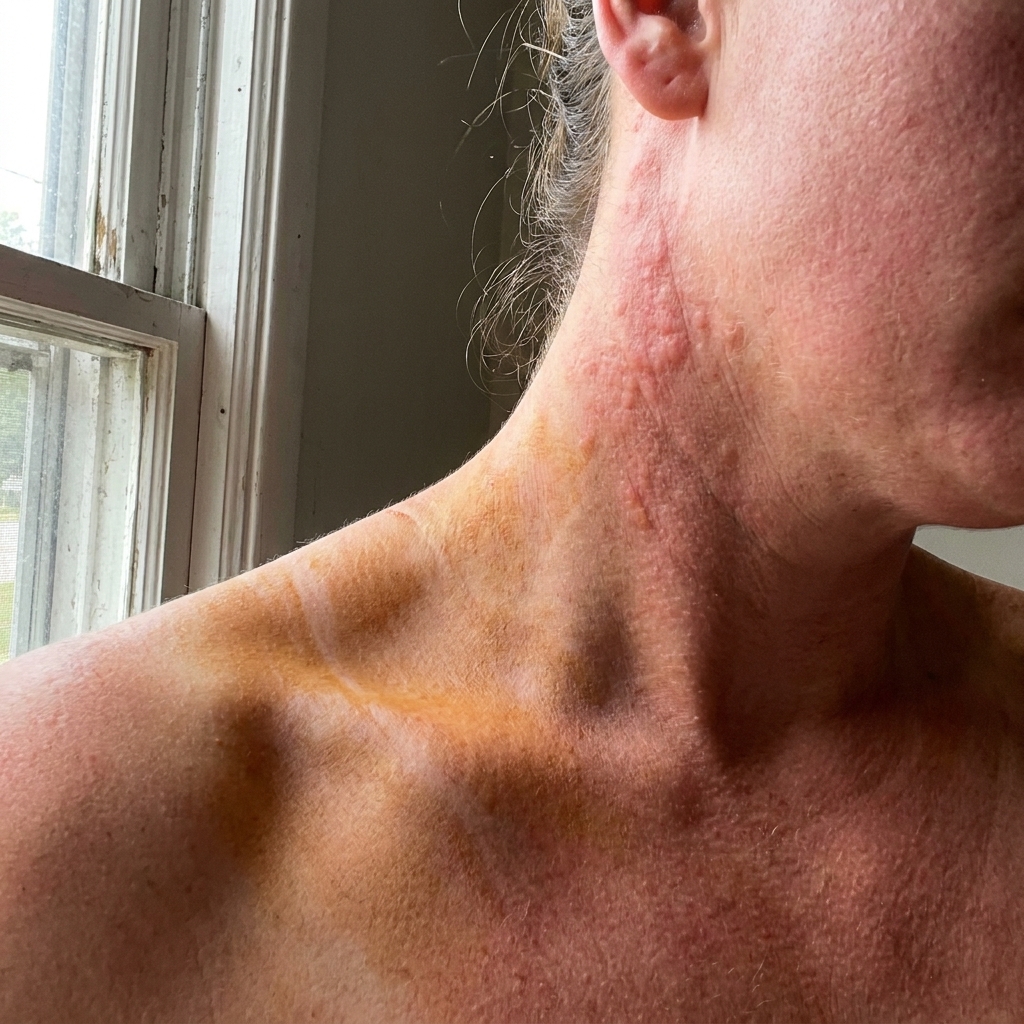
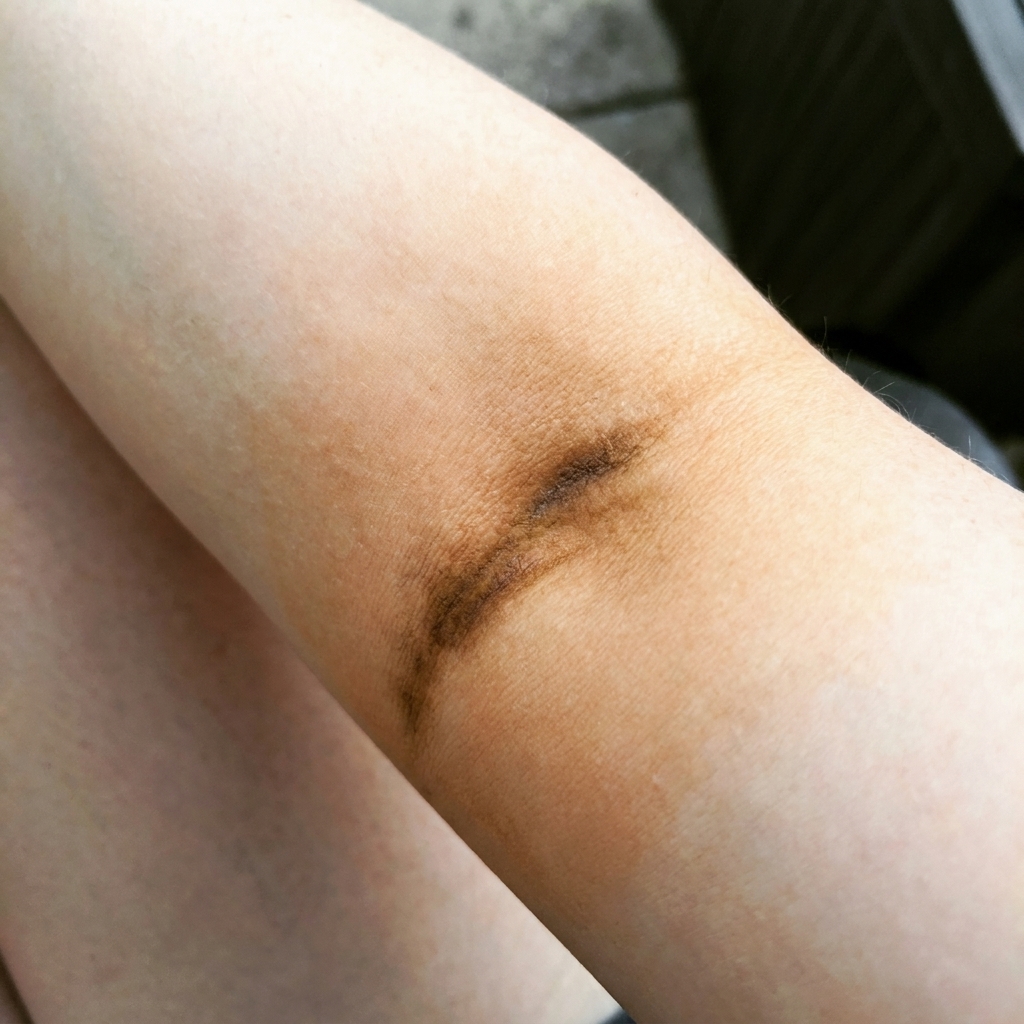
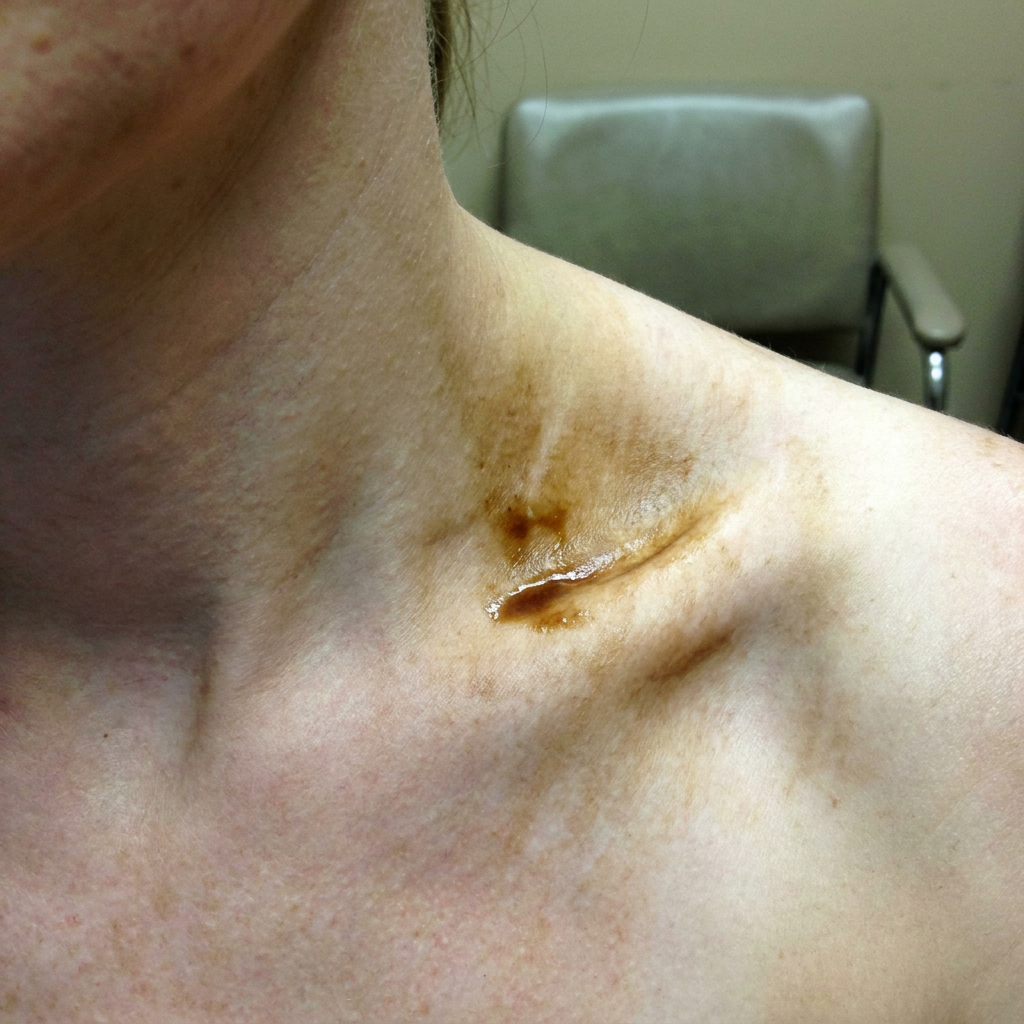
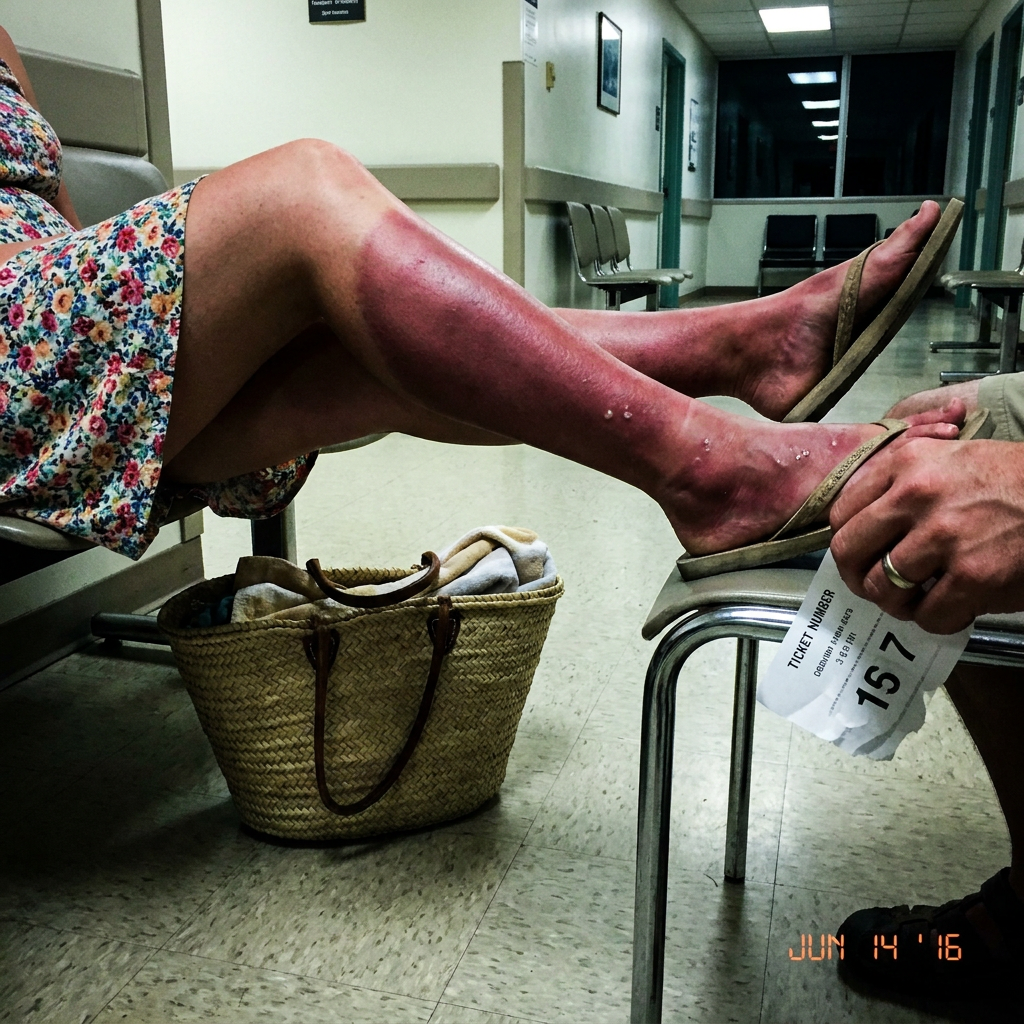
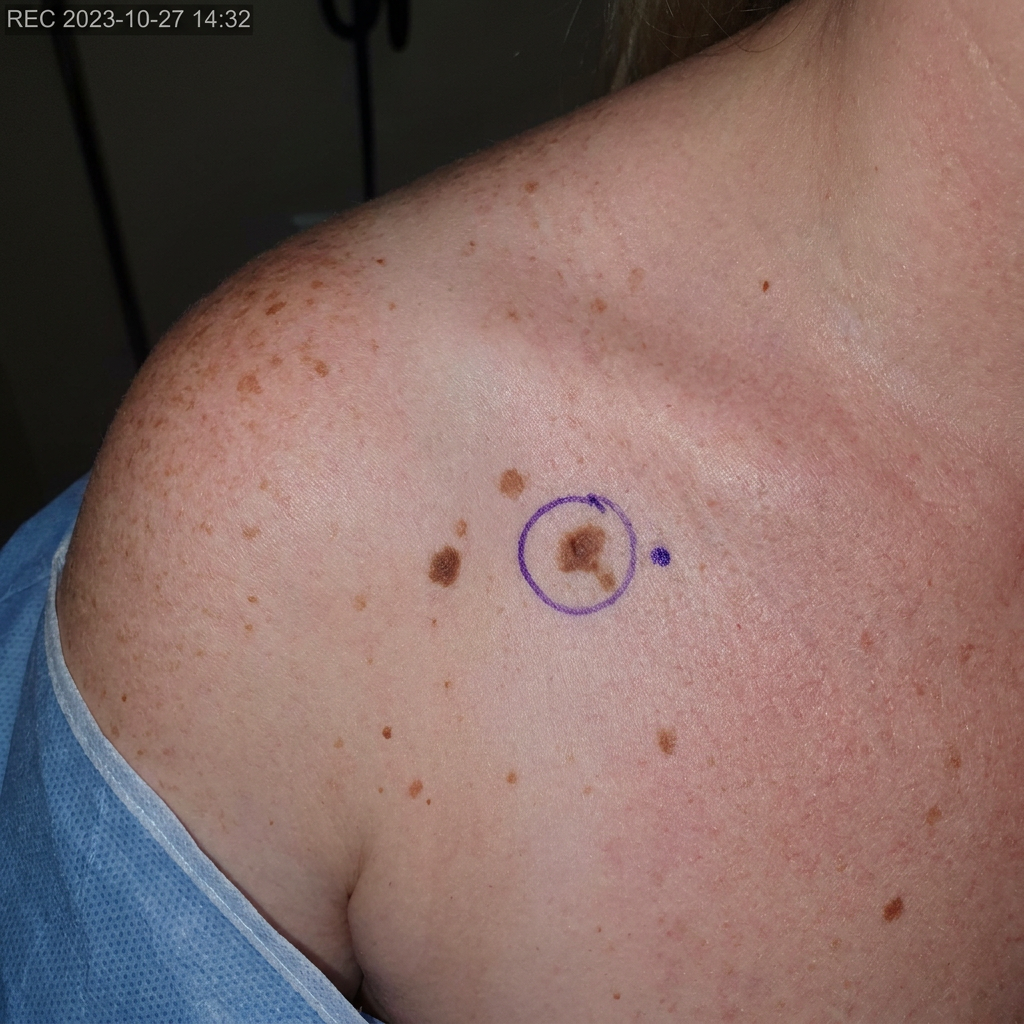
That photo above is not from a horror movie. Those purple marker circles are drawn by a dermatologist on real skin, on a real woman, around spots that used to just be called freckles. The moment a doctor uncaps that surgical marker and draws a circle on your chest, something shifts in you that does not shift back. If you have had that experience, or if you are terrified of having it, keep reading. What I am about to share changed how I think about every summer I ever spent trying to build a base tan. The image you just looked at is a medical documentation photo. Not a stock image. Not a dramatic illustration. That is what a dermatology monitoring photograph actually looks like, taken under clinical flash, with no flattering light, no filter, and no kindness toward the subject. The purple circles are surgical marker. The dermatologist draws them precisely around the spots she wants to track across visits. If you have ever sat in that paper gown under fluorescent light while someone circled something on your skin with a felt-tip marker, you know the exact feeling I am describing. It is not fear exactly. It is something colder than fear. It is the moment your body stops being just your body and becomes something that needs monitoring. I want to tell you about a myth that has been passed down through families for generations, quietly, like a recipe or a superstition. The myth of the base tan. In 1903, a Danish physician named Niels Finsen won the Nobel Prize in Medicine for using concentrated light to treat skin infections. Almost immediately, popular culture took the idea that light was healing and warped it into something else entirely. By the 1920s, sunbathing had become fashionable in Europe and America. By the 1950s, it was practically a seasonal ritual. By the time your grandmother was young, the advice was everywhere: get a little sun early in the season so your skin has something to protect itself when summer really hits. That is the base tan myth. And it is medically wrong. Here is what actually happens inside your skin when you get a so-called base tan. Your body produces melanin, the brown pigment that gives skin its color, as a damage response. Not a protective response. A damage response. The UV radiation from the sun is breaking apart the DNA in your skin cells. Your melanocytes, the cells that produce melanin, respond by releasing pigment in an attempt to absorb further radiation before it reaches the cell nucleus. The tan you see is your body's emergency system doing its job. The problem is, the emergency system is imperfect. A tan produced by real sun exposure in fair-to-medium skin provides roughly the equivalent of SPF 3 protection. SPF 3. Not 30. Not 15. Three. For women with lower melanin levels, the protection is even less than that. There is no gradual building of real protection. There is only cumulative exposure, cumulative DNA fragmentation, and cumulative pigmentation damage that your body can never fully reverse. Every summer you chased a base tan, you were not building a shield. You were adding to a total. That total is what a dermatologist reads when she looks at your chest under a light, tilts her head slightly, and reaches for her marker. Here is the part of the story that most women in their late twenties, thirties, and forties are now sitting with. They followed the advice they were given. They were not reckless. They were not ignoring warnings that existed. The warnings were not widely communicated when the habit formed. So now they have skin that reflects fifteen or twenty summers of doing exactly what they were told. Clusters of hyperpigmentation on the chest and shoulders. Irregular spots that used to be dismissed as cute summer freckles and are now being photographed and circled with purple marker in a dermatologist's office. The advice aged badly. The skin aged along with it. What I want to give you is not guilt. You cannot reverse the summers you already spent. But you can change what the next ten summers look like, starting with the foundational belief that got us here in the first place. You do not need UV exposure to have a tan. That sentence probably sounds obvious when you read it, but follow me here, because it took dermatological science about seventy years to offer a real alternative to the sun. The way a tan looks is a function of pigment deposited in the skin. UV exposure forces your body to produce that pigment through a stress response. But pigment can enter the skin through another route entirely: through the bloodstream, via the digestive system, via what you eat. Carotenoids are the pigments found in orange, yellow, and red plants. Carrots. Sweet potatoes. Tomatoes. Bell peppers. When you consume carotenoids in sufficient quantity, they are absorbed in the gut, enter the bloodstream, and deposit in the subcutaneous tissue just beneath the surface of your skin. This is not a theory. This is documented biology. The effect is called carotenodermia in its clinical form, which is just the medical word for skin that has taken on a golden hue from carotenoid saturation. Researchers at the University of Exeter and the University of St Andrews published studies showing that skin tone rated as more attractive, healthier-looking, and more radiant by outside observers was consistently associated with higher dietary carotenoid levels, not with UV exposure. The golden glow that people associate with a healthy tan is, in part, a carotenoid signature. And unlike a UV tan, carotenoid pigmentation does not damage DNA. It does not trigger a stress response. It does not add to the cumulative total that a dermatologist reads on your chest. It simply makes you look like you have been eating very well and spending time somewhere warm. This is why Tanning Gummies by Bronzii exist. Bronzii is a once-daily gummy that delivers a concentrated dose of natural carotenoids and antioxidant-rich plant compounds. You take one gummy a day. The carotenoids are absorbed in your gut. They enter your bloodstream and begin depositing beneath the surface of your skin. Because the pigmentation builds inside living skin cells rather than sitting on top of dead ones, it develops evenly across your body. Not orange. Not patchy. Not concentrated in weird places like the palms of your hands the way some topical self-tanners behave. Golden, even, and gradual. It takes about two to three weeks of consistent daily use to see the full effect. It fades naturally when you stop taking the gummies, exactly the way a real tan fades when you stop getting sun. No UV exposure at all. No biopsy conversations. No purple circles on your chest. I want to say something directly to the women reading this who are in their twenties and have not had the marker conversation yet. You are at the exact age where the habit forms. The base tan advice is going to come at you from your mother, your friends, beauty culture, and the memory of every summer you watched someone else come back from holiday looking golden and healthy. You do not have to choose between that golden look and your future skin health. Those two things only appeared to be in conflict because we were told for a century that sun was the only mechanism. It is not. And to the women in their thirties and forties who have already sat in the paper gown, who have already felt the cold feeling of the purple marker, who are already managing something on their skin that needs watching: this is not about guilt or reversing what cannot be reversed. It is about what you choose going forward. The next summer holiday does not have to begin with intentional UV exposure. You do not have to choose between looking pale and feeling self-conscious, or lying in the sun and adding to a total that your dermatologist is already watching. There is a third option that your mother did not have access to, but you do. Tanning Gummies by Bronzii. The tan your mother told you to build came with a cost she did not know about. You know about it now. https://bronzii.com/pages/lp-1
Read This If A Dermatologist Has Ever Used A Marker On Your Skin And You Have Not Forgotten It
Get a natural, golden-bronze glow from within with our doctor-reviewed, 100% UV-free formula. No streaks, no mess, no orange. Shop our New Year Sale and save 50% off your order!
LEARN MORELike this ad? Make it yours.
Crush rebuilds this exact creative around your product — your brand, your colors, your offer — in about a minute.