
Inactive· since Aug 7, 2026
- 35
- days it ran
- 0
- relaunches
Ad copy
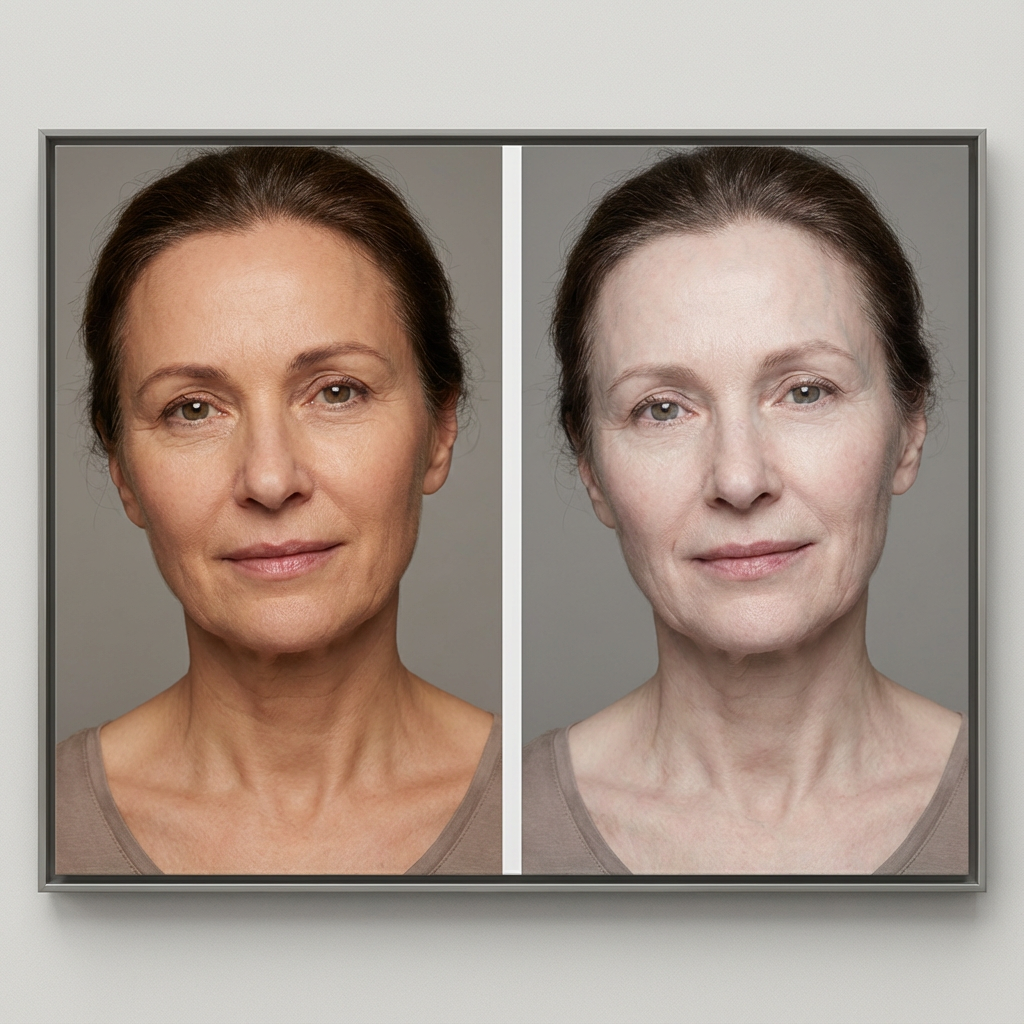
In the 1940s, one of America's best-selling throat lozenges contained an antiseptic compound. Decades later, researchers put that same molecule on skin and compared it, in published testing, against a leading prescription-strength brightener. It compared favorably. And almost no skincare brand will print its name on a bottle. Let me start with the tin. If you're old enough to remember a pharmacy with a wooden counter, you remember Sucrets. The flat metal tin with the hinge. The medicinal little squares your mother made you suck on when your throat was raw. The active ingredient in them was hexylresorcinol. Say it out loud once. Feel your interest drain away. Hold onto that feeling. It's the entire reason you've never heard this story. WHAT IT USED TO BE Hexylresorcinol came out of the 1920s as an antiseptic, and for forty years it was ordinary American medicine. It was in the lozenge tin in your grandmother's purse. It was in wound washes: the stinging stuff poured from a brown glass bottle onto a scraped knee. It sat on pharmacy shelves from Maine to California. Cheap. Reliable. Boring. Nobody was thinking about age spots. They were thinking about sore throats. They just knew it did what they pointed it at. THEN IT DISAPPEARED Not because it failed. Newer antiseptics arrived with brand names, patents, and advertising money behind them. Hexylresorcinol was already generic, decades past anyone's ownership, which meant no company on earth had a financial reason to defend it. So it moved to the back of the shelf, and within a generation the word left ordinary English. It didn't leave because something better came along. It left because something more ownable did. WHY IT NEVER MADE IT ONTO YOUR FACE So if the research says what it says, why isn't this on the front of every bottle in the drugstore? Two reasons, and neither is a conspiracy. Which somehow makes it worse. The first is the name. A brand gets about two seconds on a shelf or a screen. "Vitamin C" sells. "Retinol" sells. You know those words and your hand moves. Nobody in the history of commerce has picked up a jar because it said hexylresorcinol on it. So the industry made the easy call, every time, for thirty years: lead with the word she already recognizes. The second is the money. Nobody can own this compound. Any brand could put it in a bottle tomorrow. So why spend ten million dollars teaching women a word your competitor gets to use for free next quarter? And there's a third problem, from a business standpoint. An ingredient that works on what's actually causing the spot doesn't sell you a system. The industry runs on repetition: an eye cream, a neck cream, a spot corrector, a night cream, a moisturizer. Five products, replaced forever. That's the revenue model. One ingredient that collapses your counter to a single bottle isn't a breakthrough to that business. It's a threat. You never failed at skincare. You bought what a business model needed you to buy. WHAT THE MOLECULE ACTUALLY DOES Marketing decisions couldn't change the chemistry. An age spot isn't dirt and it isn't sitting on the surface, which is why nothing you've rubbed on top of one has moved it. An enzyme in your skin called tyrosinase converts an amino acid into pigment. That's normal. That's a tan. But after decades of sun, patches of cells stay switched on, and because turnover has slowed, what once faded in six weeks now sits there for six years. Hexylresorcinol targets that enzyme, the one responsible for producing dark spots. It also works on discoloration by a second route, supporting the skin's own antioxidant defenses so those cells aren't being driven so hard to begin with. That's what the researchers were testing. And to be accurate rather than dramatic about it: a favorable comparison in a study is a finding, not a promise about your face. But it's a remarkable finding for something that used to come in a flat tin next to the aspirin. THE PART YOU CAN VERIFY YOURSELF Here's the fact that changes how you read everything above. It takes ten minutes to check. The food industry never stopped using it. Go stand at the seafood counter in your grocery store. Look at the shrimp on ice. The ones with no black spots on them. Then walk to produce and pick up a bag of pre-cut apple slices that are still the color of apples. Hexylresorcinol. It's used commercially as an anti-browning agent. It's in food-safety documentation. Not hidden, not obscure, not controversial. When an apple browns, an enzyme reacts with oxygen and produces dark pigment. Your skin runs the same play with the same enzyme family. So there's an entire industry paying for this compound, at scale, every single day, for exactly one job: keeping dark spots from forming. They've known what it does the whole time. Nobody had a reason to mention it to you. WHY YOUR MOTHER NEVER DEALT WITH THIS She gardened in a hat. She wore gloves to church. Sun was something you got incidentally on a particular afternoon, and then you went back indoors. We got the beach. Baby oil. Convertible windows. Thirty years of a windshield on a commute. Daily sunscreen didn't become normal behavior in this country until most of us were well into our forties, and by then the deposit had been made. Then it all comes due at once. Turnover slows, and everything banked in 1974 surfaces the same year and stays. That's not a discipline problem. It's a bill that arrived late. SO WHY HASN'T ANY ONE INGREDIENT SOLVED IT Because discoloration doesn't run on a single pathway. Work one route and the skin uses another. That's the honest reason single-active products stall out. Three good weeks, then nothing, and three months later another half-empty bottle in the bin and a quiet suspicion that the problem is you. What you'd actually want is one formula working several routes at once, with the old lozenge molecule anchoring it. THE ONE I FOUND Vibriance Super C Serum. Hexylresorcinol is in it. The lozenge molecule. The shrimp molecule. Super Booster C is in it: a stabilized form of Vitamin C, which matters more than the industry admits. Most vitamin C serums oxidize in the bottle, turn orange, and stop working within weeks. That's why you concluded vitamin C does nothing. It isn't that it does nothing. Yours was finished before you were. Acetyl glucosamine is in it, working on uneven tone by a different route again, and supporting the skin's own hyaluronic acid production. Then Hyaluronic Acid, Vitamin B5, and Vitamin E in the same bottle, which is why one product replaces the eye cream, the neck cream, the dark spot treatment, and the moisturizer instead of standing next to them. BEFORE YOU GO SHOPPING A warning, because this is where the money gets lost. As this ingredient gets noticed, it'll start appearing on labels in amounts that exist for the label and nothing else. A pinch at the very bottom of an ingredient list isn't a formula. It's a marketing claim wearing a lab coat. That's the same trick that was run on you with vitamin C for twenty years, and the imitations will run it here too. You wouldn't be getting the molecule. You'd just be losing the money. MARGARET My neighbor Margaret is 71. One spot on her left cheekbone she's concealed every morning since her fifties, and more scattered across the backs of both hands from thirty years of a garden and a station wagon with no air conditioning. She's bought four separate dark spot correctors in her life. She kept the empties in a drawer, which tells you how she feels about them. She started the serum in March. Two pumps, face and neck, morning and evening. That was the entire routine. The first few mornings, she said, there was a brightness in the mirror that hadn't been there in years. She assumed she'd slept well. By week one, her skin felt different under her fingers. Smoother. Like something underneath had quietly woken up. By week three, the spot on her cheekbone had faded to almost nothing. The fine lines around her mouth had softened. Her neck looked firmer. By week five, she came out to the fence without foundation on. She hadn't decided to skip it. She'd reached for it, looked at her face, and put it back in the drawer. Her daughter asked what she'd had done. Margaret said, "I'll tell you at Easter." I'm 68. I started six weeks behind her and I'm on my second bottle. Everything else went into a drawer and I haven't opened it since. Two pumps, morning and evening. The whole thing takes under a minute. A woman at my church stopped me last month and said she spends four hundred dollars a month on her skin and it doesn't look like mine. She ordered it that night. THE OFFER, AND WHAT IT ACTUALLY IS Right now Vibriance is running up to 37% off, but only through one page. Order anywhere else and you're paying full price, which is nearly double. I bought two when I saw it. Margaret bought three. It comes with a 1-year money-back guarantee. Use the entire bottle. If it doesn't work, send it back for a full refund. Think of that as the experiment nobody ever ran on you. Wash your face. Two pumps, face and neck. Then watch one spot you've been covering for years, and decide for yourself what you believe. HERE'S WHERE WE STARTED A molecule sold in a flat tin in the 1940s. The same molecule the food industry uses to keep shrimp and apple slices from developing dark spots. The same one researchers eventually compared, favorably, against prescription-strength brightening in published testing. Nobody buried it. Nobody hid it. It just had a name no marketing department would print on a label, that no company could own, and that no business model wanted you to learn. So you bought the eye cream instead. For twenty years. You can finally buy the real thing on the front of a bottle. Link's below. Order from the official Vibriance site; the imitations aren't the same formula. And go look at the shrimp counter first. I'll wait.
The lozenge molecule they tested against prescription
We then carefully added in Hyaluronic Acid, Vitamin B5, Vitamin E, and other trademarked skin-nourishing ingredients that make Vibriance Super C Serum a well-rounded multi-tasking serum that can deliver noticeable results.
SHOP NOWLike this ad? Make it yours.
Crush rebuilds this exact creative around your product — your brand, your colors, your offer — in about a minute.