
Inactive· since Jul 26, 2026
- 22
- days it ran
- 0
- relaunches
Ad copy
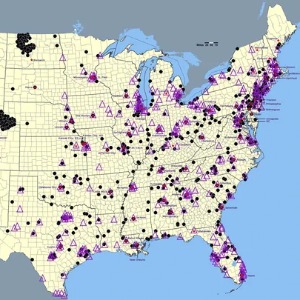
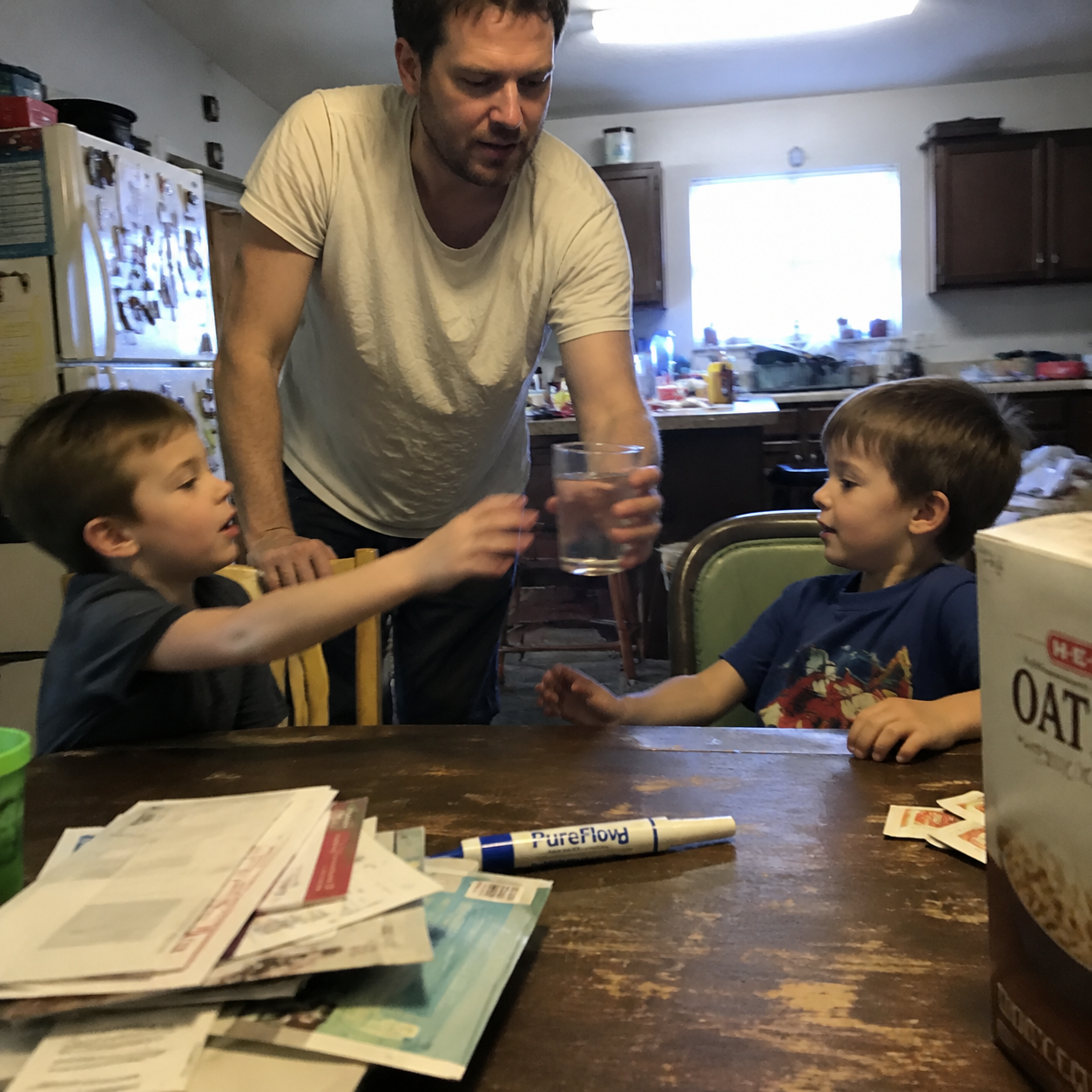
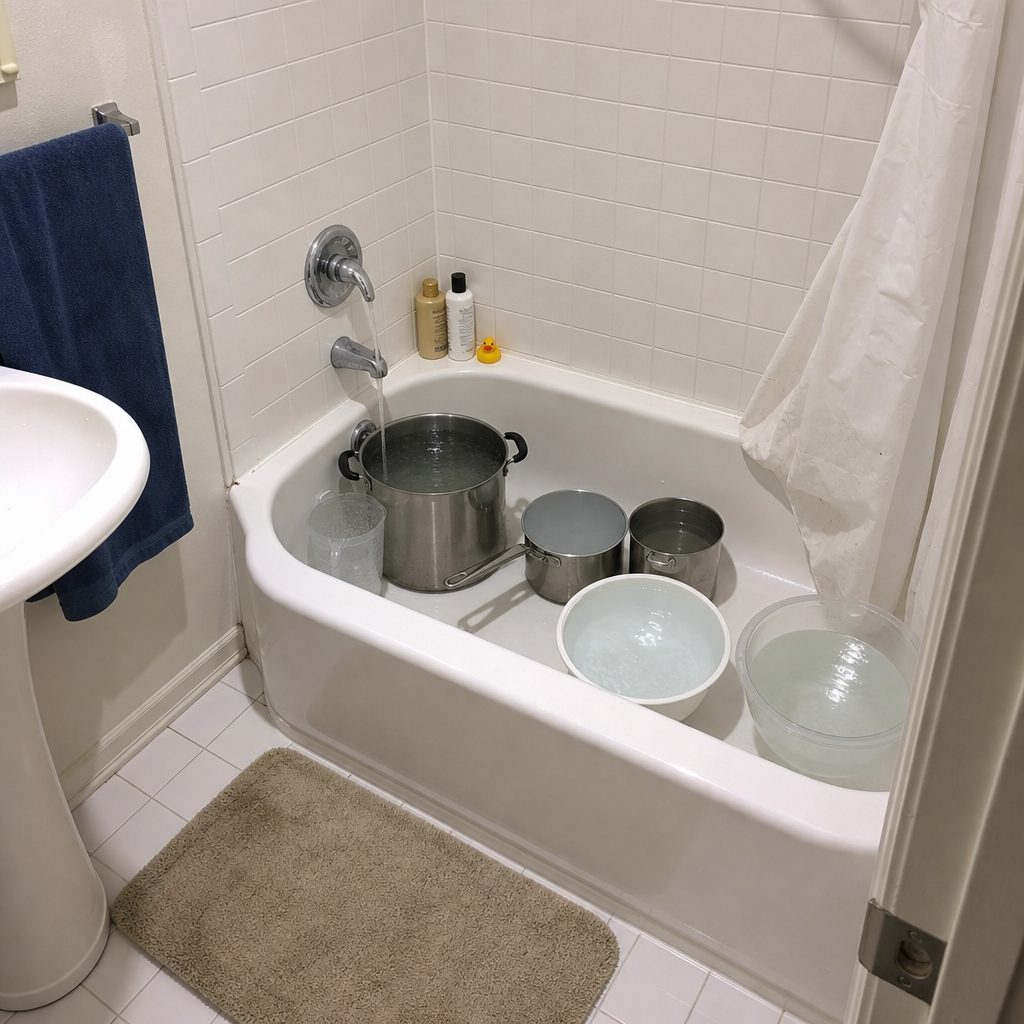
My Tía Carmen lives in Bayamón, Puerto Rico. She's 63 years old. She's a retired teacher. She's lived in the same house for thirty-one years. She raised three kids in that house. She pays American taxes. She votes in American primaries. She is an American citizen on American soil. I need you to understand that before I tell you what happened to her. Because what happened to my aunt is the reason I will never — for the rest of my life — assume that someone is coming to save my family. In September 2017, Hurricane Maria hit Puerto Rico as a Category 4 storm. You probably remember the headlines. Maybe you donated. Maybe you shared something on Facebook. Maybe you thought: "That's terrible. I hope they get help." I thought that too. For about three days. Then I started calling. My aunt's phone was dead. Her neighbor's phone was dead. The entire cell network was down. I couldn't reach anyone. For nine days, I didn't know if my aunt was alive. On Day 10, her neighbor's son drove four hours to a town that still had a working cell tower and called me from a stranger's phone. "She's alive," he said. "But there's no water." Here's what "no water" means when it happens to 3.4 million Americans on American soil: It means the municipal treatment plant is destroyed. The pumping stations are flooded. The pipes are shattered. The reservoirs are contaminated with sewage, debris, and agricultural runoff. The tap doesn't just stop working. The entire system that makes tap water EXIST is gone. It means the bottled water at the store was gone in six hours. It means FEMA's first water truck didn't arrive in my aunt's municipality for eleven days. And even then — one truck. For 40,000 people. It means you start doing things you never imagined. My aunt drank from a well. Not a clean well. Not a tested well. A hand-dug neighborhood well that sat less than half a mile from a site the EPA had already flagged for chemical contamination years earlier. She knew. Everyone in the neighborhood knew. They'd been told not to use it. But on Day 14 with no water — no tap, no bottles, no trucks, no rain for five days — you stop caring about what the EPA flagged. You drink what's there. Because the alternative is dying of thirst in your own home while being an American citizen in an American territory and nobody — nobody — is coming fast enough. My aunt drank from that well for almost three weeks before her body started shutting down. She got leptospirosis. If you've never heard of it: it's a bacterial infection you get from water contaminated with animal urine. It attacks your liver and kidneys. Without treatment, it can kill you. My aunt's symptoms started on a Tuesday. Fever, vomiting, muscle pain so bad she couldn't stand. Her daughter — my cousin Maria — carried her to the car and drove her to the hospital. The hospital had no power. They had a generator, but it was rationing fuel, running four hours on, eight hours off. The ER had a line that wrapped around the building. People with open wounds. People with diabetic emergencies who'd run out of insulin. Children with diarrhea so severe they were becoming dangerously dehydrated. My aunt waited nine hours. In 95-degree heat. Vomiting into a plastic bag. They admitted her when her kidneys started failing. She spent six days in a hospital that flickered in and out of electricity, staffed by nurses who hadn't slept in days, supplied by FEMA shipments that arrived "when they arrived." She survived. Barely. And here's the thing that keeps me up at night: My aunt did everything right. She had water stored. She had food. She had batteries and a radio and important documents in a waterproof bag. She wasn't careless. She wasn't ignorant. She was a prepared, responsible woman who did what every emergency guide tells you to do. And it didn't matter. Because no amount of stored water is enough when the system fails for four months. That's the number nobody talks about. Not four days. Not four weeks. Four months. Large parts of Puerto Rico went four months without reliable, safe drinking water after Hurricane Maria. My aunt's neighborhood didn't get municipal water restored until late January 2018. Maria hit on September 20th. Some smaller mountain towns didn't get water back until March 2019. A year and a half. I want you to sit with those numbers for a moment. Because every emergency plan you have… …the cases of water in the garage… …the "we'll just boil it" assumption… …the "FEMA will come" belief… ALL of it is built on the assumption that help arrives in days. What happens when it doesn't arrive for months? I called FEMA during my aunt's crisis. More than once. The first time, on Day 12, I was put on hold for two hours and seventeen minutes. I know because I timed it. I was sitting in my kitchen in Virginia, watching my own tap run clear while my aunt was drinking from a contaminated well 1,600 miles away. When I finally reached someone, I asked: "When will my aunt's area get water?" The woman on the phone paused. I could hear her typing. "Ma'am, we're working on it. Resources are being deployed." "When?" I asked. "I don't have a specific timeline for that municipality." That's what she said. "I don't have a specific timeline." My aunt — an American citizen, on American soil, in an American territory, paying American taxes — was drinking from a well next to a chemical contamination site, her kidneys were about to shut down, and the United States government told me they were "working on it" with "no specific timeline." I want to be very careful here because I'm not telling you this to make you angry at FEMA. The people at FEMA are not villains. The woman on the phone was not heartless. She was probably exhausted. She was probably fielding thousands of calls exactly like mine. The problem isn't bad people. The problem is math. 3.4 million Americans needed water simultaneously. The infrastructure to produce, transport, and distribute that much water to an island with destroyed roads, no fuel, no power, and no functioning ports... it simply doesn't exist at that scale. Not for weeks. Certainly not for months. The system was designed for localized disasters — one city, maybe two, for a few days until things come back online. Puerto Rico was a SYSTEMIC failure. Everything failed at once. Power, water, roads, communications, fuel, medical. All of it. Simultaneously. For months. And here's what Puerto Rico taught me about America: We are one bad storm away from the same thing happening on the mainland. People hear that and they say: "That's Puerto Rico. It's an island. It's different. The mainland has more resources." Let me tell you why that argument doesn't hold up anymore. Asheville, North Carolina. September 2024. Hurricane Helene. Not an island. Not remote. A mid-sized American city in the Blue Ridge Mountains. A place people retire to. A place with breweries and art galleries and a functioning municipal water system rated ABOVE the national average. Hurricane Helene destroyed the water treatment facilities. Flooded the reservoir with so much sediment it couldn't be treated. Shattered the distribution pipes. 100,000 Americans went 50+ days without safe drinking water. Some smaller western NC communities went into a third month. Sound familiar? Jackson, Mississippi. August 2022. Not a hurricane. A flood that crashed the main treatment plant. 180,000 people without reliable water. Boil-water advisory lasting nearly seven weeks. Texas. February 2021. Winter Storm Uri. Over 14 million people affected. 20,000+ with zero running water — pipes burst. Many couldn't even boil because the power was out too. Rural systems went 20+ days without restoration. This isn't theoretical. This isn't a worst-case scenario from a disaster movie. This is what's been happening. In America. To Americans. Repeatedly. In the last five years. And every single time, the timeline to restoration was NOT the "72 hours" the emergency guides tell you to prepare for. It was weeks. Sometimes months. After my aunt got sick, I became obsessed with understanding why. Not just why FEMA was slow. I understood that. But why my aunt — a prepared woman with stored water — still ended up drinking from a contaminated well. The answer was brutally simple: Stored water runs out. My aunt had about 30 gallons stored. For one person, that's roughly one month at absolute minimum usage. For her household of three? Ten days. The tap was dead. The stores were empty. FEMA wasn't there. Her stored water was gone by Day 12. And then what? She had nothing. No backup. No way to take the water that existed all around her — the rain that fell on her roof, the creek behind her neighbor's property, the well in the yard — and make it safe. She had purification tablets. She used them. And here's what I learned later — the part that made me genuinely angry: Her purification tablets couldn't kill the thing that almost killed her. After my aunt recovered, I started researching. Obsessively. I needed to understand how a prepared woman with stored water AND purification tablets still ended up in a hospital with organ failure. What I found: Standard chlorine and iodine purification tablets — the ones most people have in their emergency supplies — do NOT reliably kill Cryptosporidium. Cryptosporidium is a waterborne parasite. It's the #1 parasite that surges after storms and floods. The CDC documented a 52% spike in Cryptosporidium infections after US cyclones. Its outer shell is so hard that standard water-treatment chemicals cannot penetrate it. The CDC's own guidance lists chlorine and iodine tablets as "not effective" against Crypto on their backcountry water treatment chart. Even the stronger chlorine-dioxide tablets — the expensive ones — need 4+ hours of contact time before they touch Crypto. Four hours. When you're dehydrated and desperate. My aunt's tablets were killing some of the bacteria in that well water. But they were not removing the parasites. They were not removing the sediment. They were not removing the bacterial contamination that lives INSIDE the sediment — because here's another thing I didn't know: Cloudy water isn't just gross. It's measurably more dangerous. Studies show that turbid (cloudy) water tracks with significantly higher rates of gastrointestinal illness — highest in children under 4 and the elderly. The cloudiness physically shields pathogens from disinfection. Your tablets can't reach what's hiding in the mud. Boiling? Same problem. Boiling sterilizes — but it leaves all that sediment in the water. You're drinking dead bacteria in brown water. And boiling needs the power you just lost. So my aunt's tablets were partially disinfecting the water. Partially. While leaving the Crypto alive, the sediment untouched, and the contamination that lives inside that sediment completely sheltered. She thought she was making the water safe. She wasn't. Not fully. Not against the things most likely to send her to the hospital. And she had no way of knowing. That's when I started looking for something different. Not stored water. Because stored water runs out and you cannot physically store enough for months. Not tablets alone. Because they can't handle the parasites that surge after storms, and they leave the water cloudy. Not boiling. Because you need the power the event already took, and it leaves the mud. I needed something that could take ANY water my family could find. A creek, a pond, collected rainwater, a questionable well. And physically remove the bacteria, the parasites, and the sediment. Without power. Without fuel. Without chemicals. Without a timeline from FEMA. I needed what my aunt didn't have. The ability to make found water drinkable. Independently. Indefinitely. After months of research, reading CDC filtration guidance, published studies, lab reports, I found PureFlow. And I understood immediately why it's what was missing from my aunt's emergency plan. And from mine. Here's what it is: A complete 4-layer emergency water filtration system. Not a camping toy. Not a single bare straw. A full system designed for the exact scenario my aunt lived through: extended grid-down, contaminated found water, no power, no resupply, and a family depending on you. How it works — and why it would have changed everything for my aunt: Four layers of filtration, in sequence. A coarse pre-filter catches the sediment and silt — the turbidity that shelters pathogens and makes your tablets useless. A medical-grade PP cotton layer catches finer particles. A flow-stabilization layer ensures consistent draw. And then a 0.01 micron hollow-fiber ultrafiltration membrane — 15 times finer than the standard survival straws — physically strains out 99.99% of bacteria and protozoa. Including Cryptosporidium. The parasite my aunt's tablets couldn't touch. Crypto is 4-6 microns. The membrane is 0.01 microns. It physically cannot pass through. Removed on contact. No waiting. No chemical reaction needed. And here's what matters: the pre-filter removes the cloudiness FIRST — before the membrane even touches it. So you get clear water. Not treated-but-brown water. Not killed-but-cloudy water. Clear, filtered water where the sediment that shields pathogens is gone. That's the one thing boiling and tablets physically cannot do. Your kids can do it. Your elderly mother can do it. No hard sucking. No getting on hands and knees at a water source. No strength required. My aunt is 63 with arthritis in both hands. She could use this. That mattered to me. Here's what sealed it: It never expires. Drop it in a drawer, a backpack, a glove box. It works identically whether you need it next month or in ten years. No rotation. No expiration date to track. No "did this go bad?" anxiety. One straw filters up to 1,800 gallons. At one gallon per person per day, that's nearly five years of drinking water from a single straw. It weighs two ounces. Fits in the palm of your hand. No power. No batteries. No fuel. No plumbing. No moving parts. No training. If my aunt had had one of these in September 2017, she would never have needed that well. She would have taken the rainwater off her roof — the rain that fell for months — filtered it through the straw, and had clean water indefinitely. She would not have gotten leptospirosis. She would not have spent six days in a hospital with failing kidneys. She would not have been one of the 4,600+ Americans who nearly died because the system that was supposed to protect them didn't show up for months. I bought six. One for my kitchen drawer. One for my car. One for each of my kids' backpacks. And I mailed one to my aunt in Bayamón with a note that said: "Never again, Tía. Never again." She called me when it arrived. She cried. Not because she's scared. Because she's 63 years old and she survived something nobody should survive and she finally — finally — has a backup that doesn't run out, doesn't expire, doesn't need the electricity that failed her, and doesn't depend on a truck that never came. I sent one to my mother-in-law in Houston. She's 71, lives alone, and after Hurricane Harvey she spent three days without water and told no one because she didn't want to "be a burden." I can't be in two places at once. But I can put something in her kitchen drawer that means she never has to make that choice again. I sent two to my college-age daughter in Raleigh — one for her apartment, one for her car. She rolled her eyes. That's fine. She has it. Here's what I need you to understand: I'm not telling you Puerto Rico is going to happen to you tomorrow. Maybe it won't. Maybe you'll never need this. I genuinely hope that's true. But I need you to understand three things that are no longer opinions — they are documented, verified, recent American history: When the system fails at scale, help takes weeks to months. Not the "72 hours" the guides tell you to prepare for. Helene (50+ days), Maria (4 months), Jackson (7 weeks), Uri (20+ days). This is not projection. This already happened. Repeatedly. Stored water has an end date. Tablets can't handle the #1 post-storm parasite. Boiling needs the power you just lost. Your Brita needs a working tap. Every backup plan most families have silently assumes a working grid — which is the exact thing these events take away. The only thing that makes you independent of all of it — the grid, the trucks, the timeline, the FEMA tier list — is the ability to take found water and physically filter out what would make your family sick. Without power. Without resupply. Indefinitely. That's what this is. I didn't become a prepper. I didn't build a bunker. I don't have a bug-out bag or a ham radio or MREs in the basement. I made one decision. I put one thing in my home — and in every bag that belongs to someone I love — that means no matter what happens to the grid, the pipes, or the plan, my family can drink clean water. That's not prepping. That's just being the kind of mom who doesn't forget what happened to her aunt. PureFlow Emergency Water Filter Straw: 🔷 Removes 99.99% of bacteria and protozoa — including Cryptosporidium (the #1 post-storm parasite standard tablets can't kill) 🔷 Pre-filter cascade removes sediment and turbidity FIRST — clear water, not treated-but-cloudy 🔷 Filters up to 1,800 gallons — nearly 5 years per straw 🔷 Never expires — true set-and-forget 🔷 No power, no batteries, no fuel needed 🔷 Fits in the palm of your hand easily 🔷 0.01 micron membrane — 15x finer than standard survival straws 🔷 FDA-approved, BPA-free, independent lab tested, individually batch-inspected 🔷 Over 1 million units sold | 25,000+ five-star reviews Most prepared families order the 3- to 6-pack. One for every bag. One for every person you'd never forgive yourself for leaving uncovered. The rule is two is one, one is none. 👉 https://shoppureflow.net/products/survivor-filter-straw Safe water is the simplest, smartest prep. Put one in every bag today. Don't wait for "what if." P.S. — My aunt keeps hers in the same cabinet where she used to store bottled water. Except now the cabinet isn't full of heavy jugs she has to rotate every six months. It has one small straw that weighs two ounces and lasts five years. She told me last Christmas: "I sleep different now. Knowing it's there." I know exactly what she means. P.P.S. — For the most complete coverage: pair PureFlow with standard purification tablets. The filter removes what tablets can't (Crypto, bacteria, protozoa, and sediment — instantly). Tablets handle what the filter doesn't (viruses). Together, that's the CDC-recommended layered approach: filter first, then treat. PureFlow handles the biggest, hardest part. Get your family's water secured now. 👉 https://shoppureflow.net/products/survivor-filter-straw
Like this ad? Make it yours.
Crush rebuilds this exact creative around your product — your brand, your colors, your offer — in about a minute.