The Daily Wellness Journal
The Daily Wellness Journal Facebook ad: “If You've Been Told It's Degenerative Disc Disease, Read…”

Ran for 1 day, from September 9 to September 10, 2026, the last day Crush saw it.
Run by The Daily Wellness Journal on Facebook. Crush is not the advertiser and does not verify its claims. See this ad in Meta's Ad Library(opens in a new tab)
Want an ad like this for your product?
Crush makes new ad images for your product from this ad: your logo, your product photo, your offer.
Trials from $19.95 USD, then $79.95 USD a month. Cancel anytime.
About this ad
- Meta Ad Library ID
- 1058331207045989
- Platforms
- Facebook, Instagram, Audience Network, WhatsApp and Threads
- Relaunches
- 0
Ad text
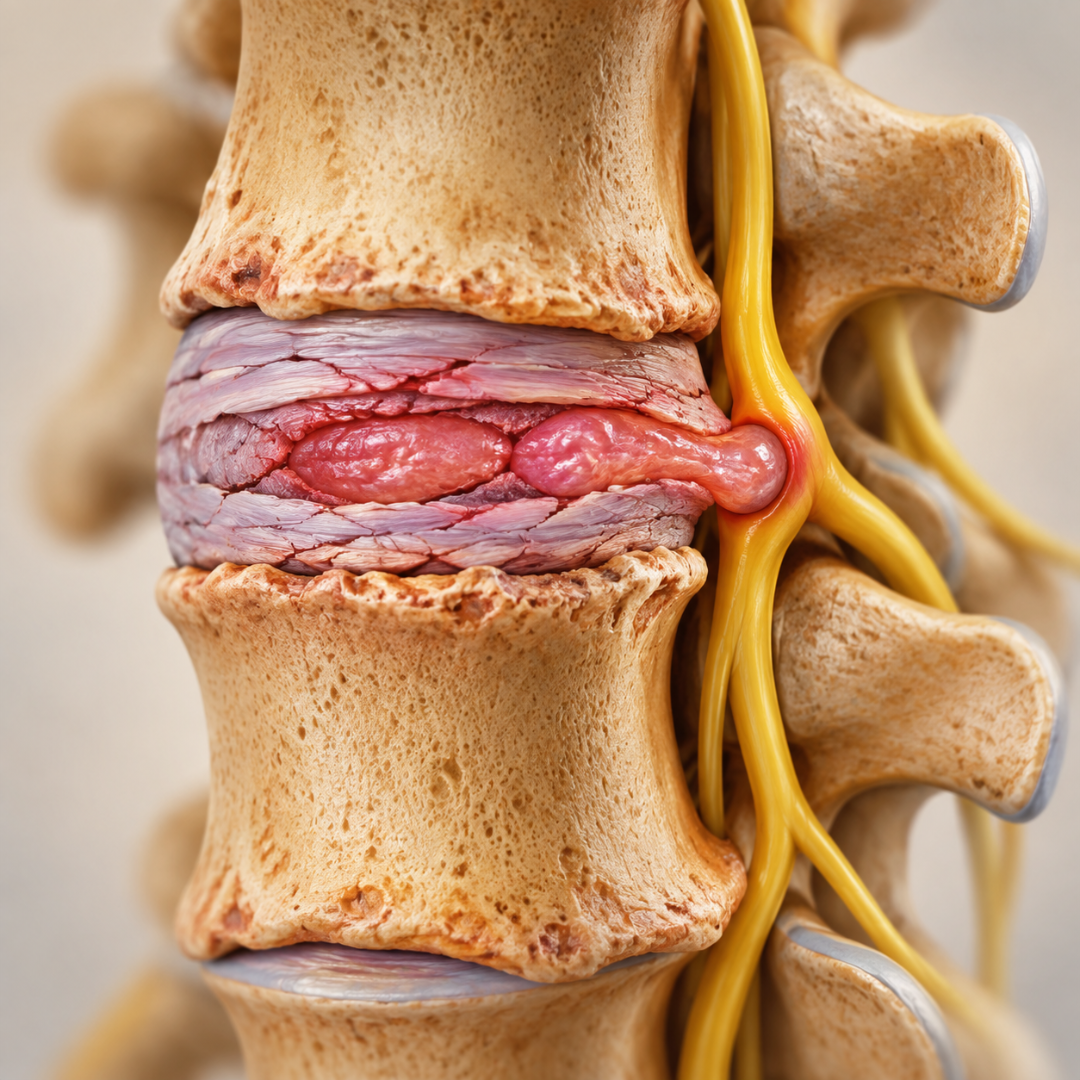
They told my mother the discs in her spine were "degenerating" and spent the next nine years billing her for it. What they never told her is the part that makes my blood boil. My mother was sitting on the edge of an exam table in a paper gown. A doctor she'd met twice was holding up an MRI film and pointing at a dark spot with the tip of his pen. He said, "You see this? This is degeneration. L4, L5. This is what's causing your pain." She nodded. She didn't ask what degeneration meant. She didn't ask how he knew that dark spot was the problem. She just stared at the film and thought, something inside me is dying. He said, "We're going to start you on physical therapy, and if that doesn't manage it, we'll look at injections." Manage. Not fix. She didn't catch that. I didn't either. She drove to a PT clinic three times a week. Strip mall. Between a Subway and a nail salon. A twenty-six-year-old put a hot pack on her lower back, told her to do bridges, and sent her home. She did the bridges. She did them on her living room floor every morning. And for about six weeks, she thought it might be working. Then she was pulling a fitted sheet off the bed and something grabbed in her low back so hard she dropped to both knees. She stayed there, one hand on the mattress, staring at the carpet, breathing through her teeth. She told me later she didn't call out because she didn't want my father to see her on the floor. She called the doctor the next day. He didn't sound surprised. "Okay," he said. "It's time to try the injections." Here's what a cortisone injection looks like, if you've never had one. You lie face-down on a procedure table in a cold room that smells like iodine. A doctor you've never met threads a needle into your spine while watching a fluoroscope screen. You can feel the pressure. You can hear your own breathing bouncing off the walls. You are not allowed to move. My mother did this every three to four months for four years. The first shot helped for about twelve weeks. The second, maybe ten. By the third year she was calling to schedule the next one before the last one wore off. The window kept shrinking. Nobody on the other end of the phone seemed concerned about that. They just booked it. I asked her once, standing in her kitchen, watching her unload groceries one bag at a time, "Does it actually work, or does it just take the edge off for a while?" She had her back to me. She didn't turn around. She said, "It gives me a few good weeks. That's more than nothing." That's not an answer. That's what someone says when they've stopped expecting one. After four years, the shots stopped holding at all. So she tried everything else. Chiropractor, twice a week for three months. Acupuncture. A TENS unit she wore under her shirt at the grocery store. A $50 tube of Voltaren she rubbed in every morning and every night. Biofreeze. Tiger Balm. A CBD cream her neighbor swore by. Turmeric capsules. Magnesium pills. A foam roller she watched a YouTube video to learn how to use. A heating pad she slept on so many nights the fabric started to pill. Some of it helped for an hour. Some of it helped for a day. Most of it didn't help at all. She kept every tube and every bottle in a basket under her bathroom sink. I saw it once. It was full. She never threw any of it away. I think she kept telling herself she'd circle back to something that worked. Nothing did. Her doctor referred her to a surgeon. The surgeon was the fifth doctor in nine years. He pulled up the same MRI, the same dark spot at L4-L5 that every doctor before him had pointed at, and he said, "At this point, fusion is your best option." She was seventy. They put a cage and four screws into her lower back. The operation took five hours. The surgeon came out to the waiting room afterward and told us it went beautifully. He used that word. Beautifully. For the next six months, my mother didn't live. She existed. She couldn't bend. She couldn't twist. She couldn't sit in a chair for more than twenty minutes without gripping the armrest and shifting her weight side to side like she was trying to find a position that didn't exist. She showered sitting on a plastic stool my father bought at Walgreens. She slept on her back with a pillow jammed under her knees, and most nights she didn't sleep. She just lay there, staring at the ceiling, waiting for the morning so she could stop pretending. I drove over three, four times a week. I did her laundry. I brought food. I watched my father help her stand up from the couch, both his hands under her arms, and I watched her face while he did it. She wouldn't look at him. She looked at the wall. She hated every second of being lifted. The surgeon said this was normal. He said recovery takes time. He said, "Give it a year." We gave it a year. At twelve months she could walk to the mailbox and back. That was the victory. The mailbox. She stood a little straighter. She could sit through dinner if the chair was right. But the pain, the low, grinding, constant thing she'd gone in to fix, was still there. Quieter some days. Louder others. But there. Always there. She didn't say it out loud for a long time. I think she didn't want to admit it. But one night I was staying over and I heard her calling from the bedroom. Not loud. Just my name, twice, the way you say someone's name when you don't want to wake the rest of the house. I went in and she was sitting on the edge of the bed, both hands gripping the mattress. She said she needed to use the bathroom. It was eight feet away. She couldn't get there. I put her arm around my shoulder and walked her eight feet to the bathroom door. I could feel her shaking. Every step was a negotiation. A cage and four screws in her spine and I was walking my seventy-one-year-old mother eight feet to the toilet in the middle of the night. Nine years. Five doctors. One dark spot on a film. And I was carrying her to the bathroom. That was the year my own back started hurting. And I already knew how this goes. I'd watched the whole playbook run on my mother for nine years. The scan. The label. The shots. The creams. The surgery. The bathroom. I wasn't doing it. I wasn't walking into a clinic and letting someone point at a dark spot and start a clock. So I started looking. Not for another cream. Not for another doctor. I started looking for the thing nobody had ever explained to my mother, or to me, in nine years of appointments: what was actually causing the pain. I sat at my kitchen table for three hours that first night. I didn't know what I was looking for. I just kept reading. Study after study, forum after forum, women describing the exact same thing. The stiffness, the grabbing, the mornings where you negotiate with your own body just to stand up. And every one of them had been told the same thing my mother was told. Degenerative disc disease. Like it was a sentence. Like it explained something. Then I found a number that stopped me cold. By age sixty, more than 90% of people show disc degeneration on an MRI. By thirty-five, it's already 30%. This wasn't from a blog. This was from Columbia University's neurosurgery department. And the next line was the one that made my hands shake: Degeneration itself is normal, and does not necessarily cause pain. I read it again. I read it a third time. I leaned back in my chair and put my hands over my mouth. Ninety percent. My mother was treated for nine years for something that nine out of ten people her age have on their scan. Most of them don't even know it's there. Five doctors looked at that film. Not one of them told her that. Degenerative disc disease isn't a disease. I'm serious. It's not a disease. The word disease makes you think something is attacking your body. That you're broken. That you need to be fixed. But disc degeneration is just your spine adapting to decades of being upright, moving, and living. It's not a malfunction. It's mileage. Calling it "degenerative disc disease" is like calling gray hair "degenerative scalp disease." It sounds terrifying until you realize it's just what happens to a body that's been used. And they gave it to my mother like a diagnosis. They printed it on her chart. They pointed at it on a screen. And they built nine years of procedures on top of a word that was never a disease in the first place. So if the disc wasn't the problem, if 90% of people have it and feel fine, then what the hell was actually hurting her? I kept reading. If the disc wasn't the source, if it was just wear, just mileage, just a spine doing what spines do, then something else was creating the pain. Something that didn't show up on the MRI. Something nobody was looking for, because they were all staring at the thing that did. It took me two more nights at that kitchen table before I found it. And when I did, it was so simple I almost didn't believe it. Here's what happens. A disc wears down. That part is real. It's just not the part that hurts. But your body doesn't know that. Your body senses that something in the spine has changed, and it does what it's designed to do, protect. The muscles around the disc clamp down. They tighten. They lock. It's a reflex, the same thing that happens when you flinch. Your body is bracing. The problem is, the muscles never let go. A flinch is supposed to last a second. This one lasts months. Years. The muscles lock and they stay locked, and over time they get tighter and tighter until they're squeezing the nerves, choking off blood flow, and generating the very pain that everyone keeps blaming on the disc. And once I understood that, the whole thing got simple. Stupidly simple. Three things needed to happen: The muscles needed to let go. They'd been locked so long they'd forgotten how to release. Not because they were damaged, but because they were stuck. And until they unstuck, they'd keep squeezing the nerves and generating the pain that every doctor kept blaming on the disc. Blood flow needed to come back. Months, sometimes years, of constant clamping had choked off circulation to the area. The tissue was starved. No oxygen, no nutrients, no healing. Just a tight, angry knot running on nothing. The swelling needed to come down. All that compression had built up inflammation around the muscles and nerves. Even if the muscles released tomorrow, the swelling would keep the pain alive until someone dealt with it. That was it. Loosen the muscles. Restore the blood flow. Calm the swelling. Not a fusion. Not a nerve burn. Not a needle into the spine every three months. Three basic things that nobody in nine years had tried, because they were all staring at the disc. Every injection my mother got went into the spine. The muscles were the problem and nobody touched them. Every nerve they burned grew back. The muscles were still locked, so the pain came right back with it. The fusion bolted the bones in place. The muscles around those bolts were still clamped, still choking off circulation. The cage and screws didn't fail. They were just solving the wrong problem. I sat at my kitchen table at one in the morning and I thought, it was never the disc. It was never the disc. And nobody told her. And that's when it hit me. The creams. All of them. The basket under my mother's sink. The Voltaren, the Biofreeze, the Tiger Balm, the CBD cream from the neighbor. My own tube of Penetrex sitting on my nightstand. I'd always thought they "didn't work." Like they were just bad products. But that wasn't it. Some of them did something. They cooled the area down, or they took the edge off the swelling for a little while. Some of them even had a bit of magnesium in the formula. But none of them were getting blood flow back into the area. Not one. And without blood flow, nothing else matters. You can loosen a muscle all you want. If the blood isn't flowing back into the tissue, carrying oxygen, carrying nutrients, flushing out the waste that's been sitting there for months, the muscle tightens right back up. That's why the relief wore off in an hour. That's why she'd rub something in at night and wake up right back where she started. The cream wasn't failing. It was just doing one job out of three. I needed something that did all of it. Relax the muscles. Open the blood vessels. Calm the swelling. In one application, at the site, through the skin. So I started looking. I went through ingredient lists like I was reading the back of cereal boxes. Brand after brand after brand. Most of them were menthol and filler. Some had something for the muscles but nothing for circulation. Some had something for swelling but nothing to actually release the tightness. Every cream I found was missing at least one piece. Two out of three at best. Usually one. I almost gave up. I'd been at it for a week and I was starting to feel like my mother, cycling through options, hoping the next one would be different, knowing it probably wouldn't be. Then I found a small brand I'd never heard of. No celebrity endorsement. No Super Bowl commercial. No "as seen on TV" sticker. Just a small company with a cream that had everything I'd been looking for. Something to release the locked muscles, something to force blood flow back into the starved tissue, and something to bring the swelling down. All three. In one formula. Applied through the skin, directly to the spot. I almost scrolled past it. It looked too simple. No big claims. No miracle language. Just the ingredients and what they do. I ordered it that night. The box showed up four days later. Small. Plain. I rubbed it into my lower back before bed. No smell. No tingling. No heat. I thought, great. Another one. First morning, nothing. Same stiffness. Same sideways roll out of bed. Day three, something small. That band of tension across my lower back, the one that had been there so long I'd stopped noticing it, was softer. Not gone. Just less. Like someone had loosened a belt one notch. I didn't trust it. I've had good days before. By the end of the first week I was getting out of bed without bracing. Just sitting up. I didn't even realize I was doing it until I was already standing. Week two, I bent down to put a pot in the lower cabinet and didn't think about it. Didn't plan it. Didn't put my hand on the counter first. I was halfway back up before it hit me. Three weeks ago that move would have made me hold my breath. Week three, my husband looked at me across the kitchen and said, "You're moving different." That's when I called my mother. I drove over that weekend with the jar in my bag. I didn't explain . I didn't talk about calcium or magnesium or blood flow. I didn't give her a speech. I just said, "Try this tonight. Rub it into your lower back before bed. Just try it." She looked at me the way you look at someone who's handing you the fifteenth thing. Tired. Patient. That look that says I'll do it because you're my daughter, but we both know how this goes. She didn't call me the next day. Or the day after. On the third day she called and said, "What is this stuff?" I said, "Why?" She said, "I slept through the night. I haven't slept through the night in I don't know how long." She's not on the floor anymore. She's not healed. I'm not going to say that. She's seventy-one with a cage and screws in her spine and she's never going to be what she was at sixty. But she's sleeping. She's getting out of bed without calling for help. Last Sunday I watched her reach into the cabinet and grab a coffee cup with one hand. She didn't notice. I did. Here's what I wish someone had told my mother at sixty-one, that first day in the paper gown. This doesn't get better on its own. It gets worse. Not the disc. The disc is just sitting there being a disc. The muscles. The longer they stay locked, the tighter they get. The tighter they get, the more they choke off blood flow. The more they choke off blood flow, the more the tissue starves. And the more the tissue starves, the more the muscles clamp down to protect it. It's a loop. And every month you leave it alone, the loop gets harder to break. My mother left it for nine years. By the time anyone addressed the actual problem, she had a cage and four screws and she was being walked to the bathroom by her daughter. I left it for seven months. It took me three weeks to feel like a different person. The difference was time. If your back is hurting right now, if you're waking up stiff, if you're bracing yourself every time you bend down, if you've got a basket under your sink full of creams that didn't hold, you are somewhere on that timeline. You're closer to my seven months than my mother's nine years. But you won't be forever. The cream is called Lumen. The company is running a sale right now, up to 60% off, with a 30-day risk-free guarantee. If it doesn't work, you send it back. But they run out of stock fast, and the sale won't last. You can wait. You can keep doing what you've been doing. But I watched what waiting looked like, and it looked like my mother on the hallway floor asking me not to tell my father. I'm not waiting. And I don't think you should either.
Where the ad sends people
shoplumen.store
If You've Been Told It's Degenerative Disc Disease, Read This 👆
Omg it actually worked - Sarah A
Learn more: shoplumen.store(opens in a new tab)