Paul Mitchell
Paul Mitchell Facebook ad: “Ceylon Cinnamon 7200mg Equivalent with MCT Oil”
Ran for 36 days, from August 3 to September 8, 2026, the last day Crush saw it.
Run by Paul Mitchell on Facebook. Crush is not the advertiser and does not verify its claims. See this ad in Meta's Ad Library(opens in a new tab)
Want an ad like this for your product?
Crush makes new ad images for your product from this ad: your logo, your product photo, your offer.
Trials from $19.95 USD, then $79.95 USD a month. Cancel anytime.
About this ad
- Meta Ad Library ID
- 1059016146473606
- Platforms
- Facebook, Instagram, Messenger, WhatsApp and Threads
- Relaunches
- 0
- EU reach
- 27
Ad text
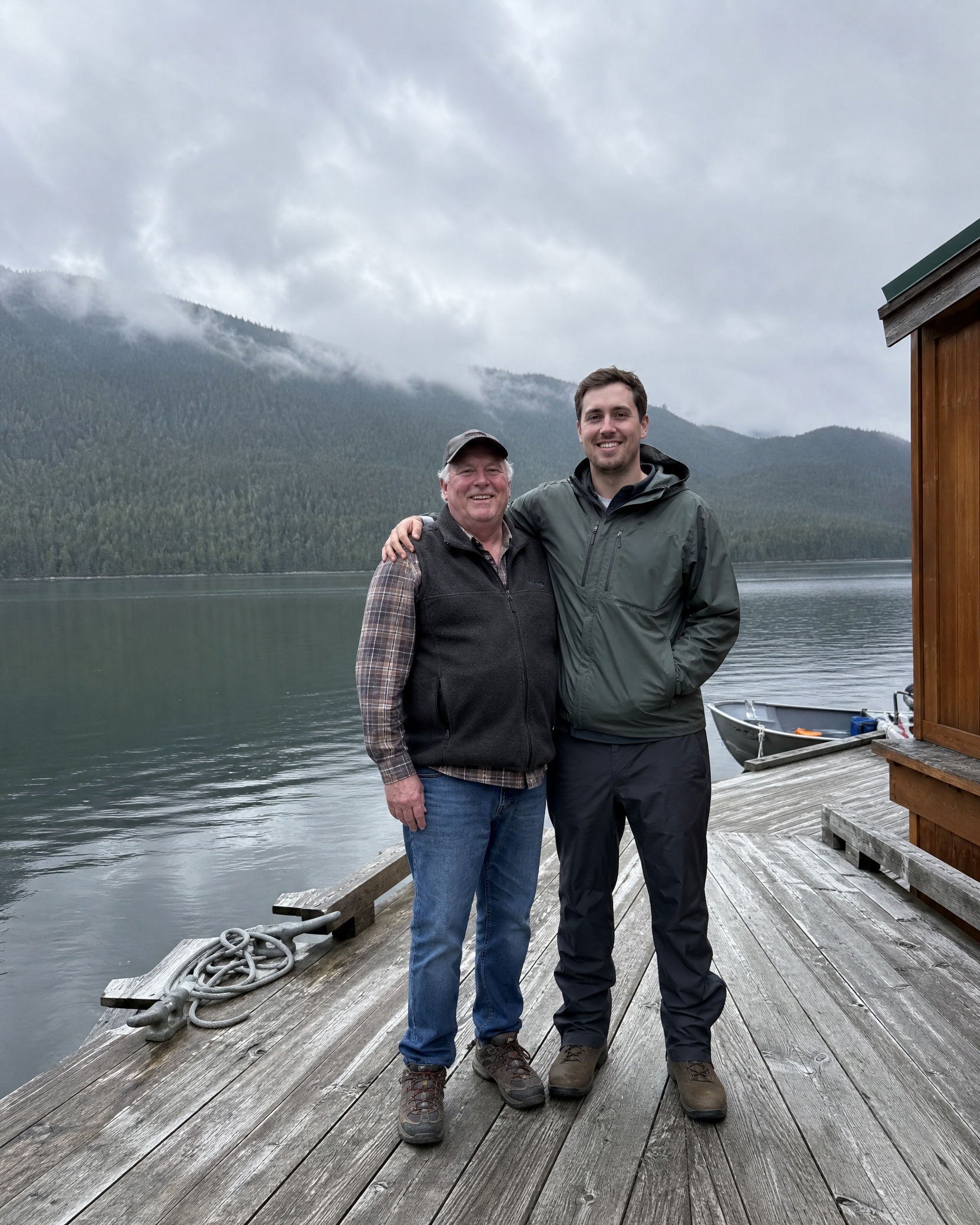
I almost died on a fishing boat in Alaska. My son was holding me up. I could hear his voice but I couldn't answer him. There was a man staying at our lodge. Retired physician from Denmark. Twenty-two years in the Danish military, another eight in metabolic medicine at one of the top hospitals in Copenhagen. He asked me one question that made fifteen years of American doctor visits look like they'd been reading from the wrong page. I'm 62 years old. My son and I had been talking about this trip since he was in high school. Alaska. Real salmon. Real cold. Real silence. Not a resort. Not a cruise. A wooden fishing lodge outside Sitka, tucked between the mountains and the Tongass, accessible only by floatplane from Juneau. I've had a photo of a guy holding a king salmon pinned to my office corkboard for as long as my son can remember. Somebody I worked with went in the nineties. I'd look at that photo sometimes when I thought nobody was watching. We finally booked it last March. Five nights. Three days on the water. Charter boat with a guide named Jim who'd been running charters out of Sitka for twenty years. We flew into Juneau and took a six-seater floatplane to the lodge. When we touched down on the water I turned to my son and said, "I've been waiting thirty years for this." Day one and day two were everything I'd pictured. On the water by 6am both mornings. Mist coming off the channels. Eagles sitting in the spruce trees like they owned the place. My son caught two silvers on day one. I got one on day two. Jim barely talked. Just pointed, tied rigs, and let the water do the work. That's the kind of guide you want. Day three my son hooked a king salmon. You hear about king salmon your whole life if you're the kind of person who pins photos to a corkboard for thirty years. They're the ones you go to Alaska for. Jim saw the rod bend and said one word. "King." My son's face lit up like he was twelve years old again. He fought it for almost forty minutes. Jim talking him through it. The line screaming out, then the slow reel back. My son's arms shaking. I was standing behind him watching him do the thing I'd been dreaming about doing myself since before he was born. He landed it. Thirty-eight pounds. Jim netted it and my son stood there holding it with both hands, soaking wet, grinning so wide I could see every tooth. I took a photo. He looked exactly like the guy in the picture on my corkboard. That's the last clear memory I have before everything changed. I'd been feeling something during the fight. Standing at the stern, watching my son, my heart had started pounding. Not the normal excitement of watching your kid land a big fish. A deep, heavy pounding. The same pounding I'd been feeling at home for the last six months walking up the stairs to our bedroom at night. I'd been telling myself it was just getting older. Just being out of shape from too many years behind a desk. I'd told my son the same thing when he noticed me stopping on the landing one evening. I believed it. Standing on the back of that boat, I felt it getting worse. Not better after the excitement settled. Worse. My chest started to feel tight, not painful exactly, but like someone was pressing a hand flat against my sternum. I started sweating through my shirt even though it was forty-eight degrees. I felt the blood go out of my face. I leaned against the gunwale. Tried to slow my breathing. It didn't slow. My son was still holding the fish. Still grinning. He turned to show me and the grin disappeared. "Dad?" My legs were going. I grabbed the gunwale with both hands and my knees buckled and I went down onto the deck. My son dropped the fish and got to me and grabbed my arm. He was saying my name. I could hear him but I couldn't get a word out. My mouth was open and nothing was coming. Jim cut the engine. My son was holding me up against the side of the boat. I could feel his hands shaking on my arm, or maybe my arm was shaking, I couldn't tell the difference. He kept saying "Dad, talk to me, talk to me" and I couldn't. Then I heard him say something to Jim. "Is my dad dying?" I heard every word. I couldn't turn my head. I couldn't answer. Jim didn't say anything. I was on the deck of a fishing boat in Alaska with my son's hands on my arm, listening to the silence after that question, and I was somewhere else entirely. I was thinking about my father. My father had a heart attack at 68. He was sitting on the sofa watching the Bears game on a Sunday afternoon. He wasn't doing anything. Just sitting there. Quiet. Still. And then he slumped sideways into the armrest and he was gone. I was fourteen. I was in the next room. That's all I need to say about that. One minute he was there and the next minute he wasn't, and I have carried it for forty-eight years. And now my son was asking a stranger if I was dying, and I couldn't speak, and the only thing in my head was: he's getting the image. Right now. The one I've carried since I was fourteen. He's getting his version of it and he's going to carry it the way I've carried mine. That scared me more than dying. Jim radioed the lodge. Twenty-five minutes back to the dock. My son held me in a deck chair the whole way. I couldn't talk for most of it. I just sat there watching the tree line and feeling his hand on my arm and thinking about how my father never got a boat ride. He just went. Sofa. Sunday. Gone. We got to the dock and two guys from the lodge helped me up the ramp. My legs were working but barely. They got me onto a cot in the back room. Clean, small, a window looking out at the water we'd just come from. The lodge owner said there was a guest staying in one of the cabins who could help. Retired physician. His name was Dr. Lindberg. Tall, white-haired, calm in the way that only people who have seen real emergencies are calm. Slight Danish accent. He'd been a military physician in the Danish armed forces for twenty-two years. Deployed to Greenland twice, Afghanistan once. Then spent eight years in metabolic medicine at Rigshospitalet in Copenhagen before he retired and started spending his summers fishing in Alaska. He wasn't there for me. He was there for the salmon. He walked in, set down his coffee, and went to work like he'd done this a thousand times. Checked my blood pressure. Took it twice. 174 over 102. Checked my pulse at the wrist and at the neck. Irregular. Looked at my fingernails. Looked at my ankles. Pressed the skin on my shins and watched how long the dent stayed. Asked me to squeeze both his hands. Asked me to push against his palms with both feet. He set his stethoscope down. "You did not have a heart attack today. But you came close." I was lying on that cot with my son standing by the window. I just stared at the ceiling. My father had a heart attack at 68. Sitting on the sofa. Doing nothing. Gone. And I had just come close to the same thing. On a fishing boat. In front of my son. Then he asked. "How long have you been diabetic." Eleven years. Type 2. On Metformin. My doctor says I'm managed. A1C between 6.8 and 7.2 for most of that time. My doctor is happy with the numbers. Dr. Lindberg looked at me for a moment. Then he pulled up a chair. "Managed." He said it like it tasted wrong. "I have treated diabetic patients for thirty years. Military deployments, hospital medicine, remote clinics in Greenland where the nearest hospital was an eight-hour helicopter flight. And the single biggest difference I see between European metabolic medicine and what American doctors are doing is this." "American doctors monitor. They do not treat. They look at the A1C. They look at the blood pressure. They adjust the dose. They write the next prescription. They schedule the next appointment. And they call that managed." "It is not managed. It is observed. Managed means the disease is being addressed at the place where it lives. Observed means the damage is being measured while it continues." He looked at me. "What happened to you on that boat today was not a surprise to your body. Your body has been telling you for years. The question is whether anyone has been listening." He asked about my feet. "Do they tingle at night. Or burn." I nodded. Couple of years at least. My doctor called it neuropathy. Common with diabetes. Said we'd watch it. "Your kidneys. Has anything changed in your lab work." My creatinine had been creeping up. My doctor said it was borderline. Said we'd watch it. "Your vision." My optometrist mentioned some changes at my last appointment. Nothing serious yet. "Your blood pressure." It had been climbing for the last few years. My doctor talked about adding a second medication but hadn't done it yet. "And today on that boat. Your heart pounding so hard your son asked the guide if you were dying." I didn't answer that one. I looked at my son standing by the window and I thought about my father on that sofa and me in the next room and the silence after. Dr. Lindberg let it hold. "Tingling feet. Kidney function declining. Vision changing. Blood pressure climbing. Heart straining. Five symptoms. Five different body systems. Your American doctor has been treating each one as a separate issue. Watching each one individually. Probably has a different note in your chart for each." "They are not five separate issues. They are one issue showing up in five places." He leaned forward. "When your cells stop responding to insulin, the sugar from every meal you eat has nowhere to go. It cannot enter the cells where it is supposed to be burned for energy. It stays in your blood. Trapped. And it does not sit quietly. It moves with every heartbeat. It grinds against the lining of every blood vessel in your body. It damages the smallest ones first." "The ones feeding the nerves in your feet. Those go early. That is the tingling." "The ones filtering your kidneys. Those go next. That is the creatinine climbing." "The ones in the back of your eyes. That is the vision changes." "Then the medium-sized vessels. The ones regulating your blood pressure. That is the number your doctor has been watching climb." "And then the arteries feeding your heart muscle." He paused. "That is what happened to you today. On that boat. In front of your son." I asked what the Metformin had been doing for eleven years if all of this was happening underneath it. "Metformin tells your liver to produce less new sugar. It reduces the supply coming in. The number on your chart goes down. Your doctor is satisfied. But it does not open the doors on the cells that have stopped responding to insulin. It does not move the sugar already trapped in your blood. It turns down the faucet. The drain is still clogged. The flood continues." I sat with that. "My doctor wants to put me on Ozempic. He brought it up at my last appointment." Dr. Lindberg nodded. "The GLP-1 drugs. Ozempic, Mounjaro, Wegovy. Everyone is calling them a miracle. They slow how fast your stomach empties so less sugar enters your blood after a meal. Some patients lose weight. Some see real benefits. But they do not open the cellular doors. The sugar that is already trapped stays trapped. The grinding does not stop." He paused. "And the lawsuits accumulating right now. Gastroparesis. Muscle wasting. Bone density loss. Real problems showing up in real patients who trusted they were safe." I asked what addresses it if the medications don't. "In Denmark we have been approaching this differently for over a decade. We focus on insulin sensitivity at the cellular level. Not the supply side. The demand side. Getting the doors to open again so the sugar moves out of the blood and into the cells where it belongs." He pulled a small notebook from his jacket pocket and started writing. "There are two compounds in one plant that address both sides of this." "The first is MHCP. It signals the cellular doors to start responding to insulin again. Once those doors open, the trapped sugar finally moves out of the blood and into the cells where it gets burned for energy. Published research going back twenty years. The American Diabetes Association's own journal, Diabetes Care, published the foundational trial. American doctors still do not recommend it." "The second is cinnamaldehyde. The compound that gives cinnamon its smell. Cinnamaldehyde supports the lining of the blood vessels that have been damaged by years of trapped sugar grinding through them. It helps the endothelium start producing nitric oxide again, which is what tells the vessels to relax and let blood flow back to the places it stopped reaching. Your feet. Your kidneys. Your eyes. The arteries feeding your heart." "Two compounds. One plant. One opens the doors. The other helps repair the damage already done. Together they address the disease where it actually lives instead of just managing the number on the chart." He kept writing. "There is one critical distinction. The cinnamon in most American kitchen cabinets and most supplements is cassia. A completely different species. Cassia contains roughly five percent coumarin, a compound European regulators limit for daily intake because of the load it puts on the liver at sustained doses. You cannot take cassia every day at clinical amounts for years. It was never designed for that." "True Ceylon, Cinnamomum verum, from Sri Lanka, carries a trace of coumarin. Same word on the label. Different plant entirely. The only one suitable for daily long-term use." "And the dose matters. Most supplements sit at 500mg. Well below what the published research used. You could take it for a year, see no change, and conclude cinnamon does not work. You would be wrong for a reason nobody told you." He tore the page out and handed it to me. "I have been recommending one specific product for the last three years. A colleague at Rigshospitalet, a cardiologist, put me onto it. True Ceylon. DNA-verified from Sri Lanka. Concentrated to match the dosing in the published research. Suspended in MCT oil so the active compounds actually absorb instead of passing through the gut. Third-party tested." Resia. He wrote the name on the paper. "I contacted this company myself before I put my name behind it. That is how I was trained. They sent the lab work and the sourcing documentation within the day. The species was verified. The oil was real. The testing was clean." He looked at me one last time. "Your body is not failing you. The protocol that has been monitoring your compliance for eleven years while the damage accumulated is what failed you. What happened on that boat today was not a surprise to your body. It was only a surprise to you." We didn't fish on day four. My son and I sat on the lodge's back porch looking at the water. I held the piece of paper Dr. Lindberg had given me. Read it. Folded it. Put it in my shirt pocket. Took it back out. Read it again. I kept thinking about my father on the sofa. How still he was. How it happened in the middle of nothing. A heart attack at 68 with a managed A1C and three medications and a doctor who said everything was fine. And about my son on the boat. His hands on my arm. His voice asking Jim if I was dying. Jim not answering. Same disease. Different room. One generation later. After a while I said something I didn't plan to say out loud. "I didn't want you to see that." My son didn't say anything. But I think he understood. I've carried the image of my father on that sofa for forty-eight years. And what almost happened on that boat wasn't just me almost dying. It was handing my son the same weight to carry for the rest of his life. That's the thing nobody tells you about this disease. It doesn't just take you. It takes the people watching. We flew home Saturday. I couldn't sleep Sunday night. Sat at the kitchen table at 11pm and opened my laptop. Typed in what Dr. Lindberg had written on the paper. True Ceylon cinnamon. MHCP. Cinnamaldehyde. Diabetes Care. The 2003 Diabetes Care trial. Real human patients. Type 2 diabetics. Fasting glucose reductions of up to 29 percent. A 2024 meta-analysis. Twenty-eight randomized trials. Over three thousand patients. Same results across the board. I sat at that kitchen table until 1am reading study after study. The mechanism was exactly what Dr. Lindberg had described. The dormant cellular doors. The trapped sugar. The endothelial repair. All of it published. All of it in journals my doctor should have been reading. All of it sitting there in the medical literature while he wrote me Metformin scripts for eleven years and watched my blood pressure climb without ever asking what was causing it to climb. I ordered Resia that night. Three bags. I wasn't doing this halfway. My son called the next morning. He told me to get the blood work done first. Full panel. HbA1c, kidney function, everything. Real baseline, not the number from eight months ago I'd been carrying around in my head. He was right. I did it Monday morning. Week one. Not much. No buzz. No surge. I just took the softgel with breakfast and went about my day. My son asked how I felt. I said the same. He told me to keep going. Week two. I mowed the entire yard without stopping on a Wednesday. Hadn't been able to do that since spring. Called my son that evening. Didn't make a big deal of it. Just mentioned it. Week three. The tingling in my feet at night was easing. I lay in bed and realized my feet were just feet. Not buzzing. Not burning. Just quiet. Week four. Blood pressure at the pharmacy self-check: 136/84. It had been 156/94 at my last doctor visit. And 174/102 on the cot in Alaska. Week six. Fasting glucose one morning: 108. I'd been running in the 140s and 150s for years. Week eight. I walked up the stairs to the attic to get something and realized halfway up that my heart wasn't pounding. Same stairs. Same landing I'd been stopping at since last winter. Same pounding I'd been blaming on getting older. I went up. Back down. Up again. Just to make sure. I called my son. I don't think my voice sounded normal because he got very quiet on the other end. Week twelve. Full panel at my doctor's office. A1C: 5.9. Down from 7.1 three months earlier. Fasting glucose: averaging 101 across two weeks of morning tests. Blood pressure: 128/78. Kidney creatinine: back inside normal range for the first time in three years. LDL: down 18 points. The nurse ran the A1C twice because the first result came back so different from my history that she thought the lab had made an error. My doctor pulled up the chart. Scrolled through eleven years of notes. Looked at me. "What did you change?" I told him everything. The fishing trip. The Danish doctor. The trapped sugar. The two compounds. The Diabetes Care trial. I talked for fifteen minutes. He didn't interrupt once. Long silence. Then: "I haven't been trained on this. But your numbers have improved significantly across the board. Let's cut your Metformin in half and see where they hold at the next panel." I walked out of that office with my Metformin halved. I never started the Ozempic. I called my son from the parking lot. I didn't say much. Just, "I don't want you carrying what I carried about my dad." Then, "I want to go back to Alaska." I want to be clear about something. I'm not cured. Diabetes doesn't work that way and anyone who tells you otherwise is selling you something. I still have Type 2. I still monitor my numbers. I still see my doctor. But the tingling is gone. The blood pressure is down. The kidneys are stable. My doctor is cutting medication, not adding to it. And for the first time in eleven years, my body is moving in the right direction instead of the wrong one. That's not a miracle. That's what happens when you stop monitoring the number on the chart and start addressing what's happening inside the cell. If I had died on that boat, my son would have flown my body home. The autopsy would have said cardiac event in a Type 2 diabetic patient with managed A1C. Common in patients his age. Nothing that could have been done. Nobody would have asked why a man with a "managed" A1C had been quietly losing his feet, his kidneys, his eyes, and his heart for eleven years while his doctor watched the numbers climb and wrote prescriptions for a drug that only addressed the number on the chart. And my son would have carried that image for the rest of his life. His father going gray on the deck of a fishing boat in Alaska. The rod going slack. Jim not answering his question. The twenty-five minutes back to the dock not knowing. The same way I've carried my father. Sitting on the sofa. Watching the Bears. Still and quiet and then gone. A heart attack at 68 with a managed A1C and a doctor who never once connected the dots. Same disease. Same word on the chart. Same ending. Just a different room. I got a different ending. Barely. It took a Danish physician who happened to be staying in the next cabin to explain in forty-five minutes what my American doctor never explained in eleven years. It took almost dying in front of my son to make me listen. My father never had that chance. Nobody told him what to look for. Nobody connected the five symptoms to one cause. His doctor watched the numbers for twenty years and called it managed until a Sunday afternoon when he was sitting on the sofa doing nothing at all and his heart just stopped. Three generations of this disease. My father died from it. I almost died from it. My son almost watched it happen again. It stops here. If you're diabetic and your doctor has been calling your A1C managed while your feet tingle, your blood pressure climbs, your vision changes, and your kidneys creep in the wrong direction, please hear me. Those are not five separate problems. They are one problem showing up in five places. And every day it goes unaddressed at the cellular level is another day the grinding continues through every vessel in your body. One warning. There are knockoffs flooding Amazon and other sites right now with similar packaging and similar softgels, but cassia and seed oils inside instead of real Ceylon and MCT oil. Cassia does nothing for blood sugar and actually puts strain on your liver at daily doses. Only order through the official site. If it is in stock when you click, do not wait. They produce in small batches to keep the potency intact and it is backordered more often than not. Resia. True Ceylon cinnamon from Sri Lanka. DNA-verified. An extract equivalent to 7,200mg, suspended in MCT oil so it actually absorbs. Third-party tested for purity, which matters more than it should, given the FDA has flagged lead contamination in eighteen cinnamon brands since 2024. One softgel a day. Link is below. Ninety-day money-back guarantee. But get the blood work done first. Full panel. HbA1c, kidney function, everything. Know your real numbers. That is the part that matters most. I'm going back to Alaska in September. Same lodge. Same guide. Already booked it. I'm going to catch that king salmon.
Where the ad sends people
tryresia.com
Ceylon Cinnamon 7200mg Equivalent with MCT Oil
resia
See details: tryresia.com(opens in a new tab)