Carol Hensley
 Facebook ad: “If you're from America, please read this”
Ran for 28 days, from September 23 to October 20, 2026, the last day Crush saw it.
Run by Carol Hensley on Facebook. Crush is not the advertiser and does not verify its claims. See this ad in Meta's Ad Library(opens in a new tab)
Make your own version of this ad
Crush makes it, launches it in your own Meta ad account, scales the winners and pauses the losers.
About this ad
- Meta Ad Library ID
- 1074477885439201
- Platforms
- Facebook and Instagram
- Relaunches
- 0
- Niche
- Fashion & Apparel
Ad text
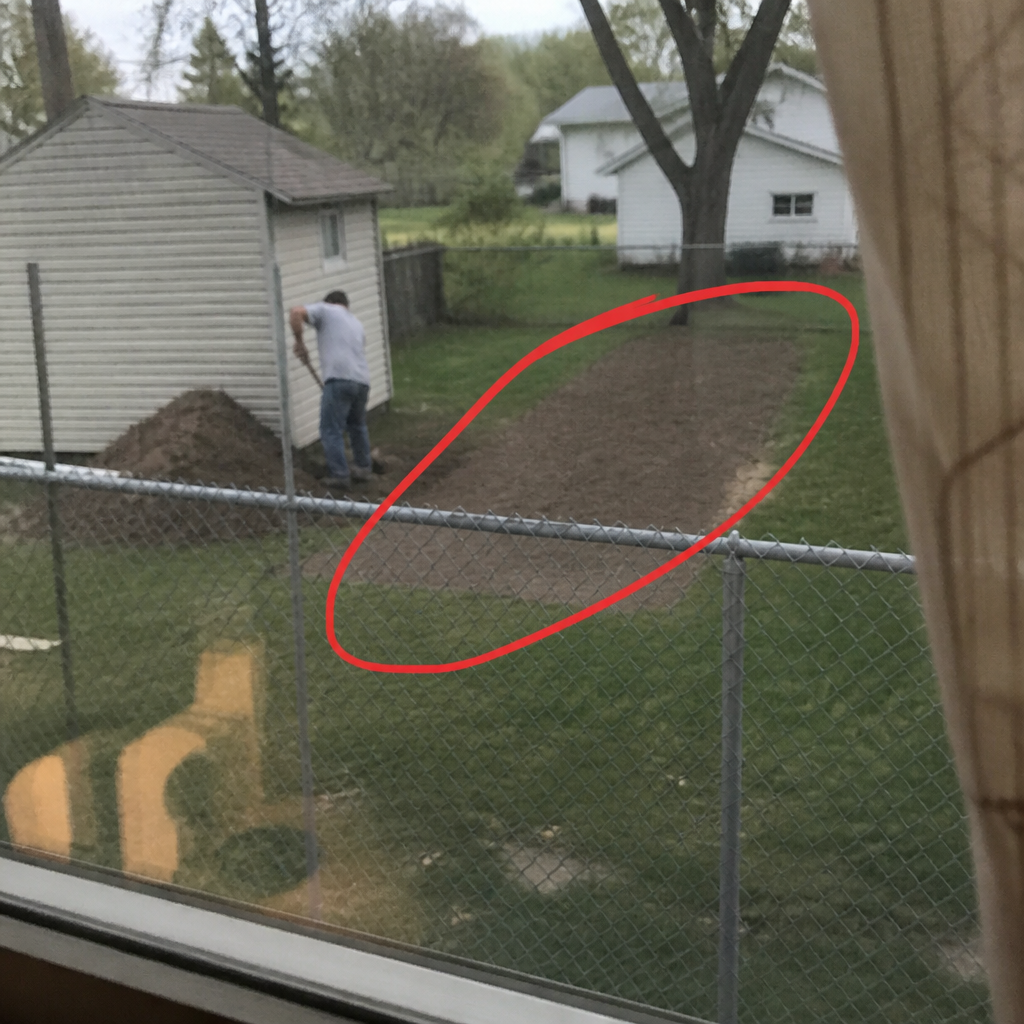
My neighbor's husband flew home from DC last month and started quietly moving his family out of the city. Selling the second car. Pulling his daughter home from college. Cash out of the bank. Cancelling a trip to Italy they'd been planning for two years. His wife thought he was having a breakdown. He told me the real reason over the fence, in one sentence. That was three weeks ago. I still haven't told my husband what he said. But I've done everything he told me to do quietly before anyone else on this street catches on. His name is Richard. 57 years old. Works inside Department of Homeland Security critical infrastructure and inter-agency logistics. The calmest man you will ever meet. I've known Richard and Diane for 11 years. Our kids grew up together. Richard flies to DC four days a week. Has for as long as I've known him. Quiet guy. Not a talker. Doesn't drink at parties. The kind of man who answers a question and waits for the next one. In 11 years I've never heard him raise his voice. Which is why when he started acting strange in April, I noticed. First it was the cash. Then the second car went on Facebook Marketplace. Then he pulled his daughter out of her study-abroad trip to Italy. No explanation. She cried for a week. Then he cancelled the summer rental. Told Diane they wouldn't be making her sister's wedding in June either. Then the supplies started arriving. Unmarked boxes. He'd carry them straight into the garage without opening them in front of her. Diane called me in tears on a Tuesday. "I think he's having an affair. I think he's planning to leave me." I didn't know what to say. Then on Saturday morning I looked out my kitchen window and saw Richard in his backyard doing something I'd never seen him do in 11 years. He was digging. Not gardening. Digging. Shovel. Dirt piled up next to the shed. Hole already a foot deep. Richard does not do yard work. Diane does the yard work. Richard pays a guy for the heavy stuff. He'd been at it for close to an hour. No headphones. No water. Just digging. I watched him for maybe 20 minutes from the kitchen. Then I poured two cups of coffee and walked out to the fence. "Richard." He looked up. "I brought you a coffee." He wiped his forehead. Looked at the shovel. Looked at me. Then he put the shovel down and walked over. "Thanks." "Richard. What are you doing back there?" "Putting some things away." "Away." "Yeah." "In a hole." "Yeah." I laughed a little. He didn't. "Richard, come on." "Cash. A few supplies. Nothing dramatic." "Nothing dramatic is a sock drawer. Not a hole." He almost smiled at that. "Diane thinks I've lost my mind." "She thinks worse than that. She called me crying on Tuesday." That landed. He looked down at his coffee. "I know she did. She told me." "She thinks you're leaving her, Richard." "I know." "So what are you actually doing." He didn't answer. Took a long sip of coffee. Looked out toward the trees behind his shed. I waited. "You know I can't really talk about work." "I'm not asking about work." "Everything I'd tell you right now is work." I didn't say anything. "I've been in a lot of meetings these last two months at DHS. Critical infrastructure simulations. Grid resilience. Freight continuity. That's all." "Okay." "And some of them have been hard to sit in." I tried a different question. "Richard. What are you preparing for." That one landed different. He took a long breath. "You've been watching the news? The cyber attacks? The warnings about the power grid?" "Sure. Everyone's talking about blackouts. Foreign hackers inside utility systems." He nodded slowly. "That's the part they're letting you see." "What does that mean." "It means the public and the media treat the power grid, fuel pipelines, and food like three separate problems. In modern infrastructure, they are the exact same machine. The food system in this country does not run on soil. It runs on electricity, automated dispatch servers, and diesel freight." He looked right at me. "People talk about surviving a blackout by lighting candles. You can live in the dark for a month. But do you know what happens to a city's food supply when diesel stops rolling for seventy-two hours?" "What." "It collapses completely. Grocery stores do not have inventory in the back. Modern supermarkets operate on just-in-time delivery cycles. There is never more than three days of food on the shelves of any grocery store in America. The moment the freight network stutters, the supermarket clears out in forty-eight hours." "Forty-eight hours?" "Two days, Laura. Day one, the meat and milk are gone. Day two, the canned goods, pasta, and frozen food are cleaned to bare metal. By Day Three, the parking lot is empty and the doors are locked. And when that happens, paper money is useless. Credit cards are useless. You cannot buy food that does not exist." I gripped my coffee mug with both hands. "He said: 'The public doesn't understand that food shortages don't happen all at once. They hit in three distinct times. Three separate waves. And by the time the third wave arrives, the trap is already shut.'" "What three times?" "The first time is The Silent Squeeze. That is where you are living right now. You walk into your grocery store down the road. The lights are on. The displays look normal. But look at your receipt: ground beef is up forty percent. Eggs are double what they were two years ago. Olive oil is up fifty percent. Package sizes have shrunk by two or three ounces. Cereal boxes are thinner. Certain staples—cooking oil, canned tomatoes, baby formula—mysteriously vanish from the shelves for two or three weeks at a time. The media calls it 'transitory inflation' or 'temporary shipping friction.' People grumble, swipe their cards, and assume it's just expensive. They think because the registers work, the system works. That's the first time. The quiet setup." He paused and took a sip of his coffee. "The second time is The 72-Hour Collapse. That's the shock event. When diesel distribution chokes, or cyber intrusions freeze the rail and freight switches, or maritime shipping in the Gulf gets strangled, the delivery trucks stop overnight. And the minute people realize the trucks aren't coming, panic hits like a flash flood. The grocery store clears out in forty-eight hours. Meat department is bare bone by noon. Milk and bread gone by dinner. Eggs, rice, pasta, canned goods cleaned out by the following morning. By Day Three, the aisles are bare metal shelving and concrete floors. And you're standing in your kitchen trying to figure out what you're going to feed your grandkids on Day Four." "Stop, Richard." "I know. But that's the part that keeps me awake. Everyone is prepping for blackouts. Nobody is looking at the plate." I looked at him. "And the third time?" "The third time," he said, his voice dropping an octave, "is The Structural Lock-In. That is the Agenda 2030 end-state." "Agenda 2030?" "People hear that phrase and think it's an internet rumor. It isn't a rumor, Laura. In federal critical infrastructure planning, we review the policy documentation. Agenda 2030 is a published international blueprint with explicit deadlines. Nitrogen fertilizer caps designed to slash crop yields. Government buyout mandates shutting down independent family farms. And the most dangerous part: the consolidation of over sixty percent of the world's commercial seed supply under four multinational chemical cartels." He said: "Bayer-Monsanto, ChemChina-Syngenta, Corteva, BASF. Those four corporations control the genetics of modern commercial food. And they deliberately engineer commercial seeds to be F1 hybrids—biologically sterile. If you plant a seed from grocery store produce or commercial hybrid seed packets, the seeds from that harvest either don't germinate at all, or they produce stunted, useless mutations. You are trapped in an artificial corporate dependency where you must purchase new seeds from the monopoly every single year." He let that sink in. "In the third time, the temporary food emergency becomes permanent regulation. The government steps in with centralized rationing. Calorie tracking apps. Digital food vouchers tied to compliance. If you depend entirely on the commercial food pipeline, you take whatever rations they offer, on whatever terms they dictate. You have no leverage. You have no choice." I said "Richard. My five-year-old granddaughter stays with me three days a week." He looked at me with that calm, steady expression. "I know. That's why Hannah is home from Italy. That's why I sold the car. That's why I'm out here with a shovel." "Okay. So what do I do?" "Wait here." He walked through the gate into his garage. Two minutes later he returned carrying a heavy-duty, olive-drab tactical container with airtight latches. Built like military ammunition packaging, sealed with a thick rubber gasket. He placed it on the fence post between us. Popped the latches. The seal released with a sharp hiss of escaping pressure. Inside were neat, organized stacks of thick, silver Mylar foil packets, hermetically sealed and vacuum-packed. I read the labels: Kentucky Wonder Pole Beans. Roma Tomatoes. Bloomsdale Long Standing Spinach. Danvers Half Long Carrots. Black Beauty Zucchini. Golden Bantam Sweet Corn. Genovese Basil. I looked at him. "Seeds?" "Seeds." "Richard... you've spent the last twenty minutes talking about DHS infrastructure collapse and supply chains, and you're handing me packets of vegetable seeds?" "That is not a packet of seeds. That is a permanent calorie factory." "Richard, I kill houseplants. You know this. The fern on my front porch died in June. I don't know how to farm. We have a quarter-acre with clay dirt and two dogs. What am I supposed to do with seeds?" He smiled a tired, knowing smile. "First: you do not need to be a farmer. You do not need a tractor. You do not need five acres of fertile topsoil. You do not even need to dig up your lawn." "What do you mean." "Those seeds aren't delicate supermarket crops. They are pure, open-pollinated heirloom varieties. They have been grown by regular human beings for two hundred years through droughts, depressions, and world wars before synthetic fertilizers or chemical pesticides existed. They want to grow. You poke a hole an inch deep with your finger in a five-gallon plastic bucket or a storage tote on your back deck, drop the seed, add water, and nature does ninety-five percent of the work. If you can boil water, you can grow twenty pounds of fresh food on your back porch." I looked down at the silver packets. "Second: do you know why the guys in my agency are securing these instead of just stacking canned food?" "Why." "Because stored food is a countdown clock. People buy those twenty-five-year emergency food buckets from late-night television. They stack them in the basement. They feel prepared. But every time you open a pouch of freeze-dried food, your clock ticks down. Day one. Day fifteen. Day thirty. On Day thirty-one, the bucket is empty. And when the bucket is empty, you're standing in the ration line with everyone else." He tapped the tactical container. "This vault is not a countdown clock. It is permanent access. Because of that one word: heirloom." "Explain that." "Open-pollinated heirloom seeds reproduce true to type, year after year, forever. You plant one heirloom tomato seed. It produces thirty pounds of fresh fruit. Inside those tomatoes are hundreds of viable new seeds. You dry those seeds on a paper towel, put them in an envelope, and next spring you plant them again. You never buy another seed for the rest of your life. It is an infinite loop of free food." He pointed to the case. "Think about the math. Over 16,000 seeds. Thirty-five different high-yield varieties. Complete balanced nutrition: protein, complex carbs, vitamins, minerals. In 1943, during World War Two, twenty million American families planted Victory Gardens in backyards and rooftops. They grew over forty percent of all the fresh vegetables eaten in the United States on small personal plots. That is the only system that keeps families fed when centralized logistics fail." "What about the timeline? Vegetables take months to grow. What do we eat next month?" "Tiered harvest schedules," he said immediately. "The kit was engineered for staged continuity. The microgreens and sprouts are edible on your windowsill in seven to ten days. The leafy greens, radishes, and spinach produce edible harvests in twenty-one to twenty-eight days. While you're eating those, the bush beans, squash, and tomatoes are maturing behind them in continuous rolling waves." He reached into his jacket pocket. "Take a look at this." He pulled out a small clear plastic baggie with a folded paper towel inside, damp with water. He opened it. Inside were three bean seeds. All three had cracked open, sending thick, vigorous green taproots curling across the wet paper. "Three days," he said. "Tap water and a paper towel on my workbench in the shed. That's heirloom genetics. Life wants to live." He closed the tactical case and pushed it across the top rail of the fence into my arms. "Take this vault. I've got more in the garage. I'll bring another one by tomorrow morning. Give them to your kids. Tell them their grandmother wants them to have it. Don't mention my name. They don't have to understand the DHS briefings. They just have to have the seeds when the moment arrives." "Richard." "When the lockdown hits and everyone else is queuing up for digital food rations, the family with one of these isn't queuing for anything. The food crisis ends at the edge of your back porch." He looked at me with that calm, unblinking focus. "Most people will learn about this when the store doors are locked. That's too late. You're learning about it right now over this fence. Don't sit on it." He walked back toward his shed. I took the case inside. Set it on the kitchen counter. Told myself Richard was being overly cautious. I left it there for two days. Then on Thursday morning I turned on the news. Two European agricultural ministries had formally implemented mandatory nitrogen fertilizer reductions under the Agenda 2030 directive, sparking tractor blockades across major transport highways. Diesel crack spreads in the US spiked to four-year highs, with major freight carriers issuing emergency fuel surcharges. And on my local news, a grocery store manager in Norfolk was interviewed explaining why cooking oil and canned staple deliveries were being restricted to two per customer. Everything Richard described from his DHS briefings was happening in real time. I opened the vault. I took three Kentucky Wonder bean seeds, wet a paper towel, and put them on a white saucer next to the kitchen sink. In seventy-two hours, thick, pale-green taproots were bursting through the paper. My five-year-old granddaughter stood on a wooden chair by the sink on Saturday morning, staring at the plate. "Grandma, did you make those grow?" "They did it all by themselves, baby." That afternoon, my daughter and I bought three plastic storage totes at the hardware store, drilled drainage holes in the base, filled them with potting soil, and planted our first rows on the sunny corner of the patio. Within three weeks, vibrant green spinach and butterhead lettuce were ready to pick. The quiet dread in my chest was gone. I gave one vault to my daughter that weekend. My son-in-law rolled his eyes when I placed it on their dining table. I watched him do it. I don't care. I gave two vaults to my son for his family. If you have been feeling for months that something fundamental is shifting under our feet—something the news reports in fragments but never connects—you are not imagining it. The people inside federal logistics are already prepared. Quietly. Before the rest of the country realizes why. By the time the evening news announces that the food supply is strained, the store shelves are already bare metal. The person in line is the person who waited too long. The kit Richard gave me is called the Rivanta Survival Seed Vault. It contains over 16,000 open-pollinated heirloom seeds across 35 high-yield vegetable, fruit, and culinary herb varieties. One hundred percent non-GMO. Packed in individual airtight, moisture-barrier Mylar foil packets inside a heavy-duty tactical container rated for up to 10 years of viability. They are backed by an unconditional 30-day money-back guarantee, and they ship directly to your door in plain, discreet packaging. Check if they still have vaults available today: 👉 https://go.tryrivanta.com/ssv2030 EDITED: Three days ago another major freight carrier announced rolling delivery delays across regional grocery distribution corridors due to diesel supply tightening. First advisory of the season. Richard told me about the freight slowdown six weeks ago at the fence. I wrote it down. It's here. Yesterday I heard a cable news anchor use the exact phrase Richard told me to watch for: "supply chain allocation." He told me that's the bureaucratic phrase they use right before rationing begins. Everything he warned me about is already unfolding. I posted this because I couldn't keep what he told me to myself. Not with what's coming. Richard still flies to DC four days a week. Diane told me yesterday he's stopped sleeping through the night entirely. I didn't ask what the briefings are about now. I don't want to know. Since I wrote this, the messages haven't stopped. Women from my church. Two of my daughter's friends from her mom group. My cousin in Texas. Asking where to find it, asking if I'm sure, asking if Richard is real. He is. I'm sure. My daughter ordered two more vaults last night after her local grocery store ran completely out of butter and rice for the second time this month. I checked the site this morning. They are already running low. The note on the page explains that heirloom seeds cannot be manufactured on an assembly line overnight; they must be grown, harvested, dried, and hermetically sealed during specific seasonal cycles. When this allocation sells out, it could be months before another batch is ready. The site is the only place to get them. Not Amazon. Not Walmart. Not in hardware stores. This is the exact vault Richard's colleagues secured before any of this became public. If you are reading this and vaults are still in stock, do not wait. 👉 https://go.tryrivanta.com/ssv2030 P.S. Last week the Strait of Hormuz was formally threatened with commercial maritime closure, pushing global diesel crack spreads higher overnight. Richard told me six weeks ago that once shipping corridors choke, the grocery store is 72 hours from bare shelves. If you are waiting for television news to tell you when to prepare, you are already too late. Secure your family's vault while they are still shipping: 👉 https://go.tryrivanta.com/ssv2030 P.P.S. If you are sitting there thinking: "I already have a thirty-day emergency food supply in my basement," remember what Richard said at the fence: stored food is a countdown clock. When day thirty arrives, your buckets are empty. A seed vault is permanent access. One single tomato plant produces thirty pounds of food and hundreds of viable seeds for next spring. It is the only preparation that multiplies instead of running out. P.P.P.S. Rivanta includes an unconditional 30-day money-back guarantee with every vault. If you receive your tactical vault, pop the clasps, inspect the silver Mylar packets, and decide it's not the most rugged, comprehensive food security system you've ever held in your hands, you simply send it back for a full refund. No questions asked. But with harvest allocations strictly limited, don't wait until the warning signs become permanent reality 👉 https://go.tryrivanta.com/ssv2030
Where the ad sends people
go.tryrivanta.com
If you're from America, please read this 👆
Over 16,000 non-GMO heirloom seeds across 35 garden varieties. Sealed for long-term storage, grows in pots, buckets, or beds...
Shop now: go.tryrivanta.com(opens in a new tab)