Dr. Thomas Edward Harrison
Dr. Thomas Edward Harrison Facebook ad: “Feel like yourself again, It's possible.”
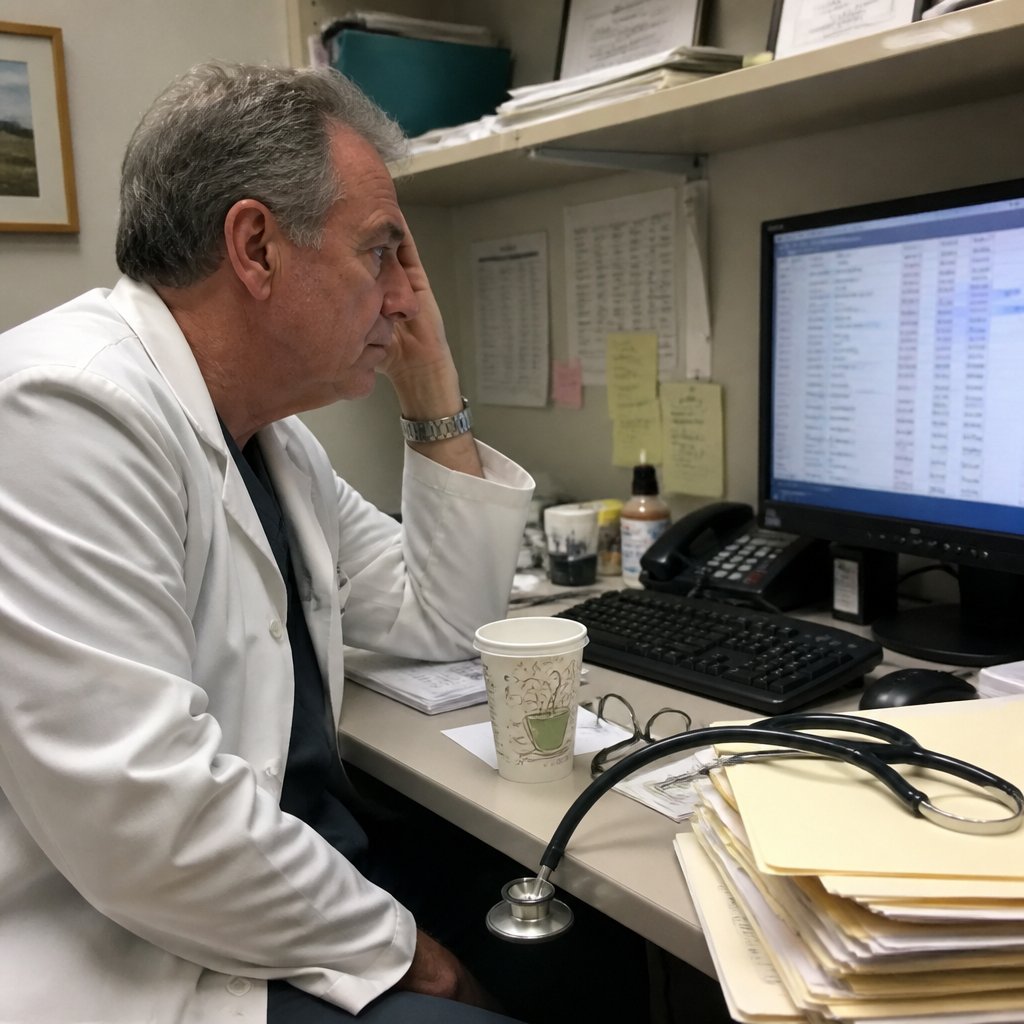
Ran for 5 days, from July 29 to August 3, 2026, the last day Crush saw it.
Run by Dr. Thomas Edward Harrison on Facebook. Crush is not the advertiser and does not verify its claims. See this ad in Meta's Ad Library(opens in a new tab)
Want an ad like this for your product?
Crush makes new ad images for your product from this ad: your logo, your product photo, your offer.
Trials from $19.95 USD, then $79.95 USD a month. Cancel anytime.
About this ad
- Meta Ad Library ID
- 1077898451334313
- Platforms
- Facebook, Instagram, Audience Network, Messenger and Threads
- Relaunches
- 0
Ad text
If you're on thyroid medication, your labs come back "normal," and you're still exhausted all day but lying awake wired at night — I owe you an apology. I'm an endocrinologist. And for eighteen years, I've been treating the wrong thing. Let me tell you about the woman who made me realise it. She's fifty-one. She's been on levothyroxine for eleven years, since just after her second child. For the first few years, the pill did its job. Then, somewhere in her mid-forties, the wheels came off. Not a crash. A slow leak. She didn't arrive with one dramatic thing. She arrived the way they all do — exhausted, embarrassed, apologising for wasting my time, half-convinced it was all in her head. If you're reading this on your phone at 2 a.m. because you're shattered and still can't sleep — she is you. Keep going. First it was the afternoons. A wall at 2 p.m. she used to walk straight through, now flattening her. Then the coffee stopped working. Two cups, three, just to stay upright — and on the days she skipped it she didn't get sleepy, she got erased. Then the nights turned on her. Bone-tired all day, and the second her head hit the pillow her body switched on. Buzzing. Tense. A brain that would not shut up — not even about anything, just running. Then the 3 a.m. wake-ups. Heart going. A dread she couldn't pin to anything. By the time she sat in my office she put it in one sentence: "I'm made of cement all day and wide awake all night." And underneath it was the fear she didn't say until I asked twice. That this was just who she was now. That she would feel like this for the rest of her life. That her kids would only ever remember a mum too tired to get off the sofa. She had tried everything, in the order they all try it. She'd asked me to raise her dose. Twice. It only made her more wired. She'd gone to another doctor and added T3. The anxiety got worse, not better. Magnesium. Vitamin D. B12. The whole cupboard. Sleep hygiene — no screens, no caffeine after noon, same bedtime every night, blackout blinds. Nothing moved. And she'd been handed a script for sleeping pills, which frightened her — because she'd watched her own mother lean on those for twenty years. It had cost her far more than sleep. She'd stopped saying yes to things. Cancelled the Friday dinners. Snapped at her teenager over nothing and then cried about it alone in the car. Her husband had stopped asking what was wrong. Not because he'd stopped loving her — because she never had a new answer. And then she said the thing that stopped me. Because I have said it, in that room, to a hundred women myself. "Everyone tells me my labs are fine. My own mum thinks it's just anxiety. I'm starting to think they're right." They weren't right. And neither was I. Because last week she walked into my office for a routine check — and something had changed that shouldn't have been possible. The wired-tired pattern I'd been documenting for a year had eased. She was sleeping. Her afternoons had steadied. Same dose. Same everything. I sat back. "What have you been doing differently?" "Nothing crazy. Just one thing I found going down a rabbit hole." Here's what's kept me up since. I see that exact woman every week. And everything I reach for works at the wrong level. I raise the levo — and half of them come back more wired, not less. I add T3. I write a script for sleep. I tell them to fix their sleep hygiene and manage their stress. I was treating the thyroid. I was treating the sleep. I never once treated the thing sitting underneath both of them. I called her that evening. I couldn't let it go. "What are you actually taking?" She didn't hesitate. "Something that calms the cortisol that had my body stuck in emergency mode. Not the thyroid. The stress signal above it." We talked for half an hour. And she'd understood something I'd walked straight past for eighteen years. Your thyroid pill is T4 — the inactive, storage form of the hormone. Before your body can use it, it has to be converted into T3, the active form. That conversion is what becomes calm daytime energy and a body that switches off at night. Here's the part the TSH test never shows. Chronic stress keeps your cortisol dysregulated — high when it should be low, still running into the night. And high cortisol slows that T4-to-T3 conversion and pushes it toward reverse-T3, an inactive form your cells can't use. So two things happen at once. Your nervous system is stuck in fight-or-flight — that's the wired. And the active hormone never lands — that's the exhausted. Wired and empty at the same time. Your labs read "normal" because the T4 is sitting right there in your blood. Nobody checks whether your body is calm enough to switch it on. Once I saw it, every dead end made sense. More levo just adds more T4 for a stressed body to turn into more reverse-T3 — so she felt more wired, not less. Adding T3 doesn't help while cortisol is still running the alarm. Sleeping pills knock you out for a night but never touch the daytime overdrive — you're renting sleep, not fixing it. Magnesium, no caffeine, no screens — all working on the surface while the signal underneath kept the whole system switched on. She told me how she found it, and it wasn't in a pharmacy. She'd stopped searching "how to sleep" and started asking a different question — why her body wouldn't switch off in the first place. And somewhere down that rabbit hole, at some ungodly hour, she ended up reading about the far north. Because up in the Arctic — in Scandinavia, in Siberia — there's a small plant that grows in the cracks of the mountains where almost nothing else will. The people there have used it for centuries to get through winters with no light and no let-up. They call it the golden root. Rhodiola rosea. It's what's called an adaptogen — not a sedative, not a stimulant, but a plant that helps pull an over-fired stress response back toward its normal rhythm. The Soviets took it seriously enough to study it for decades in their athletes and their cosmonauts, for exactly that: holding up under relentless stress without burning out. Reading about it later, as a doctor, the thing that struck me was that it's one of the better-studied herbs there is for stress-related fatigue and the cortisol response — and nobody markets it for the thyroid, or for sleep. It was aimed at the exact signal I'd spent eighteen years walking past. She takes it in the morning, not at night — which threw me until it clicked. It calms the daytime overdrive at the source, so by evening the body finally has permission to wind down on its own. The one she'd settled on was a small British company, Rosewyn. She was fussy about which one, and she was right to be — because most of what sits on a shelf is barely the plant at all. Hers is grown and extracted to the strengths the research actually uses — 3% rosavins, 1% salidroside — with a little black pepper extract so the body takes it in instead of passing it straight through. One capsule with breakfast. That was the whole change. She'd tried a cheap Amazon bottle first. 100mg, no standardization listed, felt nothing. Which makes sense — you can't bring a dysregulated stress axis back into rhythm with a trace dose of an extract that was never standardized in the first place. I asked her to walk me through it, because I wanted to know what the recovery had actually looked like — a switch, or a slow turn. It was a slow turn. And honestly, that's the part that made me believe her. The first week, she said, almost nothing happened. She took it a few mornings, felt no fireworks, and nearly put the bottle in the drawer with everything else that had let her down. It was somewhere in the second week that she noticed the first thing, and it wasn't energy. It was that she'd stopped bracing for bed. She only realised it because one night she climbed in, closed her eyes, and the usual dread just didn't arrive. By the third week the afternoons had started to hold. She got to four o'clock one day and realised she hadn't thought about coffee since breakfast. Then it happened again the next day. Small — but she'd long since stopped expecting even small. Around week four she slept the whole way through for the first time in longer than she could remember. She woke before her alarm and lay there for a second, confused, because she felt something she hadn't felt in years. Rested. By week six the 3 a.m. wake-ups had become the exception instead of the rule. And the low hum of anxiety she'd carried so long she'd stopped noticing it — she noticed it now, because it had gone quiet. Same dose of levo. Same job, same stress, same life. The only thing she'd changed was one capsule with breakfast. I'll be honest about something. After we hung up that night, I ordered a bottle. For myself. I don't have a thyroid problem. But I'm in my fifties, I've done this job for eighteen years, and somewhere along the way "wired at midnight, running on fumes by three in the afternoon" had quietly become my normal. The cost of the work, I told myself. Everyone in this field feels like this. I didn't expect much. I know the research better than most, and I know how rarely anything actually lives up to it. A few weeks in, it was my wife who said it before I did. She told me I'd stopped clenching my jaw in my sleep. Not long after, a younger colleague asked — half-joking — whether I'd finally started taking my own advice, because I looked less like a man surviving the day and more like one getting through it. I hadn't changed a single other thing. I'd just stopped fighting my own body to reach the evening. So let me say to you what I wish I'd been saying in that room for the last eighteen years. If you're on your thyroid medication and the labs keep coming back "fine"… If you're flattened by the afternoon and then wide awake the second your head hits the pillow… If you wake at 3 a.m. with a dread you can't put your finger on… If you've had the dose raised, tried the T3, done everything they told you about screens and caffeine and stress, and still been quietly handed the word "anxiety"… It was never in your head. It was never a character flaw, or a willpower problem, or just the price of getting older. Your stress system is stuck on. And while it's stuck on, it's holding the door shut on the very medicine you swallow every single morning. The hormone goes in. It just never gets switched on. That's why the higher dose left you more wired. That's why the sleeping pill only ever rents you a night. That's why nothing anyone reached for ever reached the thing sitting underneath it. You can keep going the way you've been going, and watch another year go the way the last few have — the afternoons on the sofa, the 3 a.m. ceiling, the person you used to be getting a little further away from the one your family sees now. Or you can turn down the signal that's been holding the whole thing open, and give the medicine you already take the chance to finally land. I spent eighteen years telling women to be patient. A few weeks ago I stopped being patient myself. So here's what I'd tell you if you were sitting across the desk from me. Don't touch your levo — keep taking it exactly as you do. Add one capsule of Rosewyn in the morning, and give your body sixty days to bring the flood back down. Watch the afternoons first; that's usually where it shows itself before anything else. They stand behind those sixty days with a money-back guarantee, so the only thing it can really cost you is the trying. They're a small outfit and they do run dry — so if it's in stock when you look, I wouldn't sit on it. https://rosewynhealth.com/ P.S. Don't come off your levo to try this. It isn't a replacement, it's the other half — keep the pill, add one capsule in the morning. Not at night; it's not a sleeping tablet, it works by calming the daytime overdrive so the evening can quiet down on its own.
Where the ad sends people
rosewynhealth.com
Feel like yourself again — It's possible.
Rosewyn
Learn more: rosewynhealth.com(opens in a new tab)