Senior Wellness UK
Senior Wellness UK Facebook ad: “Doctor said: Just age”
Ran for 7 days, from August 27 to September 3, 2026, the last day Crush saw it.
Run by Senior Wellness UK on Facebook. Crush is not the advertiser and does not verify its claims. See this ad in Meta's Ad Library(opens in a new tab)
Want an ad like this for your product?
Crush makes new ad images for your product from this ad: your logo, your product photo, your offer.
Trials from $19.95 USD, then $79.95 USD a month. Cancel anytime.
About this ad
- Meta Ad Library ID
- 1080821460991753
- Platforms
- Facebook, Instagram, Audience Network, Messenger and Threads
- Relaunches
- 0
Ad text
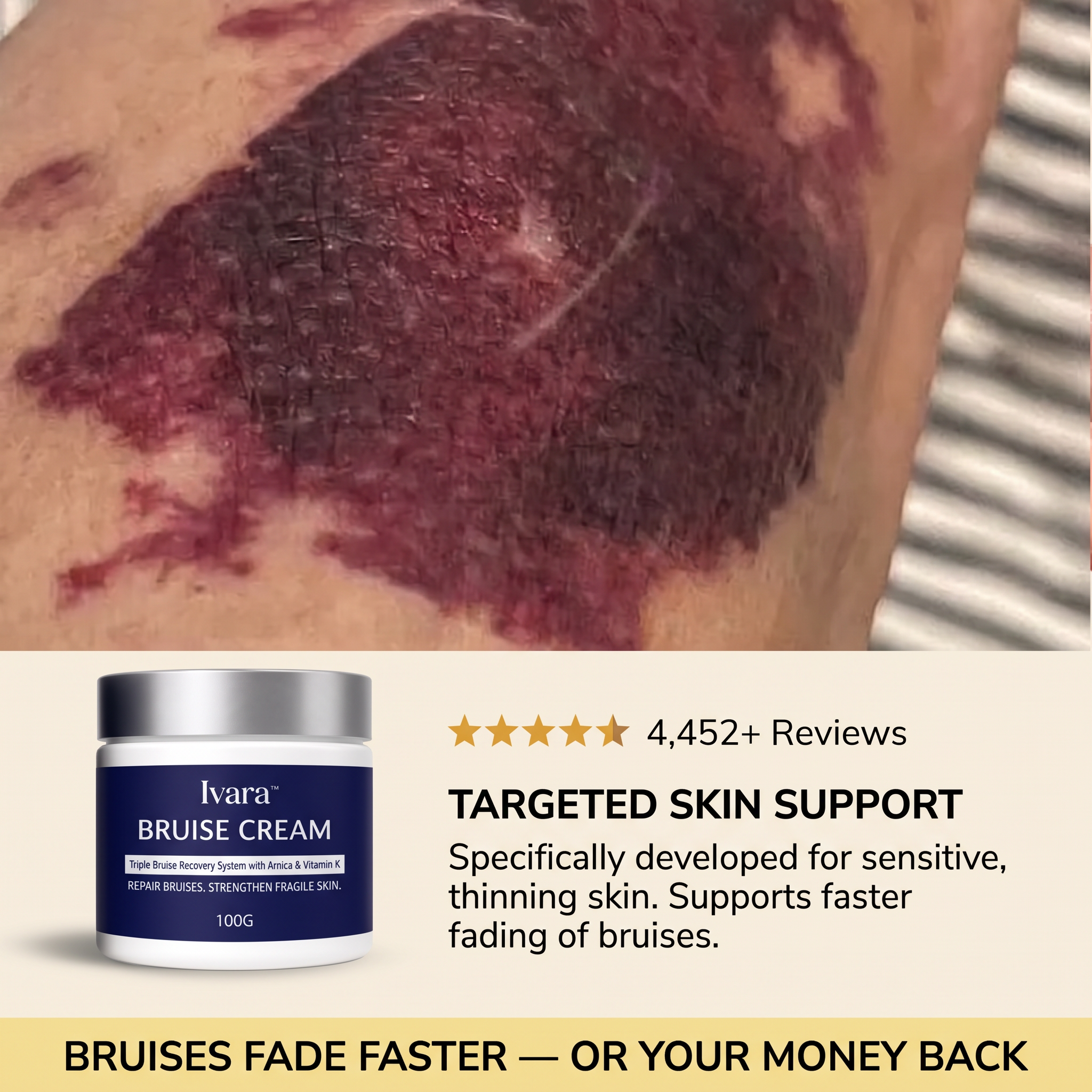
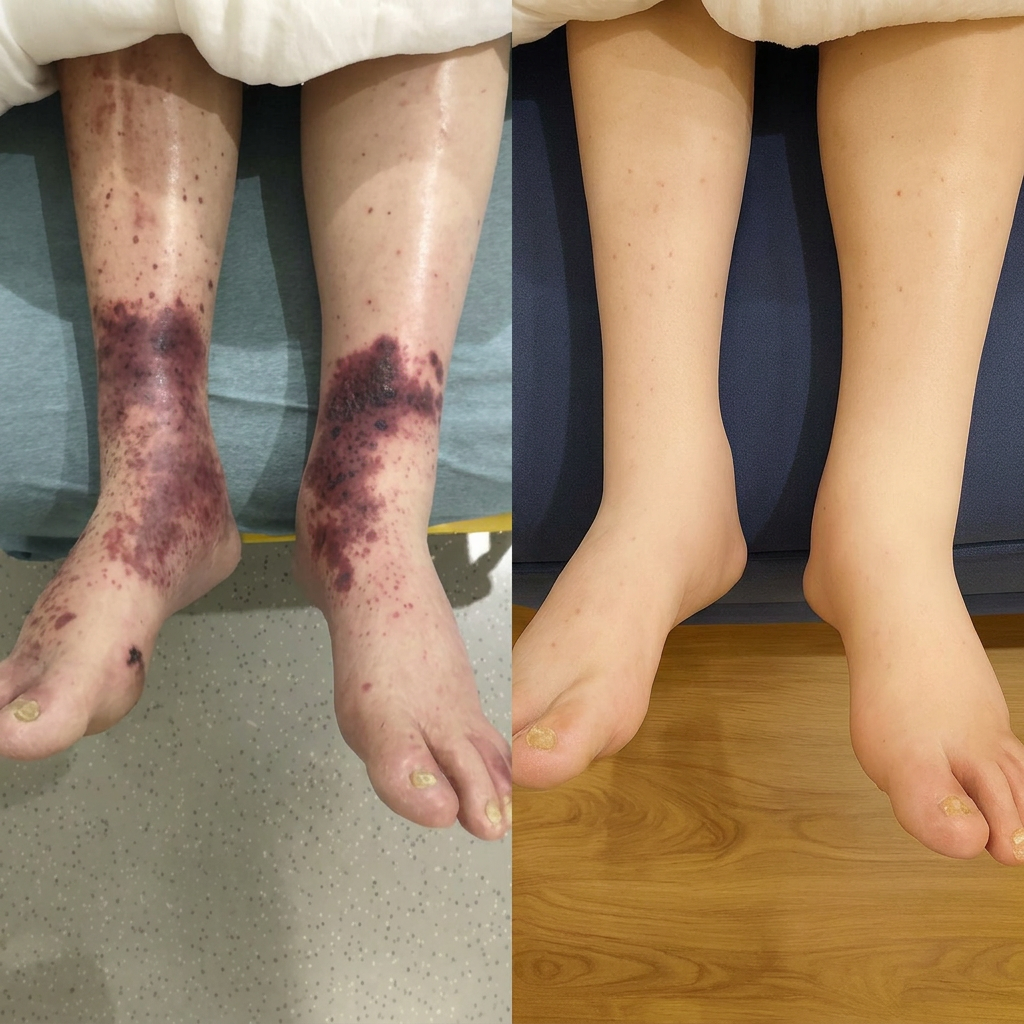
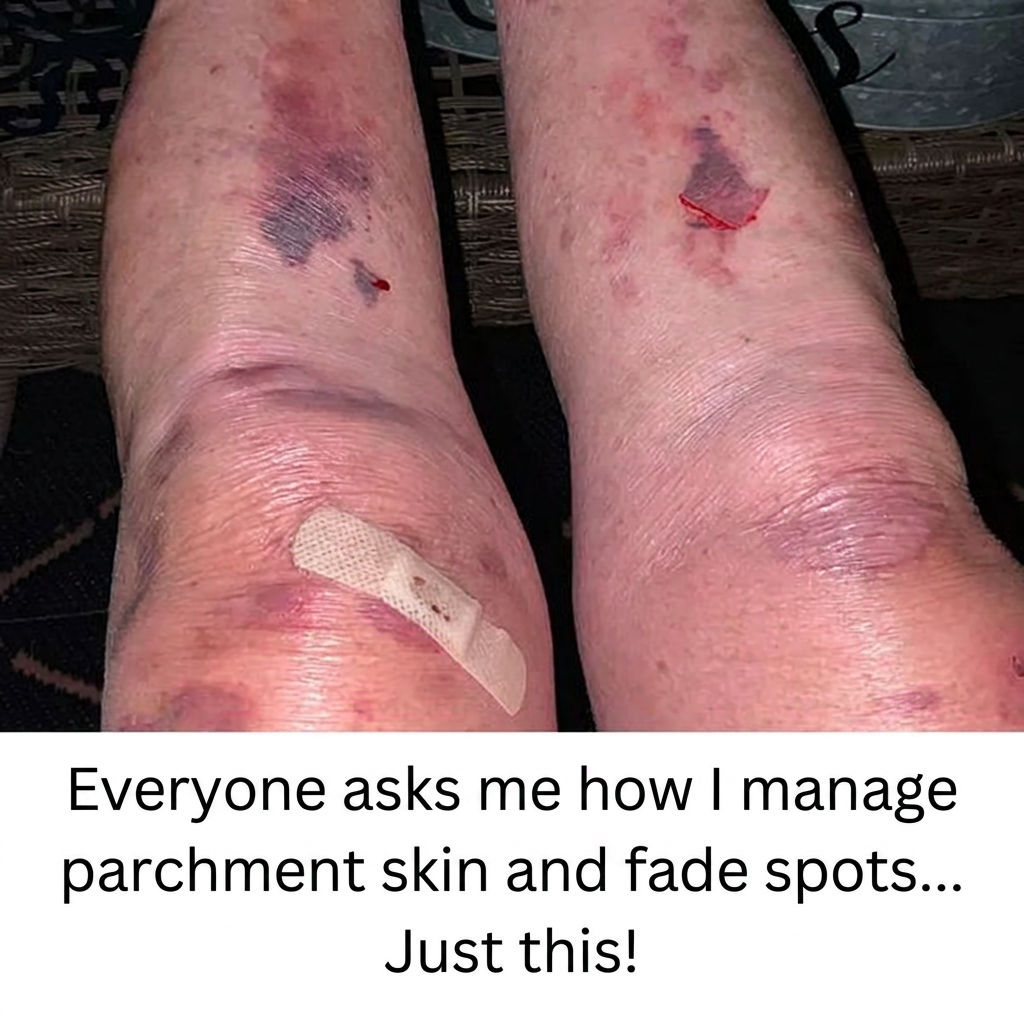
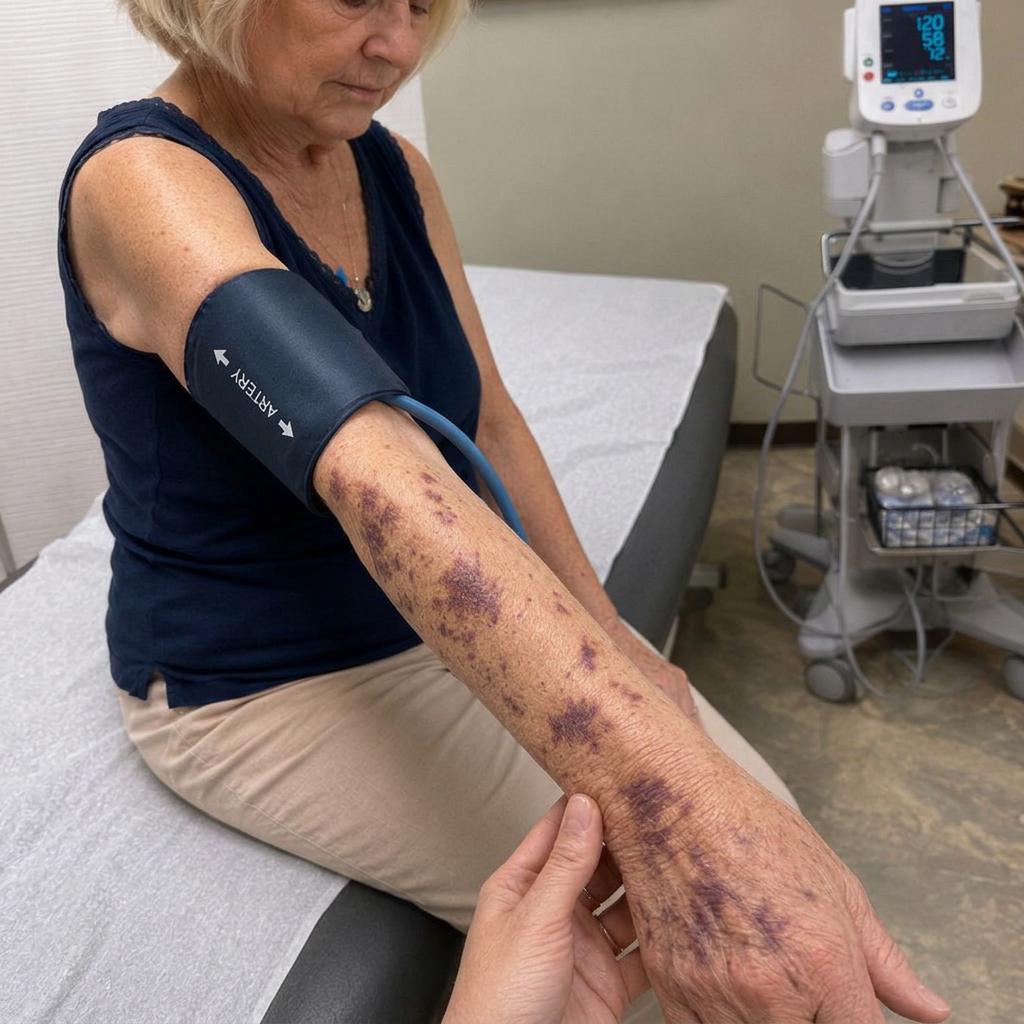
The most frustrating line I hear in my clinic is: "My doctor told me it's just ageing, so I just wear long sleeves." In my 22 years as a procedural skin specialist — 19 of those in reconstructive surgery — I have treated thousands of women who were told to accept fragile, easily marked skin as permanent. My patient Margaret had accepted it for 5 years before she walked into my examination room. She was 67, and even though it was July, she sat in my warm office wearing a thick, long-sleeved cardigan. When I offered to take it for her, she folded her arms across her chest and said she could leave it on. I said "no problem", and we started her evaluation. About ten minutes in, she needed to roll her left sleeve up past her elbow for a blood pressure reading. Her outer forearm was covered in a dense patchwork of flat blotches. Different sizes, different stages. Dark purple ones from this week, dull tan-brown stains from last month, and fading shadows underneath. I set the pressure gauge down and pointed to her forearm. "Can you tell me where these came from?" She pointed to a dark purple one near her wrist first. "That one is from a shopping bag. I was carrying it from the car and the handles rested on my arm for maybe a minute. That was 4 days ago." She pointed to a larger one near her elbow. "That one is from the bed. I was tucking the fitted sheet under the corner of the mattress and my arm caught the edge of the bed frame. I did not even feel it happen. I found it later that night." She pointed to one of the brown stains. "I actually do not know where that one came from. I just noticed it one morning. That happens a lot." I asked how long this had been going on. She said about 5 years. It started gradually around 62. A mark she could not explain here and there. Then they started appearing more frequently and from less and less contact. By 65 she was marking from things she described as basically nothing. I asked her to give me examples. Her kitchen cupboard door. She opens it, the edge catches her forearm lightly, and there is a flat mark the next day. Her dog. A 7-kilogram terrier who jumps against her shins when she comes home. Not claws, just the impact of his little body. Marks on both shins that rotate in and out constantly. A cardboard box. She was breaking down an Amazon box for recycling and the edge of the cardboard dragged across her arm. She said it looked like she had been cut with something by that evening. She told me she had a mental map of every surface in her house that was likely to leave a mark on her. She navigated her own kitchen the way you would navigate someone else's cluttered garage. Carefully. Deliberately. Always aware of where her arms were in relation to every edge and corner. I asked what she had tried. "Drugstore body lotions. I applied them every single day for almost 2 years. My skin felt a little softer on the surface, but the purple marks kept coming anyway." "Oral collagen powder. A friend recommended it. I stirred it into my coffee every morning for 6 months. My arms looked exactly the same." "Compression sleeves. I ordered them for gardening. They prevented sharp scratches, but marks still appeared underneath the fabric." Her doctor shrugged and told her it was just ageing. Told her to be more careful, wear long sleeves, and get used to it. She said she smiled at that because she could not figure out how to be more careful than a woman who had already memorised which cupboard doors were dangerous. She had done everything she was told. For years. Consistently. Perfectly. Her arms were worse at 67 than they had been at 62. That is when I explained to her what I explain to every patient in her situation. I told her these are not ordinary bruises. A real bruise comes from a hard impact, swells up into a lump you can feel, hurts to the touch, and turns blue, then green, then yellow as it heals. What is happening on her arms is called solar purpura. Notice how her marks never go green or yellow? When a younger person breaks a blood vessel, the body sends in a natural cleanup crew. That crew digests the blood step-by-step. The blue, green, and yellow colours you watch on a normal bruise are that cleanup crew working. But in skin with 60 years of sun exposure, that cleanup crew is running weeks behind. Think of your tiny blood vessels like glass straws wrapped in thick bubble wrap. When the bubble wrap is thick, you can bump into a counter and nothing breaks. Decades of sun dissolved that bubble wrap. Now your blood vessels sit bare right under the skin. Because paper-thin skin has no padding for blood to pool into a lump, a broken vessel spills sideways. The blood spreads flat under the skin — like a drop of purple ink bleeding across a paper towel. Because her natural cleanup crew is running weeks behind, that blood just sits there. Over time, everyday sunlight bakes that trapped blood until it turns into literal iron rust — leaving behind brown stains that sit on her arms for months. To stop those stains, you need something that physically flushes that trapped blood out before it has time to break down. Then I told her the part that changes everything for every woman who hears it. A plain drugstore lotion only works on the dry surface. It cannot reach deeper down where your blood vessels sit bare, and it has nothing in it to move trapped blood. The collagen powder she drank was broken down by stomach acid long before it ever reached her arms. The sleeves shielded against scratches, but impact pressure transfers straight through fabric into bare vessels underneath. Every single thing she had tried was managing a surface symptom or going to the wrong place. Nothing she had been given was built to strengthen the thin surface barrier and rebuild the protective cushion underneath at the same time. She was quiet for a long time. Then she said, "So I was not doing the wrong thing. I was doing it in the wrong place." That is exactly right. To stop this pile-up, you have to work on two different timelines at once. The first timeline works on the mark in front of you within days. First, you need something to flush pooled blood out before it turns to iron rust. That requires true alpine-grown Arnica montana. Unlike cheap lowland field plants sold in store gels, alpine arnica carries high concentrations of helenalin to clear trapped blood. Second, you need something to pen the blood in the moment a leak starts. That requires Vitamin K, so fresh marks come out smaller, fainter, and clear in days instead of sitting for three weeks. Third, you need something to refill the missing surface mortar. That requires a 5-ceramide lipid complex so dry, crinkled parchment turns supple again and stops splitting open. The second timeline works over 60 to 90 days — rebuilding the cushion underneath so fewer marks arrive at all. That requires Retinol paired with Glycolic Acid. Glycolic acid clears away dead, dry surface buildup. Retinol then reaches the deep layer and signals the cells to start manufacturing fresh Type I collagen again. Over two to three months, it weaves fresh structural padding back around those bare capillaries. The bubble wrap grows back. I gave her a specialised topical cream built specifically for this dual-timeline mechanism — a formula called Fadewell Fragile Skin Formula. It combines alpine Arnica montana, Vitamin K, 5 ceramides, retinol, and glycolic acid into a clean daily cream. I told her to apply it twice a day, right after brushing her teeth in the morning and before bed. She was sceptical. She had earned that scepticism over 5 years of doing everything right and watching her arms get worse. She agreed to try. Minute 1: She smoothed it over her forearms. Tight, papery skin drank it in like a dry sponge dropped in water. No grease, nothing on her sleeves. Days 1–5: She called to tell me her arms felt completely different in the shower. The dry, crinkled parchment texture had turned supple. The skin stopped feeling like paper and stopped splitting when she bumped a counter. Weeks 1–2: She caught her arm on the edge of a kitchen drawer. She checked the next morning. Instead of a dark, wide purple blotch, it was a tiny, faint mark — and within three days, it was completely gone. Weeks 3–4: She looked down at her forearms while pouring coffee. The older brown patches she had given up on — the iron stains from months ago — were noticeably lighter as glycolic turnover lifted the discoloured cells. Months 2–3: Her grandson grabbed her arm at a family lunch. She let him. She did not pull away. She did not tense up. She just let an 8-year-old boy grab his grandmother's arm because he wanted to show her something. No mark. Not that evening. Not the next morning. Nothing. I have been doing this work for 22 years. I have explained the dermis to hundreds of women. I have seen the scepticism when I tell them a twice-daily cream can do what 5 years of ordinary lotions and collagen powders could not. But Margaret is the patient I come back to when someone asks me why I talk about solar purpura publicly. Because she spent 5 years doing everything right. She memorised which cupboard doors were dangerous. She padded her own kitchen counters. She wore thick cardigans in July in my examination room and asked me if she could please keep them on. And 11 weeks later, her grandson grabbed her arm and she just let him. I have seen a lot of results in my career. That one still sits with me. Not because it was the most dramatic. But because of what it gave back to her. She is not thinking about her arms anymore. She is not navigating her kitchen like it is an obstacle course. She is not checking her forearms every morning after making the bed. She is just living her life. Wearing short sleeves to Sunday lunch. The way she was living at 55 before any of this started. That is not a small thing. That is everything. If you wake up finding dark purple marks on your arms from contact you do not even remember... If you have started wearing long sleeves in the summer heat just so people stop staring or asking if you got hurt... Or if you have caught yourself turning your forearms away at the dinner table so your family does not see... I want you to know that you were not doing the wrong thing. You were just doing it in the wrong place. EDIT: I have received quite a few messages asking where to find this exact formula. You can check availability and read more about the 30-day protocol here: https://ukhealthjournal.com/Ivara/i-hid-my-arms-for-years-until-a-friend-told-me-something-my-own-doctor-never-had
Where the ad sends people
https://ukhealthjournal.com/Ivara/i-hid-my-arms-fo...
Doctor said: "Just age"
Ivara™
Learn more: ukhealthjournal.com(opens in a new tab)