
Inactive· since Sep 2, 2026
- 6
- days it ran
- 0
- relaunches
Ad copy
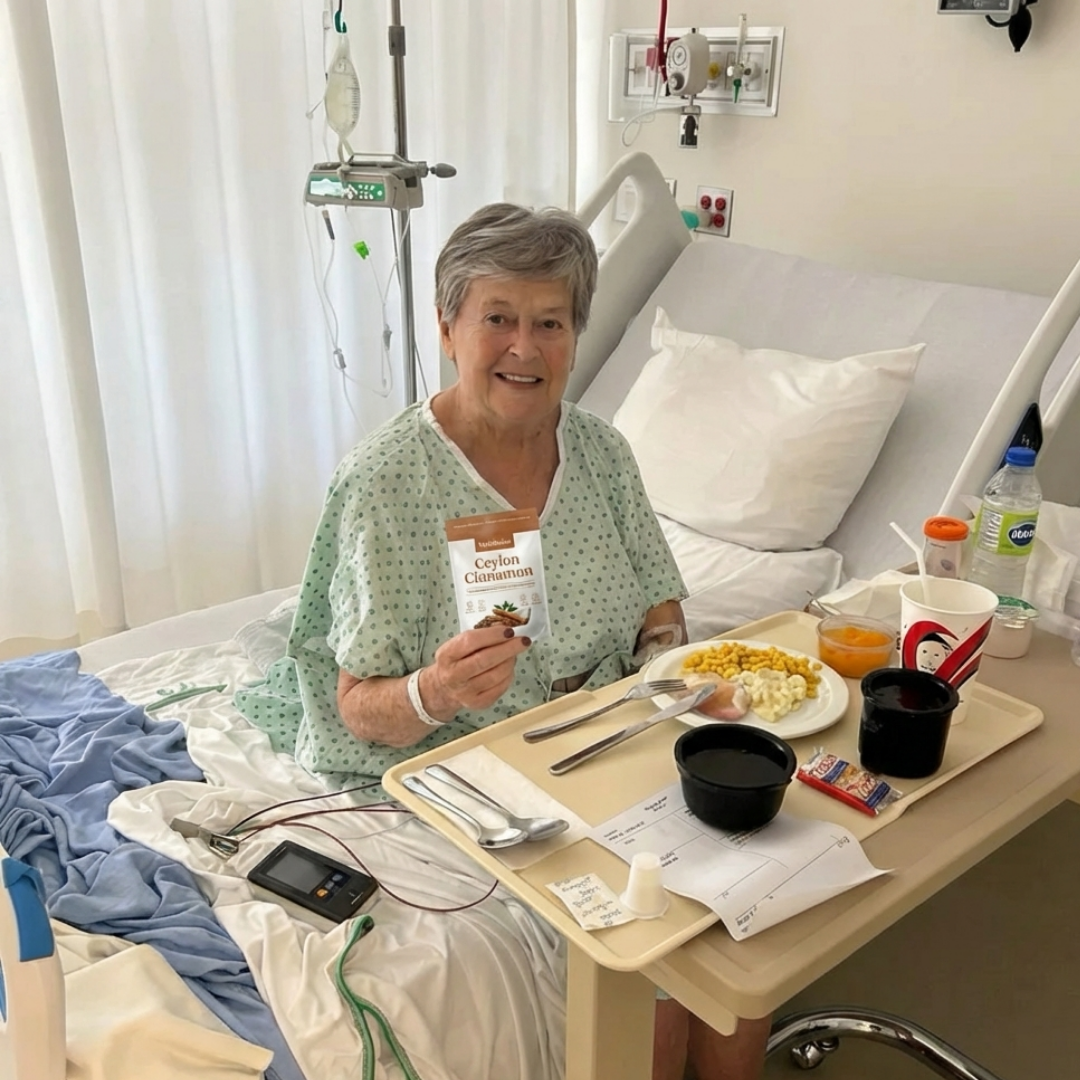
Most hospital-employed physicians now have bonuses tied to productivity dashboards that measure procedures and billing volume, not whether your kidneys improve. 78% of American patients carry their records in that same system. When my GFR kept falling after my Stage C diagnosis, I finally understood what that system was designed to do: manage the decline, not address what was causing it. My nephrologist was following the protocol correctly. The protocol was the problem. Here is what that protocol was never built to find. I want to start with the appointment two years ago. I was sitting in my nephrologist's office in the same chair I had sat in twice a year for four years. Same framed diplomas on the wall. Same paper cover on the exam table I was not sitting on because I was not there for an exam, I was there for a conversation about numbers. He pulled my lab panel up on the screen. My creatinine had gone from 1.6 to 1.9. My GFR had dropped from 41 to 36. He told me what he had told me at every appointment for three years. We are watching it closely. The numbers have shifted but we are still managing this. Keep the protein restricted. Watch the sodium. Stay on the ACE inhibitor. Come back in six months. I asked him if there was anything I could do to help my kidneys recover, not manage the situation, but actually move it in a better direction. He looked at me the way doctors look at you when you have asked a question they consider answered. He said that at Stage C the clinical goal is to slow the progression and protect the remaining function. Recovery was not the word he used. I drove home and sat in my car in the garage for a long time. I had been a type 2 diabetic for eleven years. M*tformin for nine of those years. An ACE inhibitor for three years, added specifically for kidney protection. My A1C had run between 6.8 and 7.2 for most of that time. Two different doctors called it managed. And yet my creatinine had been climbing for four years. My GFR had been falling for four years. Managed, on two dashboards, in two offices, by two doctors who each thought the other one was handling the upstream problem. And the organ was failing every quarter. I knew what the trajectory said. GFR of 36, falling roughly two points every six months, put dialysis in range inside four years. My nephrologist had mentioned dialysis prep in passing at the previous appointment, the way you plant something you want the patient to start processing without fully absorbing. I had absorbed it fully. Nothing was going to change while I was being managed by the same protocol that had failed to stop four years of decline. I found out why six weeks later, in a city I had been putting off visiting for two years. My sister's daughter had been living in Amsterdam for a year on a work placement. My sister had been trying to get me on a plane since the assignment started. I had been saying I would go when things stabilized. I finally booked the ticket because my nephrologist's last appointment had made one thing clear: things were not going to stabilize on their own. My sister's daughter worked for a Dutch pharmaceutical company. On the second evening she brought a colleague and his wife for dinner. His name was Dr. Henk Verhoeven. He was a nephrologist at the Amsterdam University Medical Center. He had been practicing for twenty-two years. He was there to have dinner, not to consult. He talked mainly about his three children and a cycling route he was planning in northern Portugal. He was warm and funny in a quiet way and had nothing to do with my medical situation until my sister, in the way sisters do, mentioned that I had a kidney condition. He asked, politely, what stage. Stage C. GFR in the mid-30s. On an ACE inhibitor. Managed A1C on M*tformin. He was quiet for a moment. Then he said: what does your nephrologist tell you about your blood sugar spikes between your A1C readings? I did not know what he meant. He said: your A1C is a three-month average. An average hides what is happening to your glomeruli on a Wednesday afternoon two hours after dinner. The spike after a meal is what drives the filtration pressure inside your kidney's capillaries. That spike does not appear in your A1C. It is invisible to the number your nephrologist is monitoring. I told him I tested my fasting glucose most mornings. It ran around 130 to 140. He nodded slowly. He said: your fasting glucose is the quietest your blood sugar gets. What happens in the hours after you eat is a completely different profile, and that profile is what is doing the damage your creatinine is recording three months later. He said one more thing before the conversation moved back to Portugal and his children. He said: the mechanism that is damaging your kidneys is not your creatinine reading. The creatinine is the report card. The mechanism is upstream from that number, running continuously between your quarterly lab draws, in vessels so small you would need a microscope to see the wall they are damaging. And the metric that would capture it does not appear in any productivity dashboard your doctor manages against. We talked about other things after that. His wife knew a lot about Amsterdam and told me where to eat lunch the following day. The evening was good. Before we left I asked him to write down the names of what he had described. He wrote four things on the back of a receipt from his jacket pocket. GLUT4. MHCP. Cinnamomum verum. Diabetes Care 2003. He handed it to me and said: start there. I thought about his words for the rest of the trip and for most of the flight home. When I landed I put the receipt on my kitchen table. When I got home I asked my nephrologist's office for a continuous glucose monitor to see what my blood sugar was doing after meals. His nurse called me back and said that was a question for my endocrinologist. I called my endocrinologist. He agreed to prescribe it. He said he was not sure what it would show given that my A1C was well-controlled. He was wrong. The first thing the monitor showed me was a dinner I thought was modest. Grilled fish. Roasted vegetables. A small serving of rice. Glucose two hours after that dinner: 218. Stayed above 180 for nearly two hours. Then it came down. Then a late handful of crackers pushed it up again. Then it recovered. Fasting glucose the next morning: 131. That 131 read as managed blood sugar on every quarterly lab form I had ever filed. The 218 two hours after dinner had not appeared on any chart in eleven years of type 2 diabetes management. It had been happening every night after dinner. It had been happening for eleven years. I sat at my kitchen table looking at the CGM graph, the receipt from Amsterdam sitting next to my laptop, and I started working through what Dr. Verhoeven had written down. I read for three hours that first night. Then I kept reading for a week after that, working through the mechanism studies, the clinical trials, the published data on the compounds he had named. Here is what that research says. Every cell in the body has doors on its surface called GLUT4 transporters. Their job is to open when insulin signals them and allow glucose inside the cell where it is burned for energy. In type 2 diabetes, those doors stop responding to the insulin signal. The glucose that enters the blood after a meal cannot get into the cells it was meant to feed. It stays in the blood. It accumulates. Once it is trapped in the blood, it circulates with every heartbeat through every vessel in the body. In the kidney, that means the afferent arterioles and the capillaries of the glomeruli, which are the actual filtration units. The glomerular capillaries are among the smallest and most fragile vessels in the body. Their walls are designed to be selectively permeable, allowing waste to cross into the urine while keeping protein and red blood cells in the bloodstream. When glucose moves through those capillaries at elevated concentration repeatedly over time, it damages the basement membrane of the glomerulus. The membrane thickens. The pores change shape and size. Protein begins crossing into the urine that should be staying in the blood. Foam appears in the toilet because protein in urine foams. Creatinine rises as the filters lose efficiency. GFR falls as total functioning filtration area contracts. This is not a slow, inevitable, genetic process that cannot be influenced. Its rate is driven by the height and frequency of glucose spikes. Two people can carry the same A1C of 7.0. One spikes to 220 after every meal and stays elevated for two hours. The other peaks at 160 and recovers in forty-five minutes. The report card is identical. The cumulative glucose exposure inside their glomerular capillaries is not. The damage accumulating in the basement membrane is not. Your nephrologist sees your creatinine every six months and your A1C when it arrives from your primary care doctor. Neither of them is watching what happens inside your glomeruli during the two hours after dinner every night for eleven years. That is the dashboard gap Dr. Verhoeven was describing. Now here is the second piece, the one I had to think through carefully because it involved the prescription my nephrologist had added specifically to protect my kidneys. The ACE inhibitor. He had put me on it three years earlier and explained that ACE inhibitors reduce intraglomerular pressure, which slows the progression of diabetic nephropathy. That is documented. The research is real. But there is a second part of that story. Reducing intraglomerular pressure is addressing a downstream consequence of the glucose spikes, not the spikes themselves. The glucose spike elevates filtration pressure. The ACE inhibitor reduces that pressure. But the spike still happens. The glucose is still circulating at elevated concentration through my glomerular capillaries every night my blood sugar goes to 218 after dinner. The ACE inhibitor is managing a force. It is not managing the cause of that force. Every quarter my creatinine climbed a little and my nephrologist adjusted the protocol. Every quarter the upstream mechanism was still running at the same pace it had been running the quarter before. We were adjusting the downstream readout without touching the upstream driver. The dashboard had a field for the creatinine, a field for the blood pressure, a field for the ACE inhibitor dose. It did not have a field for whether the glucose producing that pressure was being addressed at the cellular level. I also want to address something I had been hearing about for two years: the GLP-1 medications. My endocrinologist had mentioned them. My primary care doctor had mentioned them. Several people I knew with diabetes were on them. GLP-1 medications work by slowing how quickly the stomach empties, which reduces the rate at which glucose enters the bloodstream after a meal. The spike is blunted. Here is what they do not do. They do not open the GLUT4 doors. The cellular mechanism driving the insulin resistance, the reason glucose stays trapped in the bloodstream in the first place, is not addressed. The doors are still closed. The cells are still unresponsive. Less glucose is arriving from the stomach so the spike is smaller, but the underlying mechanism is still running. And there is a practical reality that does not appear in the promotional materials: the adverse events accumulating around this class of medication, severe gastroparesis, muscle wasting, bone density loss, are reported events from drugs that tens of millions of people began taking within a short window and whose long-term profile is still being written. I was not willing to add a fourth prescription to a protocol that had been failing my kidneys on three. I worked through the research Dr. Verhoeven had pointed me toward instead. The active compound in true Ceylon cinnamon is called MHCP, methylhydroxychalcone polymer. MHCP functions as an insulin mimetic, meaning it activates the same intracellular signaling pathway that insulin activates when it docks with the cell surface receptor. It activates the GLUT4 transporters directly, without waiting for an insulin signal that the resistant cells have stopped responding to. The doors open. Glucose moves from the blood into the cells where it was supposed to go. The trapped glucose clears. The spike height drops. The duration drops. The cumulative exposure of the glomerular capillaries to elevated glucose concentration drops with it. In 2003, a study published in Diabetes Care, the American Diabetes Association's own journal, tested this compound in type 2 diabetic patients. Fasting glucose dropped by up to 29 percent. A1C improved. The mechanism documented was exactly what Dr. Verhoeven had described. In 2024, a meta-analysis pooling 28 randomized controlled trials and more than 3,000 patients confirmed the pattern across a large and varied population. Consistent fasting glucose reductions. A1C reductions. The same mechanism, replicated across institutions and patient groups. Twenty years of published research. No RVU assigned to recommending it. No billing code to trigger. No prescription pad to generate it. No dashboard field to record whether your nephrologist ever mentioned it. The second relevant compound is cinnamaldehyde, the molecule that gives cinnamon its smell. Cinnamaldehyde has documented anti-inflammatory effects on vascular endothelium, including the cell layer lining the glomerular capillaries. Sustained glucose exposure creates a chronic inflammatory state in those cells. Cinnamaldehyde appears to reduce that inflammatory signaling and support the structural integrity of the endothelium under glucose stress. Two compounds. One plant. One opens the cellular doors so trapped glucose clears before it reaches the glomerular capillaries at elevated concentration. The other supports the filter lining that has been under glucose-driven inflammatory stress for years. I want to be precise about what I am claiming, because precision matters here. Stage C kidney disease involves glomeruli that have already scarred. Scar tissue does not regenerate. Those filters are gone. I am not claiming my kidneys reversed. I am claiming that the rate of further damage is driven by what is still happening upstream, and if the upstream mechanism is reduced, the pace of further scarring slows. The GFR that was falling every quarter has the chance to stabilize. The creatinine that was climbing has the chance to hold, and in some patients to improve modestly as the residual filters work more efficiently when the glucose load on them drops. That is what the mechanism research supports. And it is what happened to me. Before I found the right product I had to understand why most of what was sold in this category would not work. Most cinnamon supplements are not Ceylon cinnamon. They are Cassia cinnamon, from a different tree with different chemistry. Cassia contains coumarin, a compound that stresses the liver at the doses required for daily supplementation. Cassia does not contain meaningful MHCP. It does not produce the effect the research describes. Walk into any pharmacy and look at the cinnamon supplements on the shelf. Read the label carefully. Almost none of them specify Cinnamomum verum or Cinnamomum zeylanicum, which are the two accepted Latin names for Ceylon. Most say nothing about species at all. Even among the products that correctly source Ceylon cinnamon, nearly all of them put it in a dry capsule. MHCP and cinnamaldehyde are fat-soluble compounds. Without a fat carrier they are not bioavailable. They pass through the gut largely intact. The research that documented the glucose-lowering effect used these compounds in a form the body could absorb. A dry powder in a hard-shell capsule is not that form. Metabolae is a 12:1 concentrated Ceylon cinnamon extract suspended in MCT oil softgels. The MCT oil, from coconut, is the fat carrier that makes the active compounds bioavailable. One softgel per day with breakfast. That is the complete protocol. Each bag contains 30 softgels, 30 days. I ordered it and kept my CGM running. My next scheduled lab was eight weeks out. I logged everything. Week one. I want to be honest about what the first week felt like. Nothing. No sensation. No signal that anything had changed. Ceylon cinnamon is not a stimulant. It does not announce itself. I took the softgel in the morning and checked my CGM after dinner and saw the same spike pattern as the day before. I took it again the next morning. Week two. The post-dinner spike started changing shape. Not gone. But the peak was coming down and the recovery was faster. A dinner that had been pushing me to 218 was now topping at 184 and recovering in ninety minutes instead of two hours. The area under the curve, the total glucose exposure during the post-dinner window, was shrinking even though I had not changed what I was eating. My energy shifted around day eleven. I had been hitting a hard stop at 3 PM every day for years. On a Wednesday that week I came home from work and did not go directly to the recliner. I cooked dinner. I cleaned up. I watched television awake until 9:30. The foam in the toilet was still present in week two. I had seen it every morning for two years. It had not changed. Week three. The evening spikes kept dropping. Some dinners I was peaking at 161 and clearing in under an hour. The foam in the toilet started thinning. I noticed it on a Tuesday morning and looked twice to make sure I was seeing what I thought I was seeing. I wrote it down. Week four. My fasting glucose, which had run 130 to 140 every morning for years, dropped to 114. Then 108. I checked three mornings in a row before writing it as a pattern. My home blood pressure cuff read 127 over 79. It had been running around 138 over 88. Week five. Fasting glucose: 101. The foam had nearly cleared. Week six. Fasting glucose: 96, then 93 the following morning. I had not read a fasting glucose below 100 in eleven years. I do not know whether my numbers moved faster than most people would see. I only know that they had been stuck for eleven years and they moved. I note that because I would not want anyone to set that pace as an expectation and give up if their numbers moved more slowly. Week eight. My nephrologist's office ran the full panel. Creatinine: 1.6. Down from 1.9 eight weeks earlier. GFR: 41. Up from 36. The nurse called me with the results. She said the doctor wanted to speak with me at my next appointment about what I had changed. At the appointment he looked at the labs for a long time. Then he looked at me. Then he looked at the labs again. He said my creatinine had not come down in four years. He asked what had changed. I showed him the CGM printouts with two months of post-dinner spike data, the declining peaks week by week, the recovery times shortening. I told him about Dr. Verhoeven, about the mechanism he had described, about the research I had read in the week after I got home. I told him about MHCP and the 2003 Diabetes Care trial and the 2024 meta-analysis. I explained the fat-soluble delivery problem and why the dry capsules on the pharmacy shelf were not the same thing as what the research used. I told him about Metabolae. He did not interrupt once. He was quiet when I finished. Then he said: the kidney-specific literature on Ceylon cinnamon compounds is not something I encountered in my nephrology training. But your GFR has not improved in four years and it just went up five points in eight weeks. I would like to understand what is driving that. He reduced my M*tformin dose. He said he would recheck the panel in eight weeks and we would discuss the ACE inhibitor at that point if the numbers held. I left his office with a reduced prescription for the first time in eleven years. A year later my creatinine is 1.4. My GFR is 46, which is where it was four years ago before the decline began. My nephrologist does not use the word reversal. He uses the phrase stabilization with measured improvement. He has told me twice now that he is watching my case closely because the trajectory changed in a way he had not seen in his practice for a patient at Stage C. I am writing this because I spent four years being watched and managed and declining every quarter, and nobody looking at either dashboard was asking why. The mechanism that was destroying my filters did not have an RVU attached to it. It did not generate a billing code. It could not be tracked in a quarterly panel because it was happening between quarterly panels. A productivity system cannot reward treating what it cannot measure. So it was not measured. So it was not treated. My nephrologist was a competent man doing exactly what his training and his metrics asked of him. The dashboard was the problem, not the doctor. If your nephrologist has mentioned rising creatinine, declining GFR, protein in your urine, or Stage C kidney disease, and you have been told the goal is to slow the progression and watch closely: what is driving that progression may not appear anywhere on his dashboard. It did not appear on mine. And it cost me four years of function I am not getting back. Metabolae is one softgel per day with breakfast. 30 softgels per bag. 30 days of protocol per bag. The company offers a 90-day money-back guarantee. Open the bag. Take it every morning for 90 days. If your creatinine does not move in the right direction and your GFR does not hold or improve, send back what is left and get every dollar back. Full refund. No conditions. Opened bags accepted. For 90 days of protocol you need the two-plus-one bundle. That is three bags at a lower per-bag cost, which covers the full trial window. I did not try the single-bag option because I did not want to run out and break the protocol mid-course. The mechanism is cumulative. The GLUT4 doors do not open once and remain open. The compound needs to be present every day for the signaling to stay active. Continuity is the protocol. One softgel. Every morning with breakfast. That is the whole thing. My nephrologist's dashboard still does not have a field for it. That is fine. My creatinine is 1.4. My GFR is 46. For the first time in four years the line is moving in the right direction. The dashboard was watching it go the other way the entire time. — L.M.
Like this ad? Make it yours.
Crush rebuilds this exact creative around your product — your brand, your colors, your offer — in about a minute.