Brandon Hayes
Brandon Hayes Facebook ad: “Only Do This If You're 100% Serious”
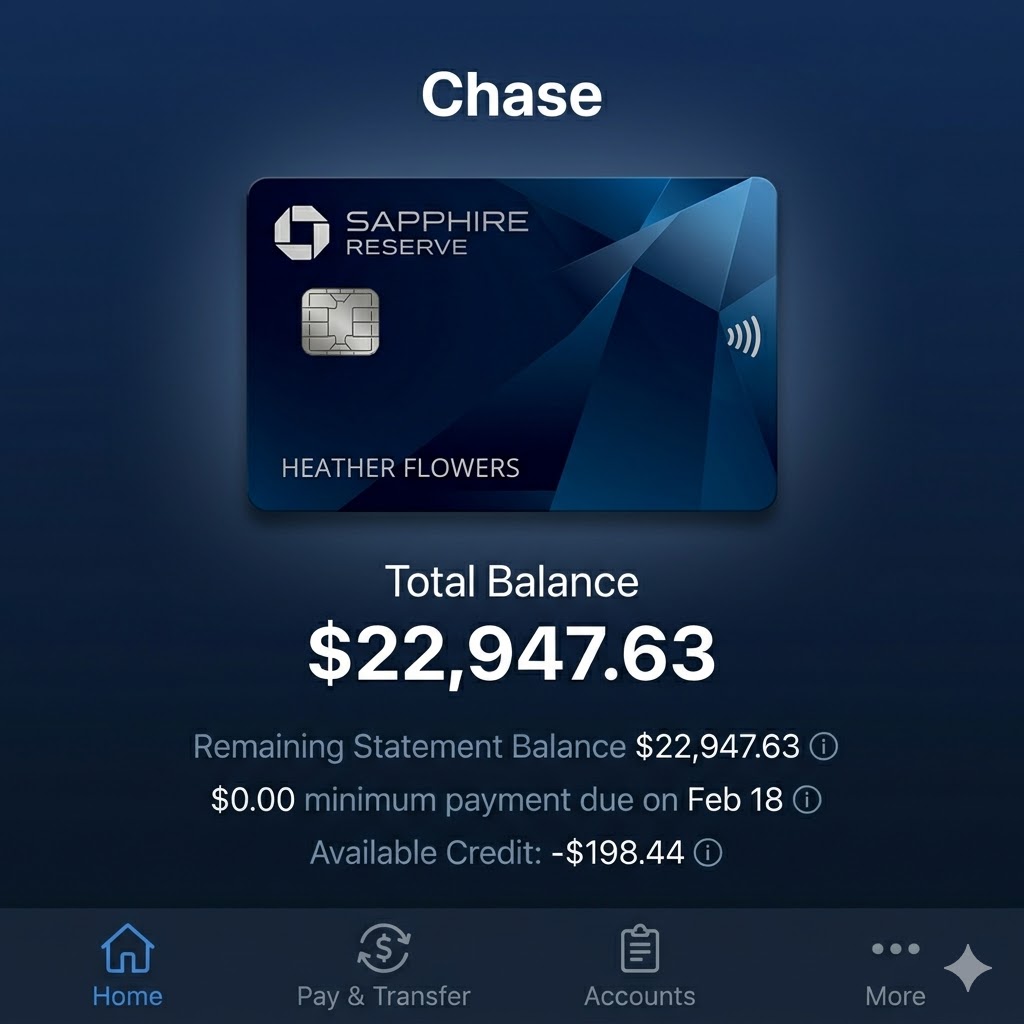
Ran for 6 days, from June 24 to June 30, 2026, the last day Crush saw it.
Run by Brandon Hayes on Facebook. Crush is not the advertiser and does not verify its claims. See this ad in Meta's Ad Library(opens in a new tab)
Want an ad like this for your product?
Crush makes new ad images for your product from this ad: your logo, your product photo, your offer.
Trials from $19.95 USD, then $79.95 USD a month. Cancel anytime.
About this ad
- Meta Ad Library ID
- 1081262417848050
- Platforms
- Facebook, Instagram, Messenger and Threads
- Relaunches
- 0
Ad text
Please STOP paying your credit card minimums. I know that sounds crazy. But every time you send another minimum payment to your credit card company, you're not paying down your debt. You're feeding it. Let me explain. ======== I used to be just like you. Sitting at the kitchen table with five statements spread out, doing the calculator dance. Deciding which card to pay this month so the others wouldn't hit me with late fees. Pulling up balance transfer offers in incognito mode, hoping a 0% intro would buy me time. Researching consolidation loans, dealing with the anxiety of taking out new debt to pay off old debt because that's what I was told you had to do. Month after month, my balance kept growing. Even though I was paying every card on time. Even though I was sometimes paying more than the minimum. The numbers got bigger. The minimums got bigger. It was a slow, creeping panic. I felt like I was failing. Was I doing something wrong? Was I just bad with money? ======== The breaking point came on a Tuesday night in March. I sat down to pay my Capital One bill. Statement balance: $11,400. Minimum payment due: $327. I sent the payment, then scrolled down to the interest charge for the month. $276. I had paid $327 to my credit card company. Only $51 of it had touched the principal. I did the math five times because I didn't believe it. At that rate, this one card alone — making the same minimum every month — would take me twenty-six years to pay off. I would be 67. For ONE card. I had four others. My stomach just dropped. A wave of guilt washed over me. In that moment, I felt helpless and desperate. That's when I discovered something that changed everything. ======== Sarah Reynolds, a debt elimination specialist with over 15 years of experience in consumer credit negotiation, explained something crucial: "If you have credit card debt and you're only making minimum payments — or even doubling them — you need to understand something critical. These approaches don't reduce your debt in any meaningful way. They keep you in the system. That's the whole point of how the payments are structured." I sat there staring at her. ======== "Here's what's really happening," she continued. "Credit cards are designed around minimum payment math. When you make your minimum payment, the bank takes the interest charge first. Then, if anything is left over, it goes to your principal. But at typical credit card APRs — 26%, 29%, 31% — the interest eats almost all of your payment." She pulled up a screen. "Look at this example. A $43,000 balance at 29% APR. Your monthly interest charge is about $1,039. Your minimum payment is about $1,160. That means $121 a month actually touches your principal. Less than 11% of what you pay is real debt reduction. The other 89%? It goes straight back to the bank. Every month. For decades." She paused, letting that sink in. "As for consolidation loans, balance transfers, credit counseling — those approaches address the payment, not the cause. You're still paying back 100% of the principal. Sometimes more, once you factor in new origination fees, transfer fees, and reset payment clocks. The math is still the bank's math." ======== My heart was racing. This explained everything. Why my balances had grown despite seven straight years of on-time payments. Why the consolidation loan I'd tried two years ago just moved the debt without reducing it. Why every "responsible" thing I'd done had failed. ======== "The solution," Sarah explained, "isn't paying more, or paying smarter, or paying faster. It's about breaking through the minimum payment structure so the principal actually drops. Not chips away. Drops." She showed me case after case of people who'd used this approach. People with $40,000 in credit card debt. $70,000. One case at $112,000. People who had been making minimums for years with no progress, who saw their debt actually drop — by tens of thousands of dollars in principal — through direct negotiation with their creditors. These weren't people who had paid more. These were people whose principal could finally come down because of one missing piece. ======== "What you described is exactly what I've been experiencing," I told her. "Seven years of payments. Five cards. My total balance is higher today than the day I started." ======== "Most people come to this realization after losing years to a payment structure they were told was responsible," Sarah said. "The good news? Once you stop feeding the minimum payment cycle and start using the leverage you have, the change can be remarkable." ======== That's when I learned about debt elimination. "Here's what most people don't understand," Sarah explained. "Every time you make a minimum payment, you're voluntarily giving the bank exactly what it wants. You're showing them you're a paying customer they can keep milking. They have zero incentive to ever negotiate with you." "But the moment you stop feeding them and start demonstrating financial hardship, the math flips. Suddenly the bank is looking at partial recovery as their best option. Suddenly they're willing to settle for a fraction of what you owe. That is not a trick. That is the actual leverage you have always had — sitting there, unused." ======== I was skeptical. After seven years of failure, how could this be different? But the math was compelling. The average client in a real debt elimination program gets their enrolled debt reduced by around 46%. Not paid off slowly. Reduced. The principal — settled for less than what's owed. The mechanism is simple. You stop sending the bank minimum payments. You put what you would have paid into a dedicated, FDIC- insured savings account that you control — not the bank. A negotiation team works your accounts down, one by one. When they bring you a settlement offer you approve, that debt is paid off for a fraction of the balance and the account closes. That is the loophole. That is the backdoor. And it has been sitting there in plain sight, blocked by the one thing the bank tells you to keep doing: pay the minimum. ======== I called for the free consultation that night. They walked me through the program. I set up the dedicated account. Stopped feeding the credit card companies. No new loan. No new card. No balance transfer with a reset clock. No "credit counseling" plan where I still paid back 100%. Just a complete change in approach. ======== Within the first stretch, something changed. The balance growth stopped. For the first time in seven years, my total debt was not increasing. Soon enough, the first settlement letter arrived. Capital One. Balance of $11,400. Settled for $4,900. A closed account. The principal cut by more than half. No minimum payment plan. For the first time in years, I felt hopeful instead of helpless. ======== My old financial advisor noticed at our next quarterly check-in. She pulled up my accounts and scrolled through the balances. "Wait a minute," she said. "These numbers have actually moved. What have you been doing?" When I told her I'd stopped making the minimums and was working through a debt elimination program, she nodded slowly. "That makes sense," she said. "Most consumer debt advice is built around managing payments, not outcomes. If you found a program that addresses the principal directly, that would explain these results." ======== A few months later, two more cards settled. Discover. $8,700 balance — settled for $3,800. A Chase card I'd carried for nine years. $9,400 balance — settled for $4,500. The total principal eliminated: more than $31,000. For the first time in seven years, my debt was actually going down. Not chipping. Not creeping. Dropping. ======== But the real test came when an unexpected expense hit. A car repair. $1,800. Six months earlier, that would have meant another card maxed out. Another balance growing. Another year added to the payoff curve. This time? The dedicated account covered it without missing a beat. No new card opened. No principal added to the pile. The debt elimination was holding. That's when I understood the difference between managing payments and addressing the cause. My debt was finally dropping — not because I was paying more. Because I had stopped paying into a system designed to keep me trapped. ======== I look at old statements and can't believe that was me. The version of me sitting at the kitchen table every Tuesday night with five statements and a calculator. The version of me checking balances obsessively, hoping the math would somehow change. The version of me who thought I'd just have to live with growing balances until I either retired in debt or filed bankruptcy. ======== If you're reading this and you recognize yourself in my story, please understand: You don't need to keep sending minimums to a system designed to keep you paying for the next 20 to 30 years. You don't need to accept growing balances as inevitable. You just need to stop feeding the minimum payment cycle and start using the leverage you've always had. A debt elimination program works with you — not with the bank. It addresses the principal directly. It uses the one piece of leverage the bank doesn't want you to know about. And because you're not piling on new debt or new payments, there is no added burden. Just real principal reduction, built right into a process the negotiation team handles for you. Stop paying minimums to a system built against you. Start using the leverage that actually works. Your debt is ready to drop. You just need the right approach to break through. Click below to see if you qualify for a free consultation and finally address what's really happening with your credit card debt. CLICK HERE 👉 https://shorturl.at/fBQZJ CLICK HERE 👉 https://shorturl.at/fBQZJ CLICK HERE 👉 https://shorturl.at/fBQZJ ======== P.S. Every minimum payment you make this month is another payment going almost entirely to interest. Almost none of it is touching your debt. Why keep feeding a payment cycle designed to keep you paying for the next 20+ years? The sooner you stop feeding it, the sooner the principal can actually start dropping.
Where the ad sends people
www.mysavingswallet.com
Only Do This If You're 100% Serious
See details: rd.t1.smartconsumersite.com(opens in a new tab)