Linda Baker
Linda Baker Facebook ad: “Put an End to Neuropathy Pain for Good?”
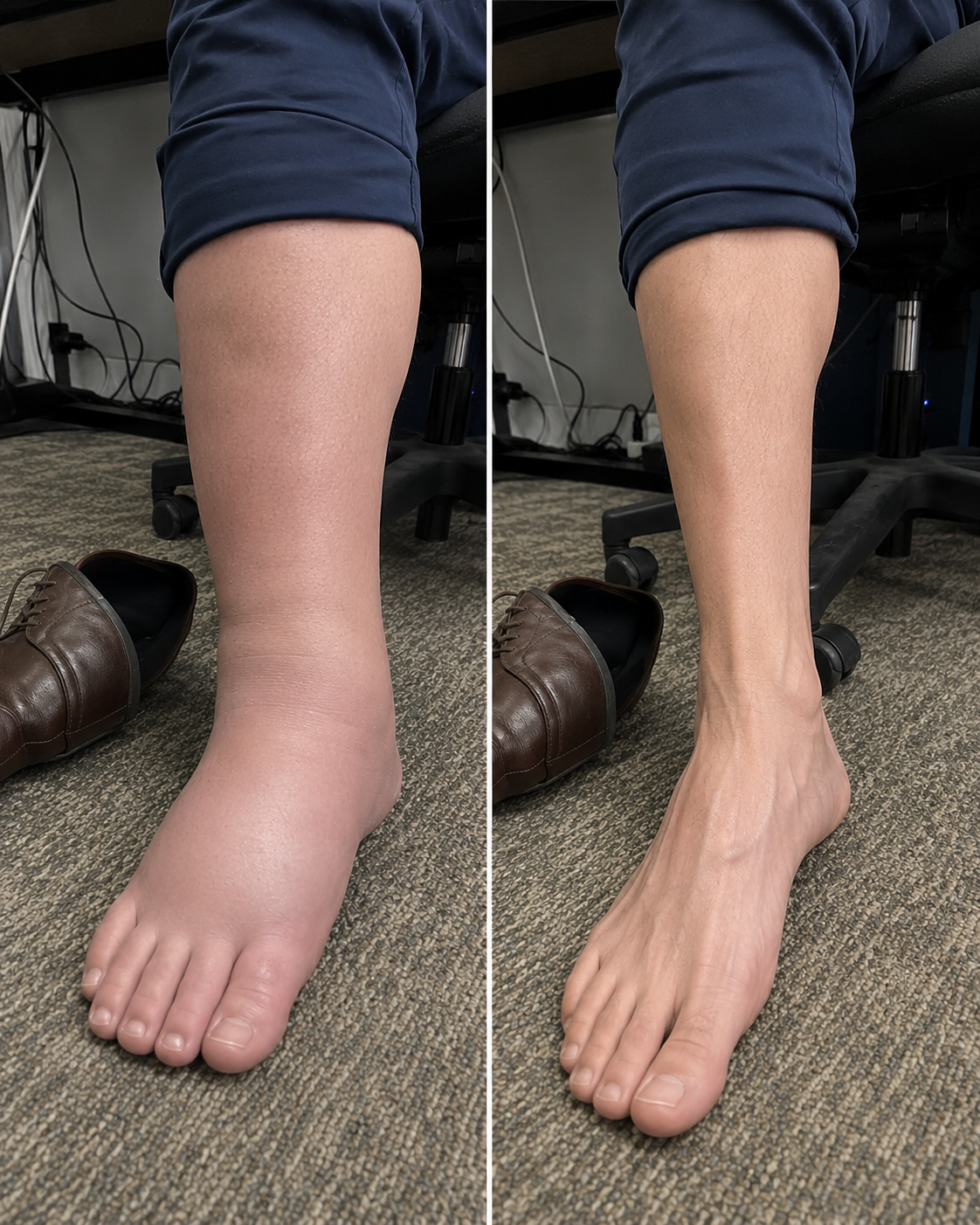
Ran for 6 days, from August 29 to September 4, 2026, the last day Crush saw it.
Run by Linda Baker on Facebook. Crush is not the advertiser and does not verify its claims. See this ad in Meta's Ad Library(opens in a new tab)
Want an ad like this for your product?
Crush makes new ad images for your product from this ad: your logo, your product photo, your offer.
Trials from $19.95 USD, then $79.95 USD a month. Cancel anytime.
About this ad
- Meta Ad Library ID
- 1081680084276617
- Platforms
- Facebook, Instagram, Audience Network, Messenger and Threads
- Relaunches
- 3
Ad text
If a doctor tells you the burning, tingling, or numbness in your feet is neuropathy and it’s time to start gabapentin, ask him one question before you fill the prescription. It’s the question that made me completely rethink the way I treated nerve pain. My name is Dr. Andy Salazar. 14 years in pain management, most of it treating people with chronic nerve pain. I managed the burning, stabbing, tingling pain that walked in the door, and when it finally became unbearable, I prescribed gabapentin. More than four hundred of my patients filled that prescription. I believed in this medication completely, because I watched it work. People finally slept through pain they had carried for years. Back to walking. Back to driving. Back to playing with the grandchildren. So when my wife Sandra started complaining that her feet were burning at night, I was calm. I knew the map. I was wrong about every part of it. Her neuropathy was bad for three years. I managed it the way I managed everyone’s. Anti-inflammatories when her feet ached. Cooling creams when the burning spiked. Gabapentin when the electric shocks started waking her up at night. I told her what I tell my patients. Your nerves are damaged. We’ll manage the symptoms. The morning I knew things had gotten bad was a Tuesday. She got out of bed, put her feet on the floor, and grabbed the dresser with both hands. She stood there for several seconds before taking a step because the bottoms of her feet felt like they were burning on hot pavement, but her toes were so numb she could barely feel the floor underneath them. She didn’t say anything. Neither did I. The next morning I wrote her a prescription for gabapentin. Fourteen years I had prescribed that drug to my worst neuropathy patients. Now I prescribed it to my wife. The treatment was textbook. We started low. Adjusted the dose. Waited for the nerve pain to settle down. Week six she was still burning by bedtime. Week ten the pill bottle was permanently sitting on her nightstand. Week sixteen she told me, very quietly, that her feet felt different but not better. That the pain had changed. I told her some people need higher doses. I said it in my doctor voice. To my own wife. At our own kitchen table. She needed her husband that night. I gave her a consult. Month seven, Monday morning, staff meeting. Eleven of us around the long table, another physician two seats down, the outcomes report on the screen. Good numbers. Everyone nodded. Then the pause where anyone can raise a hand. I had the question right there in my mouth. Then why are my wife’s feet getting worse? I looked at the table. I let the pause close. Someone moved on to scheduling. I had spent years at that table. I could have stopped the whole room with one sentence. I sat there and protected the treatment model instead, because saying it out loud would make it real, and because the medication had done exactly what it was designed to do, and the man who had misunderstood the problem was me. I didn’t tell Sandra about that meeting either. Around month eight she stopped asking me about her feet. Not because they stopped hurting. Because she had figured out I had nothing left to give her. I kept looking anyway. Not as a doctor. As a husband out of answers. I adjusted her medication myself and got three better weeks. A different specialist, two hopeful months. A colleague at a research hospital read her nerve studies and had ideas. We tried them. And at midnight, when the doctor in me ran out of ideas, the husband took over. I ordered rubs and creams off the internet. Menthol things that froze her feet for twenty minutes and did nothing that lasted. I bought the alpha-lipoic acid sitting in every supplement store and watched her take it for two months. Nothing moved. Month ten, she was in the chair by the window with her bare feet resting on an ice pack. I asked how bad it was tonight. She looked at me a long time before she answered. “I think this is just what it is now.” She wasn’t angry. She wasn’t asking me to fix it. She had stopped expecting me to. That night I lay in bed counting the times I had told a patient in an exam room, damaged nerves can take time. I never wondered where those patients ended up. Now one of them was asleep next to me. Three weeks later, at a retirement dinner, I told a neurovascular researcher named Mark about Sandra. He asked me one question. “Before you tried to shut down the pain signal, did anyone look at what was happening inside the nerve cells themselves?” I gave him the answer I had repeated for years. We had the nerve tests. The diagnosis was clear. He shook his head. He said the nerve test tells you the signal is failing. It doesn’t tell you why the nerve lost its ability to function properly in the first place. And whatever caused that nerve environment to deteriorate doesn’t disappear just because you turn down the pain signal. I started to give him the line I’d given hundreds of patients. Once the nerves are damaged, they’re damaged. It stopped in my throat. Years of repeating that line, and I had never once seriously checked whether it told the whole story. I went home and read for three nights straight. Not the journals I knew. The cellular biology that rarely makes it into a neuropathy appointment. Nerves are living tissue. They’re living cells surrounded by support cells, tiny blood vessels, protective coatings, and mitochondria that constantly need energy to function. Those cells run on a spark called NAD+. When you’re young there’s plenty of it, and the mitochondria have the cellular energy they need to maintain healthy nerve function and support repair. After fifty the spark fades. And tired cells don’t always quietly retire. Some turn into what researchers call zombie cells. Not functioning normally. Not cleared away. They sit in aging tissue pumping out inflammatory signals that poison the environment around healthy nerves, interfere with normal repair, increase oxidative stress, and make it harder for mitochondria to keep up. Burning neuropathy isn’t simply a wire that wore out. It can be a repair system starving for energy while the environment around the nerve becomes increasingly hostile. Then I went back through everything I had given my wife. The gabapentin I prescribed quieted the burning for a few hours. But the nerve underneath was still struggling. The pain medications muffled the signal while the numbness kept creeping farther into her toes. And gabapentin, the drug I spent my career prescribing to neuropathy patients, doesn’t rebuild a nerve. It changes nerve signaling. The tired mitochondria stay. The low cellular energy stays. The inflammatory environment stays. The entire environment that allowed her nerves to deteriorate was still inside those feet every night when she swallowed the pill. That’s why the burning could get quieter while the numbness kept getting worse. We turned down the alarm and left the fire. Sandra was asleep down the hall. I sat in the kitchen with her nerve studies open until the sky got light. I had silenced the smoke detector and left the house burning. I called Mark in the morning. He said the cleanest approach he’d ever seen wasn’t another pill, and it wasn’t a higher dose of gabapentin. It came down to one overlooked mineral paired with a form of vitamin B3, and a triple-action method built around them, one that could be applied directly where the nerves were screaming instead of getting lost in the gut like another pill. Here’s what he meant by triple-action, and why it finally made sense. For years I’d been asking the wrong question. Never once had I asked how to calm the hostile environment around aging nerves and feed the repair system starving inside them. I’d only ever asked how to turn down the pain after the nerves started screaming. This combination goes after all three at once. It helps address the inflammatory environment surrounding dysfunctional aging cells. It helps calm the overactive nerve signaling that creates the burning, buzzing, stabbing sensations. And it helps feed the cells the raw material involved in making NAD+ again, so tired mitochondria have the energy they need to function. Clear. Calm. Feed. Miss one, and nothing holds. That’s the part gabapentin was never designed to touch. I got Sandra started on it that night. No lecture. I just told her I was sorry it took me this long to look. Day four she said the burning was settling down before she finished her coffee. She said it like a question. Week two she walked to the end of the block and back without stopping to rub her feet. First time in months. Week three she slept through the night without one electric shock ripping through her toes. I woke up before she did and kept my mouth shut. I didn’t trust my voice. And last Tuesday she dropped a spoon at the kitchen sink. She stepped backward, bent down, picked it up, and kept talking. No hand on the counter. No staring at the floor first to make sure she knew where her feet were. She didn’t even notice. I did. The nerves are still in her feet. They always will be. But for the first time, we weren’t just trying to make her brain ignore them. We were finally feeding the environment around them. When I tell people this, they can hardly believe the difference came from one mineral paired with a simple vitamin compound. They expect me to say she found some new procedure, some expensive infusion, some specialist only she could get in to see. It was none of that. Let me be straight with you, because I still believe in medication. Some neuropathy is severe. Diabetes. Chemotherapy. Vitamin deficiencies. Autoimmune disease. Nerve compression. Those underlying causes need proper medical care, and I still send patients for it. But most people with burning feet still have living nerve tissue that nobody is feeding, because there’s no prescription code for feeding mitochondria, and nobody in my world gets paid to reach for a mineral instead of another medication. My wife lived inside that gap for a year. So if your feet are burning, tingling, buzzing, stabbing, or slowly going numb and there’s a bottle of gabapentin sitting on your nightstand, I’m not telling you to stop taking it. I’m telling you to find out what this overlooked mineral is before you accept that turning down the pain signal is the only thing you can do. That’s why I sat down and wrote a short article that lays out exactly how the triple-action method works, and names the mineral and vitamin compound behind it. Read it before your next appointment. Nobody handed my wife this information before I wrote that prescription. You don’t have that problem yet. Tap below to read the short article. ~ Dr. Andy Salazar, a pain doctor who couldn’t fix his own wife’s burning feet P.S. Don’t stop anything your doctor has you on, and don’t suddenly stop gabapentin on your own. Bring the article to your next appointment and ask them what they’re doing to support the nerve itself, not just the signal coming from it. You’re not fighting your doctor. You’re asking about the one thing the prescription pad was never built to do. P.P.S. The article is free, and it’s short. In it, I explain what the overlooked mineral is, why aging nerves can lose the cellular energy they depend on after fifty, what NAD+ and tired mitochondria have to do with burning feet, and what the research says about supporting that environment. Read it while it’s still up.
Where the ad sends people
health.morningvitality.com
Put an End to Neuropathy Pain for Good?
After watching my patient Margaret write "I CAN'T TAKE ANOTHER NIGHT OF THIS BURNING" in all caps on her follow-up survey...
See details: health.morningvitality.com(opens in a new tab)