
Inactive· since Aug 16, 2026
- 11
- days it ran
- 1
- relaunches
Ad copy
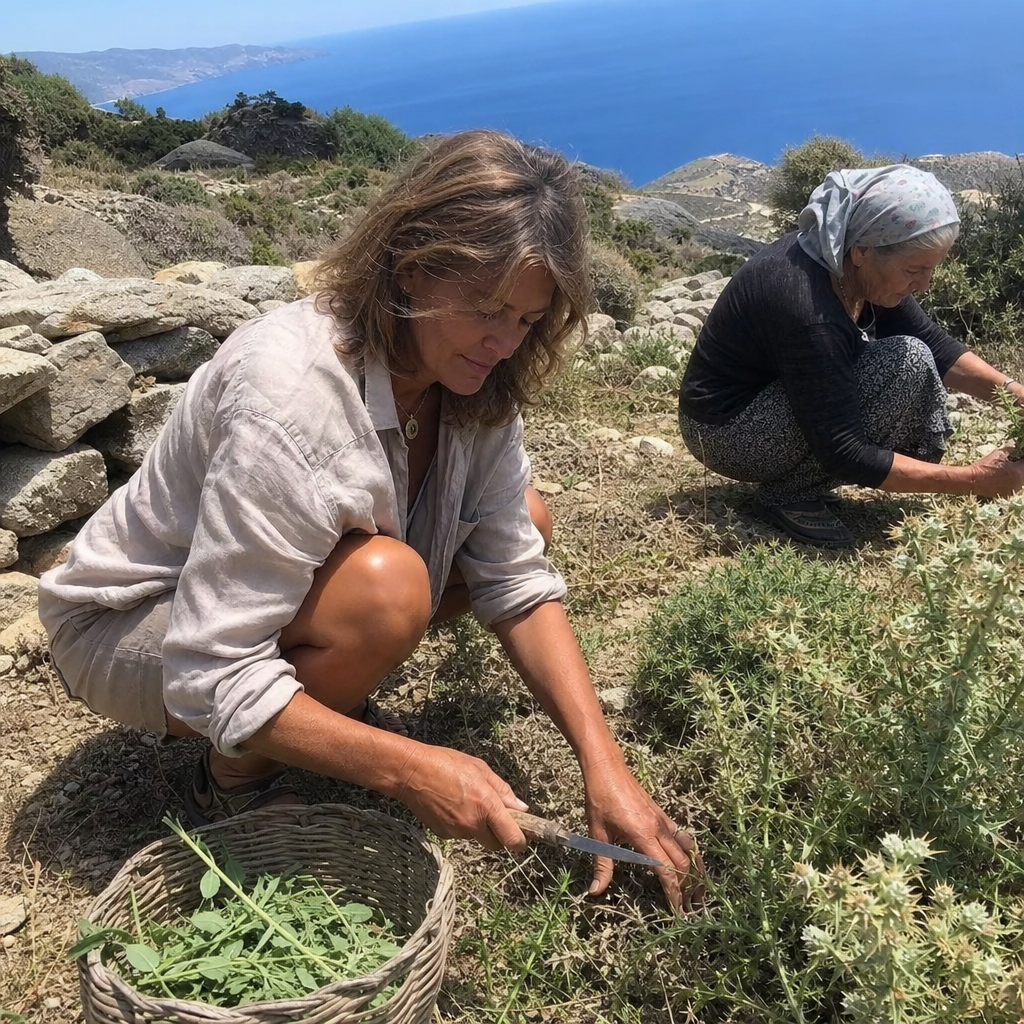
I've spent 9 years studying Blue Zones. These are the five places on earth where people routinely live past 100 — not in nursing homes, but actually healthy, mobile, and still working in their own gardens well into their 90s and beyond. Sardinia, Italy. Okinawa, Japan. Ikaria, Greece. Nicoya, Costa Rica. Loma Linda, California. I've visited all five. Multiple trips. Exposed myself to things in these communities that researchers before me glossed over because they didn't fit the narrative. And I found something that every single Blue Zone has in common. Something that has nothing to do with diet, exercise, community, or any of the things you've been told. Nobody in the wellness world talks about it. And when I tell you what it is, you're going to understand why. — Let me start with what made no sense. The Blue Zone narrative you've heard goes like this: these people live long because of what they eat. Mediterranean diet. Plant-based. Whole grains. Good fats. Maybe some red wine. I believed that too. For the first three years of my research, I was building the same case every other longevity researcher builds. Diet. Movement. Purpose. Community. Then I actually spent time in all five zones. Not a week in each. Months. Living with families. Eating with them. Watching how they actually live day to day. And the diet theory fell apart. In Sardinia, they eat cheese and bread at every meal. Full fat. Pecorino with everything. Red wine every night. The shepherds eat almost no vegetables. Their diet would make any American nutritionist panic. In Okinawa, they eat raw fish. Sometimes twice a day. Pork. Seaweed. Almost no dairy. Almost no bread. Nothing like the Sardinian diet. In Ikaria, Greece, it's wild greens, honey, potatoes, goat's milk. Heavy on legumes. Different again. In Nicoya, Costa Rica, it's beans, corn tortillas, squash, tropical fruit. A completely different nutritional profile from any of the others. In Loma Linda, it's a Seventh-Day Adventist community. Largely vegetarian. No alcohol. No pork. The exact opposite of Sardinia. Five Blue Zones. Five completely different diets. Some eat meat. Some don't. Some drink. Some don't. Some eat dairy. Some eat raw fish. Some eat almost no protein. If diet were the driver, at least two of these should agree on what to eat. They don't. Not even close. So I started asking a different question. If it's not what they eat — because they eat nothing alike — what are they all doing that IS the same? That question changed everything. — The answer didn't come from a study. It came from a 97-year-old woman named Maria in a mountain village in Sardinia. I was staying with her through a homestay program. She still herds goats every morning before sunrise. Still makes cheese with her bare hands. Still kneels in her garden and gets back up without touching anything. Still walks mountain paths that would leave most 40-year-olds gasping. Hasn't seen a doctor in over 20 years. Not because she can't. Because she hasn't needed to. I noticed her hands the first day. Ninety-seven years old and not one swollen knuckle. No brace. No wrap. Nothing. I'm 57. I had stiffened up so badly on the drive from the coast that I took the porch steps one at a time. On day three I asked her the question I ask everyone: what's your secret? She looked at me like I'd asked something very obvious. "It's not what I eat. Everyone asks about the food. The food is nothing." She sat down across from me. "The secret is the spoonful I take every night. And where I keep it." She explained that every night before bed she goes down to the cold room under the house, brings up a small dark jar, and takes one spoonful of a deep purple concentrate. Almost black. Thick, not liquid. Pressed cold from the dark berries that grow on her land and never once put near heat. "My mother taught me this. She did the same thing every night of her life. She lived to 103. Her mother did the same. Every woman in this family. Every woman in this village still kneeling in a garden at ninety." Then she said the part I couldn't get out of my head. "You call it inflammation. That word means nothing. It sounds like a bruise. Like something that heals on its own." She reached over and tapped the back of my hand. "It is not a bruise. It is a fire. It is slow, it does not go out by itself, and it has been burning in you since your forties. A bruise heals. A fire spreads." "It does not stay in the knee. It goes everywhere the blood goes." "Americans take a pill every morning for the same fire we take ours for. Theirs turns off the bell. It never touches the burning. That is not medicine. That is a blindfold." I wrote it down. I thought it was interesting. A cultural practice. Maybe superstition. Maybe something worth a paragraph in my book. I didn't realize yet that I'd just heard the answer I'd been looking for across all five zones. — Six weeks later, I was in Okinawa. Different country. Different culture. Different language. Different food. No contact with Sardinia. No shared history. No overlapping traditions. I was staying with a woman named Fumiko. 98 years old. Lives alone. Works her garden on her knees every morning. Eats raw fish every single day. Clear-eyed, steady on her feet, and more mobile than most people half her age. I asked her the same question. She said almost the exact same thing Maria said. Almost word for word. "You must take it for the swelling underneath. Not for the ache on top. The ache is only the smoke. Your pill chases the smoke. The fire keeps eating. The joint keeps dying. And then the heart." She walked to a cabinet and pulled out a dark glass jar and a wooden spoon. Deep purple concentrate, pressed from the purple sweet potatoes she grows behind the house. Kept in the cold. Never cooked. A spoonful every night before sleep. Her grandmother taught her. Her grandmother's grandmother taught her. Every woman in the village who is still gardening past 90 does the same thing. I sat there staring at my notes from Sardinia. Maria's words next to Fumiko's. Two women on opposite sides of the planet who have never heard of each other. Same practice. Same explanation. Same results. My hands were shaking. — In Ikaria, a 94-year-old man named Dimitri showed me the same setup. Dark glass jar. Wooden spoon. Sour cherries, pressed cold and kept in a cellar cut into the hillside. "Every night since I was a boy. My father did it. His father did it. The sweet on the table is for guests. The jar downstairs is for me." In Nicoya, an 89-year-old woman named Luz kept hers in a glass jar in the shade behind the kitchen. Different plant — hibiscus, deep red, steeped cold and reduced down. But the method was identical. A spoonful. Every night. "Mi abuela me enseñó." My grandmother taught me. In Loma Linda, no jar and no cellar. But every single one of them eats a bowl of dark berries every day of their lives. Whole. Raw. Never cooked, never strained, never juiced. Every single Blue Zone. Every single one. Different foods. Different climates. Different religions. Different genetics. Different languages. Zero contact with each other across human history. Same practice. Same form — never a pill, never a drink, always something dark and concentrated, pressed cold and kept out of the heat. Same timing — every night, before sleep. Same explanation — it is for the swelling underneath, not the ache on top. In nine years of research, across all five zones, this is the only practice I found in every single one. Not diet. Not exercise. Not prayer. Not community structure. Not olive oil. Not red wine. Not fermented food. A spoonful of cold-pressed dark fruit extract, taken every night. The one thing nobody in the wellness world has ever mentioned. — I need to explain why that matters. Because when I brought this finding back and started digging into the science, I realized these elderly villagers understood something that modern medicine has been ignoring — or missing entirely. Here's what's actually happening. Your joints are under assault constantly. Every step, every stair, every year of wear. Your body's response to that wear is inflammation — and in your forties it stops switching off. It becomes low-grade, constant, and permanent. This isn't rare. It's routine. It's happening to everyone. That inflammation releases enzymes into the joint. Those enzymes break down cartilage — the cushion that keeps bone from grinding on bone — faster than your body can rebuild it. Layer by layer. Year after year. And here's the part that makes it almost impossible to detect. The pain you feel and the damage underneath it are two completely different things. The pain is the alarm. The enzymes are the fire. Your anti-inflammatory works on the alarm. It has never once touched the fire. So the ache quiets down and you think you're better. You're not. The cartilage is still disappearing. Every day. Whether you feel it or not. Your X-ray can't see it either. An X-ray measures the cartilage you have already lost. It cannot measure the inflammation that is eating it. Those are two different things, and only one of them shows up on the film. And the standard blood panel your doctor orders doesn't measure it at all. Nobody orders the inflammation marker. You could have inflammation working on you for a decade and every test you've ever taken would come back normal. That's why millions of women with arthritis are stiff every morning, aching by evening, watching their blood pressure creep up year after year, and being told "your X-rays look stable." They're not stable. There is a fire nobody is measuring. And here's what nobody tells women with arthritis. That inflammation does not stay in the joint. It travels in the blood. The same process softening your cartilage is stiffening the walls of your arteries. That's where the creeping blood pressure comes from. That's where the higher resting pulse comes from. Your heart attack risk climbs quietly, for years, while your doctor treats each number separately and never once asks what's lighting all of them. Then there's the drug itself. Women who take a daily anti-inflammatory for their joints are up to 50% more likely to have a heart attack than a woman the same age who doesn't. The pill that was supposed to be the safe option is adding its own strain to the exact organ the inflammation is already working on. "Americans take a pill every morning for the same fire we take ours for. Theirs turns off the bell." Maria was right. Fumiko was right. Dimitri was right. Luz was right. They were all right. — Now here's what clicked when I looked at the science. I had all five analyzed. Sardinian myrtle. Okinawan purple sweet potato. Ikarian sour cherry. Nicoyan hibiscus. The dark berries in Loma Linda. Five plants that share no continent, no climate, no growing season, and no family tree. One molecule in all five. Anthocyanins. The pigment behind the deep, dark color in all five of them — and the only thing on earth that every long-lived population on the planet consumes every single day of their lives. And when I ranked them by concentration, the densest source wasn't the myrtle or the potato or the hibiscus. It was the tart cherry. The same fruit Dimitri had been spooning out of a hillside cellar since he was a boy, and the only one of the five that grows well enough outside its own valley to ever reach you. Anthocyanins are one of the only natural compounds shown to work on the inflammatory process itself rather than the pain signal on top of it. Not mask the damage. Slow what's causing it. But you can't get there with the pill in your cabinet. I looked at the pharmacology. An anti-inflammatory painkiller blocks the chemical messengers that carry the pain signal. That's the entire mechanism. The enzymes chewing through your cartilage aren't in that pathway and were never affected by it. By the time the ache is gone, nothing about the damage has changed at all. That's why the pill fails the same way for everybody. It works, then it needs to be stronger, then it needs a cortisone shot alongside it, then it needs a stronger one again. The alarm keeps getting louder because the fire keeps getting bigger. Every year the dose goes up and the joint gets worse. Every daily anti-inflammatory shares the same four fatal limitations. It's aimed at the pain and not the damage, so the most it can ever do is silence the alarm. The enzymes keep eating your cartilage the entire time it's working. It only ever reaches the joint, while the same inflammation is in your arterial walls doing nothing but getting worse. And taken every morning for years, it adds its own strain to the very heart that inflammation is already working on. The Blue Zone elders solved all four. Independently. On five different continents. Anthocyanins work on the inflammation itself, not the pain signal sitting on top of it. The enzyme activity slows. The cartilage finally gets a chance to hold its ground instead of losing it every single day. They travel everywhere the blood travels. Joint and artery alike. One thing for both, instead of one pill for your knee and a second pill for your blood pressure and a third one for your pulse. Taking it at night puts it in your system during the hours your joints actually do their repair. While you sleep. Before the next day's wear starts. The hours the body is most receptive to rebuilding what it lost. And because it's cold-pressed — not boiled like every juice on the shelf — the molecular structure stays intact. Anthocyanins are destroyed by heat. That's not an opinion, it's chemistry. Every bottle of cherry juice in an American grocery store is pasteurized at high heat so it can survive a truck and six months on a shelf. The heat kills the color, and the color is the compound. We are the only civilization on earth that cooks its medicine before it swallows it, and we did it for the shelf life. The extract works on the inflammation, not the alarm. The blood carries it to the joint and the artery alike. The cold press preserves what heat would destroy. Five Blue Zones. Five different diets. One shared practice that addresses every single reason the pill in your cabinet has never worked. That's not coincidence. That's convergent discovery. In science, when independent populations arrive at the same solution without contact, we take that very seriously. It means the solution is driven by the biology itself. The human body needed this. And every culture that listened to the body figured it out. The one culture that stopped listening? Modern America. — Now think about what that means. The entire arthritis industry is arguing about pain management. Stronger anti-inflammatory or weaker. Cortisone now or wait six months. Brace or no brace. Replace the knee this year or in two years. Adjust and hope something changes. I've been to all five Blue Zones. The women who live the longest on earth — many with joints that would look alarming on an X-ray — can't agree on what to eat. They eat completely different things. Some eat cheese daily. Some eat raw fish. Some are vegetarian. Some drink wine. Some don't touch alcohol. They agree on one thing. And it has nothing to do with what their doctors prescribe. Meanwhile American women with arthritis spend thousands a year on prescriptions, injections, braces, and physical therapy. See their doctor every few months. Get their X-rays read. Adjust the dose. Try every supplement on the shelf. Do everything they're told. And they're still stiff every morning. Still aching by evening. Still planning their day around stairs. Still watching their blood pressure creep. Being told "your X-rays look stable" while their heart attack risk climbs silently every single day. The Sardinians eat full-fat cheese and drink wine every night. The Okinawans eat raw fish twice a day. The Ikarians drink mountain tea and eat honey. The Nicoyans eat beans and corn. And they all kneel in gardens at ninety. Not because of what they eat. Because of what they take every night. The contrast is so extreme it made me question nine years of longevity research. Everything I'd been taught about why these populations are different was either incomplete or wrong. The diet mattered less than this one practice that nobody was studying. — I started the practice myself when I came home from my last research trip. Cold-pressed tart cherry extract. Every night before bed. Day 5, the mornings changed. I'd spent years treating the first fifteen minutes after my feet hit the floor as something to be endured. That week I got up and walked to the kitchen without thinking about it. I actually stopped in the hallway and went back to my bedroom to try it again, because I was sure I'd imagined it. Week 2, the swelling started going down. Not temporarily. Steadily. Day by day. My rings fit. The puffiness around my knees that I'd been calling "just how they look now" wasn't just how they looked. Week 3, I walked up to my office on the third floor and realized at the top that I hadn't stopped at the landing and my heart wasn't pounding. This is the week that matters most — because every grocery-store cherry product plateaus at week three. Two decent weeks, then nothing. Nothing plateaued. The improvement kept building. Week 4, a colleague asked what I'd changed. I hadn't changed my diet. Hadn't started a new workout. I was just doing what Maria does. What Fumiko does. What Dimitri and Luz and every centenarian I've ever interviewed does. Week 6, full transformation. Morning pain that had been a 7 out of 10 for nine years sitting at a 2. I spent three hours on my knees in the garden and waited all evening for the deep ache to arrive. It never did. At my physical that spring my blood pressure was 120 over 78. It had been 146 over 92 the year before, the number my doctor had been "watching" for six years. Resting pulse 67, down from 84. She asked me what I'd changed. I'm 57 years old and my knees feel better than they did at 45. Not because I found some new supplement or protocol. Because I finally did the one thing that every long-lived population on earth does and that nobody in the wellness world told me about. — Now — before you try doing this with a bag of frozen cherries and a blender, let me save you the disappointment. I tried. Bought sour cherries by the case. Pressed them cold in an unheated kitchen because I knew heat would ruin them. The concentrate oxidized within days — went brown, went flat. The potency was impossible to verify. Half of it degraded before I could use it. And it takes an absurd amount of fruit to make a single spoonful. I was guessing at dosages and hoping something was getting through. Maria's came from a press her family has used for four generations, from trees on their own land. Dimitri's cellar holds a temperature his grandfather chose. Fumiko's was made by a woman in her village from potatoes harvested that morning. Generations of knowledge behind every batch. Nobody in America has access to anything like that. The brand I use now, and the one I recommend to anyone who asks, is a small company called GoodGrove. Cold-pressed tart cherry extract. Never heated. 3,600 mg equivalent per serving — a real dose, not a splash. Third-party tested. Made in the USA with global ingredients. Vegan and gluten-free. Two capsules a night. And I want to be clear about something, because it's the first thing everybody says. It looks like a pill. It is not a pill. A pill is a compound built in a lab and pressed into a tablet. What's in this capsule is an extract — the fruit itself, pressed cold and concentrated down until all that's left is the part that matters. The same thing that's in Maria's jar. The capsule is just the jar. You don't have a cold room under your house, and you are not going to eat a spoonful of raw sour cherry concentrate every night for the rest of your life. I tried. It's brutal. That difference is printed on the front of the bottle, and it's the only label test that matters. Extract. Not "blend." Not "complex." Not "powder." Not "juice from concentrate." If the label doesn't say extract, it's the boiled version, and you're paying for the water it was sitting in. It's the modern version of what every Blue Zone has been doing for generations. What Sardinian women pressed from their own land for centuries. What Okinawan grandmothers passed to their daughters. What every ancient culture did before modern medicine told them to take something for the pain instead. Simple. Two capsules every night. No prescriptions. No cortisone. No stronger dose every year. And I'm not telling you to throw your pills in the trash. A bad day is a bad day, and that's between you and your doctor. Just understand what they are. They quiet the alarm. They were never going to touch the fire. 90-day money-back guarantee. If nothing changes, every penny back. — I've spent nine years asking why these people live so long. I've sat in their kitchens. Eaten their food. Walked their mountains. Listened to their stories. The answer was never on the plate. It was in the cold room. The dark jar. The wooden spoon. The nightly ritual that every single one of them does and that nobody in the longevity field thought to write about. Five Blue Zones. Five different diets. Five different cultures with no connection to each other. One shared practice. If your first fifteen minutes out of bed are the worst part of your day. If the ache always comes back a little worse than last time. If you've started planning your day around stairs. If your X-rays "look stable" while you feel a year older every year. If your blood pressure is something your doctor says he's "watching." If your heart pounds walking up to your bedroom at night and you've been blaming it on being out of shape. Those aren't separate problems. Those are warnings. The inflammation in your joints is in your arteries. It has been for years. Your cartilage is thinning and your arteries are stiffening from the exact same fire, and every day it burns is a day your heart pays for. Your doctor won't catch it. The X-ray only measures what you've already lost. The standard panel doesn't measure it at all. And the pill won't fix it — it was never aimed at it. I've been to the five healthiest places on earth. Not one of them treats the pain and calls it treatment. Not one of them waits for a test to tell them what their body already knows. They all do the same thing. Every night. A spoonful of dark, cold-pressed extract. Before sleep. Every night you skip this is another day your joints fall further behind. Another day the enzymes win and your cartilage doesn't. Another day your heart pays the price. You can start tonight. But GoodGrove is a small company and they sell out constantly. If you click and they're out of stock, sign up for the restock notification. It's worth the wait. Stop treating the alarm while the fire takes your knees and your heart. Almost forgot the link. Here it is: https://trygoodgrove.com/cherry
Feel Like Yourself Again
Clean, science-backed supplements crafted without anything artificial. Vegan, non-GMO, and third-party tested, with a 90-day money-back guarantee so you can shop with confidence.
LEARN MORELike this ad? Make it yours.
Crush rebuilds this exact creative around your product — your brand, your colors, your offer — in about a minute.