Shellblaster
Shellblaster Facebook ad: “The Gift He Keeps Picking Up”
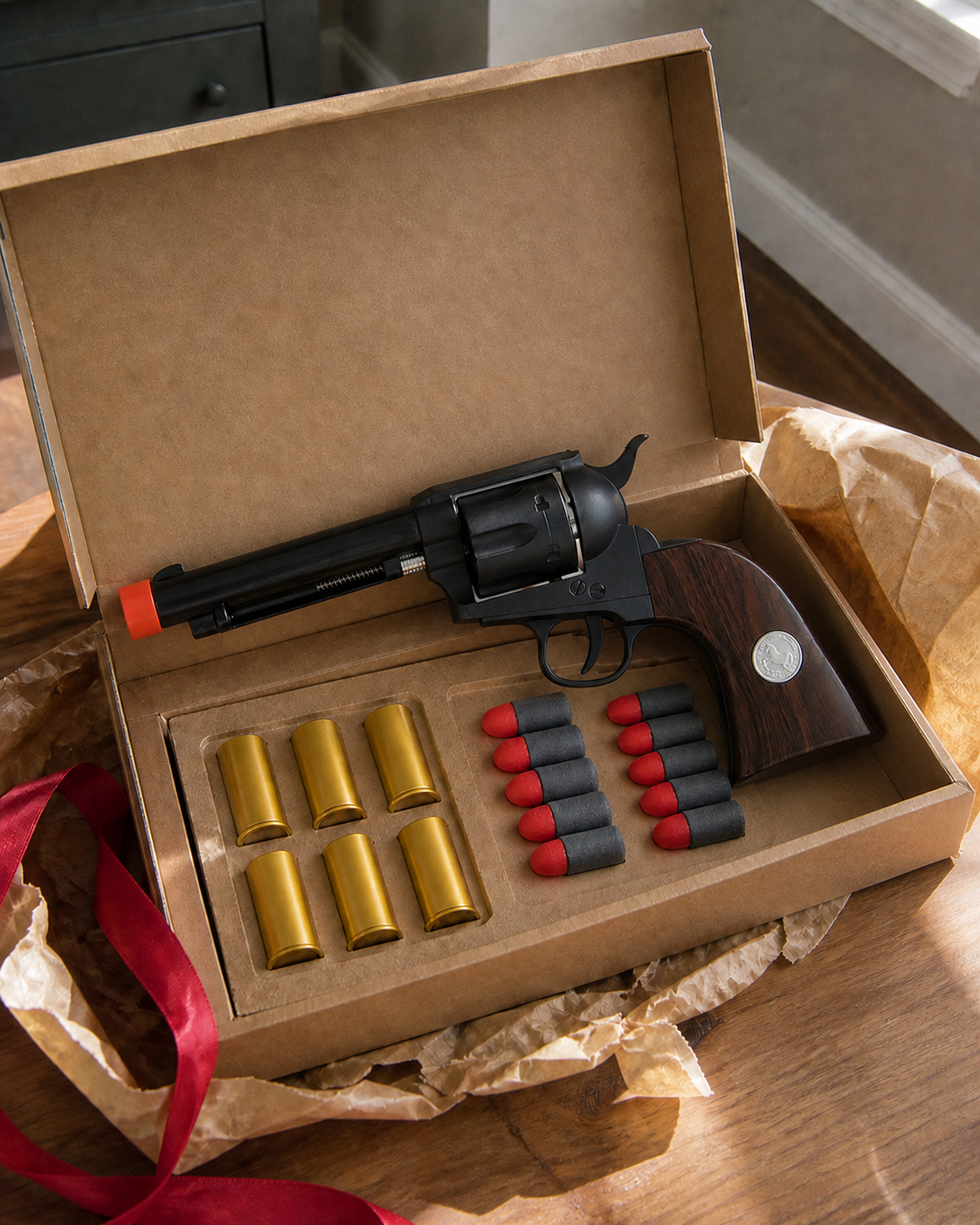
Running for 34 days since September 2, 2026. Crush last saw it on October 6, 2026.
Run by Shellblaster on Facebook. Crush is not the advertiser and does not verify its claims. See this ad in Meta's Ad Library(opens in a new tab)
Want an ad like this for your product?
Crush makes new ad images for your product from this ad: your logo, your product photo, your offer.
Trials from $19.95 USD, then $79.95 USD a month. Cancel anytime.
About this ad
- Meta Ad Library ID
- 1084170060928755
- Platforms
- Facebook and Instagram
- Relaunches
- 0
Ad text
The gift that lands best with a man who buys everything useful is usually the one he never knew to search for. You know the type of man I mean. He is not impossible to please. He is impossible to surprise. If he needs a new tool, he orders it. If his headphones break, replacements arrive tomorrow. If he wants a game, a jacket, a watch, or something for his desk, he has already compared every version and bought the one he likes. Then his birthday, Christmas, your anniversary, or one ordinary “just because” moment comes around—and you end up staring at the same list of gifts for men. A wallet. A mug. Socks. Another little box of grooming products. A gift card that quietly admits, “You choose.” Those gifts are useful. That is also the problem. Useful is the category he already handles himself. The better question is not, “What does he need?” It is, “What would he never think to search for, but immediately want to pick up?” That question changes the whole hunt. Instead of looking for a replacement item, you start looking for a reaction. Something with enough character that he understands it before you finish explaining. Something that becomes an object on his desk or shelf instead of another thing inside a drawer. And, most important, something he can do more than look at once. That is the pattern that kept appearing when I read comments and reviews around old-west mechanical toys and collector-style desk pieces. People were not talking mainly about speed or range. They kept talking about the ritual. Load it. Thumb the hammer. Spin the cylinder. Feel the click. Do it again. One person called the action “oddly satisfying.” Another said the whole appeal was getting something that felt close to the old-west experience. A grandfather wrote that it took him back to his own childhood while giving him something to share with his grandson. That is not the language people use for a gift that gets thanked for and forgotten. It is the language of a gift that earns a place in someone’s routine. Think about the little objects people keep beside a keyboard: a pen that clicks properly, a heavy coin, a mechanical switch, a pocket knife they open and close, a controller they pick up while thinking. The object does not need to solve a serious problem. It needs to give the hands and brain a tiny satisfying loop. That is why a slow reload can be more appealing than a fast one. With a normal blaster, reloading is friction between the fun parts. With this kind of revolver, reloading is the fun part. Each short dart slides into a reusable golden shell. The shells go into the six-shot cylinder by hand. The hammer moves with a deliberate click. The cylinder turns. When the six shots are gone, the shells come back out by hand and the ritual begins again. The steps are the point. That detail matters because it tells you who the gift is for. It is not for someone who only wants the fastest possible toy. It is for the man who appreciates how something feels to operate. The Western fan sees the 1873 shape. The gamer sees the cowboy-draw fantasy. The gadget person sees moving parts. The collector sees something worth placing on a stand. The desk-fidget person hears the hammer click once and immediately understands. You do not have to know the exact title of his favorite Western, the name of every game he plays, or the model number of every thing he collects. You only need to recognize the common thread: he likes objects with character, movement, and a small ritual built into them. That is much easier than trying to guess another practical purchase he has researched more deeply than you ever will. There is another reason this gift works: it creates a second moment after the unboxing. The first moment is the obvious one. He opens the box, sees the long black barrel, the wood-grain look, the orange toy tip, the six gold shells, and the darts. Then comes the second moment. Someone asks, “How does it work?” He loads the first shell. Another person reaches for one. The box stops being the center of attention. The mechanism takes over. That is when a gift becomes an activity. There is a useful test here. Picture the first thirty minutes after he opens it. With a shirt, the moment ends when he holds it up. With a gift card, the moment gets postponed until he spends it. With a mug, the joke is usually over before the coffee is poured. With a mechanical gift, the next question is built in: “What does that part do?” That question starts the demonstration. The demonstration starts the handoff. The handoff creates the reaction you were really trying to buy. This is why the strongest comments around these products rarely sound like product specifications. They sound like scenes. Someone remembers a childhood cap toy. Someone imagines a Western costume. Someone says the recipient would not put it down. Someone wants a second one because the first was passed around all afternoon. Those scenes are the proof that matters for a gift buyer. You are not trying to win a technical comparison. You are trying to choose the object that creates the better room. At a family gathering, the recipient is rarely the only one curious. A brother wants a turn. A dad demonstrates the hammer. A friend finds a target across the room. Someone jokes that a second one would turn the whole thing into a high-noon showdown. The memory becomes bigger than “I gave him an object.” It becomes “everyone ended up trying it.” That social effect also explains why two-person sets make sense here in a way they do not for most gifts. Buying two of the same wallet would be strange. Two revolvers immediately suggest a duel, a display pair, or one for the person who refused to hand the first one back. But even a single one has two clear lives. It can be used. And it can be displayed. That second life is important because the enemy is not a bad unboxing reaction. Almost every gift gets a polite reaction. The real enemy is week two. Week two is when the novelty mug enters the cabinet. Week two is when the wallet box disappears. Week two is when the gift card is spent and the gift itself no longer exists. A display-worthy mechanical object has a better chance of surviving week two because leaving it visible is part of its appeal. The long old-west silhouette looks intentional on a shelf. The dark frame and wood-grain grip fit a desk or game room. The round medallion and gold shells give the eye something to notice. Then the hammer and cylinder give the hands a reason to reach for it again. That is the standard I would use for the hard-to-buy-for man: Will he keep it visible? Will he pick it up without being asked? Will another person ask to try it? If the answer is yes, the gift is doing more than filling a box. Of course, there are a few things you should know before choosing one. First, the slow loading is not a defect to hide. If he wants rapid fire above everything else, choose a different style of blaster. This is for someone who enjoys the process. Second, the short darts are easy to lose because people actually use them. Extra shells and darts make more sense than another random bonus. A reload pack keeps the ritual moving without crawling under furniture after every round. Third, the hammer takes a firm thumb. This is not the easiest little toy for a very young child. The current product framing is for older users, with the orange tip visible and soft short darts included. Fourth, this is a toy blaster, not a metal collector replica. The appeal comes from the look, the moving mechanism, the hand-loading ritual, and the fact that it can actually fire the included darts. Knowing those things makes the choice easier, not harder. You are not buying it because it is the fastest. You are buying it because it is the kind of object the right man will keep handling. That is the belief a generic “best gifts for him” list usually misses. The hardest man to shop for does not need a more useful gift. He needs a gift with a built-in reason to come back to it. The old-west revolver I found is called the Outlaw 1873. It comes with the black revolver, six reusable golden shells, and ten short darts. The current product page also shows the available single-product and kit choices, including the Western gear options, so you can pick the simple gift or the more complete setup without guessing from an old ad. The listicle below breaks the fit into five quick reasons: the surprise, the loading ritual, the desk-and-shelf appeal, the social showdown, and why you do not need to know one exact fandom to make it feel personal. If he likes Westerns, games, mechanical gadgets, desk toys, collecting, cosplay, or anything with a satisfying click, read those five reasons before you choose. The live product page carries the current offer and a 90-day money-back guarantee, which matters when you are buying for someone else and want him to make the final call after opening it. See why this became the gift he keeps picking up.
Where the ad sends people
getblaster.co
The Gift He Keeps Picking Up
★★★★★4.6/5 from 42 reviews 5 Reasons This Is the Gift He Keeps Picking Up For the husband, boyfriend, dad, brother, or grown son who buys the obvious things himself. Cole Harmon✓ · Toy Reviewer · Updated Aug 30, 2026 The hard part is not that he wants nothing. It is that he buys the us...
Learn more: getblaster.co(opens in a new tab)