
Active· since Sep 17, 2026
- 3
- days running
- 0
- relaunches
Ad copy
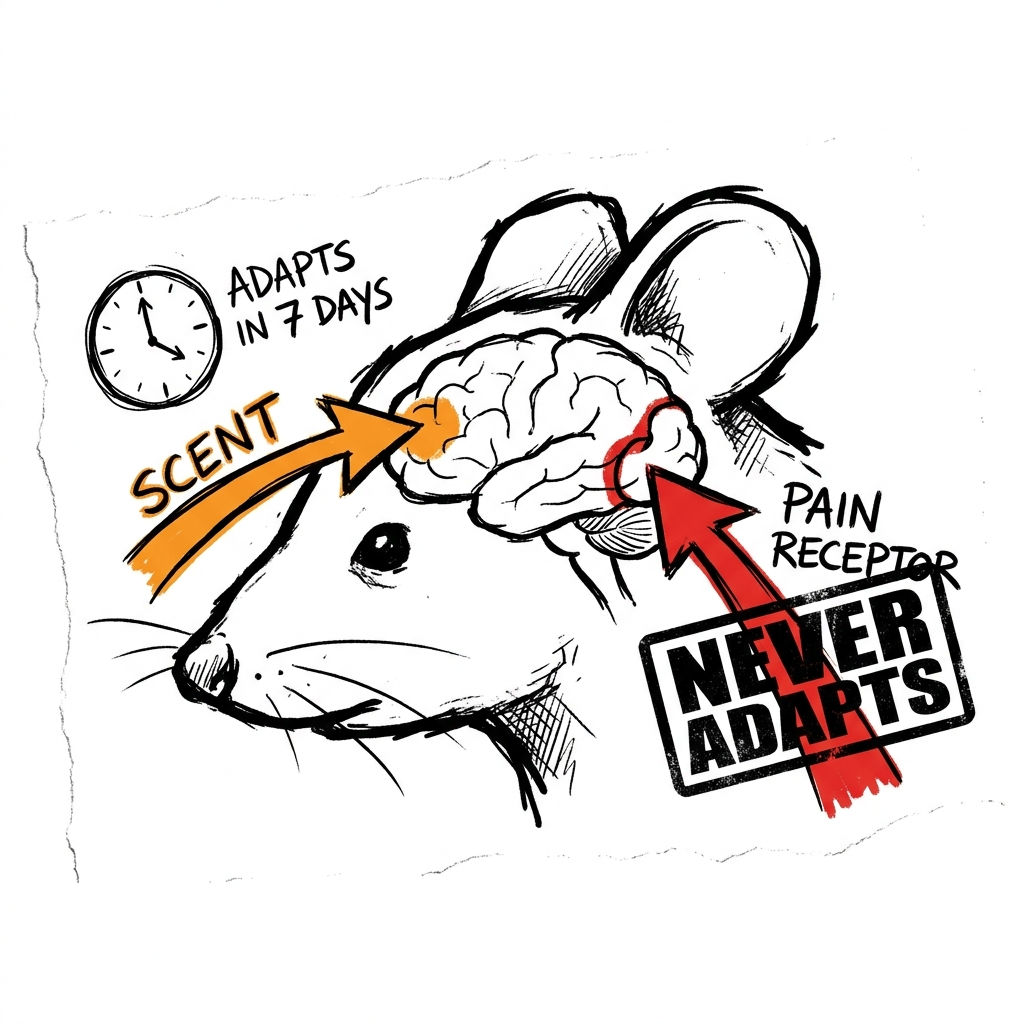
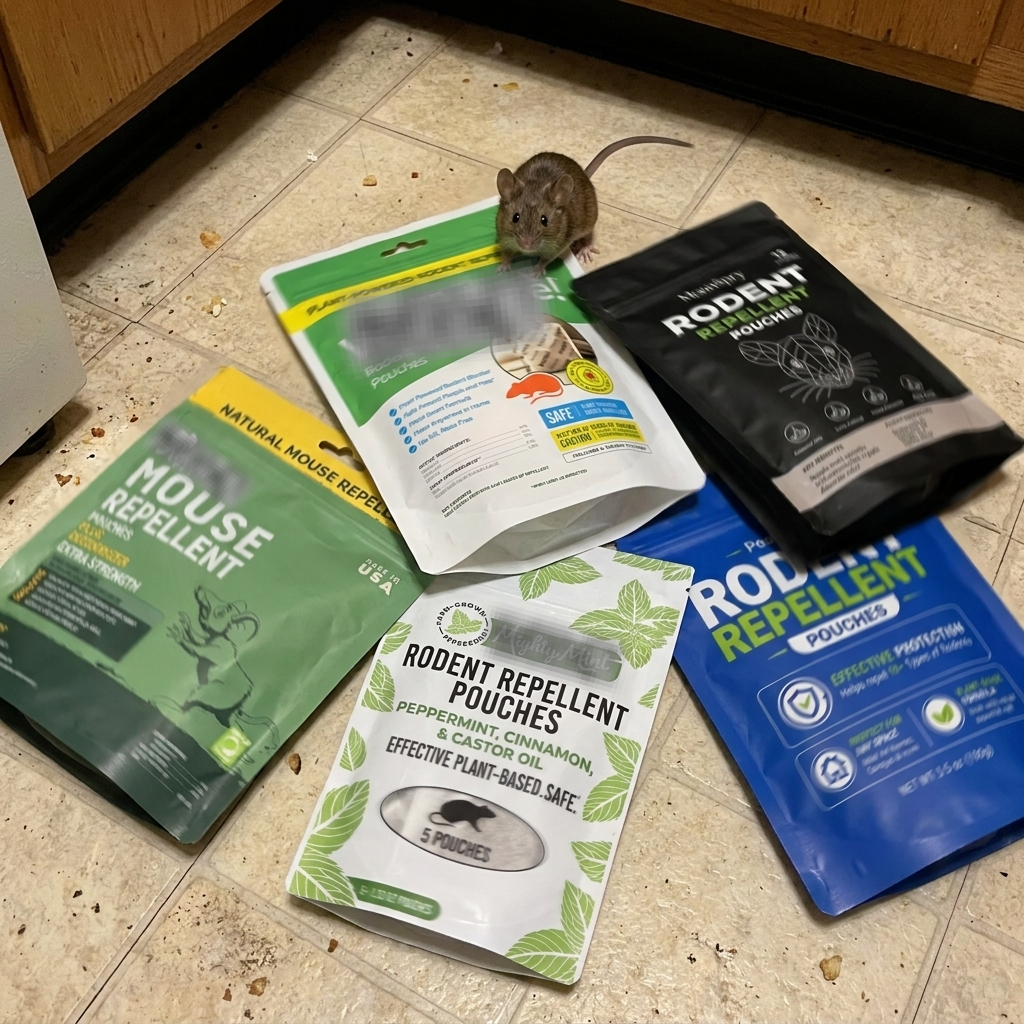
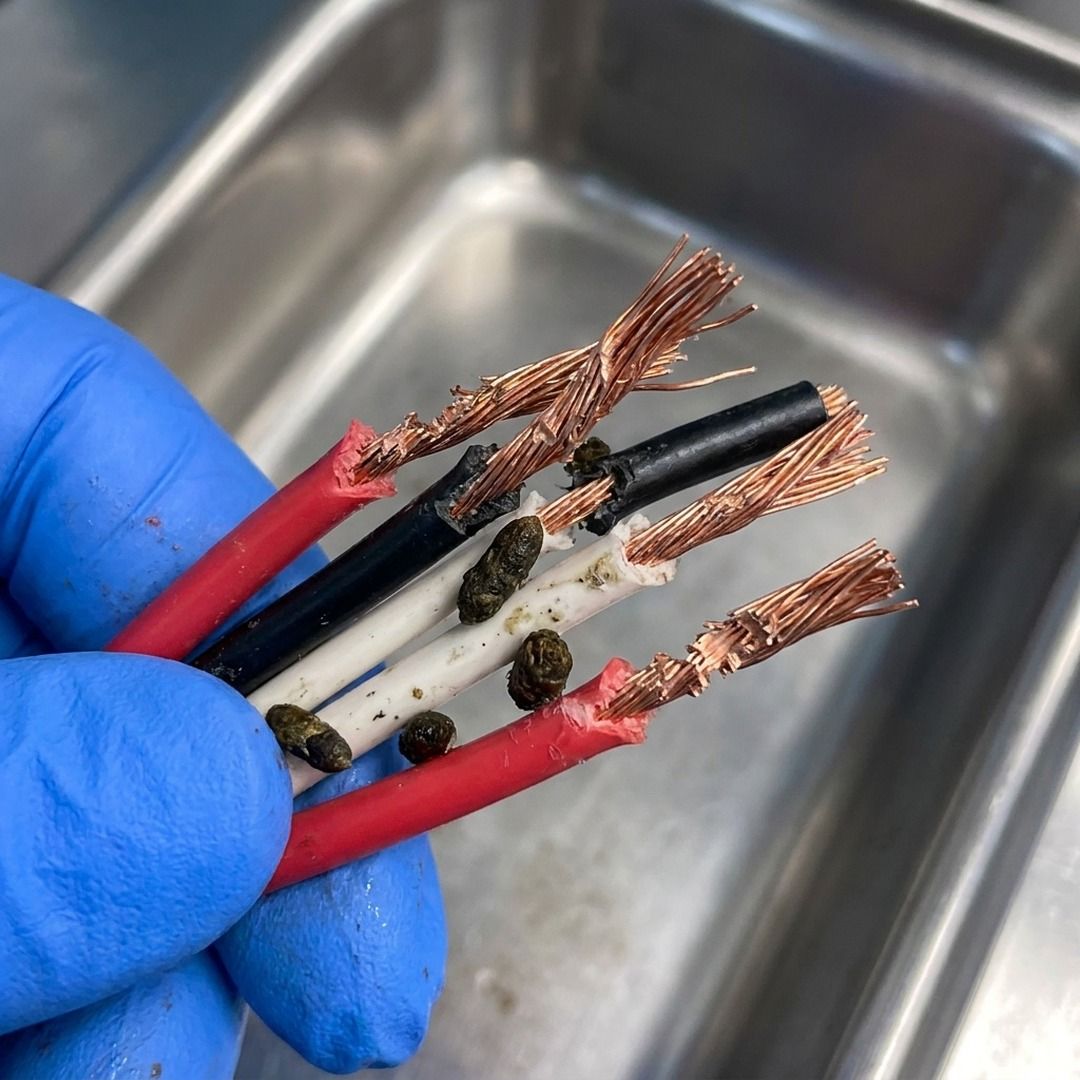
To every homeowner who bought the pouches, watched the mice disappear for four days, then found fresh droppings in the exact same spot — and still can't figure out why they came back. This is what nobody in the peppermint pouch industry will ever tell you. I'd done the research. I wasn't going to use poison. Not with a dog. Not with grandkids coming through every other weekend. I'd read enough horror stories — a neighbor's lab mix, a $4,000 emergency vet bill, a dog that didn't make it home. So I found the natural option. Good reviews. Hundreds of them. Five stars from homeowners, RV owners, farmers. I ordered Fresh Cab first. Then Grandpa Gus's when Fresh Cab stopped working. Then the ones with the black packaging that kept showing up in my Facebook feed. I did everything right. Placed them along the baseboards. Near the entry points. In the corner of the garage where I'd seen the droppings. And for about five days — they worked. No scratching at 2 AM. No new droppings in the kitchen drawer. I thought: finally. This is the one. Then I opened that drawer on day eight. Fresh droppings. Same spot. Same drawer. Like the pouch wasn't even there. I checked the pouch. Still smelled strong to me. Peppermint and something woody. Seemed fine. But the mice didn't care anymore. I ordered more. I doubled the number I was using. I replaced them earlier than the instructions said. Same result, every time. Three brands. Hundreds of dollars. And I was still waking up to that sound in the walls. Here's what I told myself: I just hadn't found the right one yet. Maybe I needed higher concentration. Maybe I needed more oils. So I tried Mighty Mint — a spray version, more peppermint than anything I'd used. Covered every corner of the garage. Four days later: droppings. I went back online. Started reading the one-star reviews more carefully this time. "Works great for a week then nothing." "Had mouse poop literally sitting on top of the pouch." "Smells like a candy cane in here and the mice honestly don't seem to care." These weren't people who'd used the wrong product. These were people who'd done exactly what I'd done — bought the most reviewed, highest-rated options — and hit the same wall I kept hitting. Something wasn't adding up. I spent a few evenings going down a rabbit hole. Forums, extension service pages, agricultural sites where farmers talked about this stuff seriously. And I kept finding the same phrase in the conversations that weren't trying to sell me anything: Sensory habituation. That's where my head was when I drove up to visit my brother-in-law Tom last fall. Tom runs a small operation out in Westmoreland County. Cattle, equipment, two big storage barns. Every winter, same war — mice in the feed room, mice in the tractor cab, mice chewing through wiring that costs more to replace than most people make in a month. He'd been fighting it for fifteen years. Snap traps. Poison he couldn't use because of the dogs and the cattle. Fresh Cab every season. A pest company for a while until the bills got ridiculous. But when I walked into his feed room that October, something was off. It was clean. Not trap-clean. Not "I got here right after setting them" clean. Just — clean. No droppings on the grain bins. No evidence of anything. The whole room smelled faintly of something I couldn't quite place. Spicy. Earthy. "You get a cat?" I asked him. He laughed. Reached under a shelf and pulled out a small pouch. The packaging wasn't anything I recognized. "My buddy works for a telecom company," he said. "Underground cable division. They lose millions of dollars a year to rodents chewing through insulation. He told me they started coating the cables with capsaicin a few years back. Chilli pepper compound. He said — and I remember this exactly — he said the mice never come back to a cable that's been treated with it." He turned the pouch over and pointed at the ingredient list. There it was. Chilli oil. Right at the top. "Found a company that actually put it in a pouch," Tom said. "First time I've gone a full season without losing any feed." I stood there a second. Every pouch I'd ever bought had peppermint. Cedar. Cinnamon. Castor oil. None of them had ever had chilli oil. I pulled out my phone. "What's it called?" Driving home, I needed to understand why Tom's result was so different from fifteen years of Fresh Cab failures. I started with sensory habituation — the phrase I'd kept finding in the forums. The short version is this: mice have a sense of smell roughly fourteen times stronger than a human's. A concentrated peppermint hit lands like tear gas on day one. It overwhelms them. They avoid the area completely. But the olfactory system — the scent-processing system — does what all mammalian nervous systems do when exposed to a repeated stimulus. It adapts. The receptors downregulate. The signal that screamed danger on day one becomes background noise by day four. It's the same reason you stop noticing the smell of your own house within minutes of walking in. Your nose adjusts. For mice, the peppermint alarm quiets. The cedarwood fades. Whatever's in the blend stops registering as threat. They remap their route straight back through. This is why every aromatic pouch follows the same arc. Every single one of them. It doesn't matter if it's one oil or four. It doesn't matter if the concentration is 2% or 40%. If it's working through the olfactory system — through scent — the mice will habituate to it. The only question is whether that takes four days or ten. That's why Fresh Cab didn't hold for Tom. That's why it didn't hold for me. That's why every brand I'd tried bought me the same window and then closed it. They were all hitting one sense. And one sense adapts. Capsaicin doesn't work that way. Capsaicin activates the TRPV1 receptor. The pain pathway. The same receptor that fires when you grab a hot pan. The same signal that makes your eyes stream when you cut a habanero. And the TRPV1 receptor does not habituate to repeated activation. You don't get used to touching a hot burner. The pain fires at full intensity every single time, regardless of how many times you've felt it before. That's why the telecom companies coat their cables with it. Not peppermint. Not cedar. Not any of the aromatic oils that smell like they should work. Capsaicin. Because pain doesn't adapt. Every pouch I'd ever bought was built around scent. Tom's was built around pain. That's the difference nobody had ever told me. When I looked up what Tom was using — Nellvo Rodent Deterrent Pouches — I understood immediately why the design was different. The formula doesn't just add chilli oil to a peppermint pouch. It's built around three separate neurological systems firing simultaneously. The chilli oil activates the pain pathway. Involuntary. Unadaptable. Every encounter fires the TRPV1 receptor at full signal regardless of prior exposure. Peppermint, cedar, and cinnamon — three different aromatic compounds — rotate through the trigeminal nerve. The key is the rotation. One scent can be habituated to. But when three different molecular structures are hitting the same pathway in sequence, there's no clean reset window. By the time one receptor's sensitivity diminishes, the other two are still firing. It's not one alarm that gets ignored — it's three running in rotation. And then there's garlic oil. Which I'll be honest — I didn't understand at first. Garlic for mice? But garlic's sulfur compounds are chemically similar to the volatile markers that predators leave in their territory. And these compounds aren't processed by the olfactory nerve at all — they trigger the vomeronasal organ. A completely separate detection system that reads territorial threat data, not smell. A mouse encountering garlic sulfur doesn't think "bad smell." It reads "predator's territory" through a pathway that has nothing to do with the first two signals. Three systems. None of them on the same pathway. None of them sharing a habituation window. Then there's the carrier. Every other pouch uses plant fiber or fabric. Fabric absorbs the oils and dumps them in 72 hours — which is why pouches that claim "90-day protection" need replacing every 30 days in practice. Nellvo uses a mica mineral matrix. Mica is a layered crystalline mineral that holds volatile compounds in its lattice structure and releases them gradually. Active concentration at deterrent levels for a full 90 days. Not three days. Ninety. All three signals. Full duration. Mineral delivery. I ordered two packs. Placed them the same day. First 48 hours: no activity in any of the placement zones. Which I'd seen before with peppermint — that part was nothing new. What was new was day ten. Still nothing. And day twenty. And day thirty. The drawer that had droppings in it every time I'd tried a new product — clean. The corner of the garage — clean. No new evidence of anything in any of the spots I'd been monitoring. I called Tom around week five. "Still holding?" I asked. "Same as when you were here," he said. "Feed room's been clean all season." When I went back and looked at the one-star reviews for the products I used to use, they all said the same thing: "works for about a week." The mechanism explained why. One sense. One pathway. One habituation window. The mechanism also explained why Nellvo was different. Three pathways. No shared habituation window. And a mineral carrier that kept all three active instead of dumping them in 72 hours. It's been four months. I haven't bought a trap. I haven't called anyone. I haven't found a single dropping in any room where a pouch is placed. I've also stopped thinking about it. Which, honestly, is the thing I hadn't expected. I stopped checking the drawer around week three. It wasn't a conscious decision. I just realized one morning that I hadn't looked in three days. And I didn't feel the need to. The 2 AM listening was the next thing to go. I used to lie there cataloguing sounds. Scratching in the walls. Movement in the kitchen. Running the mental loop: is that the house settling or is that a mouse? That loop stopped. Not immediately — but somewhere around week four it just... wasn't happening anymore. What I noticed after that was harder to name. Something about opening a cabinet and not bracing for it. Not doing the quick scan before reaching in. Not feeling like my kitchen was contested territory. The house felt like mine again. My neighbor asked me about it a few weeks ago. She'd seen me buy yet another set of traps the winter before — she knew how long I'd been dealing with it. When I told her what I was using, she asked me the same question I'd asked Tom. "But why does this one work when the others didn't?" I explained sensory habituation. I explained the TRPV1 receptor. I explained the three-pathway architecture. She ordered a pack that afternoon. If you're where I was — cycling through peppermint pouches, watching them work for a week and then watching the droppings come back, wondering what you're doing wrong — you're not doing anything wrong. The products you've been buying were built around one sense. Mice adapt to one sense. This is the version that was built around three. Nellvo comes with a 30-day money-back guarantee. If you place them and find a single new dropping in a coverage zone within three weeks, email them — full refund, no return required. You've already spent money on things that didn't hold. This one either holds or you get your money back. You'll know within 72 hours if you've finally found the one that's actually different.
Like this ad? Make it yours.
Crush rebuilds this exact creative around your product — your brand, your colors, your offer — in about a minute.