
Inactive· since Aug 28, 2026
- 2
- days it ran
- 2
- relaunches
Ad copy
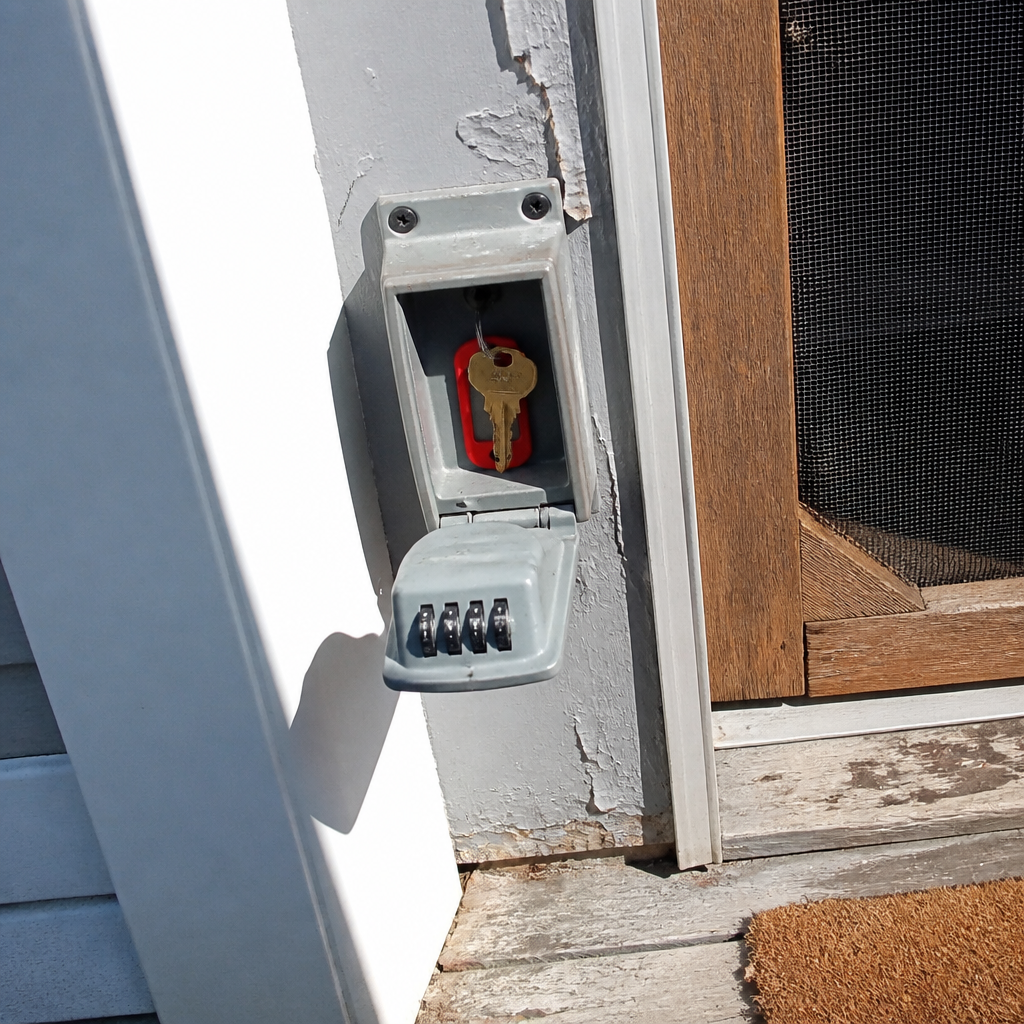
I lock away anything valuable in my Airbnb with actual combo locks. In four years, it's never been an issue until last week. A guest somehow cracked one open and stole from it. When I saw what he took, I couldn't even be angry. In fact, I was crying. Let me back up. My wife Laura and I have been running a five-star vacation rental for the past four years. Lake house, sleeps six, wraparound deck, the works. We've hosted hundreds of guests. We've dealt with red wine on white couches, a guy who somehow broke the hammock on the first night, teenagers who thought the fire pit was a trash incinerator. Normal stuff. Things go missing sometimes — a phone charger, a corkscrew, a towel someone accidentally packs. You chalk it up to the business and move on. But what this man took — and why he took it — is something I can't stop thinking about. I need to back up and explain what's on our kitchen counter. Because that's where this starts. I keep a small wellness tray for guests — a filtered water pitcher, a few herbal tea bags, and a glass jar filled with a fine orange powder and a little scoop. There's a handwritten card next to it that says: "Morning reset — mix one scoop into a glass of water. Great after travel." Most guests try it the way they'd try a complimentary coffee pod or a mint on a pillow. It's hospitality. Nobody thinks twice about it. But about six months ago, the checkout reviews started shifting. "My wife didn't snap once in three days. Not once. She kept asking what was in that orange powder." "The edge my wife has had for years was visibly gone by the third morning. On vacation. That has never happened." "My wife spilled a full cup of coffee on your white bedding and laughed about it. I braced — and it never came. What is that stuff on the counter?" Now — I knew what was in that jar. I'll explain why later. But what I didn't expect was guests feeling anything from a three-night stay. It took months with my own wife before I saw the deep changes. I figured a few days of a powder wasn't enough time to move the needle for anyone. I was wrong. The comments kept clustering around the same things, and they were too specific. Patience back. Spills laughed off. The flinch gone out of husbands' shoulders. Sleeping through the night. Energy they hadn't felt in years. Wives who were soft again with the people around them — teasing, easy, unclenched — the way they'd been before something wound them tight. That wasn't vacation. That wasn't the lake air. That was the same shift I'd watched happen once before — in my own kitchen — happening to strangers who had no idea what they were drinking. One couple, both in their sixties, rebooked for the following month specifically because the husband said his wife hadn't been that easy to be around in five years — his words, and he said them like a confession, and he wanted to come back "to whatever was in that water." A retired teacher extended her stay two nights because she said the static of irritation she'd carried for years had gone quiet for the first time. She called her sister from our deck — the sister she'd snapped at last Christmas and hadn't properly spoken to since — and they talked for two hours. She was wiping her eyes when she came in to ask about extending. Something was happening. Something real. Then last month, a couple named Don and Diane checked in on a Thursday. Nice couple. Mid-sixties. Don was warm, chatty, organized — the kind of man who carries the bags and remembers the checkout time and shakes your hand at the door. His wife Diane was quieter. Smiled politely, but there was something behind it. Something dimmed. Halfway through the tour Don fumbled the lockbox code — twice — and it happened: "DON." One word. Sharp as a whip-crack, from nowhere. And before it even finished landing, her hand went to her mouth and she was apologizing — to him, to me, a stranger — "I'm so sorry, I don't know why I—" Don just smiled and waved it off, smooth, practiced, like a man who's absorbed a thousand of them. Because he had. She was over-apologetic the rest of the tour, holding her own hands like she was keeping them still. They stayed three nights. On checkout morning, Don left the place spotless. Towels folded. Dishes done. A thank-you note on the counter. But when I went to flip the house for the next guest, something was wrong. The jar was gone. Not the tea bags. Not the water pitcher. The glass jar of powder that sits on the kitchen counter. Gone. It wasn't in the recycling. Wasn't in the cabinets. Wasn't behind the coffee maker. I checked every drawer, every shelf, every bag in every trash can. The jar was simply missing. I pulled up the footage from the disclosed camera in the living room — the one guests know about, standard Airbnb security, nothing hidden. And there it was. 5:22 AM on checkout day. The kitchen was dark. Don walked out of the bedroom, crossed the living room, went straight to the counter. He picked up the jar. Looked over his shoulder. Wrapped it in a dish towel. Put it in his suitcase. Zipped it shut. He took the whole jar. My first reaction was frustration. Not because the powder was expensive — it wasn't, really. But because the next guest was arriving in four hours and I'd have to drive forty minutes home to grab more from our pantry. That frustration lasted about ten seconds. Because I thought about the retired teacher wiping her eyes after two hours on the phone with her sister. The couple who rebooked. Every review from every guest whose wife had stirred a scoop into water expecting a greens powder and walked out three days later feeling like a different person. Whatever happened to Diane over those three nights was enough that Don couldn't leave without it. That's not theft. Not really. That's a man who watched his wife find something and was terrified of losing it. I texted him: "Hi Don — hope you and Diane had a wonderful stay. I noticed the jar of powder is missing from the kitchen counter. Everything okay?" Forty-five minutes later, my phone rang. He was crying. Not the polite kind. The kind where a man has been holding something in for a long time and it finally comes out. "I'm so sorry," he said. "I know it was wrong. I'll pay for it. Whatever you want. I just —" He stopped. Took a breath. Started again. "My wife Diane has been fighting her own temper for almost five years. Not the normal kind of temper. The kind that doesn't respond to anything she tries. Her doctor has run every panel. Thyroid fine. Hormones 'normal for her age.' Every year the same thing: 'You're sixty-two, Diane. This is just menopause. It's mood swings. Try to relax. Count to ten.'" His voice got harder. "But she's NOT fine. She hasn't been fine in years." "The snap started first. Over nothing. A dish left in the sink. The way I said 'okay.' A cabinet door. Zero to sharp in half a second — and before the words even finish landing, her hand goes to her mouth. Because that's not her. You saw it at the lockbox. Thirty-eight years, this woman was the patient one. The soft place this whole family landed. Now the grandkids go careful around her. Last spring my granddaughter asked her mother why Grandma doesn't like her anymore. Diane heard it from the hallway. I watched it take something out of her that hasn't come back." "Then the aftermath. The apology notes on the counter the next morning. The crying in the bathroom with the fan running — she thinks the fan covers it. It doesn't. And now she's started avoiding the people she loves. Declining the dinners. Keeping the visits short. Not because she doesn't want them. Because she's terrified of what the fuse will do with them in the room. She spends every family gathering braced against her own self — and bracing all day is why she's got nothing left by dark." "Last year, after she snapped at our son over — honestly, over gravy — she stood at the sink and said, 'Don, I don't recognize this person. I would never have let anyone speak to my children the way I just did.' She's loved these people gently her whole life. Now she watches herself like something failed her. Because it did. And nobody could tell us what." His voice broke. "It's not her heart. I've been married to this woman for thirty-eight years. She loves harder than anyone I know. She counts to ten. She bites her tongue until it bleeds. Something is doing this to her and nobody will look for it." I was gripping the phone so hard my knuckles were white. "That powder on your counter," he said. "I didn't know what it was. I thought it was one of those orange electrolyte things. Diane mixed a scoop into water Thursday evening without even reading the card. Just trying something new." "Seventeen minutes later she looked up and said, 'Don, something feels different.'" "I said, 'Different how?'" "She said, 'Quiet. Like the thing that's always coiled finally let go.'" He was sobbing now. "That night she slept through until morning. She hasn't slept through the night in two years. Friday morning I dropped the coffee carafe. Glass everywhere, seven a.m. And she laughed. She got the broom laughing. She didn't say anything about what that meant. But I noticed. I've been bracing at every dropped thing for three years." "By Saturday she had energy I hadn't seen in years. She walked the whole trail and teased me the entire way. At dinner the waitress got her order wrong twice, and Diane patted the girl's hand and told her it was fine — and meant it. Both times. She laughed at the table the way she used to." "And Sunday morning — checkout — I was packing the suitcase and I looked at that jar on the counter and I thought: I cannot go home. I cannot take her back to what she was before we got here." "I panicked. I knew it was wrong. I took it anyway. Because I'd watched my wife come back to life over three days and I could not — I could NOT — let that end." That's the part where I started crying. Sitting on the edge of the bed in my own rental property, tears running down my face, listening to a man describe my own life back to me. That's what I meant at the beginning. When I saw what Don took and understood why — I couldn't be mad. Because I've been exactly where he is. I've watched the same thing happen to someone I love. And I know precisely what it feels like to find the thing that brings her back and be terrified of losing it. He could have been telling my story. Word for word. Because two years ago, I was Don. Laura's doctor had been telling her for three years that everything looked great. The fuse kept getting shorter while she tried harder than anyone. The chart was perfect. The doctor was pleased. And every night I sat across from a woman who was disappearing behind her own eyes — going quiet after every flare, apologizing for herself, ashamed in her own kitchen, too worn out by eight-thirty to stay up with me on the deck the way she had for thirty years. The details were a little different but the shape was the same. Diane snapped at the people she loved and hated herself for it. Laura did the same. Diane's doctor said "that's menopause, count to ten." Laura's said the same. Same script. Same dismissal. Same husband sitting across the table watching his wife vanish and not knowing what to do about it. What I need to tell you is what I found when I went looking for answers. Because that's the part nobody told me. And it's the reason that jar is on my kitchen counter. One night — 1 AM, couldn't sleep — I was at the kitchen table with my laptop. Laura was asleep on the couch again, worn out by sundown. The woman I married used to stay up with me until midnight, a bottle of wine, the lake. Now she couldn't stay conscious past eight-thirty and the doctor called it aging. I started researching. Not "supplements for mood." I'd already wasted months on that — magnesium, B-vitamins, chamomile everything, those calm gummies, a meditation app she dutifully opened every morning. None of it touched the edge or the guilt or the exhaustion. I researched WHY. Why was this happening to her? And I found something that changed everything. It was a long post on a health forum, written by a retired endocrinologist. Twenty-eight years of practice. She'd left clinical medicine because, she wrote, she couldn't keep telling women to relax and count to ten while she watched them deteriorate from the one thing nobody was treating. I almost scrolled past it. The internet is full of cranks. But her credentials checked out. Her writing was precise. Clinical. Not angry — just tired. Like a woman who'd spent three decades doing something she'd finally realized wasn't enough. She started by explaining what chronically elevated cortisol actually does to a woman's nervous system. "Cortisol is your body's primary stress hormone," she wrote. "In a healthy rhythm it rises in the morning, giving you energy, and falls by evening so the body can repair and reset overnight. That rhythm is what lets the nervous system tell the difference between a real threat and a dish in the sink." I thought about Laura at the counter. The flare that kept firing at the people she loved most, no matter how hard she fought it. "But after decades of stress, poor sleep, and modern pressure, the system that controls cortisol loses its ability to self-regulate. Cortisol stops falling when it should. It stays elevated around the clock." "And chronically elevated cortisol does something nobody explains in plain language: it keeps the amygdala — the brain's alarm bell — primed and hair-triggered, while wearing down the prefrontal cortex — the brake that decides whether the alarm is worth acting on. Hot alarm, worn brake. So the alarm fires at full volume for a dish, a tone, a cabinet door — and fires fastest at whoever is standing closest, which is always the people she loves. The snap is not a character flaw. It is a fire alarm wired to a toaster. And the woman doing everything right keeps getting worse, because the hormone driving it is never addressed." I read that paragraph three times. "And here is the cruelest part: what follows the snap is guilt — and guilt is a cortisol pump. The flare spikes the system. The shame spikes it again, harder. The bracing against the next one keeps it spiked all day. The system re-arms hotter every cycle. She cannot count-to-ten her way past a hormone that has been holding her finger on the trigger for years. The harder she clamps down, the tighter the coil winds." I thought about Laura. Biting her tongue more every year. Apologizing more every year. The fuse still shorter every year. "And the exhaustion. Chronically elevated cortisol keeps the nervous system in fight-or-flight around the clock. The body burns through its reserves just maintaining the stress state. By evening there's nothing left. That's the woman who used to stay up until midnight, asleep by eight-thirty, running on emergency fuel all day with nothing left to give." My hands were shaking. Then she wrote the thing that made me angry. "Her doctor measures her weight. Her thyroid. Her cholesterol. Her blood sugar. Hands her a pamphlet on managing mood swings. And when all of those come back in range, he tells her she's fine and sends her home. But he has almost certainly never once measured the rhythm of the hormone actually driving all of it. The chart looks managed. The one number that would explain her whole life was never on the chart." Laura's doctor had never looked at her cortisol. Not once. In three years. Every visit they ran the standard panel, had her fill out the little mood questionnaire, said "looks great," and sent her home with the same advice she'd already been following for a decade. They were looking at everything except the thing that was actually doing it. I kept reading. The anger was keeping me awake now. "The question becomes: if chronically elevated cortisol is the driver, what actually brings it back into rhythm?" "Lifestyle helps at the margins. But for a body whose stress axis has been dysregulated for years, lifestyle advice alone is like bailing a flooding boat with a coffee cup. You have to address the hormonal system directly. Over the past two decades, peer-reviewed research has examined specific compounds — adaptogens and phospholipids — shown to measurably lower cortisol and restore its natural rhythm." She named them. KSM-66 ashwagandha — the most clinically studied standardized form, shown to lower cortisol directly, not the generic ashwagandha you find for a few dollars. Phosphatidylserine — one of the most researched cortisol modulators, the one shown to blunt the cortisol spike under acute stress, "which is why white-knuckling through every flare has been making the fuse shorter, not longer." Rhodiola, to settle a stress axis gone hair-trigger. L-theanine, for calm without sedation, myo-inositol, turmeric, each on a downstream piece. Then she wrote the part that told me why nothing Laura had tried had worked. "Most cortisol supplements on the market are single-ingredient generic ashwagandha at doses that barely move the needle. The formulas that produced real results in the research used standardized KSM-66 specifically, alongside phosphatidylserine — which most products leave out because it's expensive. An underdosed imitation is why so many women write off the entire approach." The calm gummies I'd bought Laura? Working downstream, treating the symptom. The magnesium, the meditation app? Asking her to breathe through a fire the hormone kept feeding — the same strategy, the same failure. Nobody was addressing the cortisol. Nobody was giving her nervous system the one thing it had been waiting for. This endocrinologist had walked away from a twenty-eight-year practice because she couldn't keep watching women deteriorate while everyone monitored the wrong measurement. She couldn't do it anymore. I closed the laptop at 3 AM. Opened it again at 5. I found the product she'd referenced. A complete cortisol formula — KSM-66 at the clinical dose, phosphatidylserine included, plus the others, in one clean powder. One scoop in a glass of water every morning. Natural orange taste. That was the whole protocol. I ordered a canister that morning. Harmonia. Laura thought it was an orange electrolyte drink. I didn't correct her. I just set a glass of water on the counter one morning, stirred in a scoop, and said, "Try this." She looked at it. Looked at me. Shrugged. Drank it. Nineteen minutes. She was reading at the kitchen table — the book she'd been trying to get through for months, a page a morning before she lost focus. Nineteen minutes after that first glass, she looked up. "Scott. Something feels different." "Different how?" "My chest. Less tight. Like something finally uncoiled." She went back to her book and read three chapters without stopping. I went into the garage and stood there for a minute. By week two I left the milk out — the whole gallon, all morning. She put it away and kissed the top of my head on her way past. Didn't mention it. I noticed. I'd been apologizing for that milk for two years. By week three she invited the whole family for Sunday dinner. Just did it, without the conversation we'd been having for three years about whether it would be too much for her. And when the grandkids knocked a full glass of juice across the rug, she wiped it up mid-story without breaking stride — and finished the story. By week five the bathroom fan had gone quiet — nothing to cover anymore — and the apology notes had stopped, because there was nothing to apologize for, and she had energy at dinner and after dinner. She came out to the deck at nine at night, which she hadn't done in over a year. By week six she got her bloodwork done. I went with her. Her doctor scrolled through the results, stopped, scrolled back, read something again. Then she took off her glasses and looked at Laura — not the screen, Laura. "You look different," she said. "Before I even opened this. Your shoulders are down. You walked in here unclenched." Laura shrugged. "I feel different." The doctor read the numbers. Her cortisol rhythm had normalized. Her sleep markers had improved. Her inflammatory markers were down. And the little mood questionnaire she'd been filling out for years — the nurse read it twice and asked if she'd been given the right form. She was quiet a while. Then she said, "Laura, I don't know exactly what you changed. But whatever it is, keep doing it." She didn't write a new prescription. She just told her to keep going. That was eight months ago. Laura is the soft place of this family again. The grandkids climb on her without checking her face first. When I drop something in the kitchen she says "butterfingers" and hands me the broom. She hosts the Sunday dinners. She sleeps through the night. She stays up with me on the deck. She's not the woman who was bracing against her own self. She's the woman I married. A few weeks after Laura's bloodwork came back, we were at the rental doing a maintenance weekend between guests. Laura stirred a scoop into water at the kitchen counter out of habit — it's just part of her morning now. I watched her drink it. And I thought about all the guests who come through this house. The wives who snap at a lockbox and apologize to strangers. The ones holding their own hands still. The ones whose husbands absorb the flare, smooth and practiced, with that helpless look I know too well. I went home that afternoon and filled a glass jar with Harmonia. Wrote a card: "Morning reset — mix one scoop into a glass of water. Great after travel." Set it on the counter next to the water pitcher. Didn't overthink it. Just did it. That was six months ago. And those guest reviews I told you about at the beginning? Now you know why they don't sound like greens-powder reviews. Because they're not a greens powder. They're what gave me my wife back. So here's what I told Don on the phone that day: "Keep the jar. Keep every scoop. But let me send you the link so you can order your own supply. Because that jar will run out. And when it does, I don't want Diane to go back to the way she's been." He laughed through his tears. "Deal." I sent him the link that afternoon. He ordered three canisters. Three weeks later he texted me a video. Sunday dinner at their house — the first one Diane had hosted in three years. Chaos, grandkids everywhere, and right in the middle of it a dish hits the floor — you can hear it shatter off-camera. And you can see Diane wave it off, laughing: "Plates are replaceable." The little girl from the hallway is on her lap. Five words underneath: "I have my wife back." I saved it to my phone. I've watched it more times than I'll admit. The thank-you note Don left is still on my fridge. If you're reading this, I know exactly where you are. You've been watching someone you love disappear behind her own eyes. The snap: over dishes, over a tone, at the people she loves most. The hand over her mouth half a second later. The apology notes on the counter. The crying behind the bathroom fan. The grandkids going careful. The woman who used to be the soft place this family landed — really the soft place — patient, warm, the one everyone brought their troubles to. And the doctor keeps saying it's her age. It's menopause. It's mood swings. Try to relax. Count to ten. The chart looks fine. But the chart isn't married to her. You are. They've been measuring everything except the one thing that was actually doing it. One path: keep hearing "just count to ten" while the woman you married keeps snapping, apologizing, bracing, and getting worse every year. Another path: give her nervous system what it's actually missing. Bring the cortisol rhythm back with a complete formula that addresses the mechanism directly. Watch the fuse lengthen, the edge dissolve, the patience come back, the woman become the soft place again. I chose the second path. Don chose the second path. Laura is living proof. Diane is becoming proof. 👉 drinkharmonia.com/cortisol — Scott P.S. — I never charged Don for the jar. But he's ordered three canisters of Harmonia since checkout and left us a five-star review that said: "This place gave me my wife back. I don't know how to rate that. Five stars isn't enough." Laura read it over my shoulder and squeezed my hand. If your wife has been struggling with a fuse she can't control — the snapping, the guilt, the bracing, the exhaustion — the powder on my counter is Harmonia. That's what Don took for Diane. That's what Laura takes every morning. That's what I leave for every guest who walks through our door. P.P.S. — Here's my challenge for you: stir one scoop into a glass of water in the morning. Set a timer for twenty minutes. If she doesn't feel something shift — a quiet, an uncoiling, like something that's been ready to fire finally standing down — then maybe this isn't for you. But if she feels it — and almost everyone who's tried one from my counter has felt it — that's not placebo. That's her cortisol beginning to come back into rhythm. The full return of her patience takes weeks. But that first-morning quiet is her nervous system telling you: finally, something that actually addresses what's been running unchecked. P.P.P.S. — Don't buy random cortisol supplements. Most are single-ingredient ashwagandha at doses that barely move the needle. The research that produced real results used complete formulas with KSM-66 ashwagandha specifically — not generic ashwagandha — alongside phosphatidylserine, which most formulas skip. Both at clinical doses. That's what Harmonia is. Don't let an underdosed imitation be the reason you write off the real thing. P.P.P.P.S. — Harmonia has a thirty-day money-back guarantee. Every penny back if she's not satisfied, no questions asked. Nobody offered Diane a refund for five years of hating herself after every snap while her doctor told her everything looked fine. The system doesn't do refunds. Harmonia does. That difference tells you exactly who believes in what they're selling. P.P.P.P.P.S. — Harmonia is a small operation and they sell out. I know because I had to wait for a restock after Don took the jar. I keep an extra canister in the house now — one for Laura, one backup for the rental, and one for me, because cortisol doesn't care about gender, it works the same way. If her next appointment is thirty to sixty days out and you'd like her to walk in with a nervous system that's actually standing down instead of the same managed decline — check if they have stock today. Don't let checkout day be the thing that takes her back. 👉 drinkharmonia.com/cortisol
The Jar My Guest Stole At 5 AM — And Why I Couldn't Report Him
Discover Harmonia—the smart cortisol cocktail that lowers stress, balances hormones, improves sleep, and boosts energy. Vegetarian, natural & USA-made.
LEARN MORELike this ad? Make it yours.
Crush rebuilds this exact creative around your product — your brand, your colors, your offer — in about a minute.