Rachel Smith
 Facebook ad: “The Neurologist Broke Ranks”
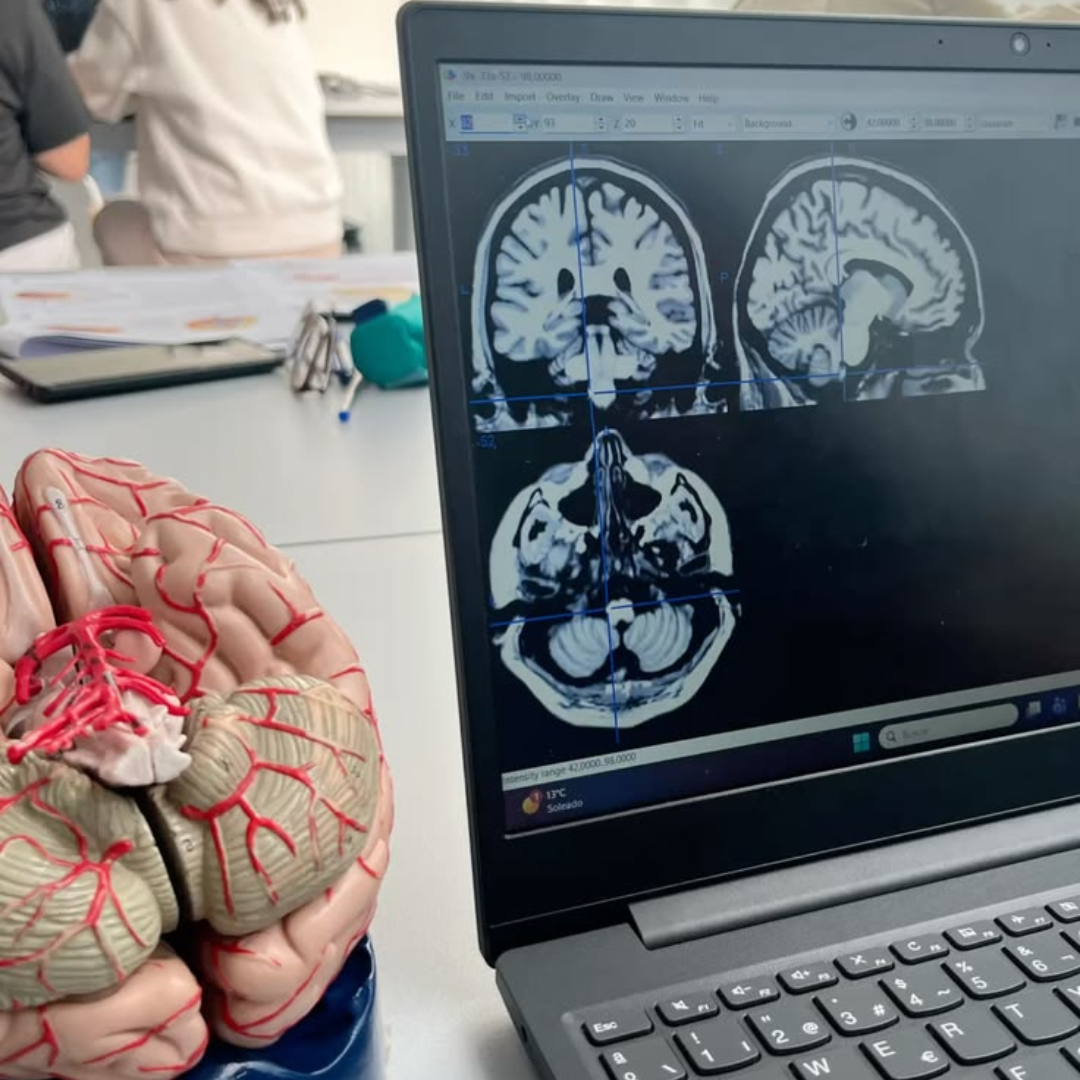
Ran for 20 days, from October 17 to November 6, 2026, the last day Crush saw it.
Run by Rachel Smith on Facebook. Crush is not the advertiser and does not verify its claims. See this ad in Meta's Ad Library(opens in a new tab)
Make your own version of this ad
Crush makes it, launches it in your own Meta ad account, scales the winners and pauses the losers.
About this ad
- Meta Ad Library ID
- 1103637729088472
- Platforms
- Facebook, Instagram, Audience Network, WhatsApp and Threads
- Relaunches
- 1
- Niche
- Fashion & Apparel
Ad text
I've been a neurologist for 25 years, and if your memory keeps slipping, your word-finding keeps worsening, your MRI keeps coming back "nonspecific white matter changes," your cognitive screen keeps dropping two points every year, and nobody in neurology has ever once mentioned the word mold to you — I'm about to tell you exactly why it's getting WORSE and why the neurology industry will NEVER tell you the truth. And by the end of this, you're gonna be pissed. My name is Dr. Harriet Vance. Board-certified neurologist with a cognitive neurology subspecialty. Twenty-five years in memory disorders, early-onset cognitive decline, and demyelinating disease. Published in Neurology and the Annals of Neurology. Over 8,900 patients. And I'm breaking ranks with my own profession to tell you this. Because there are three things happening right now: One — The fog you have been fighting, the names you have been losing, the paragraphs you have been reading three times, the keys you have been forgetting on the kitchen counter — those are not "normal for your age." Your brain is being actively inflamed by a biofilm-protected mold mycotoxin reservoir in your tissues that recirculates across your blood-brain barrier every day — and every month you don't dissolve that shield, the neuroinflammation deepens, the white matter signal grows, and the clock in your brain keeps running Two — The donepezil, memantine, cognitive rehab programs, sleep medications, SSRIs, and the "we'll follow you with annual MRIs" plans you've been offered were never capable of reaching that reservoir, and your neurologist knows it Three — There's a multi-billion-dollar neurology industry that profits every single time your MRI comes back "nonspecific" and your cognitive screen drops two more points at your annual follow-up So let me tell you what happened with one of my patients, because her story is gonna open your eyes to how messed up this really is. Her name was Claire. 51 years old. For YEARS, and I mean like four straight years, she was dealing with this. Her symptoms? It started with word-finding. Pausing in the middle of a sentence looking for the word "umbrella." She came to me early — six months in. I told her we'd handle it. No big deal. I ran a basic workup. CBC, metabolic panel, TSH, B12, folate, vitamin D. All within normal limits. I ran a MoCA. She scored 26 out of 30. "This is within normal range for your age, with mild attention and recall domains to monitor," I told her. "Let's follow up in one year." She trusted me. She went home. She tried crossword apps. She tried fish oil. She came back twelve months later. Her MoCA was 24. And then it jumped. I ordered an MRI of the brain with and without contrast. The read came back: "Scattered nonspecific white matter hyperintensities, no mass, no acute process." I ran a lumbar puncture to rule out demyelinating disease. Oligoclonal bands negative. I ran a PET scan looking for an amyloid signal. Equivocal. I ran a repeat MoCA six months later. 22. By the end of year three, Claire had progressive word-finding difficulty, 3am wake-ups four nights a week, afternoon fog so severe she stopped driving her kids to activities, lost car keys three times in a single week, cognitive screen that had dropped from 26 to 20 across three years, nonspecific white matter burden that had grown measurably on the follow-up MRI, and the terror of a woman whose mother had died at 68 of early-onset dementia and who was now watching the exact pattern unfold in her own brain at 51. And the pattern was still spreading. She stopped volunteering at her son's school. Stopped attending the book club she had hosted for ten years. Started keeping a notebook in her purse because she could not trust her memory for a conversation she had just finished. She told me once: "I am losing myself in real time and nobody will tell me what is happening to me." And the fear? It wasn't just forgetfulness anymore. She was terrified she was going to end up like her mother. Her mother had been diagnosed at 61 and dead at 68. Claire was 51 and her MoCA was dropping by two points a year. Her husband had quietly started handling the household finances because she had made three mistakes paying bills in a single month. Her 14-year-old daughter had started asking "Mom, did you take your supplements this morning?" because Claire was forgetting them three days out of five, and that question was the single most devastating sentence Claire heard all week because her mother had asked her the same question at the same age. And here's what makes me sick to my stomach: I was the doctor she trusted. Multiple visits. Year after year. We're talking tens of thousands of dollars in copays, MRIs, PET scans, cognitive testing, specialist referrals, the full dementia workup playbook. And you know what I kept telling her? "Your MRI is nonspecific." "Your MoCA is still above the dementia threshold." "Cognitive decline can be followed with annual imaging." "At your age, some decline is expected. We'll know more in six months." AT YOUR AGE, SOME DECLINE IS EXPECTED. This woman was 51 years old. She had been the sharpest marketing director at her agency for eighteen years. She had been running a book club through Dostoevsky and Marilynne Robinson for a decade. She was now losing the word "umbrella" in a sentence. And I was telling her that at her age some decline is expected. But here's where it gets worse — and this is the part that haunts me now. I prescribed low-dose donepezil as an off-label trial. I added memantine six months later when donepezil did not hold. I referred her to a cognitive rehabilitation program at a university hospital that cost her $3,200 out of pocket for twelve weeks. I referred her to a sleep specialist who put her on a sleep medication that sedated her enough that her husband drove her to appointments. I referred her to a psychiatrist who added a low-dose SSRI "to cover the possible pseudodementia of depression." I ordered a repeat MRI at twelve months. The white matter burden was worse. I referred her for a neuropsychological evaluation, $2,400 out of pocket, that confirmed "mild cognitive impairment, amnestic subtype, suspected prodromal Alzheimer's disease." I referred her to a dementia specialist at the regional center for an aducanumab discussion. You know what happened? The symptoms kept spreading. The donepezil gave her diarrhea for three months and did nothing for the fog. The memantine did nothing. The cognitive rehab taught her compensatory strategies that she was too foggy to remember to use. The sleep medication left her so sedated that her mornings started at 10 AM and her daughter started making her own breakfast. The SSRI flattened her affect and did nothing for the word-finding. The dementia specialist told her she was too early for aducanumab and should "monitor and return when symptoms are more advanced." MONITOR AND RETURN WHEN SYMPTOMS ARE MORE ADVANCED. Four years into watching her own mother's trajectory unfold in her own brain. I watched this woman — who did everything I told her, spent over $19,000 across four years, took every medication I prescribed — get WORSE. Not better. Worse. And I didn't understand why. Until a 61-year-old neuroinflammation and glymphatic clearance biologist taught me more about early cognitive decline in women in 20 minutes than I learned in nearly three decades of neurology training. October 2024. Los Angeles. The American Academy of Neurology Annual Meeting. I was wearing a long-sleeved cardigan despite the convention center being 76 degrees inside. Because at 55, my own brain had broken fifteen months earlier. Word-finding. Paragraphs I had to read three times. A patient's name I had known for a decade that I could not retrieve in the middle of an exam. The same patient history I had been managing in my chair for 25 years was now mine. My own MoCA that I had been quietly running on myself in my office had dropped from 29 to 25 over fourteen months. My own MRI, which I had ordered on myself through a radiologist friend, had come back "scattered nonspecific white matter hyperintensities." I had been self-prescribing high-dose B-complex and had bought a $700 red-light helmet online. And new symptoms had been creeping in for a year: fog, 3am wake-ups, puffy face, hair thinning, a resting pulse that climbed when I lay flat, random hives from one glass of wine. I had blamed perimenopause. That's when I saw her. Dr. Siobhan Ó Briain. 61 years old. Irish neuroinflammation and glymphatic clearance biologist who had moved her lab from Trinity College Dublin to a research institute in Boston to focus full-time on biotoxin-driven neuroinflammation in women labeled with mild cognitive impairment and early-onset cognitive decline. She was giving a late-afternoon session on mold mycotoxin reservoirs in brain tissue, glymphatic clearance failure, and the correlation with white matter hyperintensities and MoCA decline in women 45 to 60. The room was a third full. Most of my colleagues had gone to the newest anti-amyloid monoclonal talks across the hall. After her session I walked up to the podium. "Dr. Ó Briain — I'm a cognitive neurologist with 25 years of practice. My own MoCA is dropping. My MRI is nonspecific. I think I'm missing something." She smiled. The kind of smile that knows something you don't. Then she asked how I was feeling in my body generally. And I — a neurologist whose own brain was quietly becoming her patients' brains — told her about the fog, the 3am wake-ups, the puffy face, the hair thinning, the climbing pulse, the hives from wine. Symptoms I had been telling myself were perimenopause. Her face changed. And what she said next made my stomach drop. "Dr. Vance, those are not perimenopause symptoms. Those are mold mycotoxin symptoms. And the reason your MoCA is dropping and your MRI is nonspecific is because the mechanism driving your cognitive decline is not amyloid, not vascular, not demyelinating. It is neuroinflammatory. The ochratoxin A, gliotoxin, and trichothecenes in your tissues hide inside a biofilm — a lipid shield — and recirculate across your blood-brain barrier every day. Once in brain tissue they activate microglia, deplete central glutathione, impair glymphatic clearance, and produce the exact clinical picture of word-finding difficulty, 3am wake-ups, cognitive slowing, and progressive MoCA decline that your field has been calling mild cognitive impairment and prodromal Alzheimer's." She looked at me seriously. "Every month you spend on donepezil, memantine, and 'we'll follow with annual imaging' is another month the inflammation deepens, the white matter signal grows, and the brain damage accumulates while a reservoir in tissue keeps releasing mycotoxins into your central nervous system. The medications work on neurotransmitters downstream. The reservoir keeps generating the fire upstream." I felt sick. Then she said: "The problem isn't your workup. It's your delivery system. You are trying to treat a slow brain fire by cooling the surface of the skull while the fuel keeps burning inside." She gestured to an empty table. "May I show you something? It will take twenty minutes. But it will change how you understand this completely." What she taught me in 20 minutes changed everything. She drew a simple diagram on a napkin. "Your treatment model treats cognitive decline as either early Alzheimer's or vascular or demyelinating or depression-pseudodementia. So you add donepezil for the acetylcholine. Add memantine for the glutamate. Add an SSRI for the mood piece. Order an MRI every year to document the decline. Refer out for the amyloid conversation when the symptoms are 'more advanced.' That's like cooling the surface of a skull while the fuel inside the brain keeps burning. The surface drops a degree. The fire never stops." She tapped the napkin. "This isn't a neurotransmitter problem. It is a neuroinflammatory problem driven by a biofilm-protected mold mycotoxin reservoir in your tissues. The mycotoxins recirculate across your blood-brain barrier every day. Once in brain tissue they activate microglia, deplete central glutathione, impair the glymphatic system that is supposed to clear waste proteins from your brain overnight, and produce the clinical picture of progressive cognitive decline. The shield recirculates its contents through the enterohepatic loop every meal, replenishing the brain-level load every single day. Your 3am wake-ups are the glymphatic system failing. Your word-finding difficulty is the inflammation. Your MRI white matter signal is the damage." Now pause for a second. You know what's insane? We learned in neurology residency that neuroinflammation drives cognitive decline. We learned that microglial activation produces cognitive symptoms. We learned that glymphatic clearance failure is implicated in cognitive aging. We learned that biotoxin exposure impacts white matter. We KNOW this. It's in the papers. And yet we keep ordering annual MRIs that show "nonspecific white matter" and running MoCA tests that drop two points a year and offering donepezil and memantine to women whose entire decline is being driven by a mold reservoir no neurology workup is going to catch. And that's not an accident. Because once you understand that donepezil cannot touch the reservoir, you realize why Claire's cognitive decline kept progressing. Why MY MoCA kept dropping. Why the pattern moves from word-finding to 3am wake-ups to forgotten keys to a daughter asking if you took your supplements this morning while you take donepezil and memantine and watch your white matter burden grow on an annual MRI. Here's what's actually happening underneath: Your tissues contain a reservoir of mold mycotoxins bound inside a biofilm shield. The lipid wax sits over your fat cells, your organ linings, your brain lipid tissue, your perivascular spaces. The water-based medications you take orally cannot penetrate it. The donepezil increases acetylcholine availability in a brain whose microglia are chronically activated by mycotoxin recirculation. The memantine modulates glutamate in a brain whose glymphatic clearance is failing. Central glutathione is being chronically depleted. Microglia are producing the inflammatory cytokines that drive the fog, the word-finding, the 2 AM wake-ups, the executive dysfunction. The medications work on the receptors downstream. The fire keeps burning upstream. Your glymphatic system, which is supposed to clear amyloid, tau, and metabolic waste from your brain during deep sleep, requires deep sleep to function. The reservoir keeps breaking your sleep at 2 AM. The glymphatic clearance fails. Metabolic waste accumulates overnight. The next day's fog is worse. The next MRI's white matter signal is more visible. When you get the SSRI? Serotonin changes. The microglia stay activated. The glymphatic system stays broken. When you get the sleep medication? You get chemically imposed sleep that does not restore the glymphatic clearance. The waste still accumulates. When you get the aducanumab conversation? You are being offered an anti-amyloid drug for a decline that was never amyloid-driven in the first place. The result? A relentless, measurable progression that your neurologist calls "mild cognitive impairment, likely prodromal Alzheimer's" and that is in fact the natural history of a biofilm-protected mold reservoir no one has looked for. So the decline doesn't just persist. It EXPANDS into executive dysfunction, mood, autonomic, and functional domains. Actively. While you watch. And here's the key thing I learned: Donepezil, memantine, SSRIs, sleep medications, and annual MRIs don't work for a mold mycotoxin reservoir that lives behind a lipid shield and keeps inflaming the brain across the blood-brain barrier. Neurology drugs are designed for neurotransmitter dysregulation and structural lesions. A chronic biofilm-protected mold reservoir that keeps the brain inflamed and the glymphatic system broken? The drugs never reach the mechanism driving the decline. But Claire's acetylcholine wasn't the problem. MY acetylcholine wasn't the problem. The problem was that the reservoir was in TISSUE, behind a SHIELD, and the brain was being inflamed and the glymphatic clearance broken by a mold-driven mechanism no neurology workup was ever going to catch. So the donepezil raised acetylcholine. The memantine modulated glutamate. The SSRI shifted serotonin. The sleep medication sedated. The cognitive rehab taught compensatory strategies. And the brain kept being inflamed. And the glymphatic system kept failing. And the next MoCA was two points lower. And the next MRI showed more white matter burden. Because it's not an acetylcholine problem. It's a SHIELD problem. And here's the part that made my blood boil: The neurology industry KNOWS about inflammatory contributions to cognitive decline. We know about microglial activation. We know about glymphatic clearance. We know about biotoxin exposure impacting white matter. But we keep ordering annual MRIs and prescribing cholinesterase inhibitors because that's what the specialty is built on and that's what insurance pays for. Why? Because the neurology industry does not make money dissolving mold biofilm shields. It makes money per MRI, per PET scan, per lumbar puncture, per cognitive screening, per anti-amyloid infusion, per office visit for medication titration. You cannot bill ten thousand dollars for a dropper of NAC and liposomal glutathione. There's no money in telling a woman with early cognitive decline that her reservoir is behind a lipid shield and her annual MRI is going to keep saying "nonspecific" while her MoCA drops two points a year. There IS money in selling her $3,200 brain MRIs annually, $4,500 PET scans, $2,400 neuropsychological evaluations, $26,000-per-year anti-amyloid infusions down the road, and $400 office visits every six to eight weeks for medication titration for the rest of her declining years. See how that works? Siobhan showed me the actual PROTOCOL for dissolving the biofilm shield and letting the brain recover from the inside. It involves five specific things happening simultaneously: 1. Shield dissolution — A compound that enters the bloodstream and dissolves the lipid biofilm around the mold mycotoxin reservoir in tissue. NAC is sulfur-containing and lipid-active. It merges with the shield and dissolves it on contact. NAC also has independent documented effects on microglial activation and central glutathione that are directly relevant to cognitive outcomes. 2. Real-time neutralization — As the shield dissolves and mold mycotoxins are exposed, they must be neutralized before they can recirculate across the blood-brain barrier. Liposomal glutathione, delivered sublingually, reaches tissue at ten to twenty times the concentration of a capsule, crosses the blood-brain barrier where capsule glutathione cannot, and restores the central glutathione that chronic microglial activation has depleted. 3. Liver protection — Milk thistle protects the hepatocytes doing the conjugation work so the clearance pipeline doesn't collapse under the load. 4. Bile pathway opening — TUDCA opens the bile duct so the conjugated load actually exits the body instead of recirculating through the enterohepatic loop. Interrupts the mycotoxin loop that reseeds brain tissue every meal. 5. Final binding and excretion — Fulvic and humic acid bind what's been loosened in the gut and carry it out so none of it gets reabsorbed. There are actual peer-reviewed studies showing that NAC reduces microglial activation and has documented effects on cognitive outcomes, that sublingual liposomal glutathione crosses the blood-brain barrier where oral glutathione cannot, that TUDCA opens bile flow and interrupts recirculation, and that fulvic and humic acid bind mycotoxins in the intestinal lumen. The neuroinflammation literature has documented that resolving central neuroinflammation produces measurable improvements in cognitive metrics in biotoxin-exposed populations. Nature already built the protocol. We just stopped paying attention when the neurology industry offered something more profitable per MRI. But you'll never hear most neurologists mention it. Because supplement companies don't make properly formulated sublingual liposomal five-compound protocols for neurology. They make generic nootropic blends and bulk B-complex. So that's what we're trained to begrudgingly tolerate as the "lifestyle" piece around our billable workups. The financial model is backwards. A patient with "mild cognitive impairment" on serial imaging plus cholinesterase inhibitors plus specialist referrals plus eventual anti-amyloid infusions pays $500 to $2,000 monthly on average over the course of her decline. Add $3,200 MRIs every year. Add the eventual $26,000-per-year monoclonal infusion when she becomes "eligible." Average lifetime neurology spend for a woman labeled with MCI progressing to Alzheimer's: $150,000 to $500,000. A sublingual five-compound protocol that dissolves the shield? No recurring neurology revenue. The system isn't designed to resolve the mechanism. It's designed to run imaging after imaging while the brain keeps being inflamed from a reservoir behind the shield. Now here's the problem I ran into... Most "brain support supplements" on the market are garbage. I tried a high-dose B-complex. Methylated. Standard quality. Helped maybe 5%. Not sustained. I tried a nootropic stack with lion's mane and bacopa. Did nothing for the word-finding. I tried a cheap NAC capsule, 600 milligrams. Oral absorption was too poor and nothing crossed into brain tissue. I tried a glutathione capsule marketed to cognitive patients. Just reduced glutathione in a vegetable capsule. Destroyed by stomach acid before it hit circulation. I tested fifteen different products after Los Angeles. Spent over $800 total on capsules and powders that were either poorly delivered, too weak, or missing most of the protocol. Because here's the thing: A generic NAC capsule is NOT the same as a sublingual five-compound biofilm-dissolution protocol that reaches the brain. Most supplements use low-grade NAC with poor oral bioavailability and no delivery mechanism to reach brain tissue. It's like cooling the skull with a wet towel while the fuel keeps burning inside. Wrong vehicle, wrong target. True shield dissolution with brain-level clearance requires NAC at a therapeutic dose combined with true liposomal glutathione delivered sublingually where it bypasses the stomach entirely, reaches tissue at clinical concentration, and crosses the blood-brain barrier to restore central glutathione that chronic microglial activation has depleted. Combined with milk thistle, TUDCA, and fulvic and humic acid to complete the clearance pipeline so what you release actually leaves the body instead of recirculating back into brain tissue. Every supplement I tested failed at least one of the five requirements. Until I found Cerise. They had a Mold Clearance Support formula. Not a nootropic. Not a generic brain supplement. An actual sublingual liposomal five-compound protocol. With ALL FIVE requirements. NAC to dissolve the biofilm shield in tissue and reduce microglial activation. True liposomal glutathione for real-time neutralization at tissue concentration and brain-level restoration across the blood-brain barrier. Milk thistle for hepatocyte protection. TUDCA to open the bile and break the recirculation loop. Fulvic and humic acid for final binding and excretion. Sublingual delivery that bypasses stomach acid and gets the compounds into the bloodstream through the mucous membrane under the tongue. When I dug into the formulation? It was based on the exact compounds studied in peer-reviewed neuroinflammation and mycotoxin research. The same mechanisms that scientists have documented for biofilm disruption and central neuroinflammation reduction. The same approach that European integrative neurologists have used for over a decade with women their cognitive clinics had written off as prodromal Alzheimer's. They weren't just selling a supplement. They understood the science. They knew WHY the MoCA keeps dropping while the MRI stays nonspecific. They built something to actually dissolve the shield feeding the inflammation. And here's where I had to face what I'd done to my patients: When Claire was being treated by me? $400 office visits every six to eight weeks. $3,200 brain MRIs annually. A $4,500 PET scan. A $2,400 neuropsychological evaluation. A $3,200 cognitive rehab program. A lumbar puncture. Donepezil. Memantine. Sleep medication. SSRI. Her share of insurance copays and uncovered specialty referrals. She had spent over $19,000 across four years on neurology treatment that failed her. The Cerise drops? $59 per bottle. A rounding error against what she'd been spending. Uses the actual biofilm-dissolution protocol. NAC that enters the bloodstream, dissolves the shield, and reduces microglial activation. Sublingual liposomal glutathione that reaches tissue at clinical concentration and crosses the blood-brain barrier. TUDCA that interrupts the recirculation loop so the mold mycotoxins actually leave. Two milliliters under the tongue in the morning. Thirty seconds. Done. I started using them myself first. Week 2: The 3 AM wake-ups — that relentless, awake-at-2:51-AM-with-the-ceiling pattern I had stopped expecting to change because it had become my normal — began shortening. I slept through until 5:30 AM on day eleven for the first time in over a year. The glymphatic clearance was being restored at the brain for the first time. Week 4: My own ochratoxin A, which I had secretly ordered after the conference, had been 10.3. Repeat at week 4 came back at 4.1. Gliotoxin had been 4.0. Came back at 1.5. My body was moving numbers for the first time in fifteen months. My MoCA, which I had been quietly running on myself every month, had come up from 25 to 27. The puffy around my jaw was softening. Week 8: Word-finding was back. Not improved. Back. I retrieved a patient's name I had been forgetting for a year on the first try during a chart review. The fog by 3 PM that had made me cancel afternoon clinic twice a month was gone. The hives from wine were gone. The spread had stopped. No new cognitive symptoms. Week 12: Full repeat panel. Ochratoxin at 1.0. Gliotoxin at 0.3. CRP normalized. My MoCA at 29 out of 30, the same number I had scored at the start of my career. I ran my own neuropsychological assessment through a colleague's office out of curiosity. Working memory and processing speed both back to the 85th percentile for my age cohort. I repeated my own brain MRI at month four. The scattered nonspecific white matter hyperintensities had decreased in both number and signal intensity. The read came back: "Interval improvement in white matter signal compared with prior study of same date." My radiologist friend called me and asked what I had done because he had never seen that read on a 55-year-old woman. Then I called Claire. And every other patient I'd failed. "I need to tell you something. The workups I ran on you were missing a piece. The MRIs were showing an inflammation your field has been calling nonspecific. The MoCA was tracking a progression I thought was irreversible. There was a mold reservoir in your tissue that no neurology workup was ever going to catch, and no donepezil or memantine I prescribed was ever going to touch. I didn't know. I do now." Claire ran the protocol for sixteen weeks. Her ochratoxin A dropped from 11.5 to 1.4. Her gliotoxin from 4.9 to 0.4. Her 3 AM wake-ups ended. Her word-finding returned. Her 3 PM fog resolved. Her MoCA at month four was 28, up from 20 six months earlier. Her repeat MRI showed the same interval improvement in white matter signal. Her neuropsychological evaluation at month six showed working memory and executive function back in the normal range for her age. Her dementia specialist, who had been staging her for prodromal Alzheimer's, called her office and asked what she had done. Before: MoCA of 20, growing white matter burden on serial MRI, "mild cognitive impairment amnestic subtype, suspected prodromal Alzheimer's," on donepezil plus memantine plus SSRI plus sleep medication, staged for anti-amyloid monoclonal consideration. After 16 weeks on protocol: MoCA at 28. Interval improvement in white matter signal on repeat MRI. Neuropsychological evaluation normal for her age. Off donepezil. Off memantine. Off sleep medication. Off SSRI. "Prodromal Alzheimer's" removed from her working diagnosis. Cost of neurology treatment that failed her: over $19,000 across four years. Cost of what worked: a fraction of a single annual MRI. She drove her 14-year-old daughter to a college tour two states away last month. First time she had done an interstate drive in two years. She navigated on her own. She remembered the names of the admissions officers at both schools. She told me her daughter looked at her in the car on the way home and said, "Mom, you're back." Claire told me she had to pull over at the next rest stop to cry, because her daughter had not had to ask her about her supplements in six weeks and that question had been Claire's single biggest grief marker about her own mother's trajectory for her entire adult life. The spreading? Stopped. She hosted her book club last Thursday for the first time in three years. She had read the full book. She led the discussion. She remembered the names of three secondary characters her best friend had forgotten. She got her life back. This is the protocol they don't want you to know about. Because the second you dissolve the biofilm shield from the inside, the microglia stop being chronically activated, the glymphatic clearance restores, and the cognitive decline that no cholinesterase inhibitor could reach finally reverses. You don't need their next annual MRI anymore. You don't need their $26,000-per-year anti-amyloid infusion for a decline that was never amyloid-driven in the first place. Your brain stops BEING INFLAMED in the first place. Now here's what I need you to understand about timing: The urgency Siobhan warned me about is real. The reservoir doesn't wait. Every month the shield stays intact and the mold mycotoxins keep crossing your blood-brain barrier, the microglial activation deepens, the central glutathione depletion deepens, the glymphatic clearance fails further, and the white matter damage accumulates. Word-finding becomes forgotten keys. Forgotten keys become missed bills. Missed bills become a husband quietly taking over the finances. A husband taking over the finances becomes a daughter asking if you took your supplements this morning. I've watched the pattern unfold in over 100 patients. I watched it unfold in Claire. I watched it unfold in my own brain. If you're at word-finding and nothing else yet — you have a chance to dissolve the shield before the pattern spreads. Every month matters. If you're already dealing with word-finding plus 3am wake-ups plus 3 PM fog plus a MoCA that has dropped — the reservoir has been inflaming your brain the entire time. You can still dissolve the shield. But the longer your brain has been inflamed and your glymphatic clearance has been failing, the more white matter signal accumulates. If you're reading this and your neurologist has used the phrases "prodromal Alzheimer's," "mild cognitive impairment," "we'll follow with annual MRIs," or "when symptoms are more advanced we can discuss the monoclonal" — act now. Those conversations are built on a model that was never the mechanism driving your symptoms, and once your chart says prodromal Alzheimer's, every future provider stops looking at anything else. If you're someone who's been dealing with this — fog, word-finding, 3am wake-ups, a MoCA that drops two points a year, a brain MRI that keeps coming back "nonspecific white matter," and the terror of a mother or an aunt who went this exact way — and nothing has worked? It's not because you have early Alzheimer's. It's not because some decline is expected at your age. It's because your brain is being inflamed by a mold reservoir behind a lipid shield in your tissue and every neurology intervention you've been offered was modulating neurotransmitters or imaging damage while the fire kept burning upstream. Cooling the surface of a skull while the fuel inside keeps burning. Cerise has a 90-day money-back guarantee — if it doesn't work, you're not out anything. And honestly? Even if you're skeptical, try it for 90 days. See if your MoCA comes up. See if your 3am wake-ups shorten. See if the name of your husband's cousin finally arrives in the middle of a conversation without three seconds of blank. That's your proof. Because the neurology industry isn't coming to save you. We profit too much per MRI and per anti-amyloid infusion to go looking for a protocol that could resolve the mechanism between imaging studies. A 61-year-old neuroinflammation and glymphatic clearance biologist taught me more in 20 minutes than I learned in nearly three decades of neurology training. It's about time I passed that lesson on. Go get it. https://trycerise.com/pages/cerise-lp3 P.S. — I still order brain MRIs and MoCA tests — but only after I have screened for a tissue mold reservoir and, where indicated, run the shield-dissolution protocol first. For "mild cognitive impairment" and "prodromal Alzheimer's" driven by a biofilm-protected mold reservoir, no amount of donepezil or memantine is going to reach the mechanism. P.P.S. — If your neurologist has used the words "monoclonal," "aducanumab," "lecanemab," or "when symptoms are more advanced we can discuss the infusion," you are being pushed toward a $26,000-per-year anti-amyloid intervention for a decline no neurology workup has tested for the actual mechanism of. Dissolve the shield first. Then decide what, if anything, you still need. P.P.P.S. — Claire: "Four years. MoCA of 20. Suspected prodromal Alzheimer's. Four medications. Two MRIs. A PET scan. A lumbar puncture. A neuropsychological evaluation. $19,000. Nobody tested me for mold. Sixteen weeks on this protocol brought my MoCA back to 28 and reversed the white matter signal on my MRI. I drove my daughter to a college tour last month. Don't wait like I did."
Where the ad sends people
thewellnessguide.com
The Neurologist Broke Ranks😭💔
Dr. Harriet Vance says after 25 years in neurology, she finally questioned why “nonspecific” MRIs kept missing women’s cognitive decline.
Learn more: trycerise.com(opens in a new tab)