Faithgpt
 Facebook ad: “Check the Bible AI Sources”
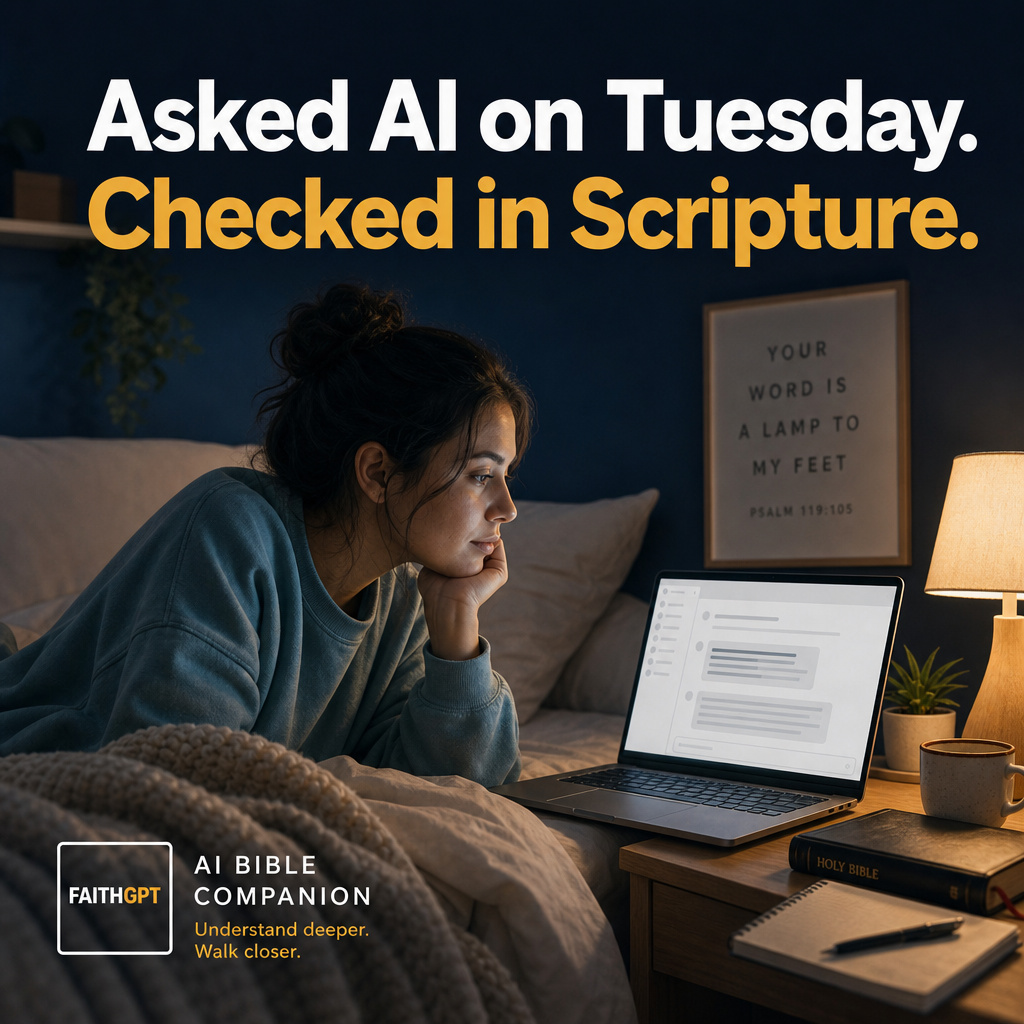
Ran for 16 days, from August 9 to August 25, 2026, the last day Crush saw it.
Run by Faithgpt on Facebook. Crush is not the advertiser and does not verify its claims. See this ad in Meta's Ad Library(opens in a new tab)
Make your own version of this ad
Crush makes it, launches it in your own Meta ad account, scales the winners and pauses the losers.
About this ad
- Meta Ad Library ID
- 1105173998822469
- Platforms
- Facebook, Instagram, Audience Network, Messenger, WhatsApp and Threads
- Relaunches
- 0
Ad text
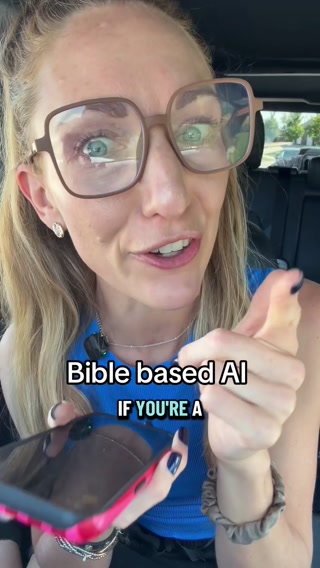
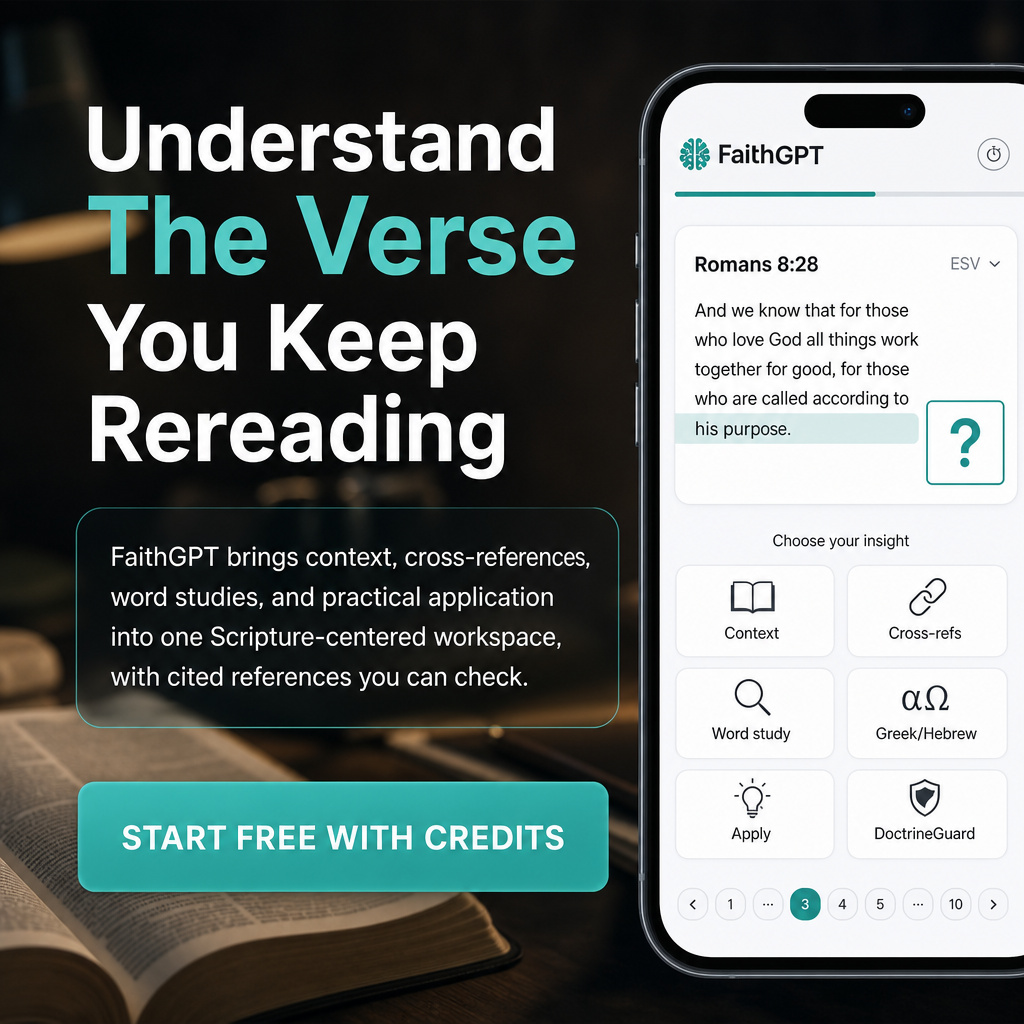
Before you trust that AI Bible answer, make it show its work. Because the scariest part is not when a chatbot says, “I don’t know.” The scariest part is when it sounds right… and might be wrong. I learned that the uncomfortable way. I was sitting there with my Bible open, phone in my hand, and that familiar tight feeling in my chest. I had just read the same passage 3 times and still felt like I was missing it. I remember thinking, “I have a hard time understanding the language in the bible.” So I did what a lot of people do now. I asked a generic AI to explain it to me. It answered fast. It answered confidently. And for about 30 seconds, I felt relieved. Then I got this sinking feeling. Because I could not tell where any of it came from. No context. No cross-references. No “here is the verse I’m basing this on.” Just a smooth paragraph that sounded like something a smart person would say. And I had already heard the warnings. “It lies very confidently a lot.” “It hallucinations, it lies it will give you heresy mixed with some truth.” I didn’t want to be dramatic, but I also didn’t want to play games with Scripture. And I definitely did not want to slowly train myself to trust a machine more than God. That night, I went down a rabbit hole. I read thread after thread where people were basically saying the same thing I was feeling. Some people were excited. Some people were freaked out. A lot of people sounded like me: grateful for the help, but uneasy in their spirit. One line hit me in the gut because it was exactly my experience: “…it feels great..however I do feel a little sad…” That was it. I wasn’t just looking for information. I was looking for peace. I wanted clarity without that “what if I’m being misled?” anxiety hanging over everything. And the problem was not that I was asking questions. The problem was I was asking questions in a place that did not force the answer to stay anchored to the Bible. That was my turning point. I stopped asking, “Can AI help with Bible study?” And I started asking a better question: “If I’m going to use a tool, what guardrails would actually make it safe enough to use with a clear conscience?” After reading through 8 different Reddit threads on this exact topic, a pattern was obvious. The people who felt the most at peace were not using AI like a pastor. They were using it like a search engine. One comment basically became my rule: “Don’t take advice from ai… use it as a search engine.” And another became my non-negotiable: “Always verify any information you get from it.” That is what led me to FaithGPT. Not because I wanted a magic Bible robot. I didn’t. I wanted the opposite. I wanted something that would slow me down in the right places. Something that would push me back into the text instead of pulling me away from it. Something that would help me learn without pretending to replace discernment, prayer, or community. What was different right away was this: FaithGPT does not just hand you a confident-sounding answer and call it a day. It helps you ask the right follow-up questions automatically, like: 1) Where is this idea in the passage context? 2) What other verses cross-reference this theme? 3) What is the meaning of key words in the original language, in plain English? That sounds simple, but it changed everything for me. Because when I see the verses, I can breathe again. When I see cross-references, I’m not trapped in one isolated interpretation. When I see the key-word meaning, I stop guessing what an old phrase might mean today. And just as important, it keeps me in a posture of checking, not consuming. Here is what it looked like in real life for me. I asked about a topic I kept spiraling on. Not “Tell me what to do,” but “What does the Bible say about X?” That wording matters more than people realize. FaithGPT brought me straight to Scripture first. Then it offered an explanation that stayed connected to those verses. Then it gave me cross-references so I could keep reading. It did not feel like an autocorrect that anticipates what someone will reply. It felt like a study helper that kept pointing at the page and saying, “Here. Look. This is where that comes from.” And that is the whole point. I’m not trying to outsource my relationship with God. I’m trying to remove the friction that makes me quit. Because if you have ever bought a heavy study Bible or a concordance, you know the tradeoff. The insight can be rich, but it can also be a lot. Tiny print. A million notes. And you still have to know where to look. I even went through 18+ review excerpts across 3 different Bible tools while I was figuring out what I needed. People loved “parallel related scriptures.” People also complained the print was “so small.” Some literally said a “larger print edition” was kind of a joke. And more than 1 person said, “Wish it was available as an E-book.” That was me. I wanted depth without needing to haul a mini library. And I wanted clarity without getting spoon-fed someone’s opinion. Now, I can already hear the objections, because I had them too. “Why pay for a niche tool if free AI exists?” For me, it came down to trust and structure. Free chatbots are built to be helpful in general. They are not built to keep you anchored inside Scripture with visible references. If you are going to use AI anyway, I would rather use the one that makes it easier to verify. “Is it wrong to ask AI for hints?” I’m not here to tell you what to do. But I will tell you what helped my conscience. I stopped asking it to be my guide. I started using it to get me back into the Bible faster, so I could actually read and pray. “Isn’t this spiritually dangerous?” I’ve seen people call it everything from harmless to “a sort of ouija board.” I get the fear. That is why my personal line is this: I don’t ask it for spiritual direction. I don’t confess to it. I don’t treat it like a voice. I treat it like a tool that points me to verses, context, and cross-references. And I keep my Bible open while I use it. “What if it’s still wrong?” Then I do what the wisest people keep repeating: “…don’t take its word for it ever.” FaithGPT is not a replacement for testing things against Scripture. It is a way to do that faster and with less confusion. The biggest change for me was emotional. I used to finish an AI answer and feel a weird mix of relief and guilt. Like I got what I wanted, but I didn’t like how I got it. Now it feels clean. If I get clarity, it is because I saw the verses. If I get insight, it is because I read the context. If something “opens my eyes,” it happens while I’m actually engaging Scripture, not just absorbing a paragraph. And a lot of times, I use it exactly like someone said in that thread: “…as a starting place for prayer.” That is the part people do not talk about enough. The goal is not to win Bible trivia. The goal is to be formed. So if you are already using AI for Bible questions, and you are living in that loop of curiosity plus suspicion, try this approach. Do not just ask for an answer. Ask for context. Ask for cross-references. Ask for original-word meaning in plain English. And always verify. That is what FaithGPT helped me do. If you want to check it out, start with 1 passage that has been tripping you up. Keep your Bible open. Ask FaithGPT to show you where it got everything. Then decide how you feel when the “proof” is right there on the page.
Where the ad sends people
faithgpt.io
Check the Bible AI Sources
AI can sound confident and still miss the point. FaithGPT helps you study any passage with Scripture context, cross-references, and original-word meaning. Get deeper insight without trading discernment for speed.
Sign up: faithgpt.io(opens in a new tab)