Blood Pressure Hub
Blood Pressure Hub Facebook ad: “read this if you have hypertension”
Ran for 6 days, from September 5 to September 11, 2026, the last day Crush saw it.
Run by Blood Pressure Hub on Facebook. Crush is not the advertiser and does not verify its claims. See this ad in Meta's Ad Library(opens in a new tab)
Want an ad like this for your product?
Crush makes new ad images for your product from this ad: your logo, your product photo, your offer.
Trials from $19.95 USD, then $79.95 USD a month. Cancel anytime.
About this ad
- Meta Ad Library ID
- 1108973804787113
- Platforms
- Facebook, Instagram, Audience Network, Messenger, WhatsApp and Threads
- Relaunches
- 5
Ad text
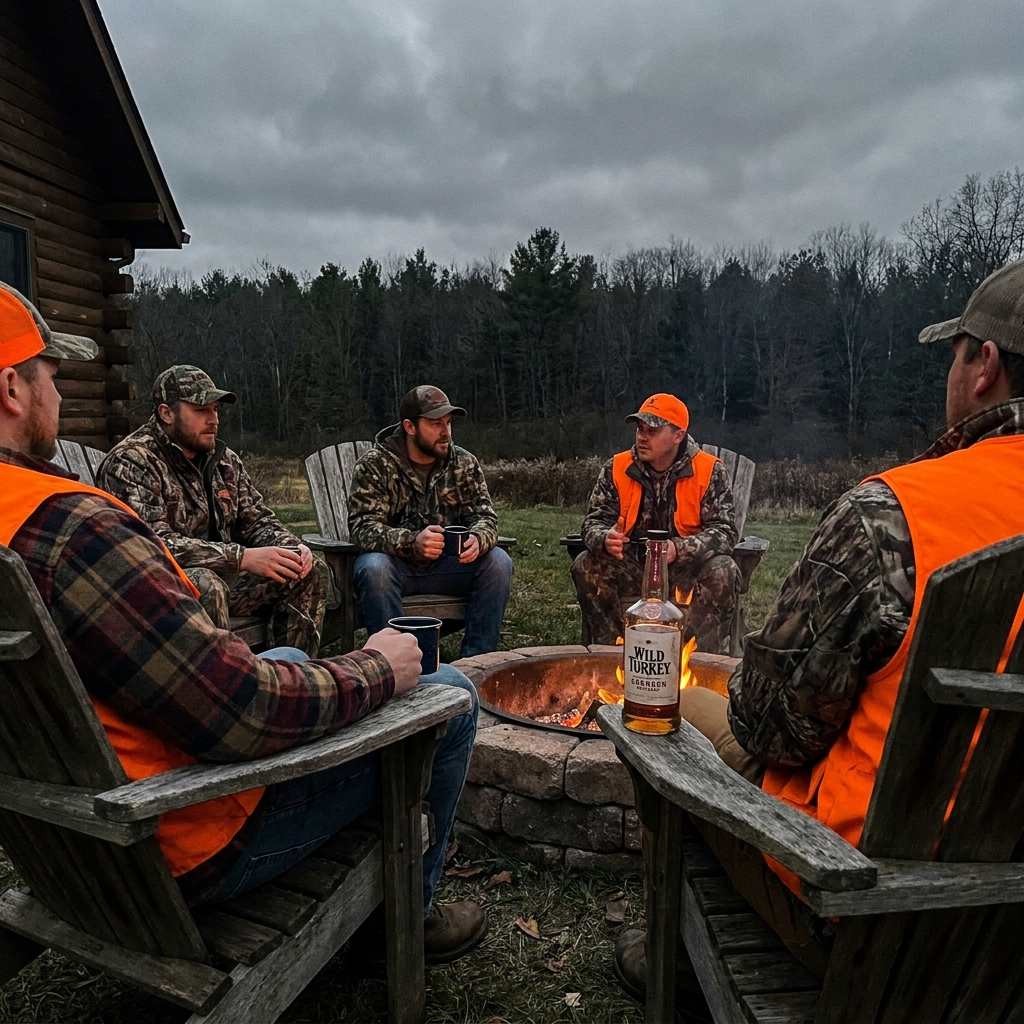
If your doctor has told you your blood pressure is 160-something over 100 and you've got three months to bring it down before the lisinopril starts, please read this before you pour the bourbon down the sink. My hunting buddy did exactly that. He gave up everything for 102 days, got ten points, and died at deer camp in October. I'm writing this on my back porch at 11 PM the night before opening weekend. There are four chairs around the fire pit at deer camp this year instead of five. The bottle of Wild Turkey he always brought hasn't been opened. It sat on the cooler all weekend in October and nobody touched it. It's still in the cabin. If you're a man over 50 who likes a drink at the end of a long day and has been told his blood pressure is too high, or you know someone who has, please read this whole thing. I know it's long. I know your phone is buzzing. I know there's other things to do. Eight months ago I would have torn up every magazine and inbox I had to find what I'm about to tell you. Hank Meier was my hunting buddy for twenty-eight years. We met at a gun show in Indiana in 1996. From that fall on, we went up to a cabin in Wisconsin every opening weekend with three other guys. Twenty-eight Octobers. Same five chairs around the same fire pit. Same routine, the bourbon poured after the rifles were locked up. Hank brought Wild Turkey. He'd been bringing the same bottle for twenty-eight years. Last July, he stopped bringing the bottle. By October, Hank was in the hospital. Hank went in for a routine physical on June 21st last year. He was 59. He felt good. The man could still field-dress a buck on his own at 59. He still loaded his own shells. He told me at breakfast the morning of the appointment that he was only going because his wife had been pestering him for six months. Three days later his doctor called him at the shop. 166 over 103. Both arms. Twice. "Your blood pressure is too high, Hank. We need to talk about the salt and the drinking." Hank called me from his truck that night. I was the first person he told. Not his wife. Me. He said, "Doc says I have to cut the salt and quit the bourbon. Completely. No exceptions. She wants to re-test in three months, and if it's not down, she's starting me on lisinopril." I said, "What are you going to do?" He said, "I'm going to quit, brother. I'm not going on a pill for the rest of my life at 59. What else can I do?" He called his wife. He drove home. He poured every bottle in the bar cabinet down the kitchen sink. Wild Turkey. A bottle of Knob Creek. A bottle of Old Forester his son had given him for Father's Day. Two six-packs of Stella in the garage fridge. Then the salt shaker went in the trash, and the bacon, and the deli ham. I heard about it from his wife months later. She said it was over inside an hour. She said she stood in the doorway watching him do it and she didn't know what to say to him so she didn't say anything. For 102 days, Hank didn't touch a drop. Not at the Fourth of July cookout I hosted. Not at his brother-in-law's retirement party in August. Not at our preseason camp meeting in September when the four of us split a flight of bourbons and Hank drank seltzer water out of a rocks glass. He stopped going to his Friday lunch with the guys from the shop because three of them ordered pints at one and he couldn't sit there watching it. He told me on the phone in early September that he felt like he'd lost a piece of himself. He took garlic pills. His doctor had said it wouldn't hurt to try. The bottle sat on the windowsill above his kitchen sink, next to his magnesium and a bottle of fish oil his wife had bought him. He walked two miles every morning before opening the shop. He dropped twenty pounds in those three months. The man bought a juicer. Hank. With a juicer. I still can't picture it. He did every single thing his doctor told him to do. The follow-up reading came on September 30th. 156 over 99. He had given up the bottle, the Friday pint, the salt, three social events, and a piece of his identity for ninety days. His top number dropped ten points. He called me from his truck the same afternoon. He sat in his truck in the doctor's parking lot for forty minutes before he could drive home. He said, "Warren, I gave up everything. Everything. And it didn't work." I told him the doctor said she'd give him till Christmas because it was moving. I told him to keep walking, keep juicing, keep at it. I told him I'd see him at camp in three weeks. October 18th. Camp weekend. Four of us drove up Friday. Hank drove up Saturday because he'd had to work a half day at the shop. He showed up at the cabin at 4 PM gray. Not a touch off. Gray. Like the color had been wrung out of his face. I thought it was the cabin light at first. By dinner he had a headache behind his eyes he kept pressing on with the heel of his hand. He laughed it off. Said he'd been squinting at the road for four hours. By 11 PM he couldn't get the words out. He was trying to tell Glenn something about the propane and the wrong words kept coming. I drove him to the ER in Wausau at 2 AM. The other guys followed in Hank's truck. The ER admitted him at 4:15 AM. The doctor was young. Couldn't have been thirty-five. He looked at the cuff on Hank's arm and then at the scan and his face shifted in a way I can't unsee. 224 over 128. A bleed on the left side of his brain. Hemorrhagic stroke. Hank said, with the half of his mouth that still worked, "But I quit drinking three months ago." The young doctor said, "I know, Mr. Meier. I'm so sorry." Hank spent ten days in the ICU. I drove home on Sunday and drove back to Wausau on Tuesday with his wife. We took turns sitting with him. The other camp guys came up on Thursday. I learned things about blood pressure I never wanted to know. I learned that when an artery in the brain gives, the blood has nowhere to go, so it presses on the brain from the inside. It means the man you've hunted with for twenty-eight years stops being him. He looks at you like he's trying to place you. On Day 5, Hank asked me three times in fifteen minutes if I'd remembered to feed the dog. He doesn't have a dog. His dog died in 2011. The nurse explained the IV bag. She said it was something called nicardipine. Nicardipine is what they run when the pressure has to come down in minutes. She told us it forces the wall of the artery to relax so the bleeding slows. She said it was the only thing they had. She said at this stage they were hoping it could buy him time. It bought him ten days. Day 7 the swelling started pushing the rest of his brain over. The doctors talked about surgery. Then they talked about him not being a candidate because of how fast he was going. Then they stopped talking about surgery. Day 9 they took a piece of his skull out to give the swelling somewhere to go. The nurse called it a craniectomy. Day 10. October 27th. 5:42 AM. I was in the family room down the hall. His wife had asked me to drive her up the night before because she didn't want to drive home alone if something happened. A doctor I'd never seen walked in. I knew. I drove his wife home at 8 AM. The juicer was still on the kitchen counter. The walking shoes were by the back door. The garlic pills were on the windowsill above the sink, next to the magnesium. His Wild Turkey bottle, the one he'd packed for the cabin and never opened, was sitting in the cabin still. I went back up the following weekend to clean out his bunk and I left the bottle where it was. It's still there. The funeral was November 8th. We carried him. Five chairs at camp became four. After the funeral I tried to go back to normal. I couldn't. Because every time I opened my phone I saw guys at camp, guys at the shop, guys at church my age, posting things in the local hunting groups. "Doc said my blood pressure's up a bit, anyone tried garlic pills?" "Got my physical results back, 157 over 99, no big deal." And I knew. I knew some of them were doing exactly what Hank did. Quitting. Cutting the salt. Walking. Juicing. Taking the garlic pills. And dying anyway. I couldn't just sit there. So I started reading. Not because I wanted to. Because if Hank gave up everything for nothing, and I can't save a single one of these guys from what happened to him, then I can't live with that. I read for three weeks straight. Medical journals I barely followed. Blood pressure forums. Studies out of London and Sweden. And one thing kept showing up that no doctor ever explained to Hank. The reason Hank's number barely moved is that cutting back stops adding to the load. It does not put back what's already been lost. The thing that was lost was nitric oxide. Nitric oxide is the signal the lining of your arteries makes to tell the wall to relax and open ahead of every beat. Every beat, that signal is what lets the blood through without your heart having to shove it. Your arteries cannot do their job without it. Here is what no doctor told Hank. After 40, the lining makes a little less of that signal every year you're alive. Modern life burns through what's left even faster. Processed food, the salt, the stress at the shop, the bourbon, you name it. By the time a man is 55, most have lost a good share of it and have no idea. By the time Hank sat down at his physical at 59, his signal was already running low. His pressure wasn't high because of the Wild Turkey. It was high because there wasn't enough signal left to open the wall ahead of the beat, so every beat was hitting a wall that stayed closed. The same pour he'd handled fine at 35 was landing on a wall at 59 that couldn't open for it. Read that again. The drink didn't change. The signal did. And here is why quitting alone didn't save him. Stopping the salt and the bourbon stopped adding to the load. It does not put back what is already gone. His signal was already low by the time the doctor told him to quit. The wall was already stiff. The juicer, the walking, the garlic pills, those things slow how fast you lose what's left. They do not put back what's already gone. That's why his number wouldn't move. He gave up everything he loved to slow the bleeding from a wound that was already inside him. I sat with that for four days at deer camp by myself. I drove up there alone after Thanksgiving and I sat in front of the fire pit with his Wild Turkey bottle on the cooler in front of me and I read studies on my phone until the battery died. When I got home I called my own GP. Not Hank's. Mine. A woman who's been my doctor for twelve years. I trust her. I told her the whole story. I asked her what was on Hank's windowsill above the sink. She said, "Garlic?" I said yes. She said, "Warren, garlic thins the blood a little. It cannot open a wall that's lost the signal to open. It works on the blood. It does not restock the wall." Then she said it again: Garlic works on the surface. It does not put the signal back. I asked her why nobody had given Hank something that would actually put it back. She was quiet for a long time. "Because we don't prescribe supplements. And the thing that actually puts the signal back isn't a prescription. Lisinopril forces the wall open from the outside. It doesn't put the signal back either." I drove from her office to the Walgreens on the way home. I stood in the supplement aisle for almost an hour. Garlic in three different brands. Hibiscus tea in a box with a flower on it. Magnesium. CoQ10. A thirty-day "blood pressure support" kit with seven different bottles in it. Multivitamins with "heart health" on the label. Generic beet root capsules, $13.99, the cheap stuff. I bought the beet root capsules. I took them for two weeks. My next reading came back the same as the last one, 145 over 94. So I started reading again. And what I found made me throw the bottle in the trash. The thing in beets that becomes the signal is dietary nitrate, and heat destroys it. The cheap capsules are made from beet root powder that's been spray dried at high temperature. Purdue tested a shelf of them. Five to ten milligrams of nitrate a serving, against the 300 to 500 the studies used. You're paying $13.99 for red dust. Cold extraction bypasses that. The nitrate survives. I had been doing the right thing in the wrong form. I was furious. I'm still furious. About three weeks after that, I was scrolling Facebook on a Saturday morning. There's a private group I'm in for men over 50 who hunt in the upper Midwest. One of the guys posted a long letter his wife had written. Her brother had gone through almost exactly what Hank went through. Told to cut the salt and quit the drink after a doctor's call. Same protocol. Number barely moved. He'd then found a cold-extracted beetroot capsule, kept his Friday bourbon, and his blood pressure went from 165 over 101 to 137 over 84 in eleven weeks. I read that post six times. I started looking into the formula. What I learned is that there are five things a serious beetroot capsule has to do at the same time, or it's not worth your money. It has to deliver the raw material the lining makes the signal from. That's dietary nitrate. The same family as the nitroglycerin they put under a chest-pain patient's tongue. Not a vitamin. The actual building block. It has to get that nitrate to you alive. That's cold extraction. Heat kills the nitrate before the lid goes on, so a spray-dried powder is the right plant with the signal cooked out of it. It has to carry the dose the research used. That's 400 milligrams of dietary nitrate per serving, standardized. The trials that moved blood pressure used 300 to 500 a day. Without the dose, the signal never gets back to where the wall can use it. It has to prove it. That's a third-party lab test with the certificate published, so the number on the label is the number in the capsule. And it has to be taken every morning. Because nitrate doesn't stay in your body. And no, you can't just eat beets. The soil store beets grow in is too depleted for them to carry much, and what little they carry breaks down fast. Five things. All five. At the same time. Every morning. I went back through every bottle I'd ever bought at Walgreens. Not one of them did all five. Most of them did one. The expensive ones did two. None of them were cold-extracted. The only formula I could find that hit all five is called BeetWise, by Zenther. Two capsules in the morning. They put a 90-day money-back guarantee on it tied to your actual cuff. If your numbers don't improve, you get every penny back, no questions asked. I almost didn't order it. After everything. After the Walgreens aisle. After the garlic pills on Hank's windowsill. After watching what happened to a man who did everything right. But the four of us at camp this year are all over 55. Two of us still drink the way Hank drank. And my younger brother Randy, 54, came back from his physical in February with a reading of 159 over 100 and the same conversation Hank got. "Cut the salt. Quit the drink. Completely. We'll retest in three months, and if it's not down we start lisinopril." I ordered six bottles. One for Randy. One for me. Three for the guys at camp. One for Hank's brother who lives in Texas. I sent Randy's bottle without asking. Wrote a note. Said, "Take this every morning. Seriously, just do it." Randy kept drinking. He's stubborn the way Hank was stubborn. But he took the two capsules every morning with his coffee. He had not changed his diet. He had not started walking. The first week, nothing. Not a point on the cuff. He nearly stopped. His follow-up reading came back five weeks ago. 136 over 82. Down from 159 over 100. In ten weeks. Without quitting. Without changing one thing about his life except two capsules with his morning coffee. He called me from his car in the parking lot. My younger brother. 54 years old. He said, "Warren, I think Hank died because nobody told him about this." I had to hang up. His doctor read his cuff log and said, "Keep doing what you're doing. We'll check every eight weeks. If this holds, no lisinopril." Then there's the Facebook brother-in-law. 56 years old. 165 over 101 down to 137 over 84 in eleven weeks. He had kept drinking too. My buddy Glenn at camp. 58. Borderline at his last physical. Started taking it eight weeks ago. He says the dull headache he'd had behind his eyes every morning for two years, the one his doctor told him was "probably nothing," is gone. He says his afternoon energy crash at 2 PM is gone. Hank's wife takes it now. Two of Hank's sisters take it. The guys at the shop pass it around. I'm not a doctor. I'm not a scientist. I'm a 57-year-old man who owns a small machine shop in central Illinois and lost his best friend in October for nothing. I'm not getting a dime from this. I have no relationship with the company. I'm writing this at 11 PM on the porch the night before opening weekend because the camp opens in eight hours and there's going to be four chairs again and I cannot stop thinking about my brother Randy and whether he'd have been the next chair if he hadn't gotten that bottle when he did. Here's what I know because I watched it. Cutting back stops adding to the load. It does not put back the signal that's already been lost. Garlic works on the blood. It does not put back the signal the wall runs on. Heat kills the nitrate in a cheap beet capsule before you ever open it. Cold extraction bypasses that entirely. Hank gave up everything he loved for 102 days, and it didn't save him, because nobody told him what was actually broken. I wish someone had told us before June 21st of last year. Before the physical. Before the pour-out in the kitchen sink. Before 102 days of seltzer water in a rocks glass. Before October 27th at 5:42 AM. Not cutting back. Restoring. That's the line that finally made it click for me. Read the page. Not for me. For whoever you'd leave behind. https://zenther.co/pages/listicle Hank used to say at camp, "You can't unring the bell, but you can stop ringing it." You can stop ringing it. Warren Dahl, age 57 Central Illinois P.S. The Wild Turkey is still on the cooler in the cabin. None of us can bring ourselves to open it. None of us can bring ourselves to throw it out. Opening weekend is in eight hours and the four of us will sit around the fire pit and the fifth chair will be empty and we'll say his name when we pour the first round of seltzer. $63,000 in hospital bills. $11,200 for the funeral. 102 days of Hank giving up everything he loved for ten points. And a bottle of capsules that costs less than the camp weekend buy-in. Please. Don't let your hunting buddy's chair be empty next year. https://zenther.co/pages/listicle P.P.S. If you're already on lisinopril or amlodipine, keep taking it. This goes next to the pill, never instead of it. Bring your cuff log to your next appointment. P.P.P.S. I don't work for Zenther. They don't know I exist. I'm writing this at 11 PM because I'm leaving for camp at 5 AM and I cannot sleep. Randy is meeting me at the cabin tomorrow with his cuff log in his back pocket. Hank won't be there. Send this to whoever you sit around a fire pit with in October. Send it to your hunting buddy. Send it to your brother. Send it to your father. Send it to the guy you've drunk Wild Turkey with for twenty-eight years. Even if he hasn't poured one in a year. https://zenther.co/pages/listicle
Where the ad sends people
zenther.co
read this if you have hypertension
Zenther Beetwise, 400mg verified nitrates per serving not 5mg like most brands. Cold-extracted beetroot supplement with published lab results. 90-day guarantee. Try BeetWise today.
Learn more: zenther.co(opens in a new tab)