Karen Mitchell
 Facebook ad: “If you own a Boxer read this”
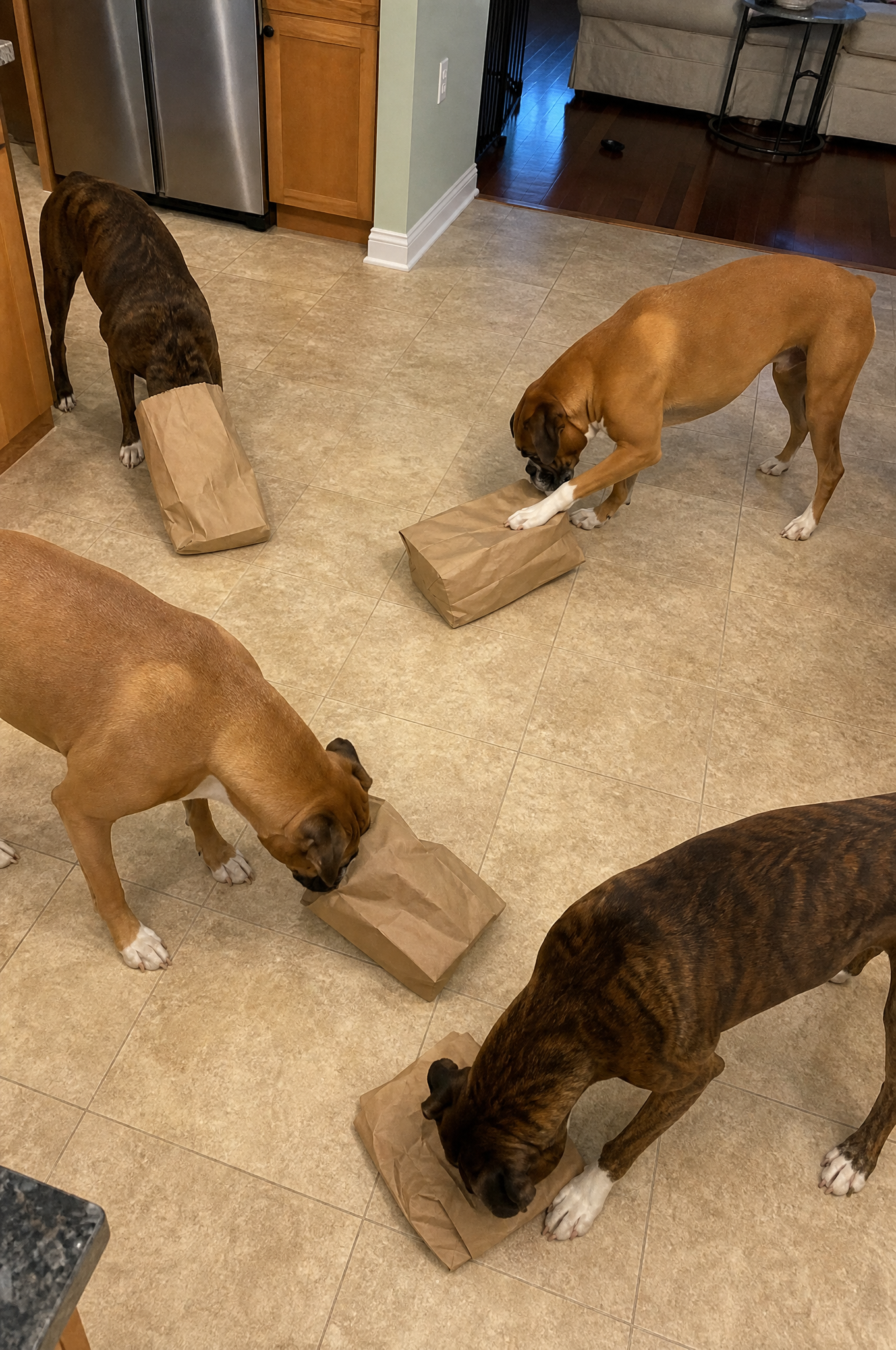
Ran for 47 days, from September 25 to November 11, 2026, the last day Crush saw it.
Run by Karen Mitchell on Facebook. Crush is not the advertiser and does not verify its claims. See this ad in Meta's Ad Library(opens in a new tab)
Make your own version of this ad
Crush makes it, launches it in your own Meta ad account, scales the winners and pauses the losers.
About this ad
- Meta Ad Library ID
- 1110672828134164
- Platforms
- Facebook, Instagram, WhatsApp and Threads
- Relaunches
- 0
Ad text
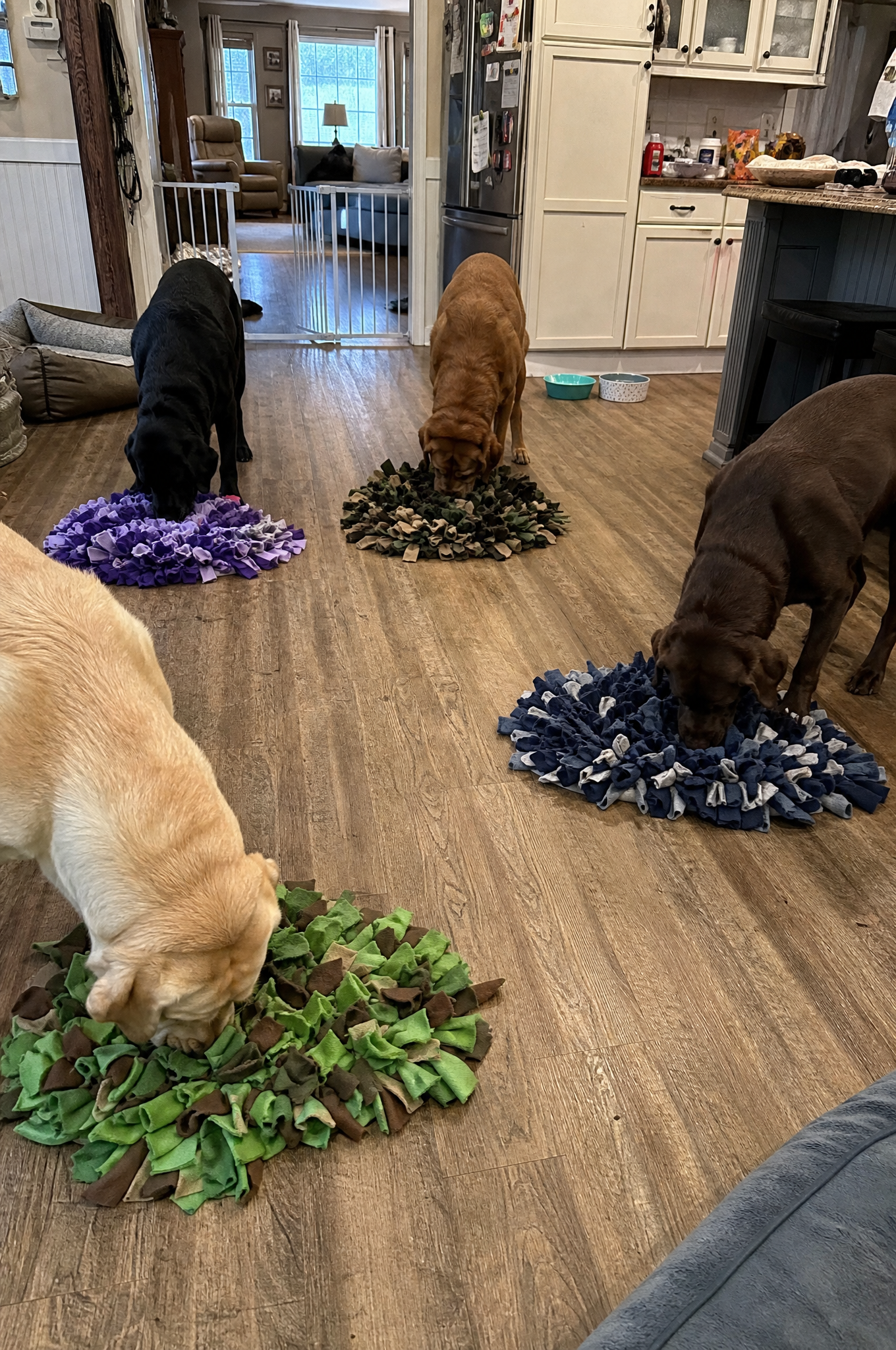
I run a small Boxer boarding business out of my home. Last week, a client sent me a text that made me cry at my kitchen table. "I need to know what you're doing with the dogs at your house. Duke spent 5 days with you and came home calmer than he's been in 2 years. He walked in the door and lay down on his bed. He didn't pace. He didn't launch at anyone. He didn't howl when I left for work this morning. My husband thinks you switched dogs on us. Please tell me what you're doing." My husband and I have been running a small home Boxer boarding service for the past 8 years. 3 to 4 dogs at a time. Quiet, calm environment for owners who don't want to leave their dog at a big kennel. And about a year ago, something started happening that I wasn't expecting. Clients would pick up their Boxers and send me updates like: "He hasn't paced since he came home. What did you do to him?" "She's settling on her bed in the evenings now. She's never done that. What are you feeding them?" "He walked past another dog on our walk this morning without lunging. That's new." At first I thought it was the vacation effect. Dogs are calmer after being in a structured environment with other dogs. They come home tired. But then a woman named Diane, who boards her 3-year-old Boxer Bruno with us every few months, pulled me aside at pickup. She looked at me and said: "Bruno has been on fluoxetine for 8 months. Prescribed after I called the vet in tears. I forgot to pack it when I dropped him off. He's been off it for 5 days now. He's calmer than he was on the medication. What the hell are you doing at your house!?" I told her the truth. "It's the brain work." She stared at me. "What?" "Not the food. Not the environment. Not the exercise. The brain work. There's something happening in your dog's brain at home that every trainer you've hired is ignoring. I only figured it out after my own Boxer nearly broke my family apart." She sat down at my kitchen table and asked me to tell her everything. So I told her about Cooper. Cooper is my 4-year-old Boxer. The kind of dog that makes strangers walk up and ask if they can pat him. Always carrying a rope toy through the house like he's carrying a prize. Always leaning his full body weight against my legs like velcro. But 2 years ago, he was destroying my house and my marriage. It started so small I almost missed it. Cooper started pacing. Kitchen to living room to hallway to bedroom and back. Pacing like there was a motor inside him running that he couldn't turn off. Then the jumping started. 68 pounds launching into the chest of every person who walked through our front door. My mother stopped visiting after Cooper knocked her into the hallway wall and left a bruise on her hip. Then the pulling. I had a permanent callus on my palm and tendinitis in my right wrist. Every walk was a physical battle, and I was losing. Then the selective hearing. He could sit, stay, and come in a quiet room. The second the doorbell rang or we went outside, every command disappeared. I could stand 3 feet from him screaming his name and he wouldn’t hear me. Then the separation anxiety. Howling when we left. Baseboards chewed near every exit and at times we’d come home to what looked like a crime scene of our couch ripped apart. So I did what every good dog parent does. I hired a trainer. Group obedience. $119. 6 weeks. He performed perfectly in the classroom and forgot everything the second we got home. Private trainer. $150 a session. 4 sessions. $600. He told me to knee Cooper in the chest when he jumped. Cooper started treating the knee like an invitation to wrestle. He told me to ignore the behavior. Cooper just found another angle and kept going until I broke. Board-and-train. $1,200 for 10 days. He came home calm for 5 days. Day 6, the doorbell rang and everything collapsed. Calming chews. 3 brands. $380. He ate them and paced the hallway 20 minutes later anyway. CBD oil. $89 for 2 months. Did absolutely nothing. Extended walks. 30 minutes became an hour. An hour became 2 hours. Every month he was fitter, stronger, and harder to hold on the leash. I was conditioning a catch dog athlete and wondering why he needed more every single week. My vet prescribed fluoxetine. Twice daily. $42 a month. It worked, the pacing stopped, the jumping stopped. But so did Cooper. He stopped doing the kidney bean wiggle when I came home. Stopped making his woo-woo sound in the hallway when my daughter came back from school. Stopped carrying his rope toy from room to room. He just lay on the tile with his eyes half open, 68 pounds of a ghost on the floor where a dog used to be. My husband looked at him one morning and said, "He looks like someone turned him off." My daughter Lily said, "I don't want him to be sleepy. I want him to be Cooper." The bill by then was over $2,400. And I had a medicated dog whose personality had been erased because nobody could tell me what was actually causing the chaos. I couldn't sleep that night. So I started researching. I joined every Facebook group I could find for Boxer behavior problems. I read every thread. Every comment. Every desperate question from owners going through what I was going through. And the same answer kept coming up over and over. The brain. Not the behavior. The brain. It made sense when I read the explanations. A Boxer has a catch dog drive bred over centuries to pursue, grip, and hold without releasing, crossed with an emotional sensitivity and bonding instinct that means they feel everything their owner feels while also craving close contact at all times. When both drives have a job, the dog is calm. When they don't, the brain runs both engines at full power with nowhere to send the output. That's the pacing, jumping, pulling, selective hearing and separation anxiety. And layered underneath all of it is the opposition reflex. Every correction, every leash pop, every knee to the chest triggers a hardwired genetic instruction to push back with more force. So every method I'd tried was fighting the output, nothing was actually speaking to his brain producing it. Walking tires the body. The brain comes home exactly as driven as before. Calming chews try to quiet a brain screaming for help. Fluoxetine shuts the brain down entirely, personality and all. Kneeing them in the chest gives a catch dog brain exactly the physical contact it was seeking all day. The board-and-train suppresses drives in a controlled environment that collapse the second the dog comes home. None of it addresses why the brain is producing the chaos. One night, buried in the middle of a Reddit thread I'd already scrolled past twice, I saw a comment that stopped me. A woman named Michelle had written this: "My 3-year-old Boxer was on fluoxetine for 6 months. $50 a month for a ghost dog. I tried 3 trainers and spent $1,800 for nothing to work. I was ready to rehome him." Right after this she said: "Then my breeder told me about a guide that was built specifically for the Boxer brain since everything I tried wasn't working." "Not generic training, but an actual system designed for how a catch dog brain with an opposition reflex processes information. Because normal training doesn't just fail them, it makes things worse." Everybody asked what it was. "It's called The Complete Boxer Guide. My breeder said it was the only thing she'd found in 18 years of breeding that addressed why Boxer training fails." Underneath her comment, 6 other people had replied confirming the same thing. "Same experience here. Tried 4 trainers before finding this guide. This is the only thing that actually worked." "My vet asked what changed. I showed her the guide." So I looked it up that night. It looked completely different from every other training program I'd seen. Not correction protocols designed for thick-skinned working breeds that make a Boxer's opposition reflex fire harder. Not ignore the behavior techniques designed for dogs with low persistence that a catch dog simply routes around. Not walk them more advice that builds a fitter athlete with more stamina to pull you off your feet. But a complete system built from the ground up for the catch dog drive and opposition reflex inside a Boxer brain. So I ordered it that night, it was only $37 and came with instant access which was perfect for me because I needed help asap. When I started reading it I could tell the difference immediately. This wasn't generic advice. This was someone who understood what was happening inside Cooper's head. I started the protocol the next morning. Day 1: Cooper's breakfast went from a metal bowl to a snuffle mat. Kibble scattered across the fabric, 12 minutes of nose work to find every piece. When he finished, he walked to the living room and lay down ready for a sleep. Day 3: I started the Threshold Pause at every door. By day 5, he was sitting at every door automatically. His brain had categorized the pattern and filed it as the rule, and the same drive that had made every wrong pattern impossible to break now made the right pattern impossible to break. Week 2: Check In Game throughout the day. The pacing decreased by half. Settling protocol on the mat. He fought it for 2 days. Day 3, he walked to the mat on his own, lay down, sighed, and put his chin on the floor. I sat on the couch and watched my Boxer voluntarily settle and I cried because I'd spent 2 years believing this was impossible. Week 3: We tapered the fluoxetine with my vet. Half dose for 2 weeks. Quarter dose for 2 weeks. Then stopped. The pacing tried to come back without the medication, but I just kept following the guide and it kept improving. Week 4: Lily came home from school. Cooper met her at the door. Full kidney bean wiggle. Rope toy in his mouth. Doing his woo-woo sound he hadn't made in months. Lily dropped her backpack and got on the floor and Cooper covered her face in licks and Lily said "Mommy, he's playing with me again." Week 6: 7:30pm. Quiet house. Cooper on his mat. Chin on the floor. Eyes closed. He didn't move for over an hour. Not because he was drugged, but because his brain had finally been given what it had been begging for. $2,400 on methods that either did nothing or erased his personality, and $37 turned his brain on. Once I saw how much it helped Cooper, I made one change to my boarding business that ended up changing everything. I started running the brain games and settling protocol with every Boxer that stayed with us. The snuffle mat at breakfast. The Threshold Pause at every door. The settling protocol on the mat. Every Boxer that stays with us now gets their brain fed. Not just their body exercised. And within a few months, the messages started coming. Diane's Bruno was the first big one. When I told her at my kitchen table that it was the brain work, she asked me for the guide link. 3 weeks later she sent me a photo of Bruno sleeping on his mat. "His energy is different. He's playing again but he can actually settle afterwards. He's off the fluoxetine, even my vet is shocked." Then Beau, a 2-year-old Boxer whose owner said "he came home and walked past 3 dogs on our walk without lunging. He's never done that." Then Stella, a 4-year-old Boxer whose owner said "she's settling in the evenings for the first time in her life. I can actually watch TV without her pacing and dropping toys in my lap every 30 seconds." And now Duke. 5 days at my house with the brain work protocol, he went home and his owner thought I'd switched dogs. I get a message like Diane's almost every week now. Different Boxer. Different owner. Same results. Not new food. Not new medication. Not more exercise. Just a brain that finally got what it’s been begging for. Here's what I tell every client who asks. Not all training works. Most of it is the wrong approach for this breed. Most training is designed for Labradors, it doesn't account for an opposition reflex that makes every correction counterproductive in a Boxer. If the training tells you to turn your back, you're giving a catch dog brain a new angle to work around. If it tells you to walk them more, you're building a fitter, more powerful athlete. If it tells you to medicate, you're erasing the dog to quiet the symptom. That's why generic trainers fail. That's why your dog improved in class then fell apart at home. In the training room the drives are dormant. Then real life happens and the catch dog drive fires and every command becomes inaccessible. The Complete Boxer Guide is the only thing I recommend. It's the only thing I use in my own home and the only thing I run in my boarding business. Because I can't risk a client's dog going home in worse shape than they came in. $37 with instant digital access plus 90-day money-back guarantee, so if your Boxer isn't dramatically calmer, more settled, and more responsive, you pay nothing. If your Boxer has been pacing, jumping, pulling, ignoring you, howling when you leave, or destroying things when you're gone, and you've tried the trainers and the chews and the walks and you feel helpless, just try it. But based on Duke's owner thinking I'd switched dogs after a 5-day stay, I know it’ll work for you too. 👉 https://pawpowa.com/pages/boxer-guide I started this boarding business because I love Boxers. I never expected it to become the thing that showed dozens of owners what was actually happening inside their Boxer's brain while they spent thousands on the wrong methods. Listen to your dog. If they're pacing your house all day, they're not being difficult. If they're launching at every guest, they're not being bad. If they're ignoring their name outside, they're not being stubborn. They're running a catch dog drive and an opposition reflex with no off-switch and nobody has given their brain what it actually needs. I wish I'd listened to Cooper sooner. 👉 https://pawpowa.com/pages/boxer-guide P.S. Cooper was on fluoxetine for 4 months. $42 a month for a ghost on a tile floor who used to carry a rope toy to the kitchen every morning doing his woo-woo song. I keep the 3 failed trainer invoices in my desk drawer. $2,400 worth of generic methods designed for a brain my dog doesn't have. I keep them as a reminder of how long I wasted trying to make the wrong approach work while his brain starved and his personality disappeared behind medication. Don't waste another month. The behavioral patterns that lock in while you cycle through trainers who don't understand the breed are patterns that get harder to break every week. Start tonight. 👉 https://pawpowa.com/pages/boxer-guide
Where the ad sends people
pawpowa.com
If you own a Boxer read this 👆
Pawpowa
Learn more: pawpowa.com(opens in a new tab)