
Inactive· since Aug 18, 2026
- 22
- days it ran
- 0
- relaunches
Ad copy
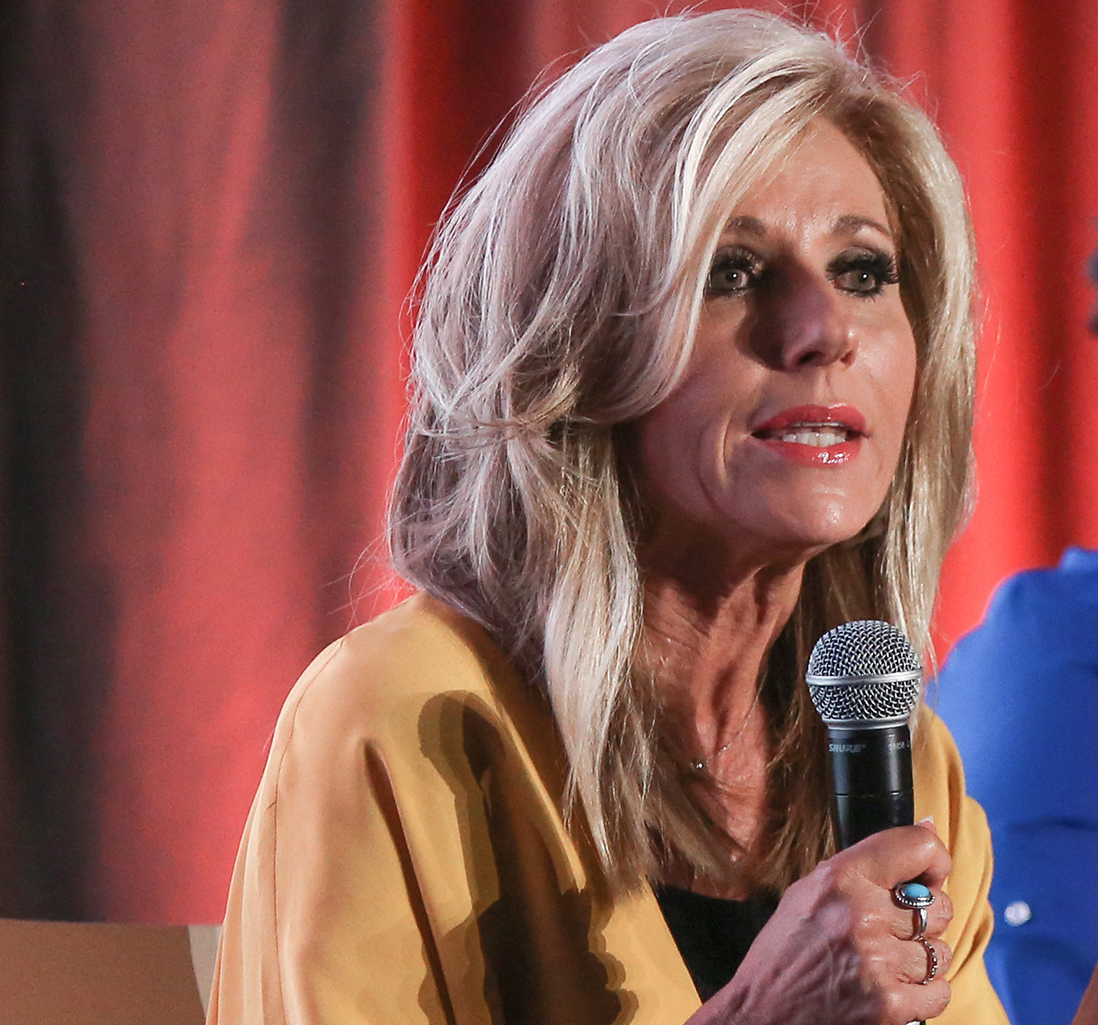
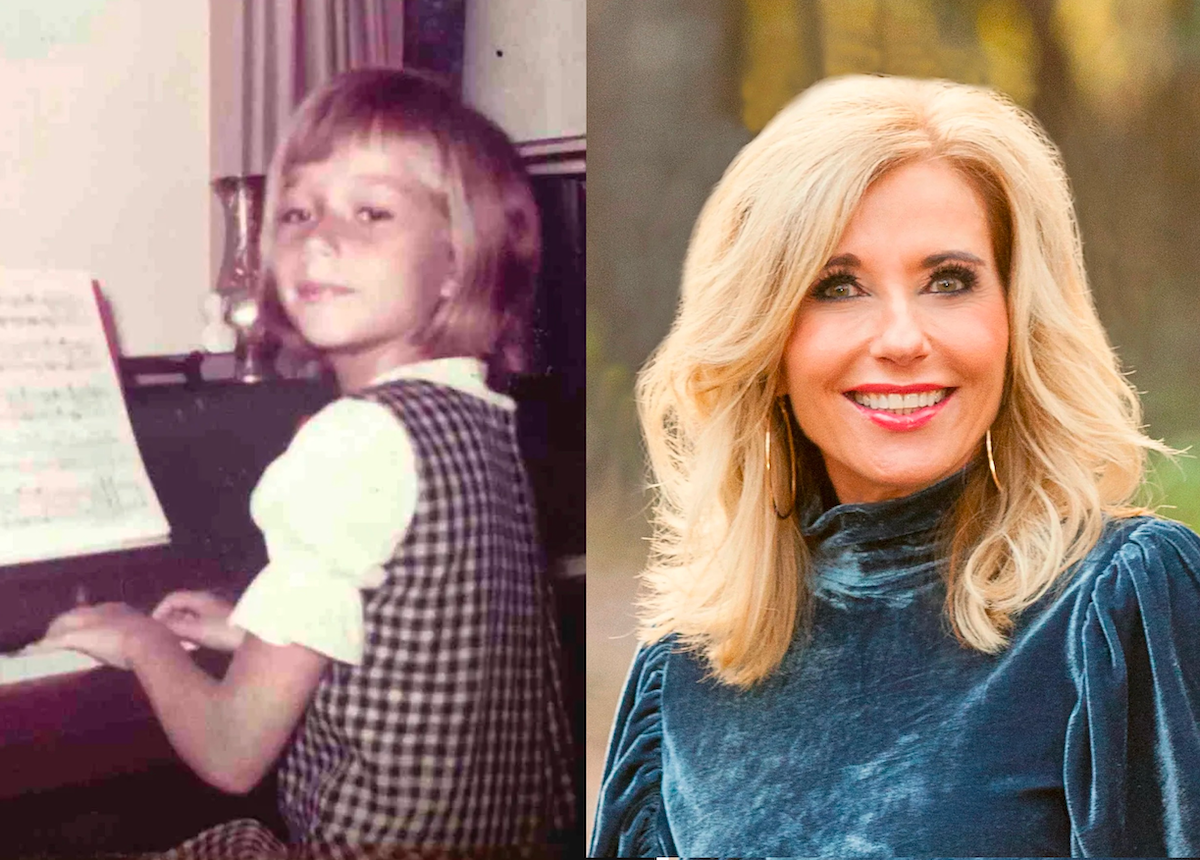
Carrie Underwood lost three babies in under two years — and the night she finally screamed at God the words she'd been swallowing, everything changed. Carrie Underwood — the seven-time Grammy winner whose very first hit was "Jesus Take the Wheel" — seemed to have the picture-perfect life. The voice of a generation. Sixty-four million records. A loving husband. A beautiful little boy named Isaiah. And a faith that was never an act. She grew up singing in a tiny Baptist church in Checotah, Oklahoma. When the industry warned her that releasing a song about Jesus was "risky," she just laughed: "I grew up in Oklahoma. I always had a close relationship with God. I never thought it was risky in the least. If anything, I thought it was the safest thing I could do." This was a woman who had walked with God her whole life. Which is exactly why what happened next broke her the way it did. "I'd kind of planned that 2017 was going to be the year that I work on new music, and I have a baby," she said. "We got pregnant early 2017... and it didn't work out." Listen to how she tells the rest. Listen to the rhythm of it: "Got pregnant again in the spring. And it didn't work out. Got pregnant again, early 2018. Didn't work out." Three babies. Under two years. "It sounds wrong when you say it," she admitted, "but it's one of those 'bad things that happen to other people.' It's not something that you ever envision yourself having to deal with." If you've walked this road, you know that feeling in your bones. One woman described it this way: "I laid on the nursery floor, sobs shaking my whole body. It felt like I was living someone else's life. Surely, this wasn't happening to me. But it was." Another: "An empty back seat, my empty body, our empty hearts." One in four women knows this grief. One in four. Sitting in your church pew, standing in line at the grocery store, singing next to you in the choir — carrying it silently. And here's the part of Carrie's story that millions of women recognized instantly. She kept performing. "Literally right after finding out that I would lose a baby, I'd have a writing session. I would literally have these horrible things going on in my life — and then have to go smile and do some interviews or do a photo shoot." She even wrote a song about it. She called it "Cry Pretty." Because that's what she was doing. Losing a baby in private. Smiling for the cameras in public. And ladies — be honest. You know how to cry pretty too. You've plastered your face with make-up, put on a fake smile, and walked into Sunday service like everything was fine. You've shut your office door because the tears came out of nowhere. You've cried in the shower where nobody could hear. You've held your breath walking past the baby section at the grocery store. You've felt sick at someone else's pregnancy announcement — and then hated yourself for feeling it. You've watched life around you return to normal, while for you, everything was different. The vacant nursery. The unused onesie. The due date that came and went while the world kept spinning. The emptiness of Mother's Day. And through all of it, you did what Carrie did. You said the right things. Because at first, she handled it the way every "good Christian" is supposed to: "In the beginning, it was like, 'Okay, God, we know this just wasn't your timing. And that is all right. We will bounce back and figure our way through it.'" God's timing. God's plan. Count your blessings. And when the second loss came... and then the third... she doubled down on the script: "I had always been afraid to be angry. Because we are so blessed. And my son, Isaiah, is the sweetest thing — he's the best thing in the world. And I'm like, 'If we can never have any other kids, that's okay, because he's amazing.' And I have this amazing life. What can I complain about? I have an incredible husband, incredible friends, an incredible job, an incredible kid. Can I be mad? No." Read that again. Because that little two-word sentence — "Can I be mad? No." — might be the most honest description of the trap Christian women live in that any celebrity has ever spoken. You've said it too, haven't you? Other people have it worse. I should be grateful. Good Christians don't question God. Anger is a sin. Swallow it. Smile. Sing the hymn. And meanwhile, the people around you made it worse — even the ones who loved you. They handed you their little sympathy-card theology: "God needed another angel." "Everything happens for a reason." "At least it was early." "You can try again." Every one of those phrases flung at you like darts. Every one of them making your grief feel smaller, sillier, less allowed. One writer called it what it is: spiritual ibuprofen. A pill to make YOUR pain more comfortable for THEM. And so you swallowed the anger, and swallowed the questions, and something terrible started to happen — the thing nobody warns you about. God started to feel far away. One woman confessed it like this: "I feel like I had a strong faith before I miscarried, but all of a sudden my doubts about God became debilitating. I felt totally abandoned — like, where did He go when I needed Him most?" Another: "When I tried to combine the belief that God was in control and that I had a miscarriage anyway, the wheels started to fall off my faith." Another, praying into the silence: "I feel so far away from you, God. I can only try to believe that you are sustaining me." That's where Carrie was. Hurting. Swallowing. Performing. Until early 2018, when she got pregnant a fourth time — and the signs started pointing toward another loss. And the dam broke. "I was hurt," she said. "I was a little angry. And of course, you feel guilty for being mad at your Creator." But this time, she didn't swallow it. This time, for the first time in her life, she told God the truth: "Why on earth do I keep getting pregnant if I can't have a kid? Do something. Either shut the door, or let me have a kid. Because I couldn't keep going down that road anymore." No polite church language. No performance. Just a shattered woman finally being honest with her Father. And then she said the sentence that should stop every grieving woman in her tracks: "For the first time, I feel like I actually told God how I felt. And I feel like we're supposed to do that." That was a Saturday. On Monday, she walked into the doctor's office fully expecting to hear the words that had gutted her three times before. Instead: "They told me everything was great." Carrie's own conclusion, through tears: "He heard me." That baby was born in January 2019. His name is Jacob. Now — hear this carefully, because this is where it matters for you. The miracle of that story isn't just Jacob. The miracle is what Carrie discovered on that Saturday: that the honest, angry, broken prayer — the one she'd been terrified to pray for two years — didn't push God away. It's the one He answered. One woman who walked the same road of loss wrote: "Finally I had it out with God in a yelling, stomping, fist-shaking, tearful fit unlike any I had ever dared before. As a 'good Christian' I had never fully admitted to Him, or to myself, just how angry I really was. But He had known the true nature of my heart all along. I couldn't shock or surprise Him. He was big enough to handle all my rage. And this didn't drive Him further away — He drew me close." He was big enough. But here's the question that should haunt you: Where was any of us supposed to LEARN that? Not from the sympathy cards. Not from the platitudes. Not from a church culture that hands grieving women a fake smile and calls it faith. There's only one place it's written down. The Bible you've been afraid to open. Because here's what nobody told you — the Bible is FULL of women and men who prayed exactly the way Carrie prayed on that Saturday. There's a woman named Hannah in 1 Samuel who wanted a baby so desperately, and grieved so bitterly, that she stood in the temple weeping and pouring out her soul — so raw, so unfiltered, that the priest watching her thought she'd been drinking. That prayer is IN YOUR BIBLE. God didn't rebuke her. He heard her. Her son was Samuel. There's David, the man after God's own heart, screaming on the page: "How long, O Lord? Will you forget me forever? How long will you hide your face from me?" — Psalm 13. That's Scripture. That's allowed. There's Naomi, who lost everything and told the whole town: "Call me Mara — bitter — for the Almighty has dealt bitterly with me." God didn't strike her down. He wrote her into the family line of Jesus. There's an ENTIRE BOOK of the Bible called Lamentations. Lament. Grief, given sixty-six chapters' worth of holy space. One grieving mother wrote: "For the first time in my life, I read the book of Lamentations. I discovered that, unbeknownst to me, one of my favorite passages came from there." It was there all along. She just had never made it that far. And then there's Jesus Himself, standing at the tomb of His friend Lazarus. He already knew He was about to raise him. He knew the ending was good. And He wept anyway. — John 11:35 He doesn't hand out platitudes at gravesides. He cries at them. "The LORD is close to the brokenhearted and saves those who are crushed in spirit." — Psalm 34:18 And maybe the most staggering verse in all of Scripture for a woman who has cried in the shower where no one could hear: "You keep track of all my sorrows. You have collected all my tears in your bottle. You have recorded each one in your book." — Psalm 56:8 Every tear. Collected. Recorded. Not one of them wasted, not one of them unseen — including the ones you cried alone on the nursery floor. This is the God who was waiting for you the whole time. But here's the heartbreaking truth about why you never found Him there. Most Christian women have never actually read these stories. They've heard fragments. A verse on a coffee mug. A Psalm at a funeral. But when they try to actually read the Bible — when grief finally drives them to open it, desperate for something real — they get lost. The Old Testament feels like a foreign language. They don't know where Hannah is. They've never heard of Lamentations. They start at Genesis, drown somewhere in Leviticus, and close the book feeling even more alone than before. One woman who suffered recurrent losses put it perfectly: "It quickly became apparent that I didn't have any real biblical framework to understand or explain my experiences within. And neither did anyone around me, for that matter." No framework. No map. No one to show her that her Bible was full of women just like her. That's exactly why this 52-Week Bible Study has changed so many Christian women's lives — especially women walking through seasons of grief. It walks you through the entire Bible — Genesis to Revelation — one weekly chapter at a time. Every chapter starts with a synopsis that gives you the context: who wrote that book, when, why, what was happening in the world at the time, and how it all connects back to Jesus — BEFORE you read a single verse. So when you reach Hannah, you understand her. When you reach the Psalms, you realize half of them are laments — holy permission slips to grieve out loud. When you reach Lamentations, you don't skip it. You finally see that God devoted entire books of His Word to people in pain — because He knew you'd need them. There's a short opening prayer at the start of every week, inviting the Holy Spirit in — for the mornings when you can't find your own words. Because there will be mornings like that. There already have been. There are seven Scripture references for your daily reading — gentle, manageable portions, about 20 minutes. Not a mountain to climb. A hand to hold. And there are three reflection questions at the end of every chapter — and ladies, for a grieving woman, this might be the most important part of the whole study. Because this is your Saturday prayer. Your private page. The place where, week after week, you finally get to do what Carrie did: actually tell God how you feel. The anger. The questions. The things you've never said out loud to anyone. There's dedicated journaling space for exactly this — because He can handle it. He's big enough. And He'd rather have your honest rage than your polite distance. It's spiral-bound, so it lays flat next to your own Bible — whatever translation you already own. And one more thing — maybe the most important thing for a woman in a hard season. Grief doesn't keep a schedule. Some weeks you'll show up every morning. Some weeks you'll barely get out of bed. This study was built for that. Each week stands alone. There's no catch-up pile. No date printed on the page shaming you for the days the grief won. Miss a day — miss a week — and grace is already built into the structure. You just open it again when you can, and God is still there, exactly where He said He'd be. Close to the brokenhearted. One woman who turned to Scripture in the darkest season of her life wrote: "During that time I grew closer to my God. God was my comfort." Another: "It caused me to turn to the Bible and to trust God's promises for real." Another: "I stopped looking for answers and started looking for God Himself. To my amazement, I found Him." And one grieving mother said the words that hold this whole story together: "I have always felt Jesus especially, palpably NEAR when I've given birth to death. His nearness isn't a small thing — in fact, it's the most potently medicinal thing." His nearness. That's what this is really about. Not answers. Not platitudes. Not "everything happens for a reason." Him. Near. Every morning. In His own words. Carrie found Him on a Saturday, in the most honest prayer of her life. "He heard me," she said. He hears you too. He's been keeping every tear in His bottle, waiting for you to come tell Him everything. Right now it's up to 62% off, and every order comes with a free pen pack. Don't spend another year crying pretty — grieving in secret while smiling on the outside. Don't spend another year swallowing the prayer God has been waiting to hear. This is what Carrie learned the Saturday everything changed: we're supposed to tell Him how we feel. Tap below and grab yours before they sell out.
If you love God but can't finish the Bible — read this ☝️
Need Tools For Kids Faith Learning? Engage Them With Weekly Guided Bible Tasks. Shop Now. Curious How To Teach Bible At Home? Kid Friendly Workbook With Guided Learning.
LEARN MORELike this ad? Make it yours.
Crush rebuilds this exact creative around your product — your brand, your colors, your offer — in about a minute.