Americanista
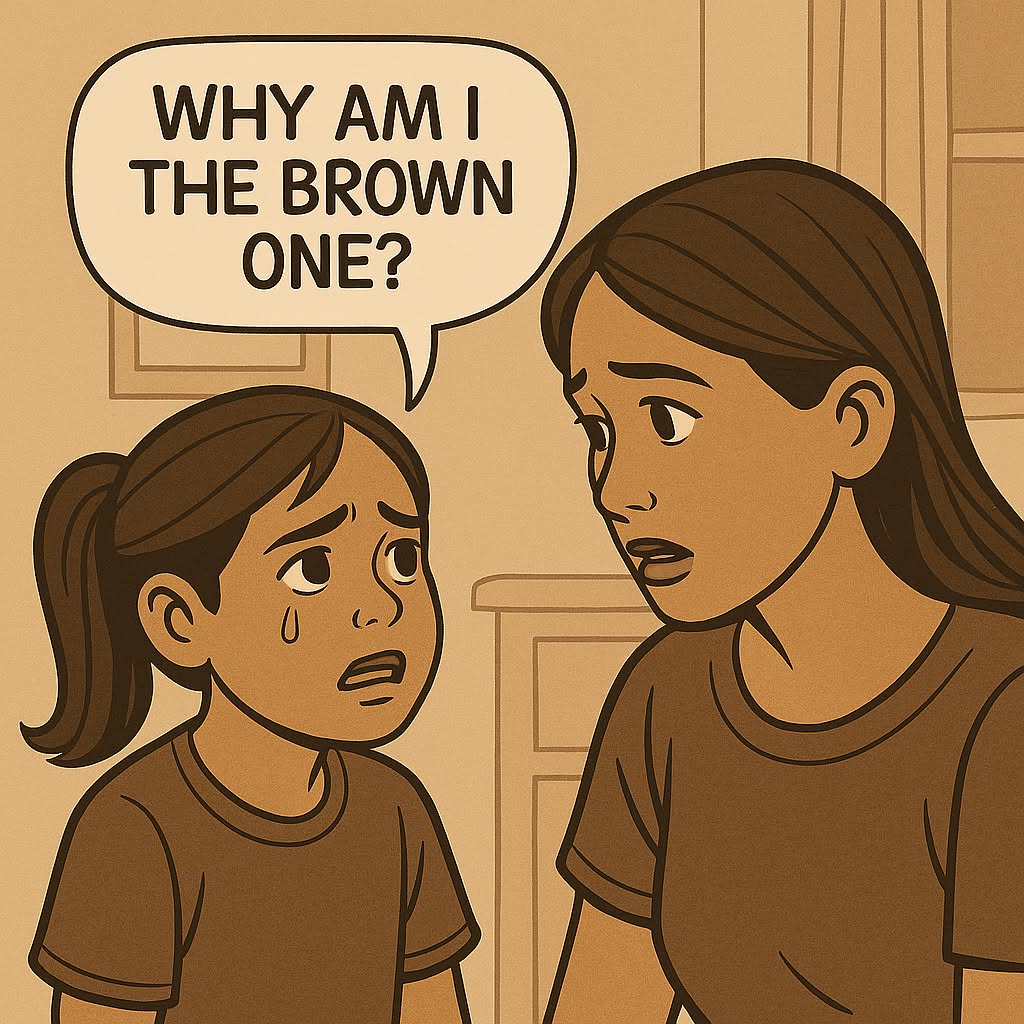
Americanista Facebook ad: “My Daughter Asked Why She Was The Brown One”
Ran for 129 days, from October 20, 2025 to February 26, 2026, the last day Crush saw it.
Run by Americanista on Facebook. Crush is not the advertiser and does not verify its claims. See this ad in Meta's Ad Library(opens in a new tab)
Want an ad like this for your product?
Crush makes new ad images for your product from this ad: your logo, your product photo, your offer.
Trials from $19.95 USD, then $79.95 USD a month. Cancel anytime.
About this ad
- Meta Ad Library ID
- 1132580638964027
- Platforms
- Facebook, Instagram, Audience Network, Messenger and Threads
- Relaunches
- 0
Ad text
My Daughter Asked Why She Was "The Brown One" A Native woman at Target stopped me and asked about my Trail of Tears shirt. What she said next made me realize I'd been fighting this battle all wrong. I'm Maya. Middle school teacher. Mexican-American. Mother of two. I thought I was doing everything right. My daughter Sophia is nine. Every Sunday, we do "heritage time." I teach her about Cesar Chavez, Dolores Huerta, our family history. We cook traditional food. We FaceTime with abuela so she hears Spanish. I've spent hundreds on diverse books. Her shelf looks like a diversity Pinterest board. Four years of this. Intentional. Exhausting. Beautiful work. Then last Tuesday, making pancakes, she told me about a game at recess. "The blonde girls stood by the swings. The soccer boys went by the goal. And I just... stood there. Because I'm the brown one, Mama. That's my group. Just me." She said it so casually. Like she was telling me what she had for lunch. My hand froze on the spatula. That night, I couldn't sleep. At 2 AM, I was at my kitchen table, laptop open, typing desperate variations: "Why does my daughter still feel other even though I teach her at home" "Child feels isolated despite diverse books" "How to make daughter proud of heritage when school doesn't acknowledge it" The advice was always the same. More books. More conversations. Find a more diverse school (can't afford to move). Homeschool (I work full-time). I'd already done all of it. Three days later, I was at Target wearing a new Trail of Tears shirt I'd ordered online. Not trying to make a statement. Just wearing a shirt. A Native woman approached me in the cereal aisle. Long black hair. She looked at my shirt. Really looked at it. "Thank you for wearing that," she said quietly. I started to respond but she kept talking. "My nephew is seven. He asked me last week why Native people are only in his history book during Thanksgiving. Like we don't exist anymore." She paused. Looked at my shirt again. "When he sees non-Native people wearing our history in regular places—not museums, not protests, just... Target on a Wednesday—it tells him something his school never will." "It tells him he's normal. Not special occasion. Not history. Normal." She walked away before I could fully process what she'd said. I stood there in the cereal aisle, cart half-full, completely frozen. Oh my god. That's what I'd been missing. All of Sophia's beautiful books? They lived on HER shelf. In HER room. At OUR house. Our Sunday heritage lessons? They happened at HOME. While her white friends did normal weekend things like soccer practice. The diverse movies we watched? We sought them out ON PURPOSE. They were OUR thing. Everything I'd worked so hard to teach her lived in careful, intentional, SEPARATED spaces. Education time. Home time. Heritage time. Meanwhile, at school, in stores, at friends' houses—everywhere she spent her ACTUAL life—history looked like white faces on every poster. Her brain was learning a pattern I never meant to teach: "The world is for them. My history is for home. I am the brown one. That's my separate category." I thought about how Sophia sees the world every single day. At school: Lewis and Clark on bulletin boards. Pilgrims. George Washington. Just THERE. Background. Normal. Then once a year: Hispanic Heritage Month. They put up a special poster about Frida Kahlo. For one month. Sophia NOTICES the difference. White history is everywhere, always, casual. Her history gets a MONTH. Gets made into a LESSON. Gets separated as SPECIAL. Special means different. Different means other. Other means "the brown one, standing alone." I started wearing that Trail of Tears shirt everywhere. Grocery store. School pickup. Soccer games. The park. Every single time, someone asked about it. Not because I was lecturing. Not because I forced a conversation. Because they were curious. And when they asked, Sophia heard it. She saw it. Adults—not her mom, OTHER adults—asking about Native American history like it was interesting. Normal. Worth knowing. Two weeks in, another parent at school pickup asked about my shirt. "What's this about? The Trail of Tears?" While Sophia was standing right there. I explained briefly. Five nations. Forced removal. 15,000 died. The parent's face changed. "I... I didn't know that. How did I not know that?" Sophia stood a little taller. Because it wasn't just MOM caring about this. It was being asked about. In public. At school. Like it mattered. I bought more shirts. Different designs. Different histories. Wore them rotating through the week. Started seeing other parents wearing them too. Trail of Tears. Tulsa Race Massacre. Japanese Internment. Last week at recess, a girl asked Sophia about the shirt I'd worn at pickup. The next day at school, that girl asked Sophia to tell her more. Sophia knew—because of our Sunday lessons. But this time, it didn't feel like "Mom's weird thing." It felt normal enough that another kid was curious. She hasn't called herself "the brown one" in three weeks. I'm not saying a shirt fixed everything. Identity is complex. But something shifted when her history started showing up in REGULAR places. On REGULAR days. In REGULAR ways. When it stopped being precious and protected and only at home. When strangers asked questions. When she saw that Mexican-American history could exist in the same spaces as Star Wars—just THERE, no announcement needed. Here's what that Native woman in Target helped me understand: You can't raise a proud child in isolation. You can teach at home all you want. But if the world says "your history is special occasion only," they learn what you didn't mean to teach. They learn special means separate. Separate means other. Other means standing alone, being "the brown one." These shirts? They're not protest gear. Not political statements. They're public normalization tools. History on comfortable fabric. The kind you wear to Target on a Tuesday. Each one shows what schools erase. Trail of Tears. All five nations. The forced journey. The tears. The truth. Beautiful designs. Quality cotton. Casual enough for anywhere. The magic happens when you wear them. People notice. Read. Ask. You share. They listen. And your kid sees: My history matters enough for adults to wear in public. Not just at home. Everywhere. Other parents have told me: "Wore mine to school pickup. Three parents asked. One teaches 5th grade, didn't know about the death toll." - Michelle R. "My neighbor asked about my shirt. First real conversation we've had about history in years." - David K. "I'm Native. Seeing non-Native people wear this and know the history when asked? That matters more than you know." - Jessica T. I own four different Trail of Tears designs now. And I'm having more conversations about real history than I did in four years of home lessons alone. Check if they're still available: https://americanista.com/lp2 7-day guarantee. Multiple colors and styles. They sell out because people are ready for this. Ready to normalize instead of tokenize. Ready to show kids: your history is everywhere-important, not special-occasion-important. You can keep doing what you're doing. Teaching at home. Buying books. Having the conversations. And those things matter. Keep doing them. But if your kid still feels like "the brown one"... If they still ask why their history is only at home... If you want them to see their heritage normalized in everyday spaces... See what designs are available: https://americanista.com/lp2 The history happened. Over 60,000 people forced from their homes. Five nations. 15,000 died. Schools barely teach it. But you can wear it. And when people ask—and they will ask—your kid finally sees: This is normal. This is everywhere. This is mine. And it matters. That's what the woman in Target taught me. That's what changed everything.
Where the ad sends people
americanista.com
My Daughter Asked Why She Was "The Brown One"
That's what changed everything.
Learn more: americanista.com(opens in a new tab)