Wellness Insider
 Facebook ad: “Feel Like Yourself Again”
Running for 22 days since October 9, 2026. Crush last saw it on October 31, 2026.
Run by Wellness Insider on Facebook. Crush is not the advertiser and does not verify its claims. See this ad in Meta's Ad Library(opens in a new tab)
Make your own version of this ad
Crush makes it, launches it in your own Meta ad account, scales the winners and pauses the losers.
About this ad
- Meta Ad Library ID
- 1143093398196532
- Platforms
- Facebook, Instagram, Audience Network and Threads
- Relaunches
- 0
- Niche
- Hair Care
Ad text
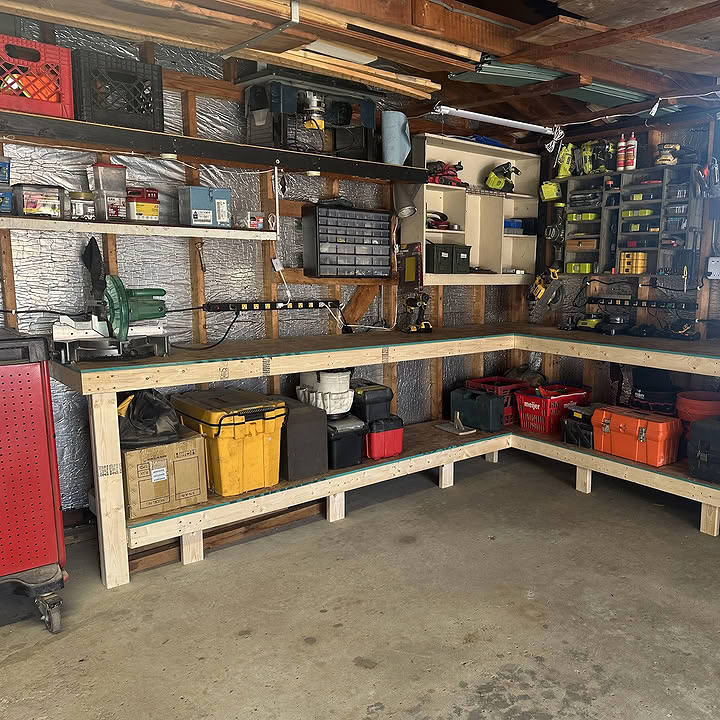
My husband finished building the pergola in the summer of 2022 and he has not picked up a power tool since. It took him 3 summers to build it. Three. He started in June of 2019, the year he turned 56, and he worked on it on weekends and the occasional weeknight, hauling lumber from the Home Depot in Greenville in our Tacoma, sketching out the joinery on the back of envelopes at the kitchen table. He poured the concrete footings himself. He cut every notch. He sanded every post until the cedar felt like skin. Our neighbor Dale, who's a contractor, came over one Saturday in 2021 to look at the rafters and just said, "Brian, this thing's gonna outlive both of us." Now Brian sits under it. That's it. He goes out around 9 in the morning with a cup of coffee and the iPad. He sits in the green Adirondack chair that he built before the pergola. He watches the birds at the feeder. Around noon he comes back inside for lunch. After lunch he sits in his recliner in the living room and falls asleep with the news on. Around 4 he goes back out under the pergola and sits there until I tell him dinner is ready. He used to be the man who couldn't sit still. I want to say that again, because I think it matters. He used to be the man who could not sit still. If you'd told me 10 years ago that my husband would spend the better part of a Saturday in a chair, I would have said you had the wrong Brian. The Brian I married was the man who got up at 5:30 on a weekend to start a project before I'd even brewed the coffee. The Brian I married built our deck in 1998 with his cousin and a borrowed compound miter saw. The Brian I married rebuilt the engine of an '89 Bronco in our driveway the summer our daughter was born. That Brian is somewhere. I know he is. I'm just having a harder and harder time finding him under the man who falls asleep on the recliner with the news on. My name is Carla Whitfield. I'm 54 years old. I'm a school librarian at a middle school in Greenville, South Carolina. Brian and I have been married 31 years. We have one daughter, Emma, who's 26 and lives in Charlotte. We've lived in the same house on Pelham Road since 1996. I want to tell you what it's like to watch your husband disappear into a chair he built himself. It's slow. That's the part that's hard to explain to anybody who hasn't lived it. It doesn't happen on a Tuesday. It happens over years. The first thing I noticed, looking back, was probably around 2018. He stopped doing the Saturday breakfast he used to make for us. Saturday breakfast was a whole thing in our house. Bacon, eggs over medium, hash browns from scratch, the works. Around 2018 he stopped making it. He said he just wasn't hungry in the mornings anymore. Started having a piece of toast instead. I missed the breakfast but I didn't think anything else of it. Then it was the gym. Brian had been a YMCA guy since before we got married. Three times a week, like clockwork, after work. In 2019 he started skipping. By 2020 he wasn't going at all. He blamed the pandemic at first, which was a fair enough thing to blame at the time. But the pandemic ended and the gym membership did not get reactivated. Then it was the pergola. Three summers to build it. I'm not going to pretend that's outrageous. It's a big project for one man on weekends. But what I noticed, and what I didn't have words for at the time, was that each summer he was a little slower than the one before. The first summer he poured the footings and got the posts up in 6 weeks. The second summer he managed the beams and most of the rafters. The third summer was just the finishing work. The trellising. The staining. The little caps for the post tops. And by the end of that third summer, when he stained the last post and walked back into the house wiping his hands on a rag, he looked at me and he said, "I'm done." I thought he meant the pergola. He meant something bigger than that. He didn't pick up another project that fall. Or the next spring. Or the spring after that. The toolbench in the garage, which had been the busiest surface in our house for 27 years, started to gather a fine layer of dust. The first time I noticed it I went out and wiped it down, the way you would. The second time I noticed it, a few months later, I just stood there with the dishcloth in my hand and I felt something cold move through me. Because I knew he wasn't going to come out and clean it himself, and I knew that meant something I didn't want to face. I started doing what wives do. I made appointments. I drove him to his physical in 2023. He sat there in the paper gown and Dr. Hammond ran the usual numbers and looked at the chart and said, "Brian, you're a little overweight, your blood pressure is fine, your cholesterol could come down a little, but overall you're doing okay for 60." Doing okay. I sat in that exam room and I wanted to scream. Because the man on the table next to me had not been doing okay in any meaningful sense for at least 2 years. He hadn't built anything. He hadn't gone to the gym. He hadn't made breakfast on a Saturday. He fell asleep at 8:30 every night and still woke up tired. And Dr. Hammond was looking at the chart, and the chart said okay, and Brian was nodding along because there was nothing on that piece of paper to argue with. I tried to bring it up on the drive home. I said, "Brian, you used to do so much more. Doesn't it bother you?" He looked out the window. He said, "Carla, I'm 60 years old. This is what 60 looks like. My dad was the same way." That night I sat at the kitchen table for a long time after he went to bed. I thought about his dad. Joe Whitfield. A man I had loved like my own father. Joe had been a postal worker for 38 years and a backyard mechanic on the weekends. He died at 71. He spent the last 5 years of his life in a La-Z-Boy in a house that smelled like Vicks VapoRub. I had loved Joe. I had also watched him fade out of his own life one chair at a time, and I was not going to do that with Brian. I started reading. I am not a researcher. I check out books on the history of South Carolina railroad lines and I read mystery novels and I help 7th graders find books about horses. I'm not somebody who reads about biology. But I started. The first thing I learned, the thing that stopped me in my tracks, was about something called mitochondria. You probably know what mitochondria are. I sort of knew, in the back of my head, from high school biology 36 years ago. They're the little structures inside every one of your cells that produce energy. Every cell in your body has them, and they work all day, every day, taking what you eat and turning it into the energy that runs everything you do. Walking, thinking, lifting a hammer, building a pergola. What I didn't know is that mitochondria take damage over time. The very process of producing energy creates byproducts, including a kind of oxidative stress, and that stress accumulates inside the mitochondria year after year. Researchers call it mitochondrial dysfunction. It's one of the most heavily studied areas in aging biology right now. And the way it shows up in a person's life is exactly the way it showed up in Brian. Tired in the mornings. Tired in the afternoons. Less energy for the things you used to love. Falling asleep in a chair at 8:30. Not feeling like yourself. That's not just aging in some abstract sense. That's a real, biological process happening inside every cell in your body. And it's been happening to my husband for years. I started looking for what might support it. I want to tell you about the night I found pomegranate, because the night I found pomegranate is the night something cracked open for me. I was up at 11:30 on a Wednesday, reading an article about mitochondrial health on my iPad, and I went down a rabbit hole into something called urolithin A. It's a compound your body produces when it digests the polyphenols in certain foods, and pomegranate is the highest source of the precursors that get converted into it. There's research, including a study out of the University of Copenhagen in 2024, that has looked at urolithin A's role in supporting a process called mitophagy. Mitophagy is the body's natural housekeeping process where damaged mitochondria are cleared out so newer, healthier ones can take their place. The researchers have been studying it because it's one of the few mechanisms anyone has identified that supports the actual root issue of mitochondrial dysfunction, not just the symptoms of being tired. And I want to say something here because I think it's important. I'm not a doctor. I'm a school librarian. I'm not telling you pomegranate cures anything. I'm not telling you it replaces a medication. What I'm telling you is what I read at 11:30 at night on a Wednesday in March, when my husband was already asleep upstairs in the recliner because he hadn't made it to the bed. The compounds in pomegranate, specifically the punicalagins from the peel and rind, are some of the most studied antioxidant compounds in any food anybody has ever looked at. They get broken down in your gut into urolithin A. Urolithin A has been studied for its role in supporting the cellular housekeeping process that clears out damaged mitochondria. And when that process is supported, the body has a better shot at producing the energy it was always built to produce. That's not magic. That's not a cure-all. That's a process. A specific, named, biological process that is happening or not happening inside my husband's cells every minute of every day, and there might actually be something that supports it. I went to bed that night and I stared at the ceiling for an hour. I thought about the pergola. I thought about the rafters Brian had cut himself, every notch by hand, in the summer of 2020 when he was 57 years old and still building things. I thought about the Saturday morning bacon. I thought about the YMCA. I thought about the toolbench. The next morning I ordered a bottle of Auniva Pomegranate. I'd read about a few brands. Auniva kept coming up in the searches I trusted. It's a US company. The product is an organic pomegranate extract, made with the concentrated compounds from the peel where the active ingredients actually are. Two capsules a day. 30 servings per bottle. A 90-day money-back guarantee. I did not tell Brian. I put the bottle on the counter next to the coffee maker, with a little Post-it note on it that just said "two with breakfast." When he came down the next morning he looked at the bottle, looked at the Post-it, looked at me, and said, "What is this." I said, "Just try it. For me. Two months. If nothing changes I'll throw it away myself." He looked at me for a long time. And then he said, "Okay, Carla." That was it. He took 2 with his toast. I want to tell you what the next 3 months looked like, because I have been over them in my head so many times I could tell them backwards. Week 1 and 2, nothing. I didn't expect anything. I had read enough to know this isn't the kind of thing that does anything in 4 days. I just kept setting them on the counter every morning, and he kept taking them, and I kept watching him from across the kitchen. Week 3 he made breakfast on a Saturday. I want to be careful about what I'm saying. I'm not telling you the pomegranate made him cook breakfast. I have no way of knowing that. What I'm telling you is what happened. On the Saturday at the end of week 3, I came downstairs at 8 in the morning and Brian was at the stove with the bacon already going. He looked over his shoulder when I came in and he said, "I was up. I figured I'd cook." We ate breakfast together. Just the two of us. He didn't make a thing of it. Neither did I. Week 5, he asked me where the orbital sander was. We have a small bookshelf in the den that has been wobbly for 3 years. Brian had been promising to fix it for that whole time and never had. On a Wednesday evening in the middle of week 5, he asked me where the sander was. I told him I thought it was on the top shelf of the garage cabinet. He went out to the garage. About 45 minutes later he came back in with sawdust on his forearms and said, "It needs new feet. I'll get some at Lowe's tomorrow." He fixed the bookshelf on Saturday. I sat on the couch with a book in my lap and I watched him through the doorway and I did not turn a single page. Week 7, he canceled his afternoon nap. He didn't announce it. I just realized at 3 PM one afternoon that I hadn't heard him come in for it. I looked out the back window and he was out by the toolbench, organizing the drawer with all the screws and washers that has been a mess since 2019. He was kneeling on a piece of cardboard with the drawer pulled out, sorting things into little plastic cups, the way I used to watch him sort them when we were 29 years old and he was setting up the garage in our new house. Week 10, he reactivated the gym membership. I cried in the car on the way to work that morning. I really did. I sat in the parking lot of the middle school for 5 minutes wiping my eyes with a fast food napkin before I could go in and unlock the library. Because I had not known, until that exact moment, how much of myself I had been spending on grief I had not allowed myself to name. Grief for a man who was still alive. Grief for a marriage that was still happening. Grief for the version of Brian who had been quietly slipping away while everybody around him, including his doctor, was telling him this was just what 60 looked like. It is not what 60 looks like. It is what depleted mitochondria, and years of accumulated oxidative load, and a body running on fumes can look like, in a man who has been told for so long that this is just aging that he stopped believing anything else was possible. We are 5 months in now. I want to be careful, again. I don't want to oversell. Brian still has a recliner. He still likes a nap on Sunday afternoons after church. He still complains about his knees when it rains, which he's done since 2008. He is not 30 again. But he is in the garage on Saturday mornings. He is making breakfast some weekends and pancakes some weeknights. He went up to Charlotte last month and spent the weekend helping Emma move into her new apartment, carrying boxes up 3 flights of stairs. He came back with sore shoulders and he was proud of it. Last Sunday I came out under the pergola at 9 AM with my coffee, expecting to find him in the green Adirondack chair. The chair was empty. He was 30 feet away at the toolbench in the open garage, with a piece of pine on the bench, marking out cuts for a planter box he'd told me last week he wanted to build for the patio. He looked up when I came out. He saw me looking at the empty chair under the pergola. He grinned at me. He said, "Sorry. Got an early start." I sat in the chair he'd built with my coffee and I watched him work, and the morning sun came through the cedar slats of the pergola he'd built before he forgot he was the man who built things, and I thought, "There he is." If any piece of this story sounds like the house you live in, if you have been watching somebody you love settle into a chair they didn't used to need, if you have been told it's just aging and your gut has been telling you it's something more than that, I'd just say take a look at it. Auniva Pomegranate is 2 capsules a day, made in the USA, with the concentrated extract from the peel where the active compounds actually live. It comes with a 90-day money-back guarantee. You can try it for up to 90 days, and if it's not the right fit, you ship the bottle back and they refund every penny. The guarantee is what gave me the courage to put it on the counter for Brian that first morning. I hadn't seen a guarantee like that on anything the doctor had ever handed him, and I had handed Brian a lot of things over the years that came with no promises and no returns. This one had both. There was always more in him. I knew it. I think on some level he knew it too. The body had been doing its best with what it had. Sometimes what it needs is a piece of the puzzle nobody else has been talking about. The pergola has a new neighbor now. There's a planter box sitting under it. Brian built it last Sunday. He carved a little C and a little B into one of the legs, the way he used to carve our initials into things when we were 23. I look at that little C and B and I think, "There he is." 👉 https://auniva.co/pom/5 P.S. I haven't told Brian's mother about the Auniva yet. She's 84 and a bit set in her ways and I don't want to start a debate about something that's working. But I told my own sister last month, and her husband Tony has been on it for about 8 weeks now. She called me last Friday and said Tony had spent the whole afternoon out in his vegetable garden, weeding and pruning, and that he hadn't done that in 2 years. She started crying on the phone and I started crying with her, and we sat on the phone in 2 different states for about 15 minutes not really saying anything, just being grateful for husbands who were coming back. P.P.S. About the 90-day money-back guarantee. It's real. If you give Auniva Pomegranate an honest try and it's not the right fit for you, you ship the bottle back within 90 days and they refund every penny. There's no fine print I've been able to find. I checked. I'm a librarian. I check things. Most of what doctors hand out doesn't come with any kind of guarantee, and Brian has been on plenty of things over the years that did exactly nothing and nobody offered any of our money back. Auniva did, and they meant it. P.P.P.S. I keep 2 bottles in the cabinet now. After what happened with my sister and Tony, and what's happened with Brian, I am not going to be the woman who runs out. The thing I would say to anyone reading this is do not wait. I waited 4 years. I watched Brian disappear into a chair for 4 years and I told myself this was just what aging looked like and I was wrong about that for every single one of those 4 years. Don't wait until the dust on the toolbench gets thick enough to write your name in. Today is the first day of the rest of his life, or hers, or yours. Give the body the support it's been quietly asking for. P.P.P.P.S. The pergola is still standing. Brian sealed it again last month. He climbed up on the ladder with a brush and a can of cedar stain and he did the whole top in an afternoon. Dale, our contractor neighbor, walked over at one point and said, "Brian, what got into you." Brian looked down from the ladder and said, "Carla put it there." I love that man. 👉 https://auniva.co/pom/5
Where the ad sends people
auniva.co
Feel Like Yourself Again
"This actually worked, thank you so much." - Emily T.
Learn more: auniva.co(opens in a new tab)