
Stopped· since Jan 19, 2026
- 122
- days it ran
- 0
- relaunches
Ad copy
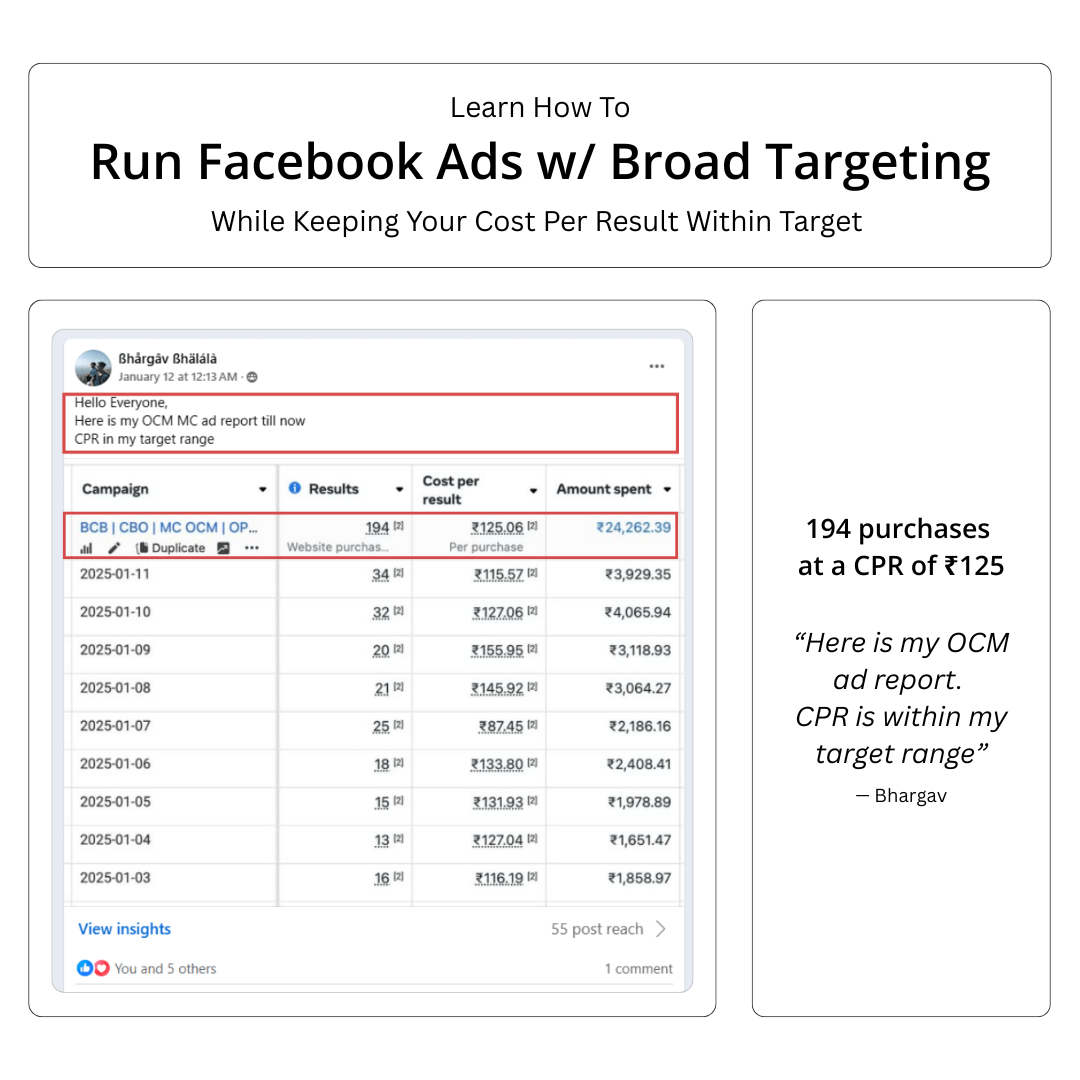
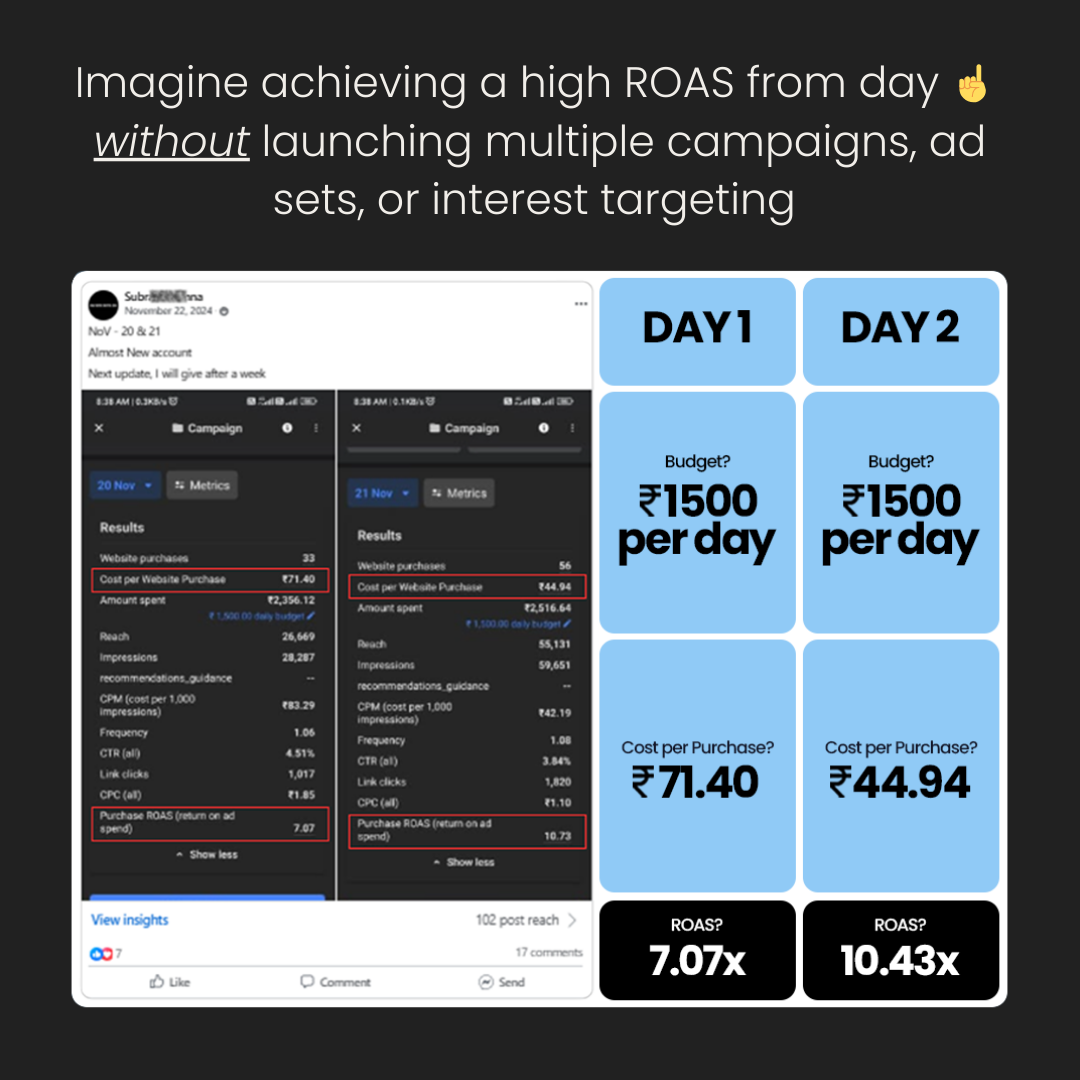
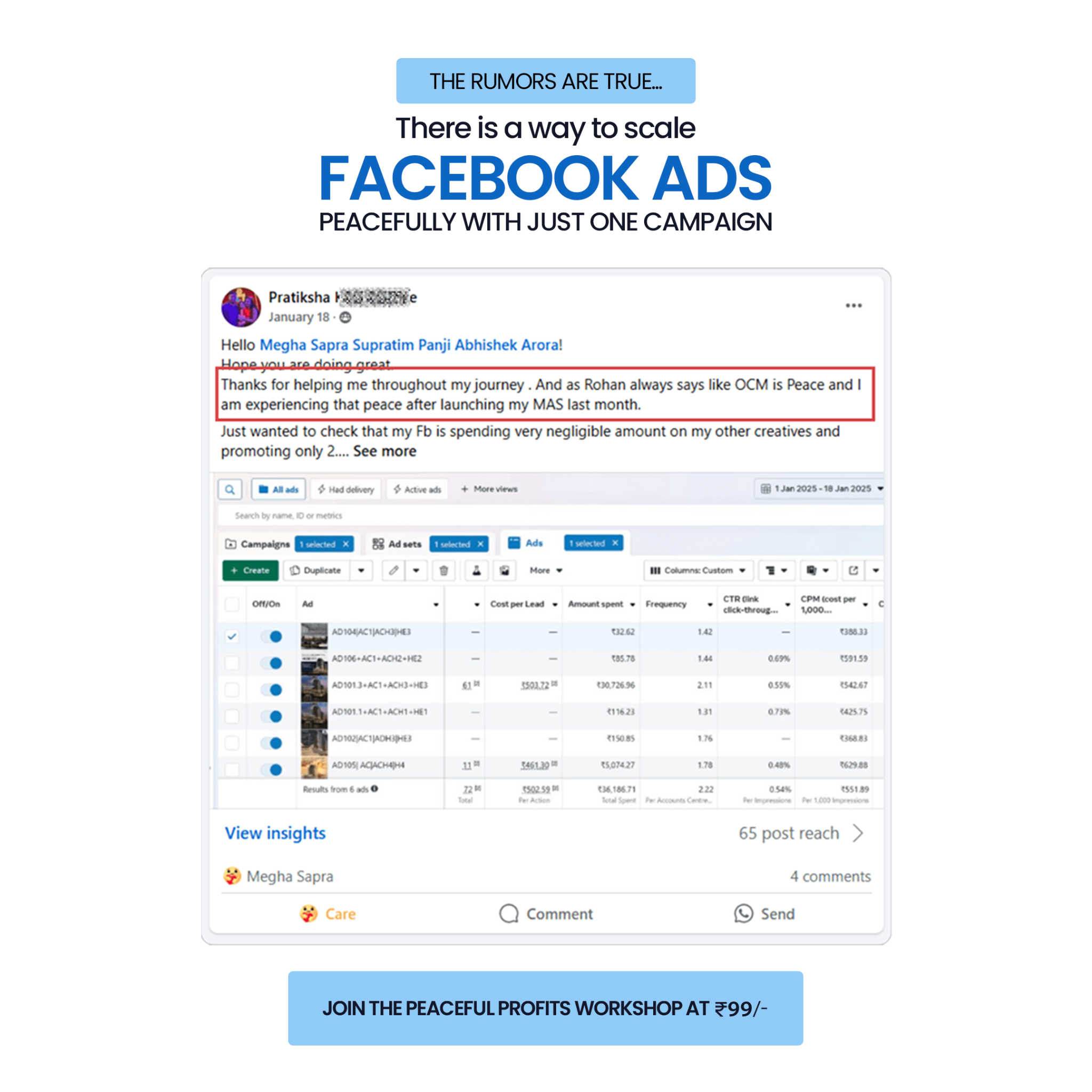
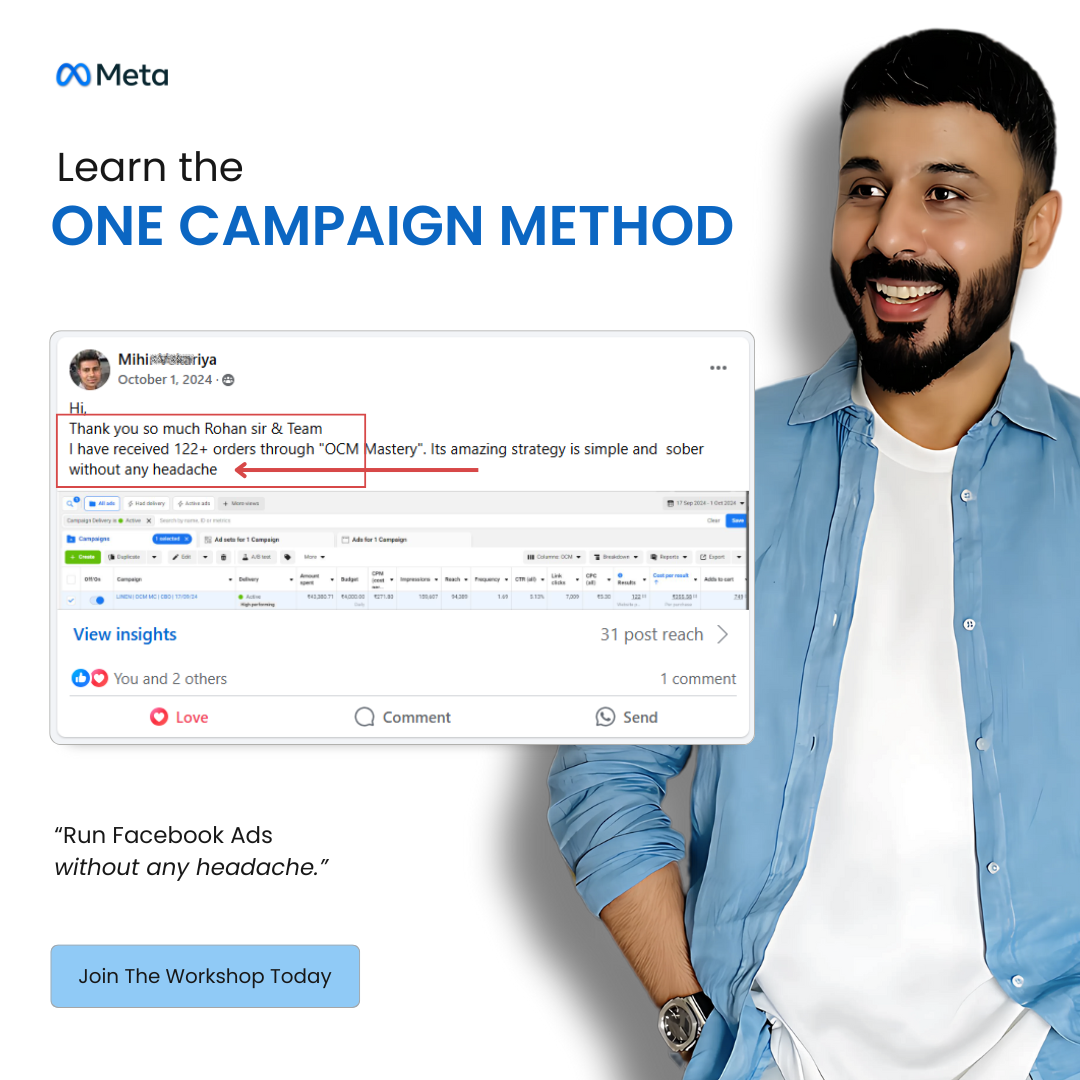
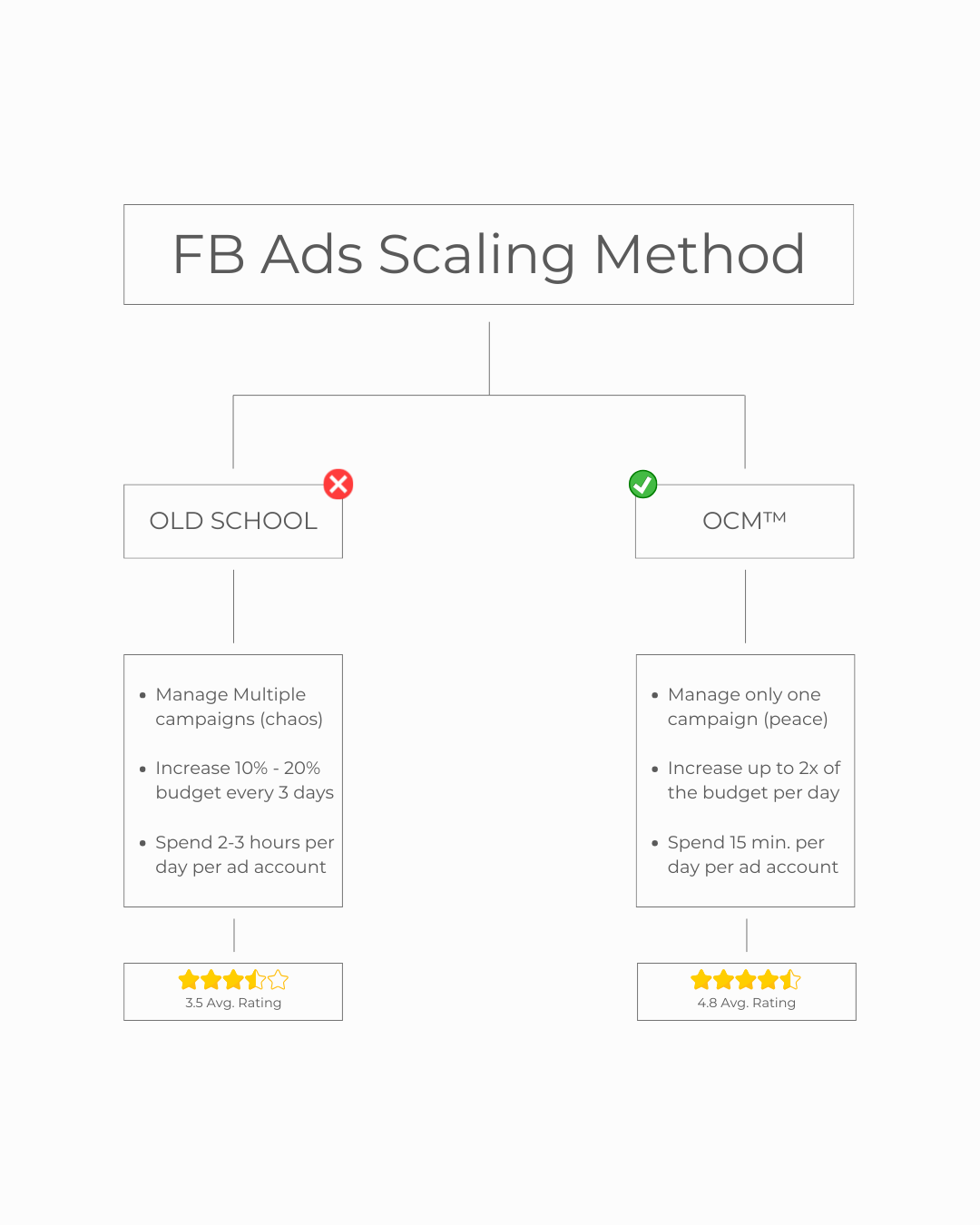
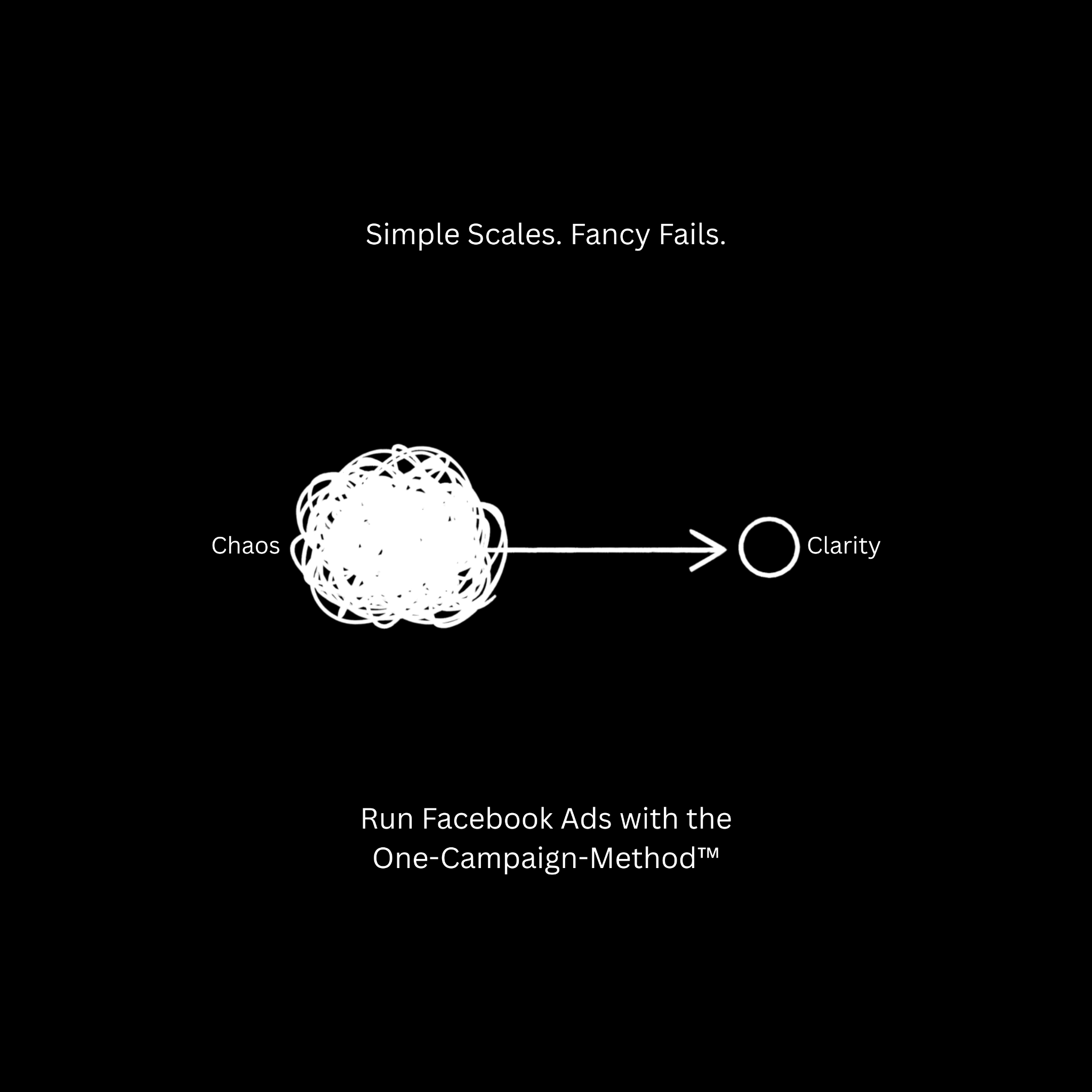
Meta works on the last-touch attribution model. That’s also the foundation on which OCM came into existence. Example User 1 — Day 1 — Clicks on Ad 1, but does not buy. User 1 — Day 2 — Clicks on Ad 2, but does not buy. User 1 — Day 3 — Clicks on Ad 3, now buys. The ads manager will show a conversion attributed to Ad 3. However, Ad 1 and Ad 2 influenced the decision too. We forget that because we are chasing “CPA” from every ad, and as a result, we turn off Ad 1 and Ad 2. And suddenly, the CPA of Ad 3 rises. Because Ad 3 now becomes the first touchpoint. Here’s another truth—Meta retargets on its own. A frequency of greater than 1 is proof. When we keep turning ads on/off and keep launching new campaigns, we lose the historical data. This results in a lack of clarity on consumer buying behaviour within our target market. Which further leads to chaos. Firefighting. Something works. Most things don’t. And we never know why. The truth is, people rarely buy at once. Especially from a business they don’t know. Take this ad as an example. You may not be ready to learn more about OCM, and as a result, this ad may not hit the CPA goal for us. However, that’s not the objective. If you are reading this ad, it serves as a solid touchpoint. And once you are ready, you will make a buying decision yourself without me having to force you into it. OCM is a simple and logical solution. It’s not a get-rich-quick scheme. The focus is to help you develop a process that enables you to step out of the ads manager and focus on things that ACTUALLY matter. In case what I shared made sense, maybe join the workshop. No pressure, though. Thanks for reading (:
Like this ad? Make it yours.
Crush rebuilds this exact creative around your product — your brand, your colors, your offer — in about a minute.